
You Don’t Need a Marketing Manager. You Need a Google Business Profile That Works.
IntroductionYour clinic runs on 10-minute slots, not marketing plans. A front-desk operator who triages calls between insurance verifications cannot add 'SEO strategist' to their job description. Watching a competitor siphon new patients because their map listing appears first is a revenue problem that lives squarely on the front desk.
Most small clinics confuse SEO with a technical department and hand the keys to an agency on a retainer that costs more than a full-time MA.
The problem is not a lack of budget. A completed Google Business Profile is the primary driver of local map-pack visibility, and it costs zero dollars to optimize. SEO success for small clinics comes down to doing a few things really well, and you can own them without a dedicated hire. The patient searching 'clinic near me' on a Tuesday afternoon does not care about your domain authority. They care that your phone number is correct, your hours list 8 AM, and someone answered the 47 reviews left about your practitioner.
What follows is a set of low-lift, high-impact habits any clinician or front-desk operator can own. No jargon. No 90-day ramp. Just the moves that put your practice on the map when someone nearby searches for exactly what you treat.
Key Takeaways
The short answer: commit two to four hours per week, use three free tools, and stop measuring your success by vanity rankings. Here is the breakdown:
- Core Commitment: Block two to four hours per week to cover profile updates, answering patient questions, and publishing one brief answer page per month.
- Only Three Tools Matter: Google Business Profile (free), Google Search Console (free), and a query surface tool like AnswerThePublic to find exactly what patients are typing.
- Track Revenue, Not Rankings: The only metric that pays the bills is calls and form submissions firing directly from your profile, not your position on a keyword tracking dashboard.
- Highest-Return Activity: A fully completed Google Business Profile with real photos and a review engine generates more patient contact than any blog post ever will.
Step 1: Claim and Perfect Your Google Business Profile (Your New Front Desk)
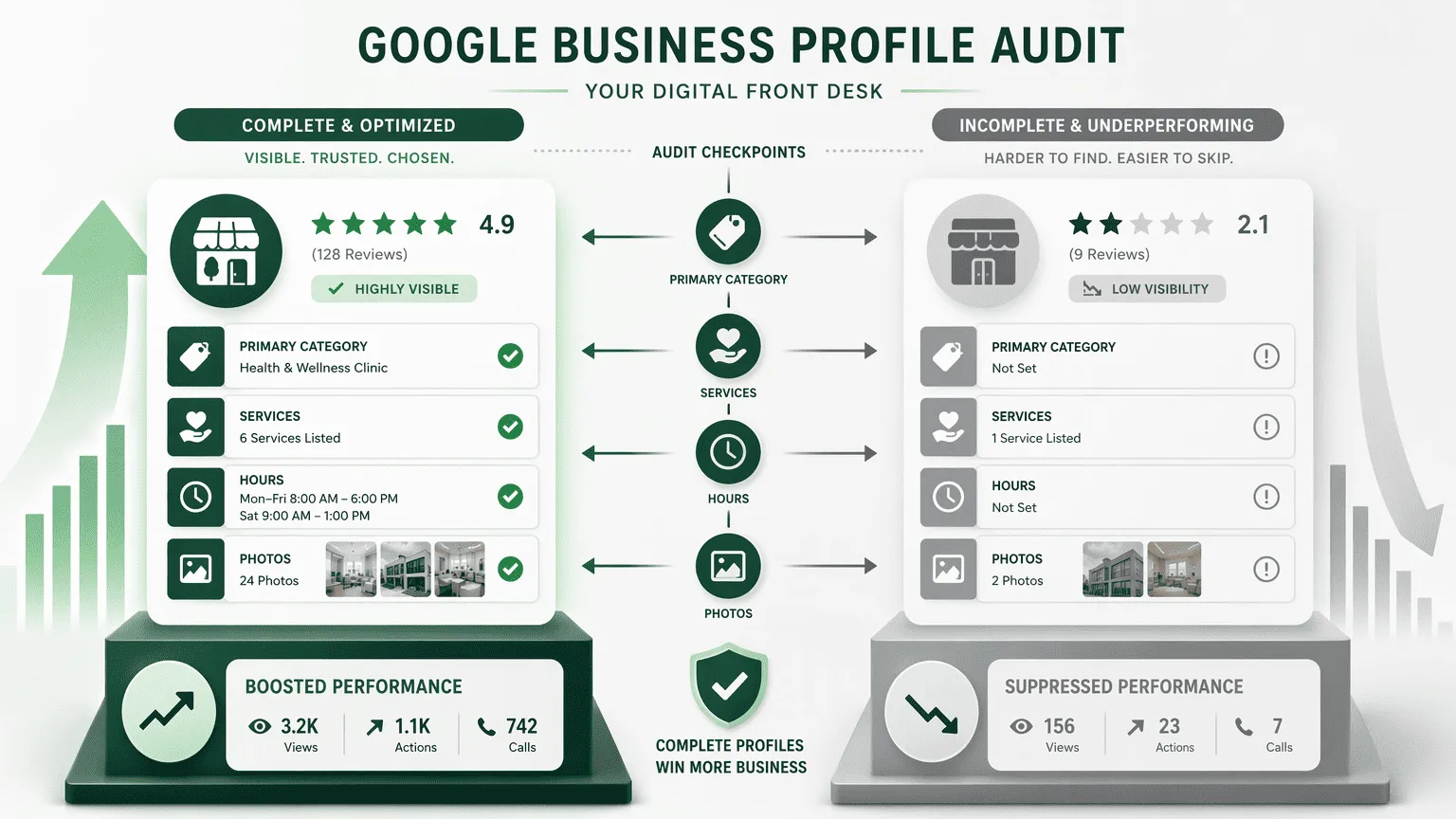
A partial profile is an invisible digital front door. The table below isolates the three attributes that cause a listing to surface in the map pack and the three that actively suppress it.
| Profile Variable | What Makes Google Surface It | What Makes Google Bury It |
|---|---|---|
| Primary Category | 'Medical Clinic' or precise specialty like 'Dermatologist' selected as the single primary category. Secondary services layered underneath through the services menu. | Leaving the default or selecting a generic option like 'Doctor' with no further specification. |
| Visual Proof | 10+ authentic photos added directly to the profile: waiting room from patient height, exterior signage that confirms the building, practitioner in the exam room with clean, branded attire. | A single logo upload or grainy stock photography that looks like every other unverified listing in the directory. |
| Operational Precision | Operating hours matched minutely to the posted hours on the physical front door and the state medical board listing, plus a phone number that rings to a person during every claimed hour. | Diverged hours between Monday and the actual schedule. A connected call-tracking number that registers as inconsistent across directory citations. |
The verification step must happen first. Google mails a postcard to your physical address. The day it arrives, a front-desk person enters the code immediately. Waiting three days turns a guaranteed local signal into a dead listing a competitor snaps up.
Step 2: Turn Every Patient Interaction into a Review Engine
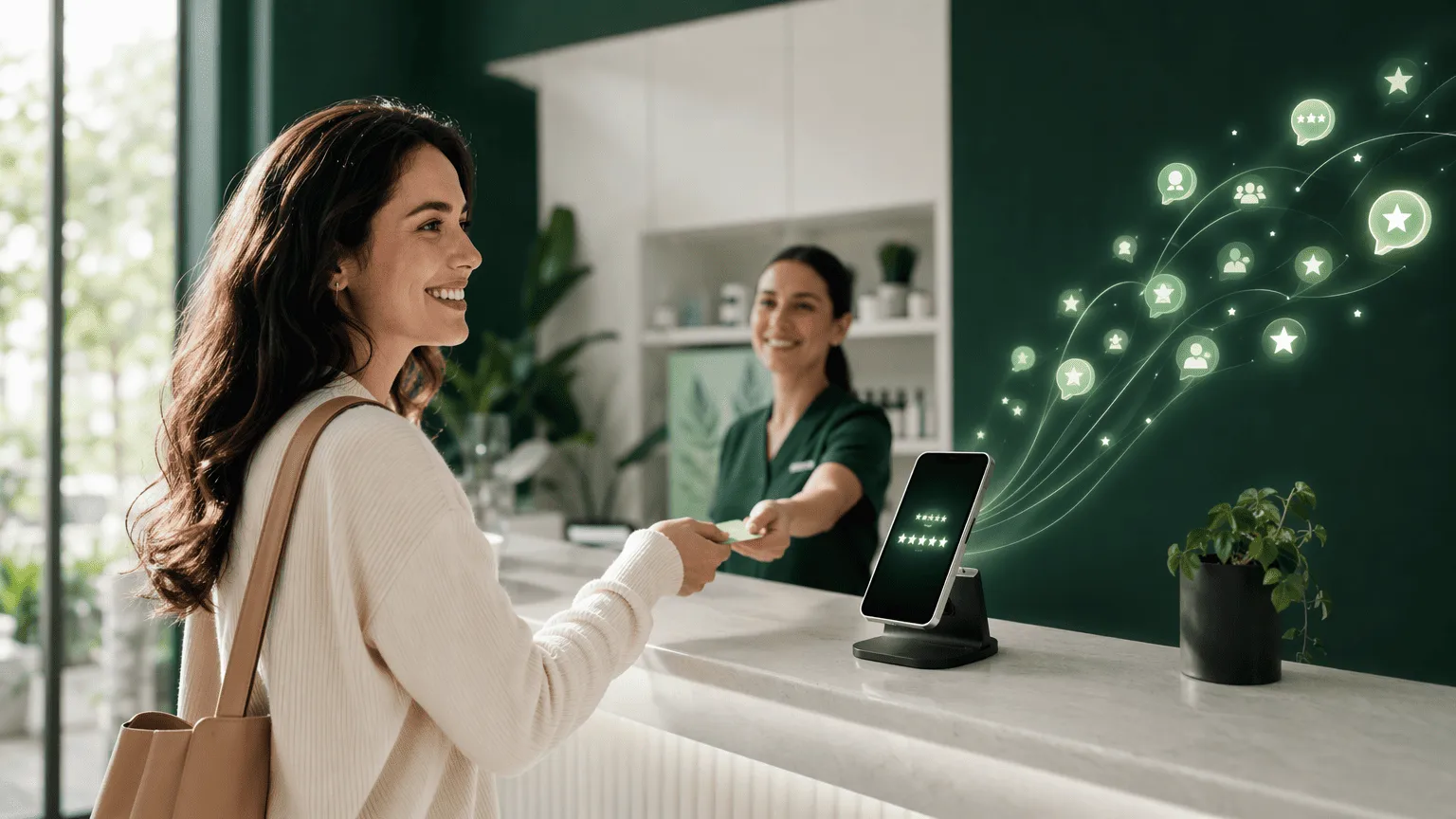
The problem is that every positive patient experience evaporates silently. A departing patient who felt genuine relief nods at the checkout counter, taps their card, and walks out. That moment holds the single strongest local ranking signal Google measures: recency and volume of reviews, and you just let it dissolve into the parking lot before anyone asked for it.
This is a workflow problem. Most clinics do excellent clinical work every day, but they have zero system for converting the goodwill they already earn into Google reviews. Without a repeatable mechanism, even a beloved practice runs a review deficit that drags its local pack position down month after month.
The fix is simple enough that any front desk coordinator can own it. Before the patient leaves the building, they receive a plain-text SMS or a small printed card containing a direct link to your Google review form. No QR code table tent they ignore, no email that lands in spam. A single tap takes them to the review box.
Timing controls everything here. Send the link while the patient is still walking to their car or just settling in at home, when the relief and gratitude are fresh. Wait 48 hours and that feeling competes with a dozen other demands; the open rate on a delayed review request is a fraction of an immediate one, and the resulting star rating trends lower too. One practice manager can manage this process in under five minutes per day. It is a small operational habit, and it compounds into a durable local SEO advantage that no competitor can easily copy.
Step 3: Publish Your Existing Expertise as Pre-Search Content
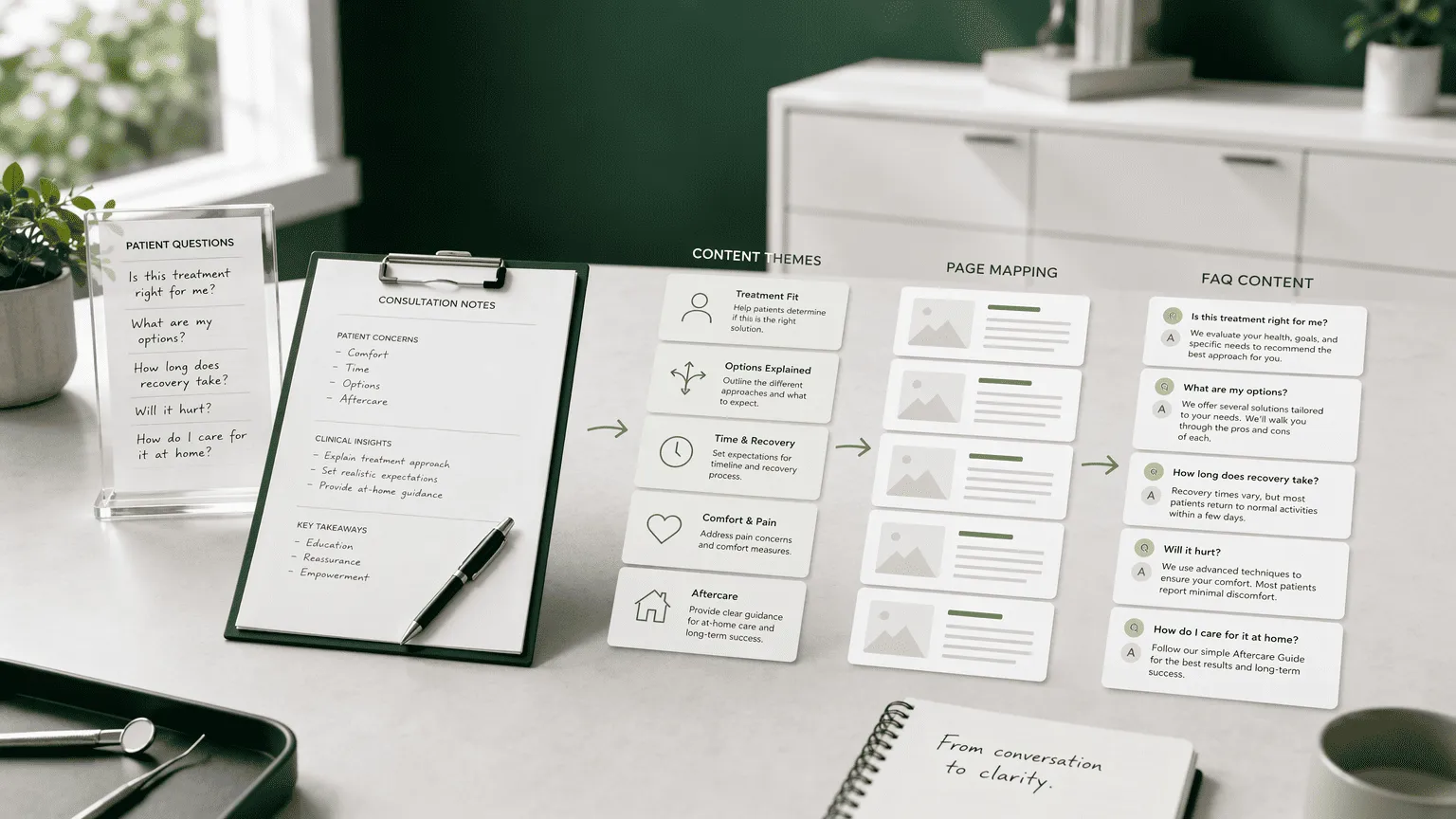
The wrong instinct is to hire a writer and assign them '3 original blog posts per week.' You already generate search-matched content every single consultation because patients phrase insurance pre-check questions the exact same way they query Google: 'Does a cortisone shot hurt?' 'How long does a DOT physical take?' Each of these is a disposable verbal answer you deliver 10 times a week, and each is a permanent service page Google has never seen.
The discipline is called an Answer-First Block. One patient question becomes one page. The first block is a 40-word direct answer, quotable verbatim by Google's snippet engine.
Below it, a plain three-sentence elaboration that handles the most common follow-up. Publish one per month.
A tool like AnswerThePublic surfaces the precise language patients use, and your clinic's own scheduling intake notes validate it. Over 12 months, you have built a library of permanent, pre-search content that matches a specific query with a specific answer, no agency brief required.
The content marketing myth that punishes small clinics the most is scale. You do not need more than 100 posts over the course of a year to rank for local service queries. What you need is answer density on the conditions you actually treat, not volume. A pulmonology clinic with 17 deeply specific answer pages on PFT interpretation, methacholine challenge expectations, and scheduling windows will outperform a general practice blog churning weekly generic health tips every time. ClinAds, for instance, maps your top answered queries to individual landing pages that match the search intent precisely.
Step 4: Establish Your 20-Minute Weekly SEO Routine
Figuring out what to do burns more time than doing it. The fix is a strict, time-boxed checklist that fits inside a lunch break and removes the decision cost of opening your laptop wondering where to start.
A one-hour weekly commitment to website optimization is the ceiling, not the floor, when you confine the work to four five-minute sprints on the only property that captures patients: your Google Business Profile.
Step 5: Activate Local Relevance With What You Already Have
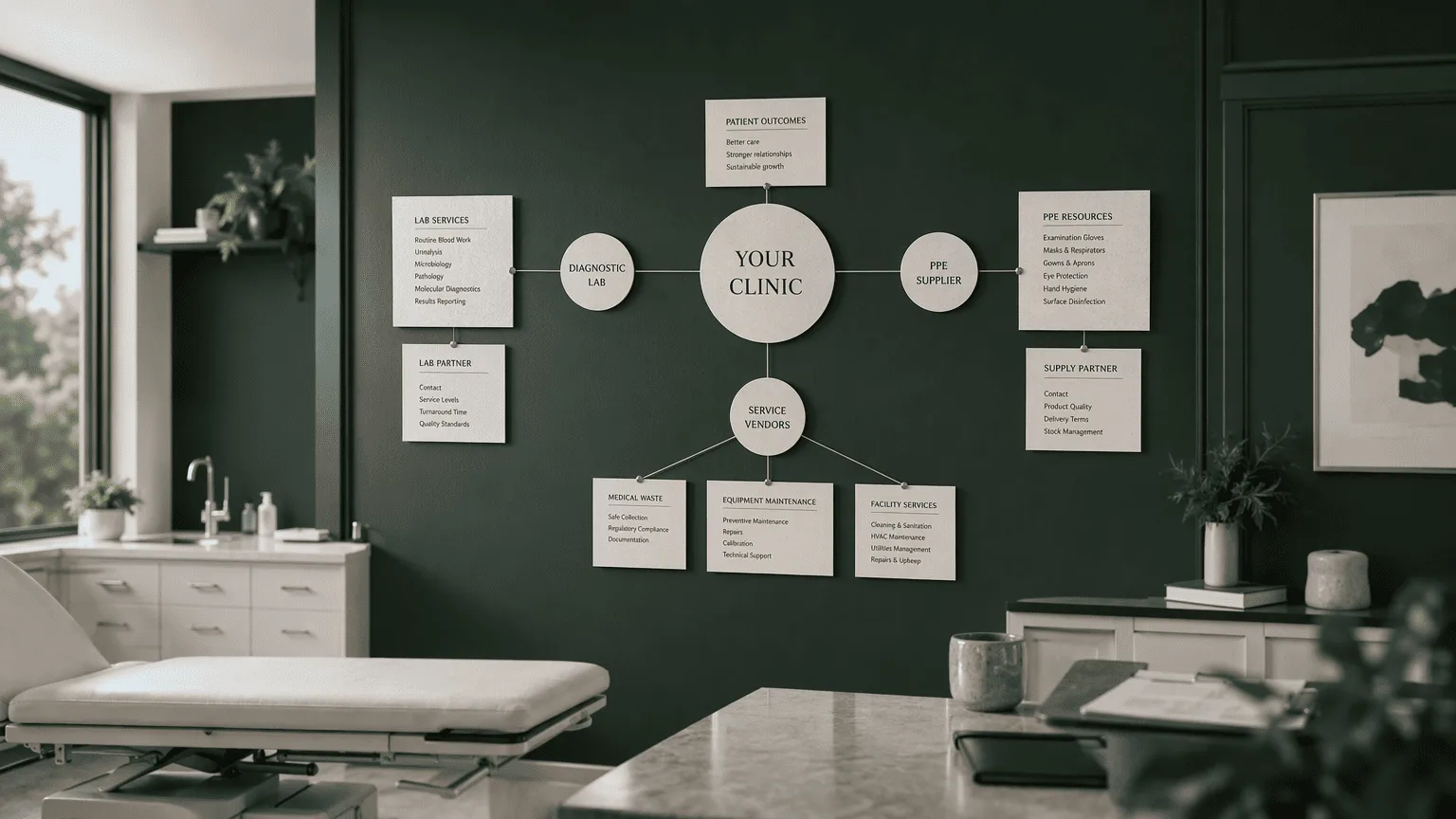
Local relevance starts inside the four walls of your clinic. Every vendor, lab, and service partner you already pay maintains a website with a partner directory, a resource page, or a client roster. Most of those pages sit empty of your link.
The diagnostic lab that picks up your blood draws twice daily has a "trusted providers" section. The PPE supplier servicing your practice runs a resource hub. One courteous email to a lab rep converts an operational relationship into a local citation signal, telling Google your clinic belongs to a specific geographic and professional network.
The chamber of commerce link is the one dentists in your building already hold and you have never pursued. A membership costs less than a single no-show appointment, and the resulting directory listing places your Name, Address, and Phone number in direct proximity to the town governance and service pages Google already trusts. The Lab Marketing research confirms that consistent NAP signals across these local touchpoints reinforce the primary citation Google cross-references against your profile. The trade-off: you are spending political capital inside a local organization instead of paying an agency retainer. That trade works in your favor when budgets are zero.
Step 6: Measure What Matters: Tracking Calls and Clicks, Not Just Rankings
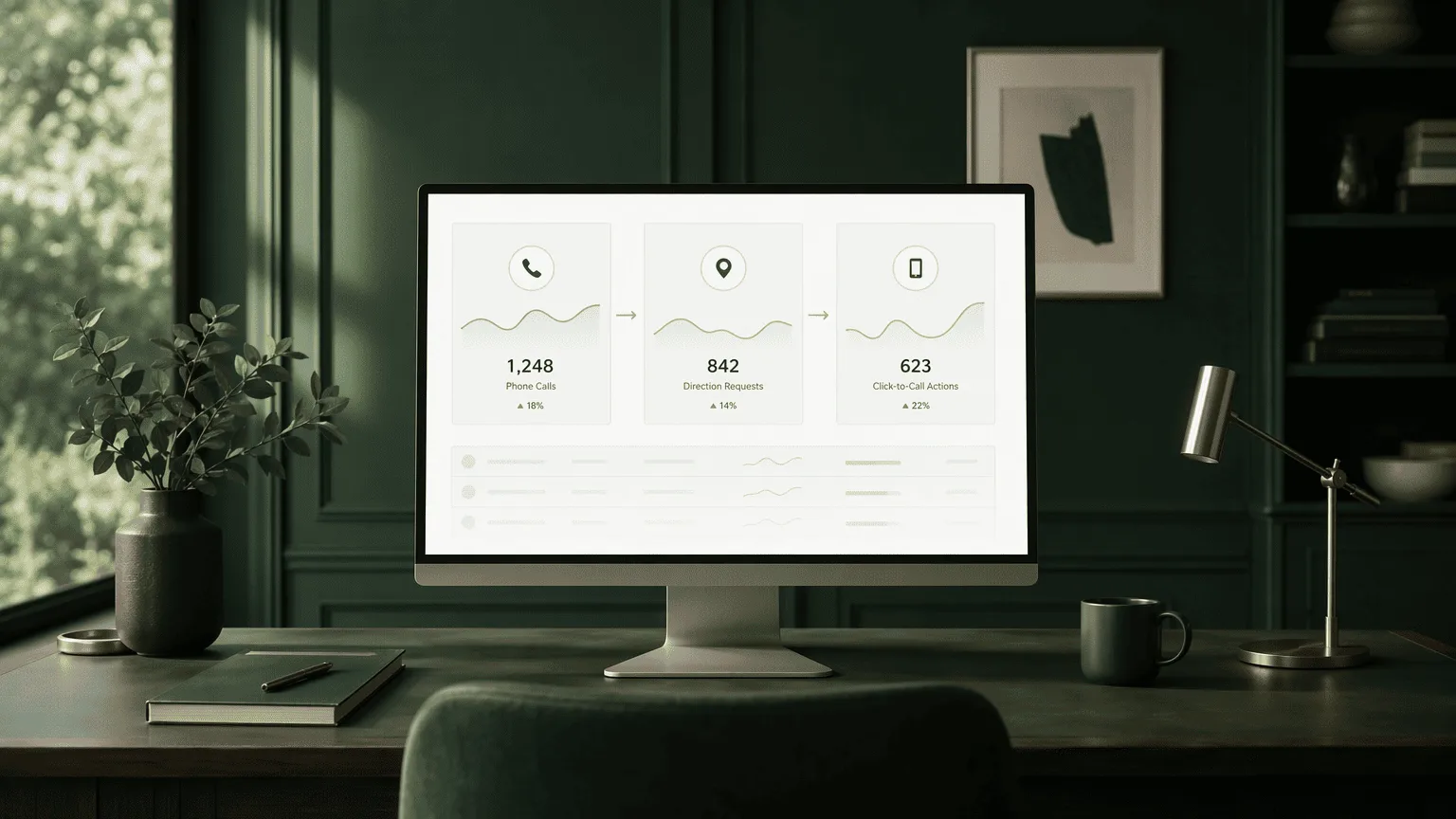
Rank checking is a placebo. A #1 blue link means nothing if the patient calls the competitor who showed up in the map pack with a click-to-call button. Swap the distraction for three straightforward measurement behaviors that track actual revenue signals:
- Open GBP Insights every Monday at 12:15 PM. Scan the exact number of phone calls and direction requests generated from the profile in the prior seven days. A dip correlates directly with an operational issue: wrong weekend hours, an unanswered negative review, or a competitor posting fresher photos.
- Check Google Search Console's 'Queries' report. Identify exactly which search terms drove impressions to your service pages. The query 'pelvic floor therapy post-hysterectomy near me' reveals a real patient need your scheduling team already hears. Write that answer page next.
- Ignore aggregated traffic graphs. A spike in blog traffic from a national health query does not fill a single appointment slot. Filter every metric through one lens: did a local patient contact the clinic because of this search interaction.
Step 7: Avoid the Three Penalty Traps That Erase Your Efforts
Keyword stuffing on a service page is the fastest way to tell Google your content was written for a search engine.
Listing variations like 'dermatologist Austin, skin doctor Austin, Austin eczema clinic' in a footer or repeated across every header triggers a content quality flag that suppresses the page entirely.
Conclusion
A small clinic beats an agency on authenticity every time because real exam rooms and real patient interactions produce the exact trust signals Google's algorithm seeks. The November 2026 core update prioritized relevant, satisfying content over site authority, which means your answer pages and verified profile carry weight a generic medical directory cannot buy.
An unverified or half-filled Google Business Profile is not a waiting-line entry. It is an invisible digital front door. Your next 15 patient appointments go to the clinic down the street.
Your single task today is to claim and verify that profile. Pick a real photo instead of a stock shot. Answer all three reviews that have been sitting there since last month. That is the whole job for this afternoon. It is a marketing problem you can solve before you lock the office.
Frequently Asked Questions
What are the lowest-lift SEO tasks a small clinic can perform without dedicated staff?
Claim and fully populate the Google Business Profile including hours, primary category, and photos. Then post one answer page per month repurposing a question patients routinely ask. Both tasks require zero technical skill and consume under one hour weekly combined.
Which free or low-cost tools are most effective for local medical SEO?
Google Business Profile and Google Search Console are the only key free tools. Match them with AnswerThePublic to surface exact patient query language for your service pages. Any paid tool beyond that solves an agency problem, not a solo clinic problem.
How can a clinic optimize its Google Business Profile to attract nearby patients?
Complete these three setup tasks to build your Google Business Profile correctly from the start:
- Select the most specific primary category available, like 'Dermatologist' rather than 'Doctor.'
- Upload 10-plus authentic photos of the waiting room, exterior signage, and practitioner.
- Ensure hours match the posted door schedule exactly, and request reviews through a checkout-desk QR code.
What is the actual time commitment per week needed to maintain basic SEO for a small practice?
Two to four hours total per week. That block covers replying to new reviews, posting one health update to the GBP, checking Search Console queries, and publishing a single patient-question answer page per month. A strict 20-minute routine handles ongoing maintenance.
How do you measure whether DIY SEO efforts are actually driving new patient appointments?
Open GBP Insights every Monday and count the calls and direction requests generated directly from the profile. In Search Console, identify which local queries are producing impressions and clicks to service pages, then filter everything else out as noise.
What common SEO mistakes do small healthcare providers make that can trigger penalties or waste effort?
Avoid these three common local SEO mistakes that actively harm your clinic's search visibility:
- Keyword stuffing service pages with city-condition variants triggers a content quality flag that suppresses ranking.
- Diverging NAP details between the GBP, Yelp, and the state medical board listing confuses local citation signals.
- Ignoring negative reviews without a professional reply signals operational neglect to the algorithm.
Sources
- Best SEO Tools for Clinics in 2026: The Buyer's Shortlist - getclinads.com
- 7 AI Search Fixes Your Clinic Needs in 2026 (Before You Become Invisible) - getclinads.com
- Clincy Case Study: 1.14K Google Impressions in 30 Days | ClinAds - getclinads.com
- Small Business SEO: 6 Ways to Simplify Your Weekly Approach - www.searchenginejournal.com
Want help executing this for your clinic?
Book a 30-minute call and we will map what a real ad engine would look like for your specific service mix.
Book a call