
The Siloed Portal Is Dead
Summary: The traditional siloed patient portal is obsolete in 2026, as it fails to meet the legal and financial demands of the 21st Century Cures Act. Effective patient communication platforms now recover lost revenue, enhance patient experience metrics, and free up staff hours by integrating automated reminders, two-way messaging, and interoperable data access across multiple healthcare sites, moving beyond mere compliance to active engagement.
Introduction
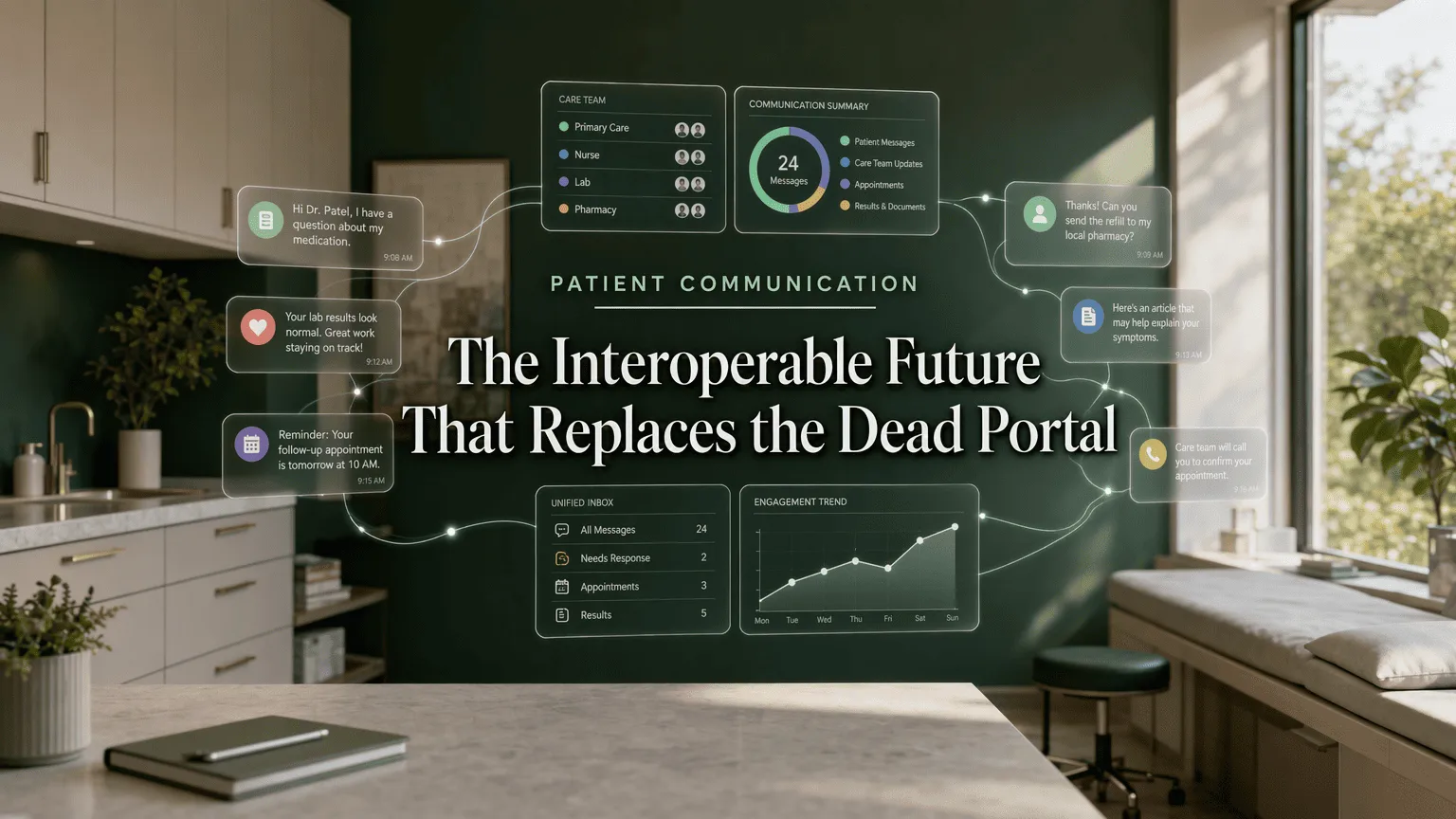
Your front-desk staff spends 22 hours a week chasing no-shows by phone while your patient portal quietly sits unused, collecting dust and disconnected data from a single EHR instance. That portal is not an engagement strategy. It is a compliance checkbox, and in 2026, it is legally and financially insufficient.
The 21st Century Cures Act enforcement timeline has matured, and payer contracts increasingly tie reimbursement to patient experience metrics that a static portal cannot move. Practices are bleeding revenue on 30% to 50% no-show rates that automated tools compress, yet most are still running communication workflows designed for a fax-machine era. The shift underway is not a software upgrade.
It is a structural separation between clinics that treat patient communication as an interoperable platform play and those still stuck on unidirectional blasts. This article audits that gap: what the tools actually are, what the law demands, and what the revenue math looks like when you stop treating outreach as an admin cost.
Key Takeaways
The short answer: a compliant patient communication platform in 2026 recovers revenue, satisfies the Cures Act, and returns staff hours to clinical work. Here is the compressed version for decision-makers who need the numbers in under 60 seconds:
- The no-show math: Automated reminders and two-way messaging cut no-show rates by 30% to 50%, recovering thousands per provider per month in otherwise lost visit revenue.
- The legal test: Under the 21st Century Cures Act, information blocking means restricting patient access to their own data. A portal that shows only one facility's records fails the interoperability requirement.
- Portal versus platform: A portal displays data; a true engagement platform aggregates it via HL7 FHIR APIs across labs, HIEs, and external sites while feeding bidirectional communication.
- The HCAHPS lever: HCAHPS survey results are publicly reported and tie directly to hospital reimbursement. Communication scores move when patients receive timely, accessible interactions.
- The adoption trap: Interventions that combine digital tools with human support outperform digital-only rollouts. Training and phased implementation are not optional.
- The privacy backbone: HIPAA compliance is a shared responsibility between vendor and practice. No product is government-certified, but every serious platform provides an automatic Business Associate Agreement covering all communication channels.
Defining Patient Communication and Engagement Tools: The Core Categories
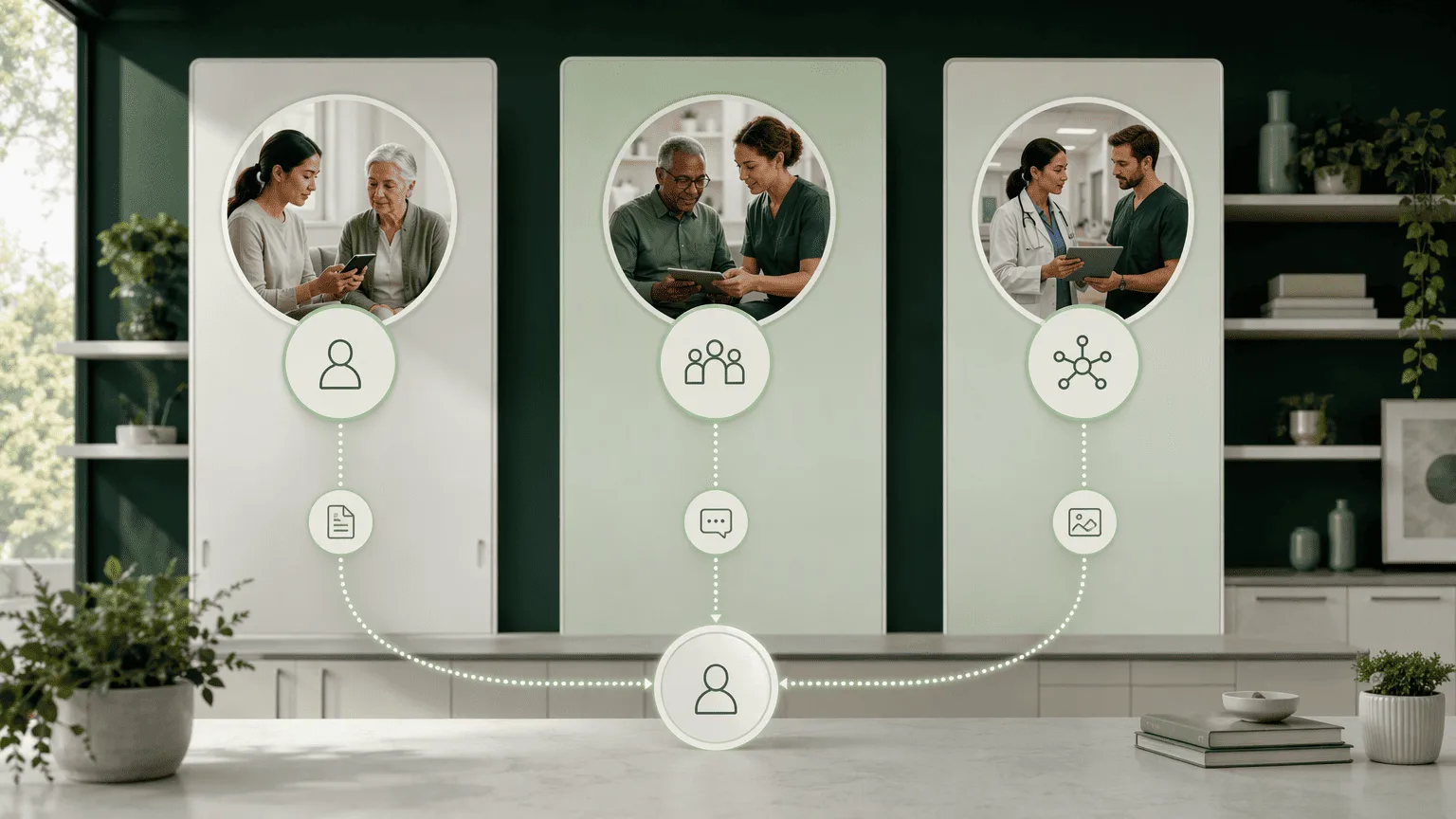
The vendor landscape lumps three distinct categories under one label, and most practices buy the wrong one first:
- Patient portal: A tethered view of a single EHR instance that lets patients see lab results, request refills, and send a message; historically the ONC's starting point for engagement, but after screening 3,462 studies and narrowing to 34 across 11 countries, researchers found that of the 29 unique patient portals studied, few offered patients access to their entire healthcare record across multiple sites, the portal is a one-way window into a single database, not engagement.
- Automated messaging and CRM systems: These handle appointment reminders, broadcast education, and in more advanced configurations, bidirectional texting; over 80% of healthcare providers already text messages that include protected health information, meaning the communication behavior already exists, but the difference is whether those texts sit inside a HIPAA-compliant envelope with audit trails and EHR write-back, a standalone text blast product might cut a few no-shows but will not integrate with clinical data or satisfy Cures Act requirements for patient access.
- Integrated engagement platform: Includes telehealth modules, care plan management tools that focus on building, assigning, and maintaining detailed, patient-specific plans, and bedside engagement solutions like tablets and in-room panels; these connect natively to the EHR, pull data across APIs, and push structured clinical information back into the record, they are not messaging add-ons but the communication layer of the digital front door.
Quantifying the Impact: No-Shows, HCAHPS Scores, and the Time-Recovery Dividend
The number that gets practice owners to stop scrolling is 30% to 50%. That is the no-show reduction achievable when automated reminders and two-way messaging replace manual phone outreach. At an average specialty visit reimbursement of $150 to $400, a single no-show daily costs a practice $54,000 to $146,000 in annualized lost revenue. Cutting that by even the bottom of the cited range shifts tens of thousands of dollars back to the P&L.
The second number to watch is the HCAHPS communication domain. CMS publicly reports patient perceptions of clinician communication, responsiveness, and discharge information. These scores now feed directly into value-based reimbursement formulas. A platform that enables pre-appointment education, post-discharge check-ins, and real-time language-concordant messaging moves the needle on domains that static portals leave flat.
Then there is the time-recovery dividend, which finance directors rarely model. A 10-provider practice whose front desk spends 22 hours weekly on reminder calls recovers roughly 1,100 staff hours annually through automation. Those hours convert to either reduced overtime or redeployed time spent on prior auths, billing follow-up, and in-person patient navigation. Fennelly et al. (2024) confirmed that secure, integrated portals improve care coordination, but the operational ROI comes from the human hours unlocked by the automation layer, not just the clinical coordination gain.
The problem is that most clinics measure the tool's cost and not the status quo's cost.
The Interoperability Imperative: Why a Portal Isn't a Platform Under the 21st Century Cures Act
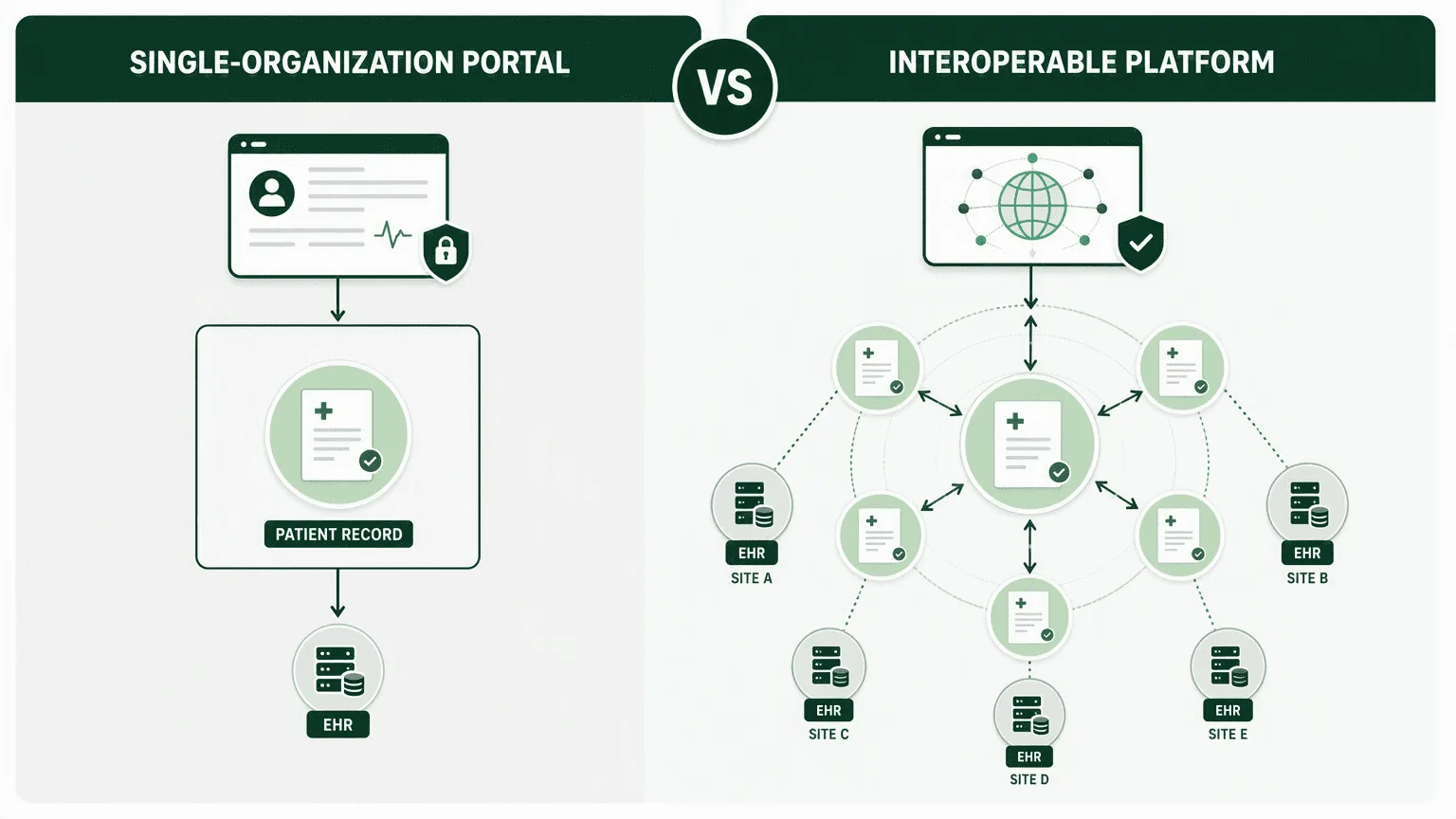
A portal that shows a single organization's data and a platform that aggregates a patient's full record across sites sit on different legal ground. The Cures Act's information blocking provisions are now being enforced, and the distinction carries real financial and compliance weight. Here is the functional gap:
| Dimension | Single-Organization Portal | Interoperable Platform |
|---|---|---|
| Data scope | One health system's records | Records aggregated across multiple sites and EHRs |
| Patient access | View-only, single login per organization | Access plus aggregation, often with a unified patient identity |
| Compliance posture | Meets the letter of patient access rules | Meets the intent: data follows the patient across care settings |
| Information blocking risk | High when it prevents export or cross-site sharing | Lower when built to FHIR APIs and TEFCA exchange standards |
| Operational reality | The patient still assembles their own story | The platform assembles the story from multiple sources |
That last row is where most organizations lose the thread. The Cures Act does not ask whether a patient can log in somewhere. It asks whether information flows without actor-imposed friction. A portal that serves one EHR silo answers the first question while sidestepping the second.
ONC data shows that hospitals' use of FHIR-based APIs for patient access grew sharply, yet many deployments stop at making the API available inside the organization's own app ecosystem (Growth of Health IT-Enabled Patient Engagement Capabilities Among U.S. Hospitals: 2021 to 2024). That is the portal trap: the infrastructure exists, but the data still does not travel with the patient.
A platform earns the label when it enables a third-party app to pull that same data, with patient authorization, into a different care context. Without that, what you have is a patient-facing viewer attached to a single database. The distinction shapes everything from contracting to enforcement exposure.
Architecting for a Silo-Free Future: Vendor-Agnostic Design and Data Integration
The first integration question most buyers ask is whether the tool works with their EHR. The better question is whether the tool's architecture makes the EHR optional as a data hub. A vendor-agnostic platform does not demand that your EHR vendor's proprietary APIs become the center of your patient communication stack. It connects to the EHR, sure, but it also pulls lab results from Quest and LabCorp, immunization records from the state HIE, and imaging reports from the radiology group across town through standards-based connectors.
The standard that makes this possible is HL7 FHIR. FHIR defines a set of RESTful API endpoints and data formats that any compliant system can consume. When a platform is built on FHIR, the practice is not locked into a single vendor's data model. If the EHR contract sours or the practice adds a new service line, the communication layer stays intact and the data flows keep running. This is what the Fennelly et al. review surfaced as the core problem: key interoperability requirements included data formats and standards, heterogeneous information systems, and data storage and management, but most implementations fell short on the multi-site data aggregation that FHIR enables.
Practically, a vendor-agnostic design means negotiating contracts where the engagement vendor commits to documented API endpoints, not screen-scraping or flat-file batch uploads. It means the platform can ingest CCDA documents from external systems and normalize them into a patient-facing timeline. And it means the scheduling module inside the engagement platform connects directly to the practice's online booking tools. When a patient converts on a Google ad and hits a disconnected calendar, the ad spend leaks at the point of booking. The Clinads thesis on scheduling tools states the problem plainly: your scheduling tool sits on an island.
Interoperability is the architecture that lets you turn a confirmed appointment into a triggered lab reminder into a post-visit satisfaction survey without a staff member touching any of those steps. Every manual handoff between systems is a point where a patient drops off the schedule and becomes a no-show statistic.
The Compliance and Security Backbone: HIPAA, APIs, and Information Blocking Rules
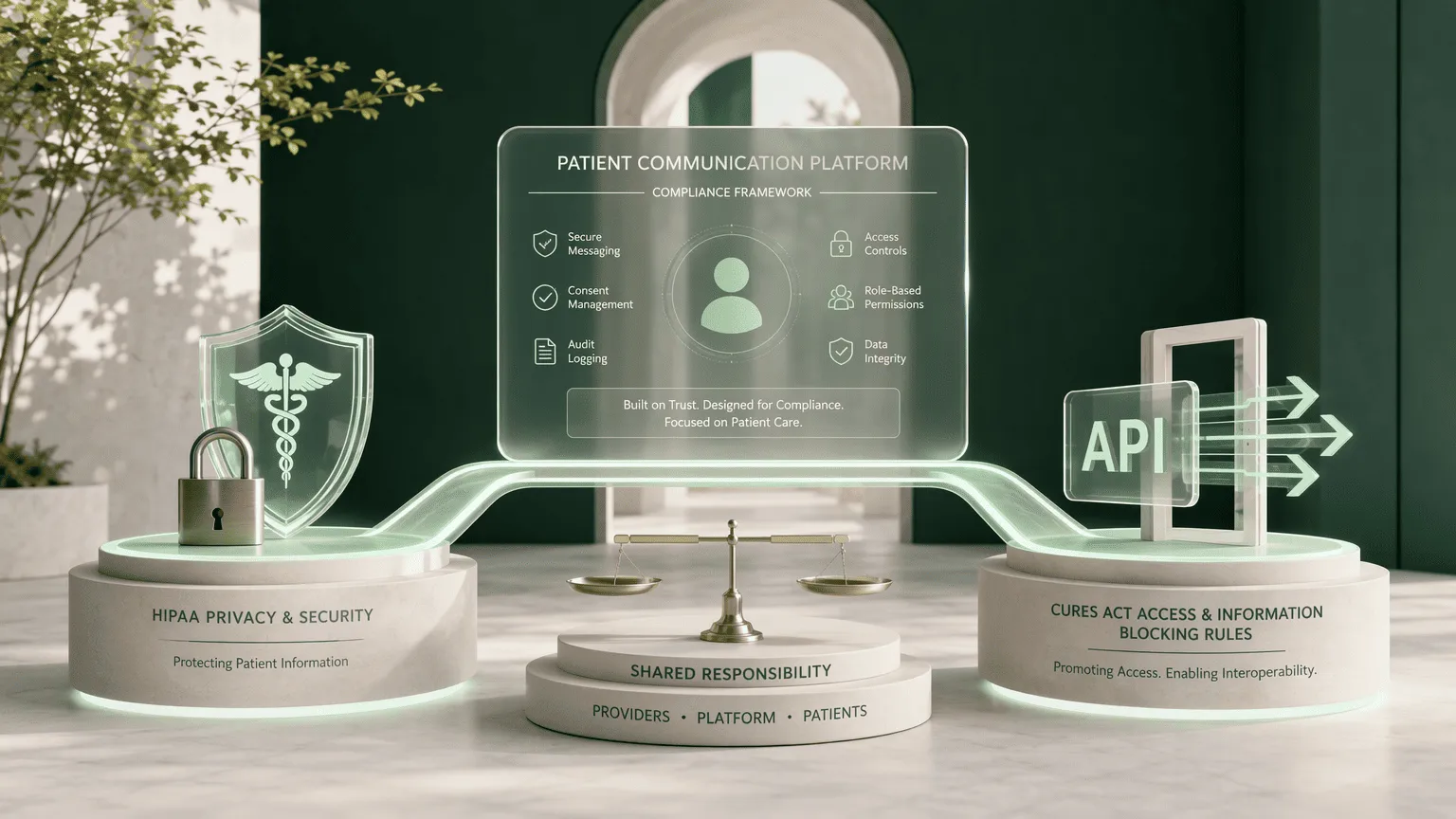
The regulatory framework has two legs. HIPAA governs security and privacy. The Cures Act governs access.
A platform that nails one and ignores the other creates liability on one side of the compliance ledger. The baseline truth most practices miss is that there is no such thing as 'HIPAA certified' software. No government agency stamps a product as compliant, so any vendor claiming a certification is marketing a fiction.
Compliance is a shared responsibility between the vendor and the practice, documented through a Business Associate Agreement. OhMD provides an automatic BAA for every user, even on the free plan, covering all communication channels, which is the floor a serious platform should meet.
On the technical side, the standard to demand is encryption in transit and at rest. The OhMD implementation uses TLS RSA with ARIA-256-CBC/SHA-384 for delivery and AES-256 for stored data, which is a concrete benchmark. The Cures Act then layers on top: the Final Rule requires certified API access that lets patients pull their data into third-party applications without delay or obstruction. A platform that exposes FHIR endpoints, authenticates via OAuth 2.0, and logs every access request meets the letter and the spirit. One that restricts exports to PDFs or proprietary formats does not.
A Maturity Model for Clinical Communication: Assessing Your Practice's Readiness

Most practices benchmark themselves against the wrong peers. Here is a four-stage model for reading where you actually sit and what the next level costs to reach:
Stage 1: Administrative. Communication lives in appointment reminders, intake forms, and billing follow-ups. The patient relationship is transactional. Staff push outbound messages through a portal or SMS gateway.
Clinical conversations happen inside visits and nowhere else. A practice at this stage rarely measures anything beyond the no-show rate. The technology stack is a scheduling tool, a separate EHR inbox, and maybe a patient portal that a third of patients have ever logged into.
Stage 2: Responsive. The practice replies to inbound patient questions through portal messages, phone calls, and secure text, but messaging is entirely reactive. Someone has to reach out first. Response times vary from a few hours to the next business day.
Some clinical coordination happens between visits, a nurse calls with lab results, a pharmacist reconciles medications, but those threads stay trapped in individual messages. No one aggregates them. This is where most mid-size primary care groups live: they respond reliably but have no line of sight into the whole conversation load across the practice.
Stage 3: Coordinated. Care teams use shared communication channels that pull messages, task assignments, and clinical context into one view. When a patient sends a question about a new symptom, the message routes to the right person on the care team instead of pooling in a general inbox. A nurse can see the last pharmacist note and the physician's most recent plan before replying. Practices at this stage track response time, message volume by channel, and time-to-resolution per thread. The operational gain matters, but the clinical coordination that comes with it matters more, every specialist who touches a case sees the same thread.
Stage 4: Embedded. Communication is continuous and data-infused. Remote monitoring feeds, lab results, and patient-reported outcomes surface automatically into care-team channels. When a glucose reading triggers a threshold alert, the system notifies the right clinician and pre-populates a draft response with relevant history.
The patient never repeats themselves between a portal message, a phone call, and an office visit because the conversation thread follows the patient. Practices at this stage measure clinical outcomes against communication latency: did faster response to a post-discharge question reduce readmissions in that cohort? Reaching this stage costs more than software, it requires workflow redesign, training, and a culture that treats communication as a clinical function.
User-Centered Design: Meeting the Needs of Diverse Patient Populations
The portal that works for a 35-year-old English-speaking patient with a graduate degree will alienate a 72-year-old Cantonese speaker managing three chronic conditions on a five-year-old Android phone. The research is consistent: barriers to effective communication include language differences, health literacy gaps, cultural discordance, and time constraints. A platform that ignores those barriers just automates inequity.
The design requirements start with health literacy. Most patient education materials in portals are written at a tenth-grade reading level or above while the average US adult reads at an eighth-grade level. A platform should dynamically serve content calibrated to the patient's stated or inferred literacy level, not blast the same PDF to every inbox.
Language support is the next hard requirement. Multi-language platforms go beyond translation by allowing the care team to compose in English and deliver in the patient's preferred language without copying, pasting, and breaking the audit trail. The same logic applies to accessibility: screen-reader compatibility, large-text modes, and interfaces that do not assume a mouse. The ONC's Patient Engagement Playbook frames this as a strategic imperative, not a compliance footnote. When the platform is user-centered, the patient population that defaults to phone calls shrinks, and the staff-hour dividend gets bigger.
The equity piece is the hardest to measure and the easiest to skip. Digital patient engagement tools can empower patients to take an active role, but only if they are designed for the patients the practice actually serves, not an idealized consumer. A platform deployed without Spanish-language medication instructions in a practice whose panel is 40% Spanish-speaking is an underwriting failure, not a clinical one.
A Practical Implementation Blueprint: From Vendor Selection to Staff Adoption
Buying the platform is 20% of the project. The remaining 80% is change management, and that is where most rollouts fail.
Here is the compressed execution plan for getting it done without the front-desk revolt.
Scoping the demo: bring your real front-desk workflow, not just a wish list. Most demos showcase a perfect-day scenario. You will get more out of the hour if you bring yesterday's actual schedule, your worst no-show timeslot, and your most confusing reschedule chain. Ask the vendor: "Show me how I clean up this exact mess in your UI." If the rep has to click through six screens while you time it on your phone, you know the platform will slow down a five-minute check-in. The ONC reports that growth in patient engagement capabilities among US hospitals accelerated sharply between 2021 and 2024, so the tool that impresses a conference room is the one your team will actually use under the fluorescent lights at 8:15 a.m.
IT integration: the interoperability checklist you need in week two. Most tools advertise FHIR APIs and HL7 feeds. Your IT lead needs to see the actual connection. Get a written scoping doc that names the endpoint, the polling frequency, and the failover behavior.
Two questions that surface real architecture faster than any RFP question: "What happens to queued appointment confirmations when the EHR goes offline for maintenance?" and "Show me the schema for a merged patient record when the same person books via your web widget and our call center."
A 2024 scoping review identified several interoperability factors that determine whether a patient-facing tool remains usable, and data consistency across entry points ranked among them. The IT vendor's answer to the merge question will telegraph whether the platform treats a patient record as a shared truth or as an import that needs constant reconciliation.
Staff training: make it a workflow change, not a software class. Most training fails because it teaches a tool in isolation. Your front desk does not care about a feature list. They care about whether the new platform makes check-in faster or creates a bottleneck.
Run role-based 20-minute sessions on a real patient scenario. For check-in staff, start with the patient who arrives early and needs to update insurance.
For the call center, start with the patient calling to reschedule the appointment that was already confirmed by text the night before. One practice group that adopted this approach reduced the "quiet workaround" period from six weeks to about one.
Launch strategy: a phased rollout beats a big-bang go-live. Pick one provider, one service line, or one location and run the new platform for two full weeks before expanding. This lets you catch the edge cases that every pilot ignores: the patient who has no smartphone, the referral that arrives as a fax, the front-desk shift that overlaps with the nightly batch job. Fix these before the whole organization is watching. CMS patient experience data from the HCAHPS survey consistently shows that communication and responsiveness drive satisfaction scores; a botched enterprise-wide launch that leaves patients receiving duplicate confirmations erodes that trust immediately. Run small, fix fast, then scale.
Measuring what matters: pick two operational KPIs and one patient-facing one. Track time from appointment-requested to appointment-booked. Track no-show rate by communication channel (text vs. email vs. phone). And pick one patient-facing metric: perhaps the percentage of patients who complete pre-check forms before they walk through the door.
A single-institution study found implementing automated reminders reduced no-show rates and increased provider availability per session. That second-order effect is the real win: more filled slots with less manual calling. Watch that number every week for the first quarter.
Vendor lock-in: test the exit before you commit. Ask your vendor for a sample export of six months of patient communication history in a machine-readable format. Then ask a clinical data analyst to load that export into a reporting database without calling the vendor for clarification. If the analyst cannot do it in half a day, you are signing up for a data migration headache when you eventually switch platforms. The contract should spell out that all patient communication logs, preference records, and appointment history belong to the practice and are exportable at any time with 48 hours' notice and no professional-services fee.
Conclusion
The platform-versus-portal question is settled.
In 2026, a unidirectional patient portal that shows one facility's data and cannot handle bidirectional communication is a compliance liability wearing a user interface. The practices that treat communication as a clinical asset tied to revenue and Cures Act compliance are the ones recovering the 30% to 50% no-show dollars and moving HCAHPS scores in the right direction. The interoperability framework, user-centered design, and phased implementation blueprint outlined here are the minimum spec for a platform that won't need replacement in 24 months when the next enforcement wave arrives. Want to see your first month of Clinads creative paired with a real engagement workflow? Book a 30-minute intro call.
| Feature | Static Patient Portal | Interoperable Engagement Platform |
|---|---|---|
| Data Scope | Single EHR instance; typically one facility or health system | Aggregated across labs, HIEs, external provider sites via API |
| Information Blocking Risk | High, if it restricts access to full available record without a permitted exception | Low, by design, when built on HL7 FHIR standards and open APIs |
| Patient Communication Mode | Read-only access; asynchronous web-based messaging bolted on | Bidirectional SMS, in-app messaging, telehealth, bedside tablet interfaces |
| API Access | Limited to what the EHR vendor exposes, often proprietary | Standards-based FHIR APIs with documented endpoints and security protocols |
| Workflow Integration | Standalone; front desk manually cross-references scheduling | EHR write-back, automated reminder triggers, care plan sync |
| Primary Use Case | Viewing results, requesting refills | Coordinating care across settings, reducing no-shows, meeting HCAHPS targets |
The Cures Act does not explicitly ban portals. It bans information blocking, which the law defines as any practice likely to interfere with access, exchange, or use of electronic health information. A portal that hides data from an outside facility because the systems do not talk to each other places the practice in legal exposure that a natively interoperable platform avoids. The ONC's data brief tracking growth of health IT-enabled patient engagement capabilities among U.S. hospitals from 2021 to 2024 shows the industry treating API-based access as a baseline. The platform is not a luxury upgrade. It is the compliance floor, and the portal-only approach is a legacy design accumulating regulatory cost.
- Reactive Phone-Only: The front desk dials every patient 48 hours before the appointment. No digital layer exists. No-show rates run at the high end of the 30% to 50% band. Staff burnout is measurable.
- Automated One-Way Reminders: An SMS or email blast goes out on a fixed schedule. No-shows drop toward the midpoint of the cited range. The patient cannot respond or reschedule directly, so the phone still rings for every cancellation.
- Bidirectional Engagement: The platform supports two-way texting, patient-initiated rescheduling, and basic care plan nudges. No-show rates hit the lower end of the cited improvement band. HCAHPS communication scores begin to move because patients receive responses, not announcements.
- Predictive Interoperable Platform: The system ingests data from EHR, HIE, labs, and scheduling to trigger risk-tiered outreach. A patient with a history of three no-shows gets a different communication cadence: confirmation text, then a pre-visit instruction video in Spanish, then a live staff callback if the message is not read. Staff time is allocated by exception.
- Standardize Consent Workflows Before Tech Touches a Single Patient: Get the patient consent language into the check-in packet and the portal enrollment flow simultaneously. If consent is captured inconsistently, the automation engine cannot fire on all records.
- Audit EHR Data Formats First, Not Last: Run a data quality pass on the fields the platform will ingest: phone numbers, preferred language, next appointment date. Dirty data fed into an automated platform produces automated errors at scale.
- Phase the Rollout by Modality, Not by Provider: Turn on automated reminders for all patients in week one, add bidirectional texting for a single practice location in week three, and layer on care plan nudges in week six. Do not let one skeptical physician veto the timeline.
- Train Staff on the Exception Workflow, Not the Software Manual: Front-desk employees do not need to memorize every feature.
- Align Platform Capabilities with Acquisition Channels Directly: The engagement tool should connect to the scheduling layer that patients actually use. You can see this with tools that merge booking with local search, where the scheduling software and the marketing engine exchange real-time availability data. When a Google ad converts a patient, the communication platform should already have the appointment locked and the reminder queued.
Frequently Asked Questions
What are patient communication and engagement tools, and what core categories do they fall into?
Patient engagement platforms automate outreach, capture patient responses, and connect to the EHR. The three core categories are:
- Patient portals: read-only EHR views that let patients see lab results, request refills, and send messages.
- Automated CRM and messaging systems: tools that handle appointment reminders, broadcast education, and bidirectional texting.
- Integrated engagement platforms: systems that add telehealth, care plan management, and bedside interfaces.
How do these tools impact patient outcomes, satisfaction scores, and no-show rates in the US?
Automated reminders and two-way messaging reduce no-show rates by 30% to 50%. Platforms that enable timely, accessible communication improve HCAHPS scores, which are publicly reported by CMS and tied to value-based reimbursement. Combined with human support, digital tools improve care coordination and adherence.
What security and regulatory requirements like HIPAA govern these platforms in the US market?
HIPAA requires encryption in transit and at rest, a signed Business Associate Agreement, and administrative safeguards. No government HIPAA certification exists. The 21st Century Cures Act adds a requirement for standards-based API access so patients can retrieve their data without information blocking.
What are the key features to look for when selecting a patient engagement platform for a US healthcare practice?
Demand HL7 FHIR API integration, automatic BAA execution, bidirectional SMS and in-app messaging, multi-language support, EHR write-back, real-time scheduling sync, and documented security protocols including AES-256 encryption at rest. Avoid any platform that cannot aggregate records across multiple sites.
How does a practice successfully implement a new patient communication system without disrupting workflow?
Use a phased rollout by modality, not provider. Follow these steps:
- Start with automated reminders.
- Layer in bidirectional texting.
- Add care plan nudges later.
- Train staff only on the exception workflow so they stop manual outreach and focus on flagged patients.
- Standardize consent capture before the tool touches any patient record.
What differentiates a true patient engagement platform from a simple patient portal under US interoperability rules?
A portal and an interoperable platform differ in key ways. Key distinctions include:
- Data access: A portal displays data from one EHR in read-only mode, while an interoperable platform aggregates records across multiple sites via FHIR APIs.
- Communication: A portal supports one-way data viewing, whereas an interoperable platform supports bidirectional patient communication.
- Compliance: A portal risks noncompliance under the Cures Act if it restricts access to the full available record, while an interoperable platform is designed to avoid information blocking.
Sources
- Your Scheduling Tool Sits on an Island. - getclinads.com
- 8 Best Patient Scheduling Software Options Merged With Local - getclinads.com
- Novel Strategies to Reduce Patient No-Show Rates: Single Institutional Study at Jane H. Booker Family Health Center - PMC - pmc.ncbi.nlm.nih.gov
- Growth of Health IT-Enabled Patient Engagement Capabilities Among U.S. Hospitals: 2021-2024 - www.healthit.gov
- Key interoperability Factors for patient portals and Electronic health Records: A scoping review - pubmed.ncbi.nlm.nih.gov
- Patient Engagement - Health IT Playbook - HealthIT.gov - playbook.healthit.gov
- Patient Support and Communications - Elion Health - elion.health
- HIPAA Compliant Patient Communication for Healthcare - www.ohmd.com
Want help executing this for your clinic?
Book a 30-minute call and we will map what a real ad engine would look like for your specific service mix.
Book a call