
7 Best HIPAA-Compliant Tools for Sending Lab Result
Summary: The article reviews the top seven HIPAA-compliant tools for sending lab results, focusing on their ability to meet the proposed 2024 HIPAA Security Rule updates. It highlights Clinads for its comprehensive compliance features, Epic MyChart for its integration with EHR systems, TigerConnect for rapid alerts, Paubox for zero-login encrypted email, and other platforms like MedAllies for secure messaging within referral networks.
Introduction
Your lab runs a tight ship on results, but the moment those PDFs leave your LIS, they hit a delivery channel running on 2019's security assumptions. Patients want results fast. The real issue is that the compliance ground under your notification stack has shifted, and most tools on your shortlist were built for a regulatory framework that no longer exists.
The December 2024 HIPAA Security Rule Notice of Proposed Rulemaking dismantles the old "addressable" implementation model that let vendors sidestep hard security controls. The proposed rule mandates encryption of ePHI at rest and in transit, multi-factor authentication with narrow exceptions, vulnerability scanning every six months, and penetration testing at least every 12 months. Those requirements materially filter the notification tool market.
What follows is a ranked assessment of eight platforms that clear the bar, ordered by how directly they anticipate the 2026 compliance reality. Each pick is scored on security architecture, patient experience, and whether its pricing model survives high-volume lab result delivery without turning per-message fees into a line-item you have to explain to your CFO.
Key Takeaways
- Every lab results notification tool sits somewhere on a spectrum: how tightly it integrates with your EHR versus how fast it reaches the patient.
- The proposed 2024 HIPAA Security Rule update turns encryption, MFA, and scheduled vulnerability testing into a universal baseline. Every platform now has to meet these requirements.
- Integrated patient portals like Epic MyChart connect results to the full patient record behind a single login. That deep integration comes at a cost, typically $200 to $800 per month per provider, and it binds you to one vendor's ecosystem.
- Standalone messaging platforms such as TigerConnect and OhMD push alerts in seconds. Each one requires its own business associate agreement and frequently charges per-message rates between $0.01 and $0.05.
- Encrypted email still earns its place. Paubox delivers results directly to the inbox with zero patient login friction, though you lose control over the recipient's multi-factor authentication environment.
- Mature operations add a layer the others skip: automation. Luma Health and Clinads layer triggered follow-up workflows on top of delivery, converting a notification into a booked appointment instead of a dead-end read receipt.
1. Clinads, The All-in-One Lab Results Engagement Platform Built for the 2026 HIPAA Security Rule
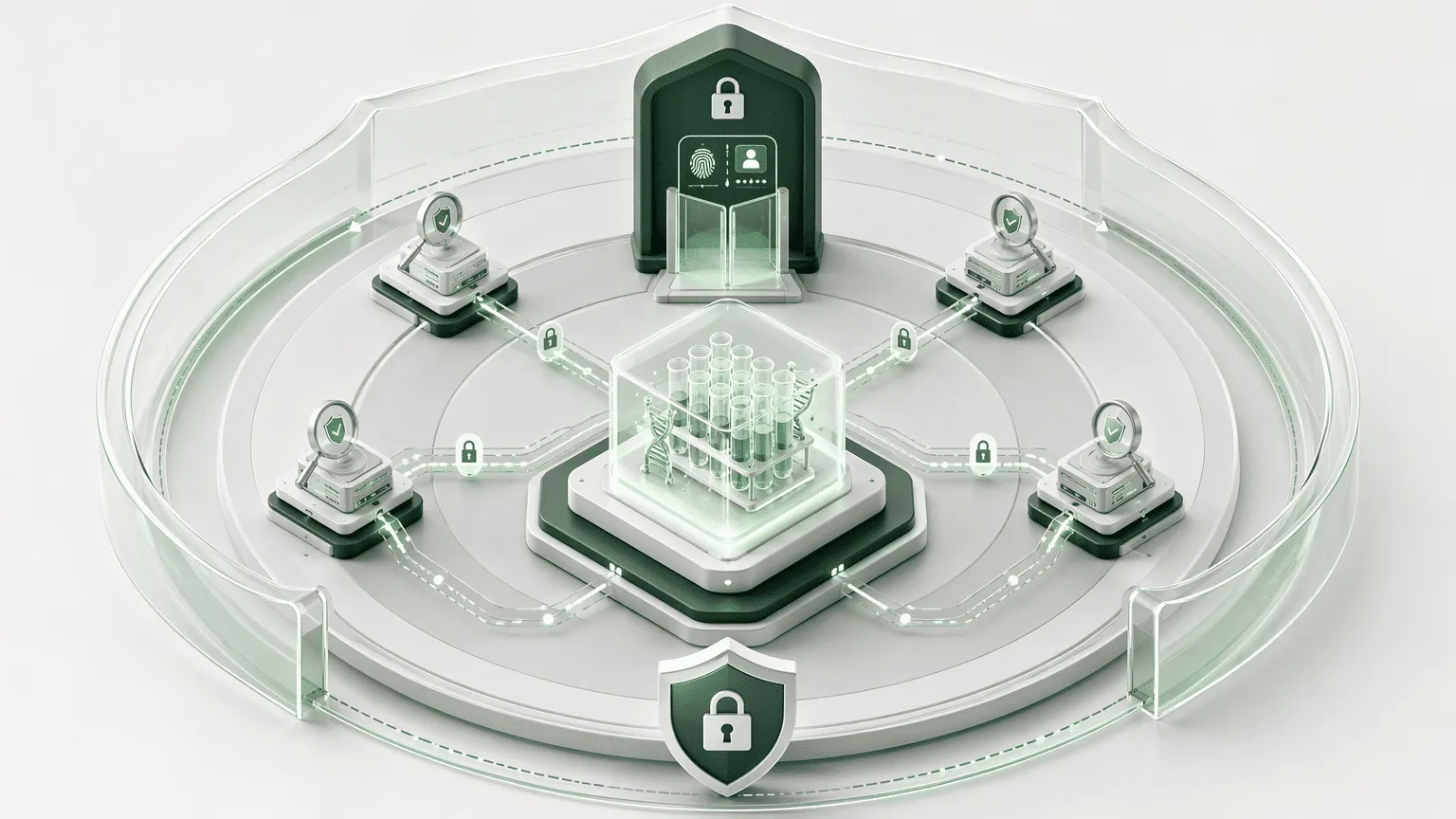
Clinads entered the market anticipating the 2024 proposed rule, so its architecture treats mandatory encryption, mandatory MFA, and continuous vulnerability auditing as the compliance floor. A single BAA covers the entire stack, which removes the multi-vendor coordination problem that plagues mixed-stack deployments.
MFA is enforced at the platform layer itself, satisfying the proposed rule’s narrow exception criteria rather than depending on a client’s EHR identity provider. ePHI is encrypted at rest and in transit throughout the delivery lifecycle. Many standalone messaging tools encrypt data in motion but leave stored messages exposed; Clinads closes that gap.
The platform runs vulnerability scans on a 6-month cycle and annual penetration testing, mapping to the proposed rule’s technical safeguard timeline. Lab results, follow-up scheduling, and patient communication all move through one integrated workflow, so the clinic is not stitching together separate vendors with separate BAAs.
2. Epic MyChart, Best Integrated EHR Patient Portal for Large Health Systems
For a health system already running Epic, MyChart is the path of least resistance. Lab results populate inside a patient's existing portal login, behind the same MFA gate that protects their full medical record. The compliance argument is straightforward: the Security Rule requires implementation of appropriate administrative, physical, and technical safeguards to ensure the confidentiality, integrity, and availability of electronic protected health information, and MyChart inherits Epic's enterprise security posture rather than asking you to stitch together a separate BAA for lab notifications.
The trade-off is cost and onboarding friction outside the Epic ecosystem. Integrated EHR patient portal features are typically bundled into the practice's monthly EHR subscription, running roughly $200 to $800 per month per provider. For a hospital system, that is absorbed overhead. For an independent lab sending results into a referring network, forcing every patient through an Epic account creation flow kills conversion.
MyChart is the default correct answer for an enterprise that already lives in Epic and wants lab results to appear alongside radiology reports and visit summaries. It is the wrong answer for any organization that needs to reach patients who have never logged into your portal and never will.
3. TigerConnect, Standalone Secure Messaging for High-Speed Lab Alerts
TigerConnect delivers lab result alerts as a push notification. The platform enforces MFA at the account level and runs under a required BAA, satisfying the core authentication and business associate requirements under the proposed 2024 Security Rule. For time-sensitive results like critical lab values, the speed gap between a TigerConnect alert and an EHR portal login is measured in minutes that matter clinically.
The pricing model is where speed meets budget reality. Standalone secure messaging platforms typically charge a per-message rate of $0.01 to $0.05 plus a base platform fee of $50 to $200 per month. A high-volume lab pushing thousands of result notifications monthly will see those per-message costs compound fast. When you factor in the separate BAA and the patient onboarding step that any standalone tool requires, TigerConnect makes sense for alert scenarios where portal latency is the bigger cost.
4. Paubox, Zero-Login Encrypted Email for Simple Lab Result Delivery
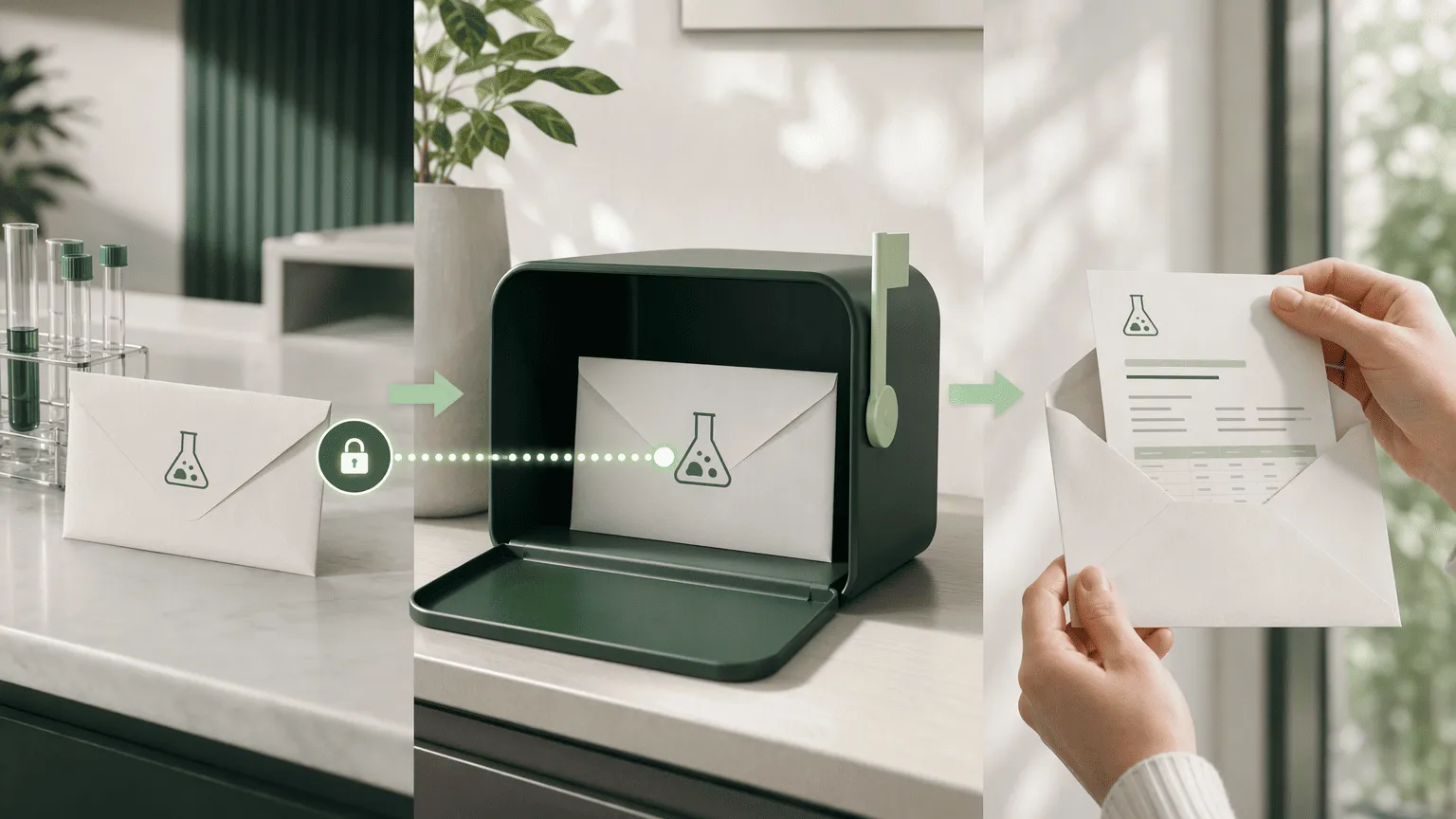
Paubox solves the patient adoption problem by eliminating the login entirely. Lab results arrive in the patient’s existing email inbox, encrypted in transit via enforced TLS, with no portal account, no app download, and no temporary PIN. That zero-step recipient experience maps directly to the patient demographic that will not create yet another healthcare login. Here is the deployment logic:
- Verify encryption compliance: Paubox enforces TLS encryption in transit and supports at-rest encryption, meeting the proposed rule’s mandate that ePHI that a regulated entity creates, receives, maintains, or transmits must be protected against reasonably anticipated threats, hazards, and impermissible uses and/or disclosures.
- Confirm BAA coverage: The platform operates under its own HITRUST-certified BAA, reducing the vendor BAA count you need to manage.
- Audit the recipient-side MFA gap: The proposed rule requires MFA with narrow exceptions. Paubox cannot control whether the recipient’s email provider enforces MFA, which creates a compliance exposure you must document.
- Model per-email cost at scale: Compare per-email economics against portal-bundled delivery when monthly notification volume is the primary cost driver.
5. MedAllies Direct Secure Messaging, Interoperable Delivery for Referral Networks
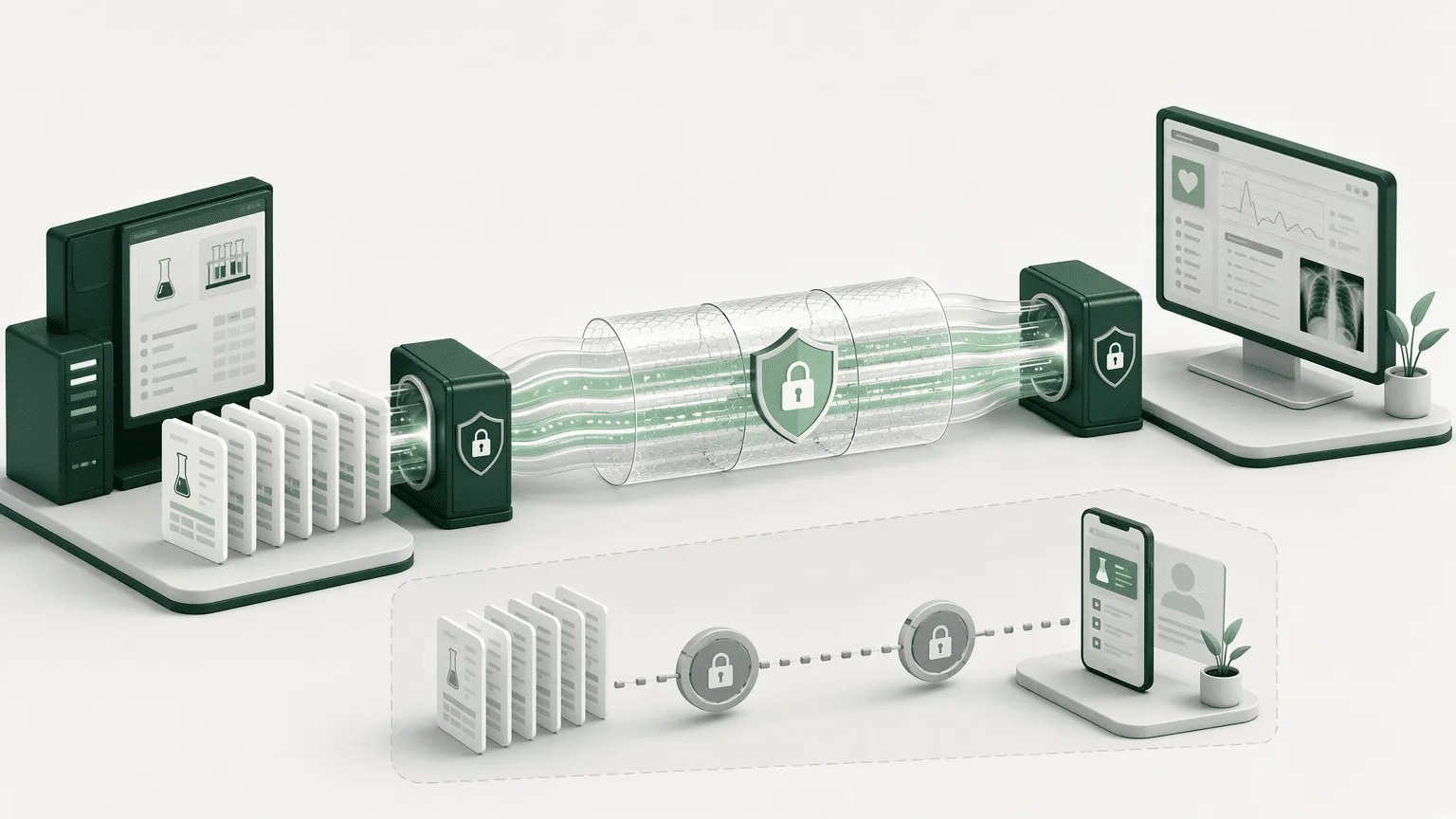
MedAllies operates in the Direct Secure Messaging layer, where lab result routing between organizations is the entire use case. It is the compliance-grade delivery rail that moves structured lab data from your LIS to a referring provider's EHR under DirectTrust encryption standards. The table below maps its fit against a patient-facing tool for the same high-volume lab result workflow:
| Dimension | MedAllies Direct Secure Messaging | Patient-Facing Portal (e.g., MyChart) |
|---|---|---|
| Primary recipient | Referring provider EHR | Patient |
| Encryption standard | DirectTrust mandatory TLS, signed | EHR-native encryption stack |
| MFA enforcement | Provider-side, per organizational policy | Patient-side, per portal configuration |
| Patient experience role | None (provider-to-provider only) | Full lab result access with context |
| Cost structure | Volume-based Direct message pricing | Bundled per-provider EHR subscription ($200, $800/mo) |
| BAA requirement | Covered by DirectTrust participant agreement | Covered by EHR vendor BAA |
6. Luma Health, Automated Patient Journeys with Lab Notification Intelligence
Luma Health treats a lab result notification as a trigger event, not a dead-end delivery. Where most tools on this list stop at “message sent,” Luma begins a rule-based journey that can escalate from text to phone to app notification and route the patient directly into a follow-up scheduling workflow. That automation layer turns a lab notification stack into a patient acquisition and retention engine.
The compliance map under the proposed 2024 rule is worth examining closely. Luma’s journey builder logs every escalation step and patient interaction, creating an audit trail that satisfies the logging and access-control requirements spelled out at 45 CFR Part 160 and Subparts A and C of Part 164.
MFA enforcement and multi-channel delivery create tension that the platform resolves by tying authentication to the patient’s verified contact method, though practices should confirm that the implementation satisfies the proposed rule’s narrow MFA exception criteria for patient-facing messaging.
Pricing follows a tiered subscription model based on patient volume. For a lab practice that currently sends raw result PDFs with no follow-up logic, the ROI argument is not about cost per message. It is about the revenue impact of converting a delivered lab result into a scheduled, kept appointment.
7. Updox, Unified Communication Dashboard for Mixed-Modality Lab Results
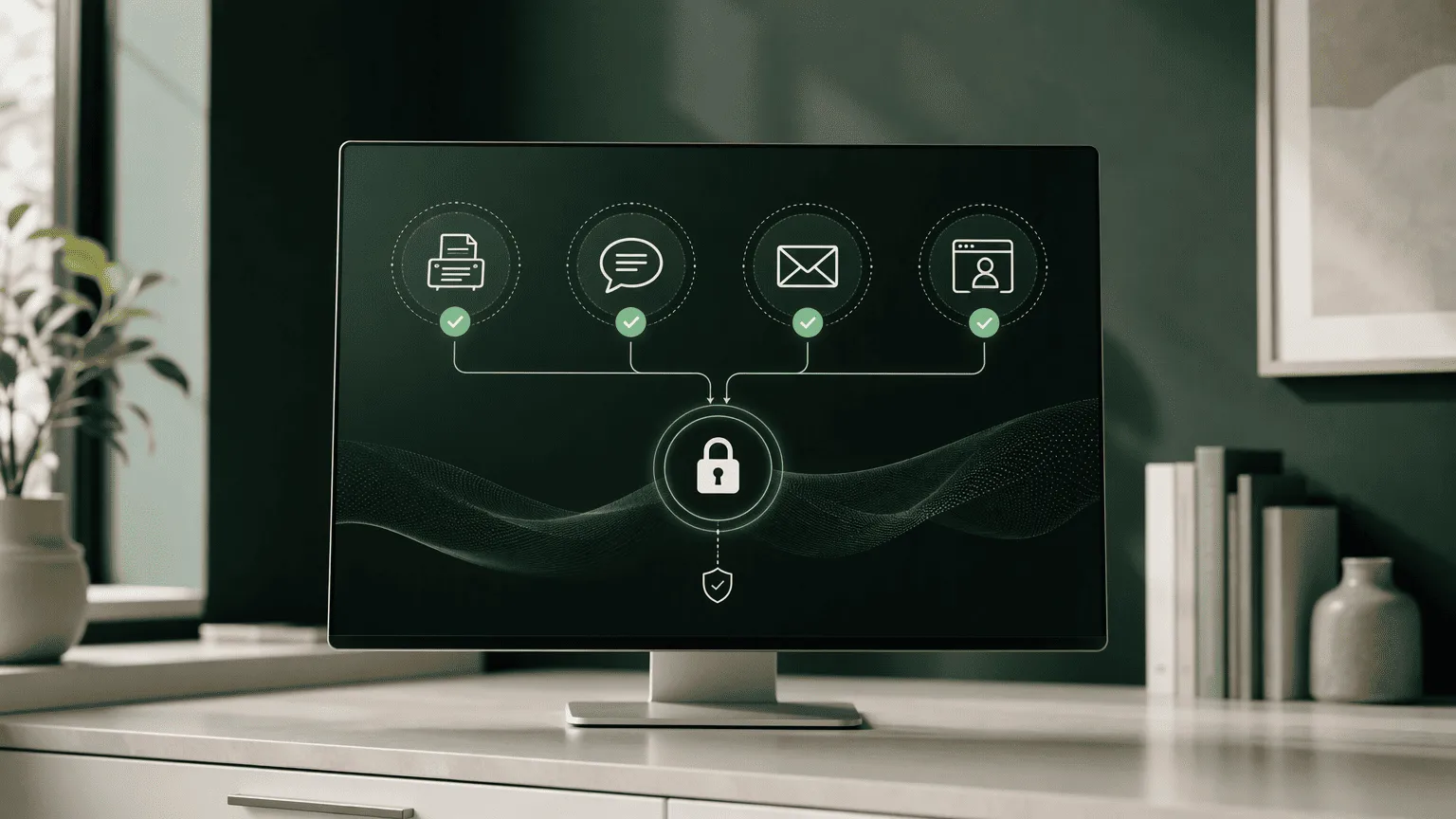
Most independent labs do not have a single notification channel. They have three: fax for the referring provider who refuses to change, text for the patient who asked for SMS, and email for everyone else. Updox solves the vendor-sprawl problem by aggregating those channels into one communication dashboard with uniform encryption and audit trails.
The platform applies the same security controls across fax, SMS, email, and portal delivery. When the proposed rule's mandatory safeguards require you to demonstrate consistent encryption and access controls across every modality, a unified dashboard collapses the compliance documentation burden into one view. That is the core value proposition.
Pricing impact is the variable you need to model. A unified dashboard eliminates per-vendor BAA management and multiple subscription fees, but the per-message cost structure can escalate for high-volume labs pushing thousands of fax-to-digital conversions monthly. Run the numbers against a single-modality tool like Paubox or OhMD before committing, especially if one channel accounts for the majority of your delivery volume.
How 2024's Proposed Security Rule Rewrites Lab Notification Tool Requirements
On December 27, 2024, HHS published a Notice of Proposed Rulemaking that erases the old "addressable" implementation specification from the HIPAA Security Rule. Encryption, multi-factor authentication, and scheduled security testing become mandatory. For anyone running a lab notification stack, the checklist is now a vendor filter.
The proposed rule requires encryption of ePHI at rest and in transit, full stop. A tool that encrypts messages in transit but leaves stored results or attachments unencrypted fails the requirement. Multi-factor authentication is required. Narrow exceptions exist, but the covered entity must document and justify them. The HIPAA Security Rule establishes national standards to protect individuals' electronic protected health information that is created, received, used, or maintained by a covered entity or its business associate, and those standards now carry mandatory implementation weight.
Vulnerability scanning every six months and penetration testing every 12 months become required administrative safeguards. A vendor that cannot produce a scan cadence on that schedule has disqualified itself.
The practical outcome: every tool on your shortlist needs a BAA, demonstrable at-rest and in-transit encryption, enforced MFA, and a documented vulnerability management program. If a vendor hesitates on any of those, you are accepting audit exposure.
Conclusion
The 2026 lab notification tool decision splits into two camps. If your practice runs inside an integrated EHR and your patients already live in your portal, Epic MyChart is the compliant default. A standalone platform like TigerConnect, OhMD, or Clinads closes the gap when you need speed, automation, or multi-channel reach across text, voice, and email.
The wrong move is letting the 2024 proposed rule arrive while your notification stack still treats encryption and MFA as optional bolt-ons. Pick a platform that treats the new rule as the compliance floor right now.
A compliant tool must meet the following requirements under the December 2024 proposed HIPAA Security Rule:
Frequently Asked Questions
How do integrated EHR patient portal notifications compare to standalone secure messaging apps for lab result delivery?
Integrated EHR portals bundle lab results with the full medical record behind one MFA gate at a provider cost of roughly $200 to $800 per month. Standalone messaging apps deliver faster push alerts but charge per-message fees of $0.01 to $0.05 and require a separate BAA plus patient onboarding.
What specific security features must a digital notification tool have to meet HIPAA requirements for lab results?
The tool must fulfill all of the following mandatory safeguards:
- Encryption at rest and in transit: protect ePHI throughout its lifecycle
- Multi-factor authentication: enforce MFA with documented exceptions
- BAA: a signed Business Associate Agreement
- Vulnerability scanning: every six months
- Penetration testing: every 12 months
- Audit logging: log all access to ePHI
- Administrative controls: limit ePHI access to authorized users with a need to know
Integrated EHR portals run $200 to $800 per provider per month bundled. Standalone messaging platforms charge a $50 to $200 monthly base plus $0.01 to $0.05 per message. OhMD uses seat-based pricing starting around $399 per month with no per-message fees. Paubox runs on per-email economics.
Sources
- The Security Rule | HHS.gov - hhs.gov
- SP 800-66 Rev. 2, Implementing the Health Insurance Portability and Accountability Act (HIPAA) Security Rule: A Cybersecurity Resource Guide | CSRC - csrc.nist.gov
- 10 Best Patient Engagement Software for Medical Practices (2026) - OhMD - www.ohmd.com
Want help executing this for your clinic?
Book a 30-minute call and we will map what a real ad engine would look like for your specific service mix.
Book a call