
6 Best Patient Communication Automation Tools for 2026
Summary: For 2026, the top patient communication automation tools include Clinads, Pabau, and Solutionreach, which excel in reducing no-show rates and improving patient engagement through AI-driven predictions, deep EHR integration, and condition-specific templates. These platforms help recover 5-15% of potential revenue lost to missed appointments, offering rapid deployment and personalized outreach to enhance access and efficiency in healthcare practices.
Introduction
Most practices lose 5 to 15% of potential revenue to missed appointments, lapsed patients, and follow-ups that never happen. That is not a trivial scheduling hiccup. It is a direct hit to your bottom line, month after month, that manual reminder calls and overwhelmed front-desk staff cannot fix alone.
A peer-reviewed study in a diverse primary care clinic confirmed that adding model-driven telephone outreach to standard automated reminders was associated with a significant reduction of in-person no show rates. The problem is not that your patients do not want to show up. The problem is that your current reminders are too passive, too generic, or too late to change behavior.
The shift from manual workflows to automated pre-visit and post-visit sequences is not about replacing your staff. It is about reclaiming their time for the patient interactions that actually require a human. Automated appointment confirmations, intake form prompts, post-care instructions, and review requests can fire off without anyone clicking 'send.' But the landscape is crowded with platforms that promise automation and deliver a mess of disjointed features that create reconciliation work for your team.
This list breaks down seven tools that actually deliver on automated pre-visit and post-visit communication, ranked by a brutally practical standard: how effectively they close the communication gaps that cost you revenue.
Key Takeaways
The automation tools that earn their keep share a hard set of core capabilities. Here are the non-negotiables and the performance benchmarks that define the top tier in 2026:
- Quantifiable revenue impact: Effective platforms can help recover the 5 to 15% of potential revenue lost to no-shows, with a peer-reviewed study confirming a measurable drop when automated reminders are supplemented with live outreach for at-risk patients.
- Disparity reduction as a feature: The most sophisticated platforms do not just cut no-shows in aggregate. The initiative reduced no show disparities by predominantly improving access for Black patients, proving that well-designed automation can close care gaps instead of widening them.
- Any vendor you consider must supply a signed BAA as a starting condition.
- EHR integration depth is the real decision point: A tool that handles appointment reminders but can't connect to your electronic health record (EHR) system creates reconciliation work. The technical integration depth determines whether the platform eliminates manual data entry or merely shifts it to another screen.
- Simplicity has a measurable ROI for independent practices: Tools with a fast go-live timeline, like OhMD's approximately 3 weeks including EHR integration and staff training, deliver labor savings faster than bloated enterprise suites, with practices reporting 65% cost savings on patient communication.
- The over-automation trap is real: Automated messaging that feels generic erodes trust. The evidence points to a hybrid model: automate the routine, but reserve live follow-ups for high-risk patients identified by predictive models. Human oversight for clinical decisions is not optional.
1. Clinads: The All-in-One Platform With Pre-Built, Condition-Specific Post-Visit Templates
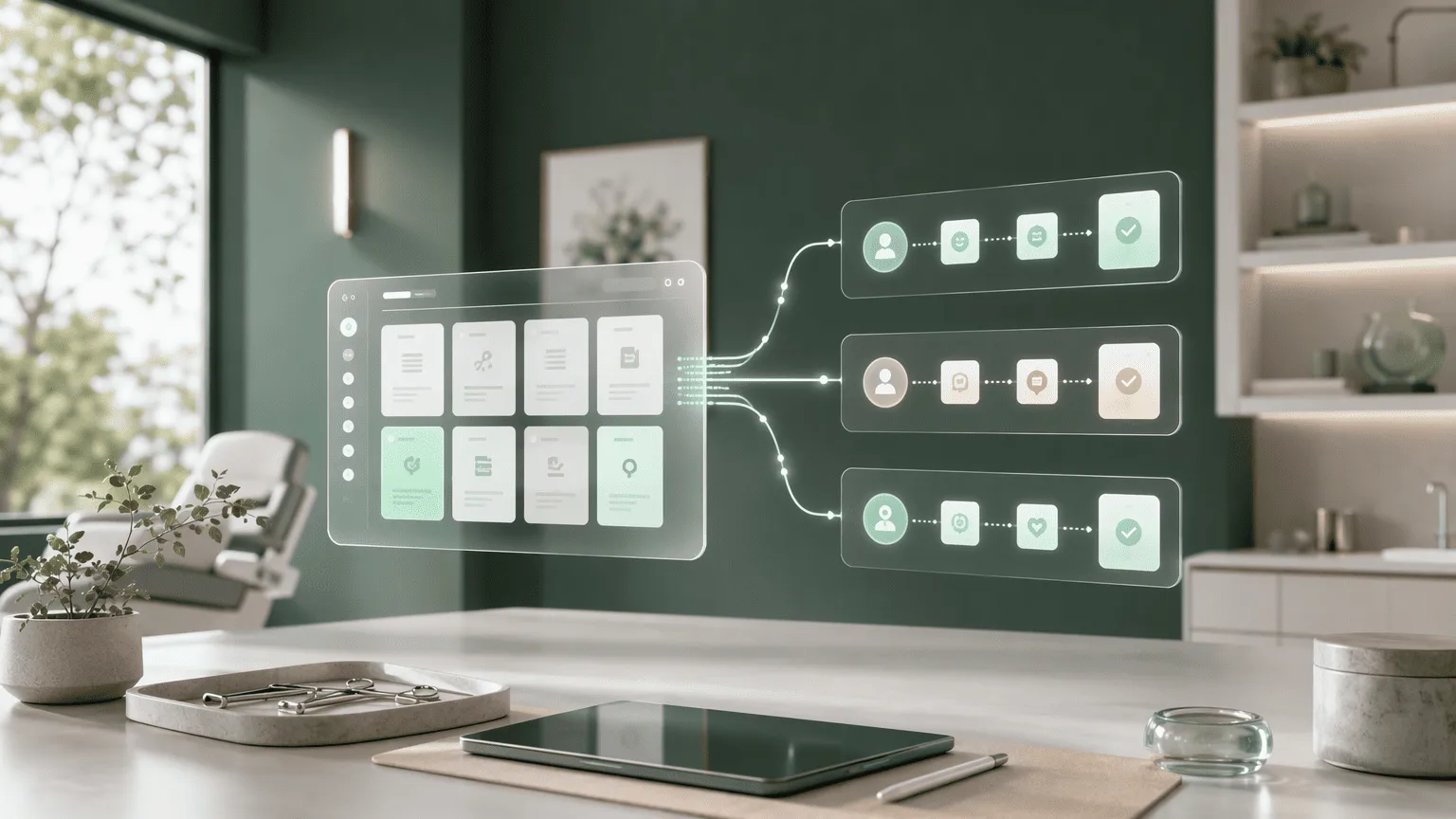
The fastest way to kill a patient communication rollout is to hand a busy practice manager a blank template editor and say 'build your follow-up sequences.' Clinads eliminates that bottleneck with pre-built, condition-specific post-visit content libraries. Your practice can deploy automated follow-up sequences for specific treatments and recovery protocols the same day you sign up. Automated review requests and post-care instructions go live without your clinical staff building a single template from scratch.
This directly attacks the compliance-and-satisfaction gap that opens the moment a patient walks out your door and forgets half of what you told them.
The trade-off: Clinads is purpose-built for practices that want to launch condition-specific follow-up without a content creation project. It prioritizes rapid deployment over functioning as a deeply integrated API hub for custom enterprise scheduling logic. For the independent practice or small group, setup speed is what matters. You go live with clinically relevant communication in days, not quarters.
2. Pabau: AI-Driven No-Show Prediction Targeting At-Risk Patients
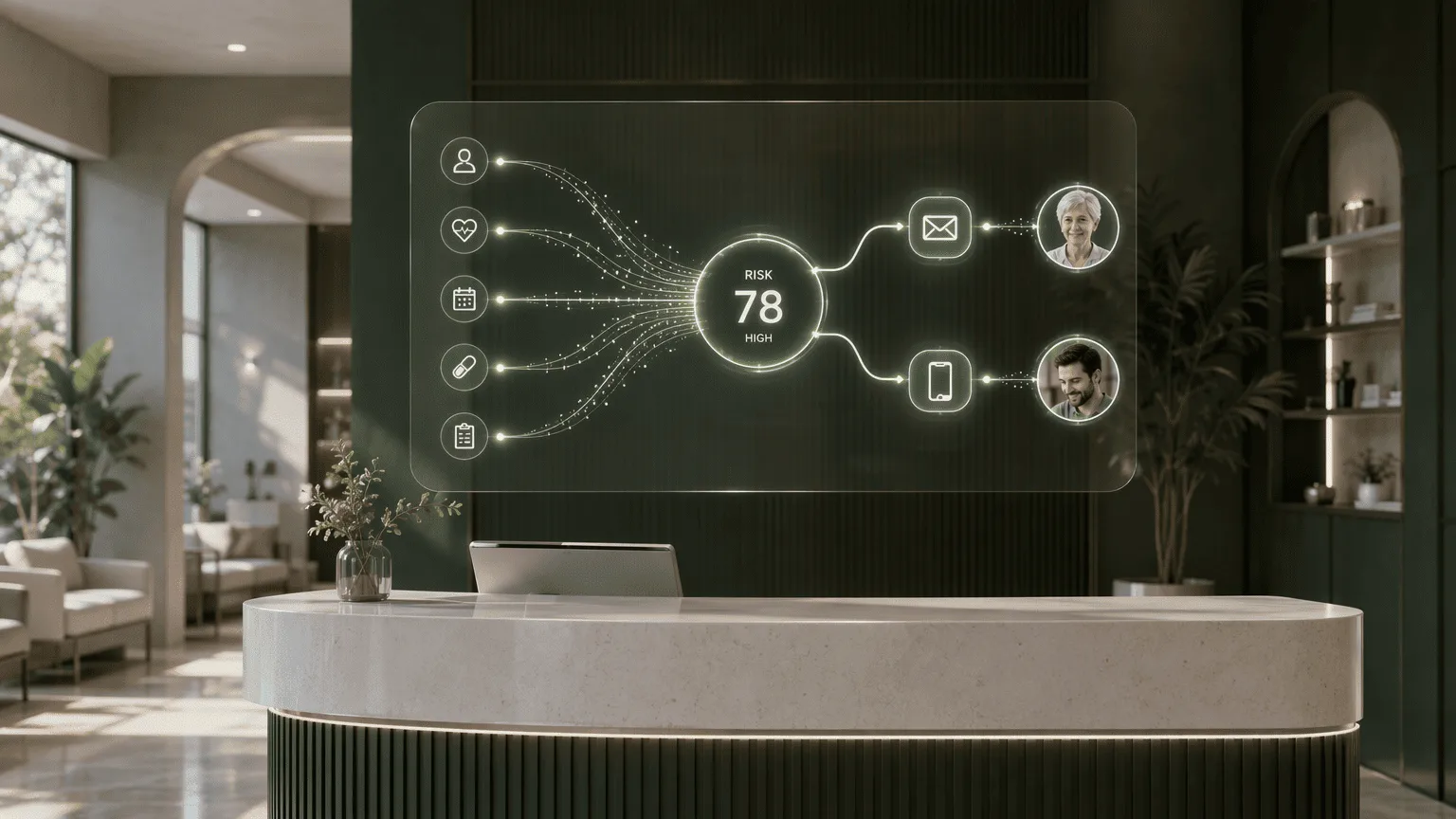
Most automated reminder systems blast the same message to every patient on the schedule. Pabau takes a fundamentally different approach. Its AI-driven analytics engine identifies high-risk no-show patients before they miss an appointment, triggering personalized SMS and email reminders that target the specific barriers keeping those individuals from showing up.
AI patient engagement uses machine learning, natural language processing (NLP), and predictive analytics to automate, personalize, and time patient interactions across the care journey. This is not a scheduler. It is a predictive intervention layer that lets your staff intervene where it actually counts.
A peer-reviewed quality improvement trial demonstrated that this kind of targeted outreach works: the approach produced a measurable improvement in access, with the initiative reducing no show disparities by predominantly improving access for Black patients. The mechanism is not complicated. Predictive models flag the appointments most likely to fail; live follow-ups, automated escalation paths, and personalized messaging then close the gap before the time slot is lost. Pabau packages this enterprise-grade capability in a form factor that does not require a data science team, making it accessible to independent practices that would otherwise be priced out of predictive analytics. The result is a direct attack on a revenue leak that most clinics write off as a cost of doing business.
3. Solutionreach: Deep EHR Integration and Multi-Channel Recall Campaigns
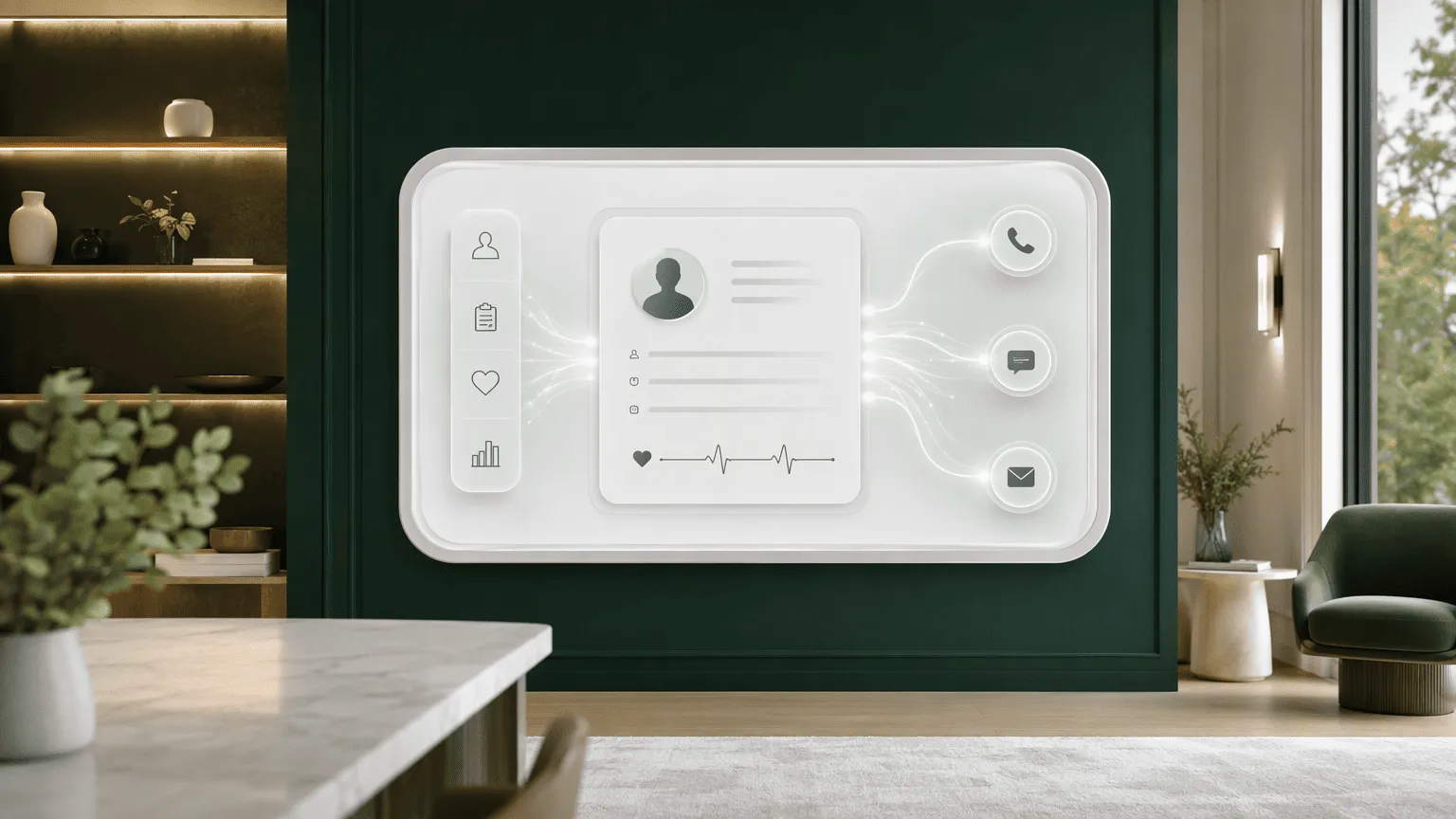
EHR integration depth determines whether a platform can take action in clinical systems or merely surface information for staff. Solutionreach syncs patient records bidirectionally with major EHR systems, which turns the communication platform into an extension of the clinical workflow rather than a disconnected layer stacked on top of it.
This matters most for recall campaigns. When Solutionreach pulls appointment history, diagnosis codes, and provider data directly from the clinical record, it triggers automated, multi-channel campaigns targeting patients overdue for preventive screenings, annual visits, or follow-up lab work. A patient who has not had an A1C check in nine months receives an SMS with a booking link because the system read the record and acted. The multi-channel logic sends the right nudge through the right channel: a text message that gets a 90-second response, an email for non-urgent reminders, and a phone call for high-risk gaps.
The impact on front-desk efficiency is immediate. Staff stop running manual recall reports and spend more time on patients who are physically in the building.
4. Weave: Unified Phone, Text, and Payment System for Appointment-Driven Practices
Some practices live on the phone. Weave accepts that reality and builds the automation layer directly into a VoIP phone system, rather than trying to route every interaction into a portal. The platform unifies calls, automated text reminders, and payment processing into a single ecosystem that covers the full appointment lifecycle.
A front-desk team answers a call, books an appointment, and without an extra click triggers a confirmation sequence, a payment link, and a post-visit follow-up. The phone system is the communication tool, so nothing slips through a disconnected app. Weave pricing starts around $399/month for core features, which positions it as a mid-market play for appointment-driven clinics that want to consolidate their tech stack. The text-to-pay functionality pulls revenue forward by collecting balances before patients walk in, and the automated payment reminders handle the awkward collections conversations that front-desk staff dread. For a practice where the phone still handles 70% of patient contact, Weave modernizes the operation without demanding the team abandon their core communication habit.
5. Luma Health: Enterprise-Grade Automated Workflows and Equitable Access Design
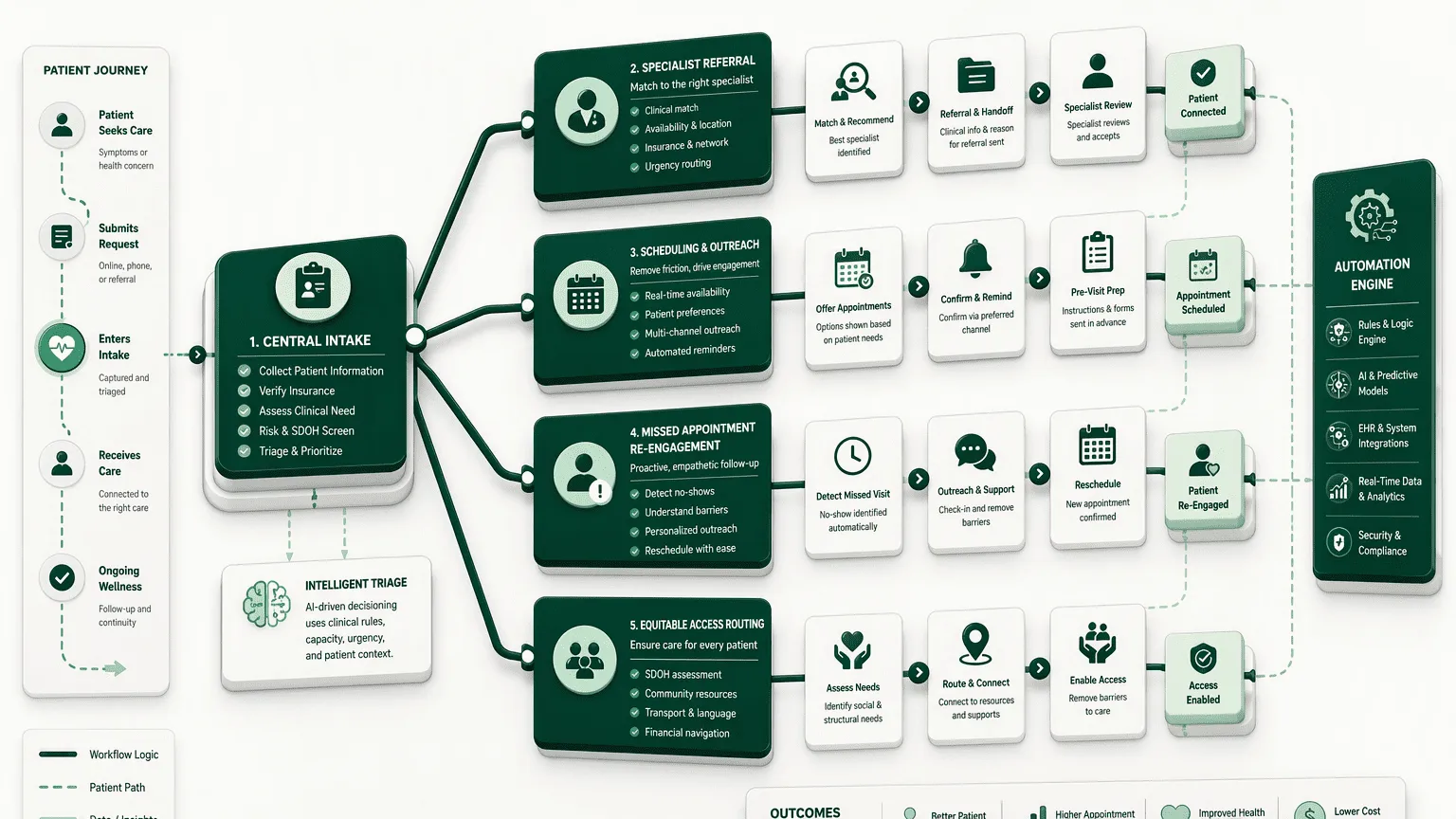
Large health systems wrestle with a problem that simple reminder platforms cannot solve: complex referral loops, multi-department scheduling, and persistent no-show disparities across different patient populations. Luma Health is built to handle the complexity while deliberately closing the access gap for underserved groups. Its workflow builder handles the logic-heavy scenarios: a specialist referral triggers a scheduling outreach, a missed appointment fires a re-engagement campaign, and a long waitlist appointment pushes a 'do you still need this slot' confirmation.
The equitable access design is what earns Luma Health a distinct category. The evidence that this kind of approach works includes the finding that adding model-driven telephone outreach to standard automated reminders was associated with a significant reduction of in-person no show rates in a diverse primary care clinic, with the initiative reducing no show disparities by predominantly improving access for Black patients. Luma Health encodes this principle directly into its platform: communication logic that adjusts based on patient need indicators rather than treating every demographic the same.
| Capability | Luma Health | Generic Reminder Platforms |
|---|---|---|
| Workflow complexity | Multi-step referral and recall logic engines | Simple appointment-to-reminder triggers |
| Disparity reduction | Deliberate design to close access gaps for underserved populations | Uniform messaging that ignores demographic access barriers |
| Scheduling scope | Enterprise multi-department coordination | Single-practice appointment confirmation |
| Core use case | Health systems with equity mandates and complex scheduling | Independent practices needing basic no-show reduction |
6. OhMD: Simple, Fast-Go-Live Texting Platform for Independent Practices
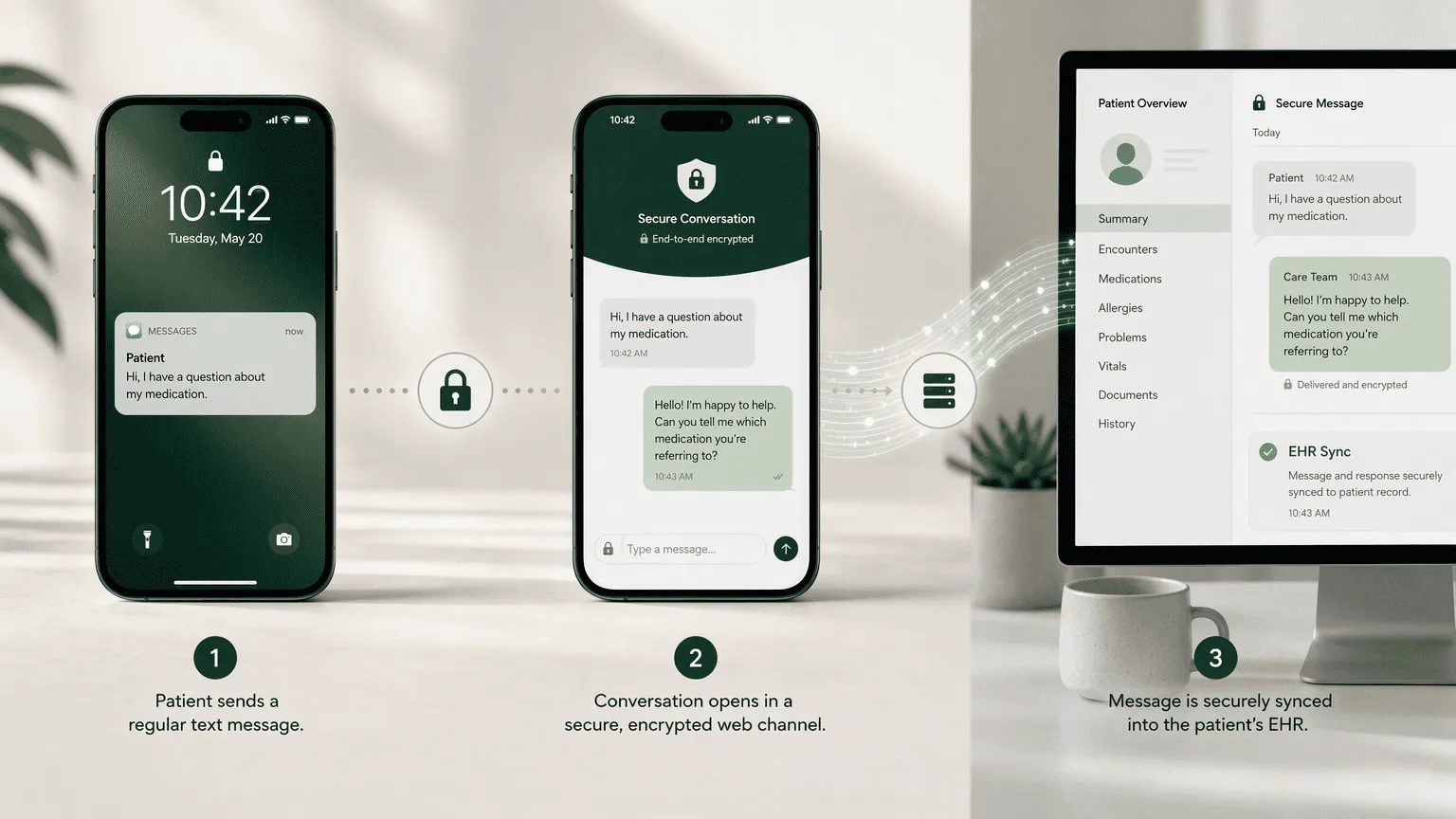
- Zero portal dependence: Patients receive an ordinary text; tapping it opens a secure web conversation. No app, no login, no 'reset your portal password' friction. Adoption is near-universal because the patient does nothing different.
- Rapid operational impact: Practices using OhMD report 65% cost savings on patient communication, and the platform's EHR integration with 85+ systems means conversations sync back to the patient chart without manual entry.
- AI agent augmentation without complexity sprawl: OhMD's AI voice and text agent, named Nia, handles routine calls and messages without pushing the platform into the heavy enterprise workflow territory that small practices neither want nor need.
- Predictable pricing with full HIPAA coverage: Transparency in costs and a signed BAA come standard, avoiding the per-message fee traps that inflate bills for high-volume practices.
Conclusion
Match the platform to the specific problem your practice actually has. A solo dermatology office with a blank follow-up protocol needs Clinads, which arrives with ready-to-use templates. A multi-location group losing 22% of certain appointment types to no-shows needs Pabau's predictive scheduling engine, which flags at-risk slots and auto-adjusts reminder cadences. A practice where the front desk spends three hours a day on manual callbacks needs Weave to fold texts, calls, and faxes into a single inbox.
Evaluate every candidate against three hard criteria:
- Demand a signed HIPAA business associate agreement before you import a single patient record.
- Check whether the integration writes back to your EHR chart or merely reads appointment data and fires messages. Read-only syncs create a second source of truth the staff has to reconcile by hand.
- Pin down a go-live timeline the team can absorb without dropping current patient volume.
The one choice that fails is a platform that schedules the reminder but strips the clinical reason for the visit. A dermatology recall that says "You're due for a checkup" without noting the prior lesion diagnosis loses the patient's urgency. Automation minus context produces faster empty slots, not fuller chairs.
Frequently Asked Questions
What are the most effective software tools for automating patient communication before and after medical appointments in 2026?
The most effective tools in 2026 are those that go beyond simple reminders:
- Pabau uses predictive analytics to target high-risk no-show patients.
- Luma Health builds equity-focused enterprise workflows for large systems.
- Clinads differentiates by providing pre-built, condition-specific post-visit templates so small practices can launch follow-up without any manual template design.
How does automating pre-visit and post-visit communication improve patient outcomes and reduce administrative burden?
Automated reminders and follow-ups ensure patients complete intake forms, remember appointments, and follow post-care instructions without staff intervention. A peer-reviewed study found supplementing automated reminders with targeted outreach significantly reduces no-show rates. This allows staff to focus on in-person patient care instead of manual recall calls.
What specific features should a practice look for in patient communication automation software?
Prioritize these platform features:
- AI capabilities for handling routine messages.
- Absence of a required patient app.
- Fast go-live timeline measured in weeks.
- Transparent pricing without hidden per-message fees, especially for independent practices.
Pricing varies widely across platforms:
- Weave starts around $399/month for core features.
- OhMD integrates with 85+ EHR systems for chart-synced communication.
- Solutionreach offers bidirectional record sync for recall campaigns.
What are the measurable ROI or efficiency gains reported by practices using these automation tools?
Most practices lose 5 to 15% of revenue to missed appointments. OhMD users report 65% cost savings on communication. A clinical initiative using targeted reminders reduced no-show disparities by 6 percentage points for Black patients specifically, demonstrating that well-designed automation provides both financial and equitable access returns.
What are the common pitfalls or limitations of automated patient messaging, and how can clinics avoid them while maintaining a personal touch?
Over-automation makes communication feel generic and erodes patient trust. The solution is a hybrid model: automate routine confirmations and instructions, but use predictive analytics to flag high-risk patients for personalized, live follow-up.
Sources
- Reducing Disparities in No Show Rates Using Predictive Model-Driven Live Appointment Reminders for At-Risk Patients: a Randomized Controlled Quality Improvement Initiative - PMC - pmc.ncbi.nlm.nih.gov
- 10 Best Patient Engagement Software for Medical Practices (2026) - www.ohmd.com
- Patient Engagement Software Platforms Compared (2026) - www.ringcentral.com
- 10 Best Patient Engagement Software for Medical Practices (2026) - ohmd.com
- AI patient engagement: How private practices automate and retain | Pabau - pabau.com
Want help executing this for your clinic?
Book a 30-minute call and we will map what a real ad engine would look like for your specific service mix.
Book a call