
7 Healthcare Marketing Software Platforms With the Tightest
Summary: In 2026, healthcare marketing software platforms with the tightest integration between booking and local search are crucial for clinics aiming to convert high-intent patients quickly. Platforms like Clinads, NexHealth, and PatientPop offer deep API syncs, branded booking experiences, and reputation-driven integrations that enhance local SEO visibility and reduce patient acquisition costs by ensuring seamless scheduling directly from Google Business Profiles.
Introduction
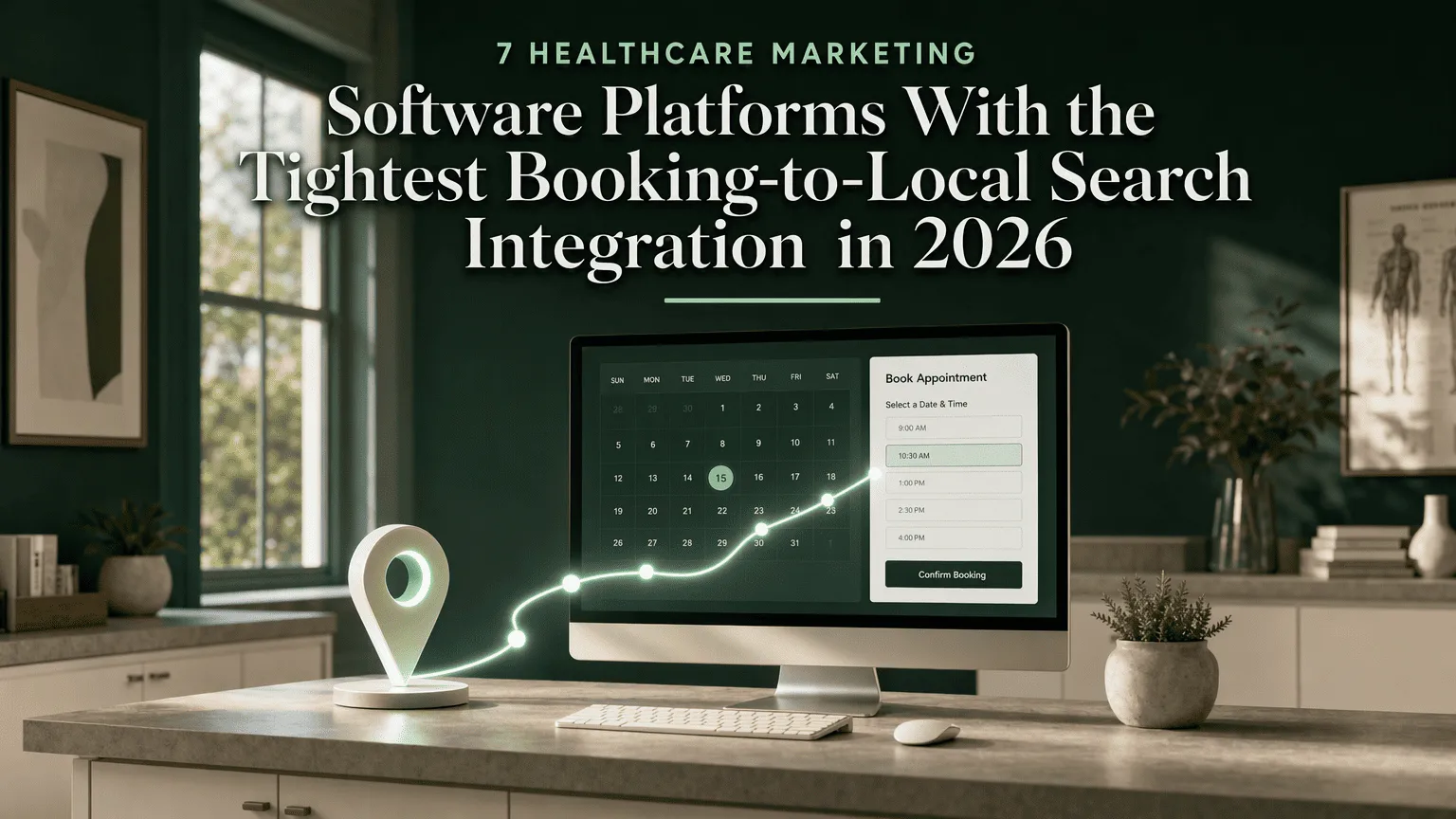
A prospective patient finds your clinic on Google Maps, clicks for an appointment, and hits a dead end: a 'call now' button, a broken booking link, or a form that asks for the same information your front desk will request again tomorrow. That friction costs you the booking. Your local search presence and your scheduling software are running on separate tracks, and every second of lag between discovery and confirmation leaks acquisition dollars.
In 2026, a Google Business Profile without a live, integrated booking path is functionally invisible to a growing segment of high-intent patients. The expectation for instant conversion has solidified into a ranking signal. You can audit this yourself: search a core procedure term in your market and count how many of the top 3 map pack results display a working 'Book' button. Those practices are receiving algorithmic preference for reducing the patient's time-to-appointment.
This article dissects seven platforms that close that gap, ranked by the depth of their native connection between booking and local search. We will examine what real-time sync actually demands under the hood, why a reputation feedback loop changes the economics of patient acquisition, and where the trade-off sits between owning your booking data and renting marketplace visibility.
Key Takeaways
The booking-to-Google connection has matured beyond a simple calendar link. It is now a composite signal that influences local pack ranking, patient acquisition cost, and no-show rates simultaneously. A fragmented integration suppresses your map pack position against competitors whose booking engines talk directly to Google's servers.
- Deep API sync is the technical moat: A two-way, real-time API connection that updates available slots directly on your Google Business Profile is the core differentiator. Widgets that open a separate booking page are table stakes.
- Reputation is a ranking multiplier for your booking button: Platforms that automate review solicitation and tie positive reviews directly to local SEO visibility amplify the exposure of the integrated booking link.
- PatientPop owns the branded experience for solo practitioners: It keeps the booking interface on your website and Google Maps tightly design-controlled, which builds practice brand equity even when the patient originates from Google.
- The 'Book' button is a ranking signal, not just a feature: Google's Reserve with Google program turns smooth scheduling into a relevance indicator, making booking integration an off-page SEO investment with measurable conversion returns.
1. Clinads: Unified Patient Booking Intelligence & Local SEO Command Center
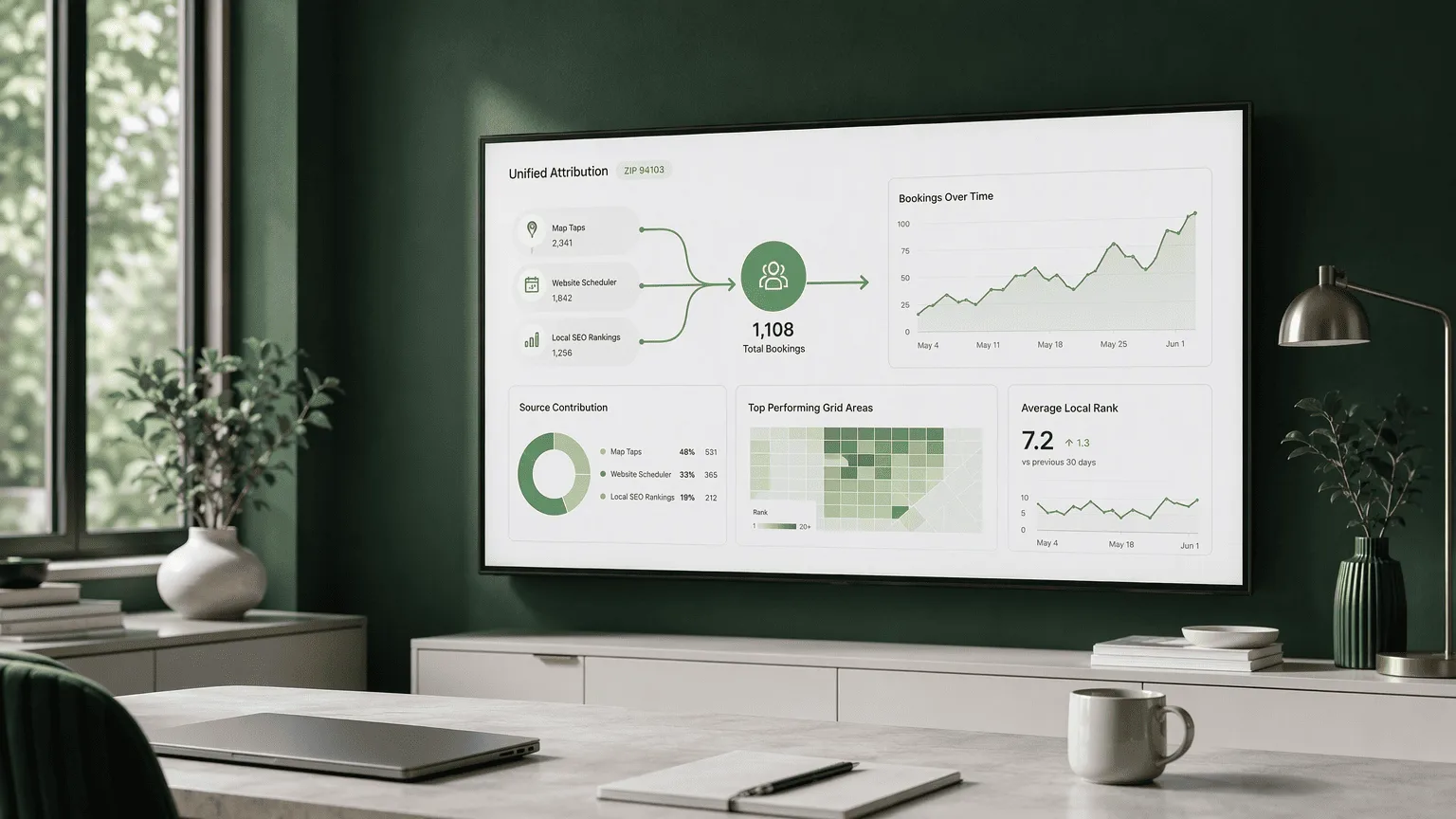
Most platforms keep booking data and local SEO analytics in separate modules. Clinads merges them into a single attribution dashboard, showing you exactly how many booked patients came from a Google Maps tap versus your website's embedded scheduler. You stop guessing whether your local SEO investment is generating appointments or just vanity map impressions.
It layers booking conversion intelligence on top of grid-level map rank tracking. For a specific procedure search in a specific ZIP code, you see your position and the appointment volume that position produces. A practice manager justifying marketing spend to an owner can hand over a P&L line item instead of a hunch.
The combined view turns your local presence into a revenue engine. An upward trend in map-pack rankings that brings zero booked appointments is a signal to audit your listing (wrong phone numbers, broken Reserve with Google integration). A competitor's drop that corresponds with a patient-volume uplift on your side validates budget allocation instantly.
Implementation touches every Google Business Profile field: categories, attributes, Q&A, and the appointment-link setup that feeds the booking data back into the Clinads dashboard. The platform covers multi-location healthcare practices (dental, optometry, medical spas) and delivers location-level reporting instead of blended regional averages.
For operations teams managing 10-plus locations, the dashboard flags underperforming profiles before they drag down the group average. The result is consistent map visibility that keeps every clinic bookable, not a silent gap that invites forgetfulness.
2. NexHealth: The Deep API Standard for Real-Time Google Availability
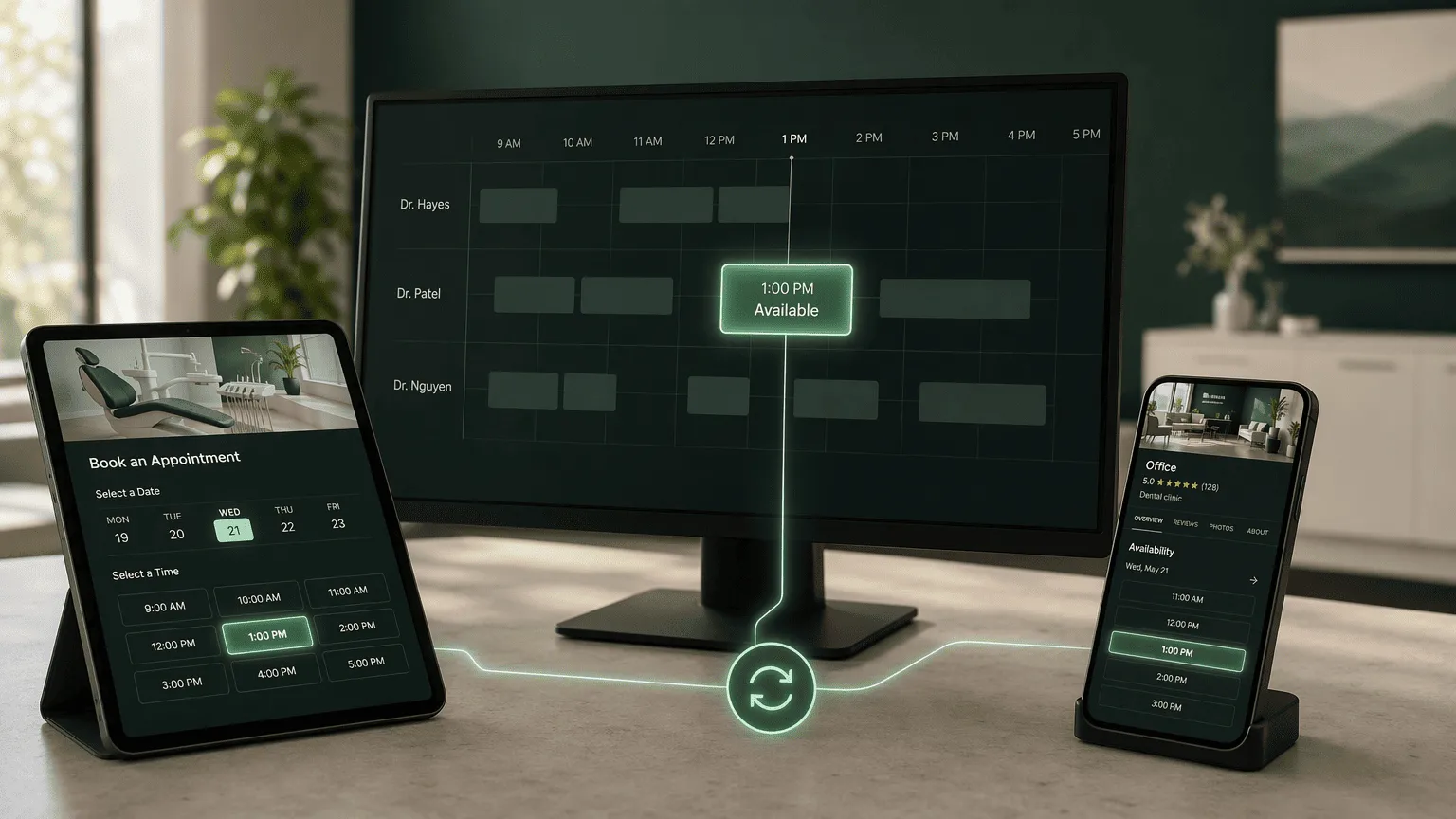
NexHealth solves a specific architectural problem that cripples most booking integrations: latency. When a slot is claimed on any channel, your front desk, your website, a competitor's portal, NexHealth pushes that change to your Google Business Profile availability in real time. This replaces the standard batch sync that runs every few hours and leaves your calendar exposed between cycles. For a multi-location DSO running high patient volume, that gap creates double-bookings that erode patient trust and waste chair time.
The engineering underneath matters. The patient information flowing from Google's booking interface into your practice management system is protected under the same compliance framework as your EHR. What you are buying is a clinical data pipeline that happens to solve scheduling.
The measurable outcome is fewer no-shows. When a patient books through a Google-integrated NexHealth slot, automated confirmations and reminders fire at the moment of booking, while intent is strongest. The window between booking and appointment fills with text and email reminders that keep the visit front of mind.
The trade-off: this depth of integration requires a technical implementation cycle heavier than plug-and-play widget solutions. NexHealth is the right pick when the cost of a single double-booking or a single patient lost to booking friction outweighs the upfront onboarding investment. For high-volume, multi-location groups, that math works decisively in NexHealth's favor.
3. PatientPop: The All-in-One Practice Growth Platform with Branded Booking
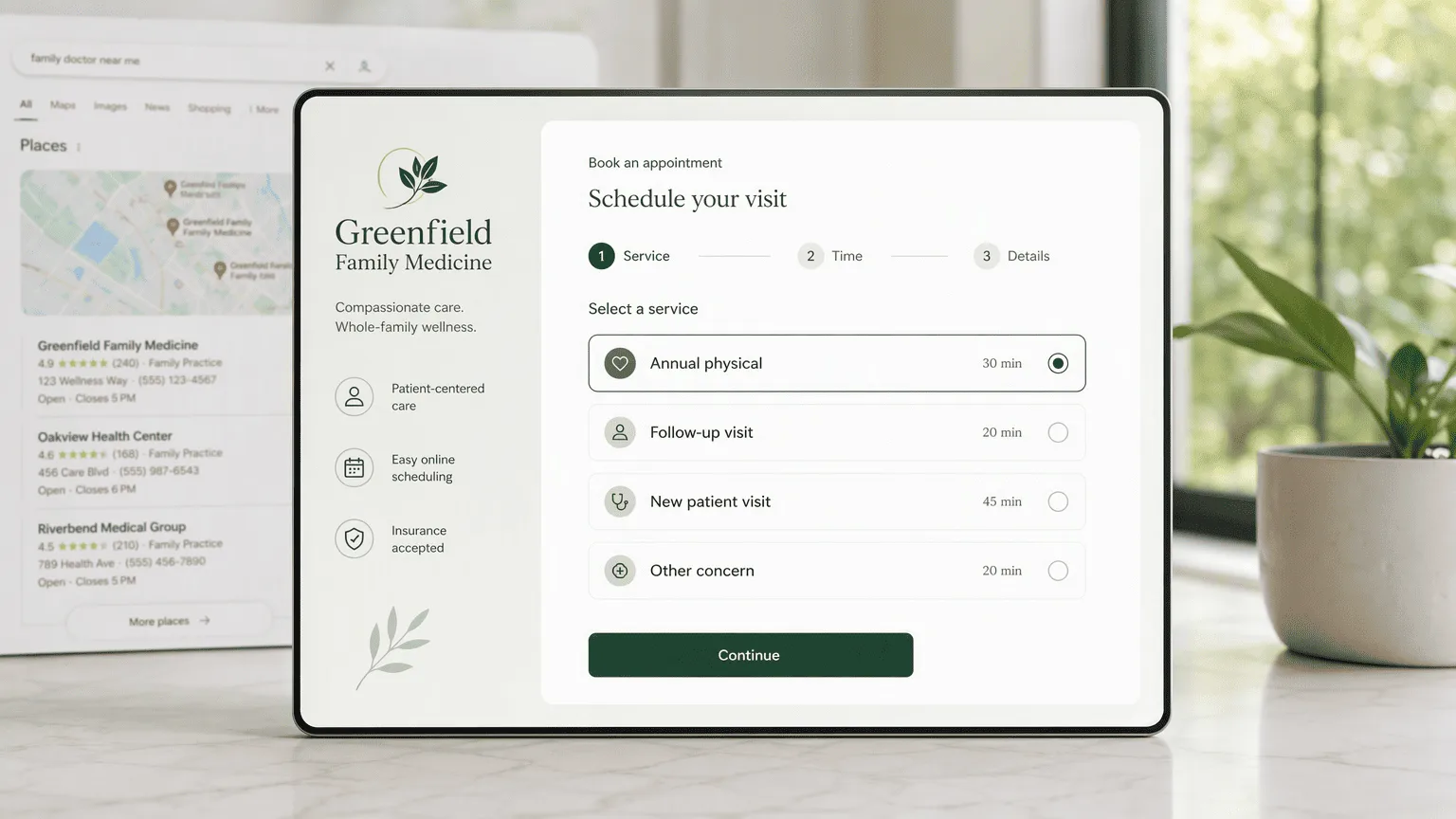
PatientPop takes a fundamentally different approach to the booking-to-local-search problem. NexHealth bets on backend plumbing; PatientPop bets on the front-end patient experience.
The booking interface that lives on your Google Business Profile looks and feels like your practice. Your logo, your colors, your clinical brand. When someone searches for a provider, finds you in the map pack, and clicks to book, they stay inside an experience you control.
This brand control extends from the Google-integrated widget to your practice website, which PatientPop builds and hosts with local SEO architecture embedded from the first line of code. For a solo practitioner who does not want to manage separate vendors for website, SEO, and scheduling, this bundling reduces operational complexity. The downside: you are buying a platform ecosystem.
You accept less API depth in exchange for design cohesion and vendor consolidation. The business case sharpens when you consider patient lifetime value.
When a new patient discovers you on Google Maps and books through a branded, practice-specific interface, their first impression of your clinical brand forms at the moment of booking. For fee-for-service practices in competitive aesthetics, dentistry, or ophthalmology markets, that brand impression matters in dollars.
4. Birdeye: Reputation-Driven Booking Integration and Review Loops
Birdeye connects booking and local search through a reputation flywheel that no other platform here replicates. Its automated review engine prompts patients for feedback after an appointment. Those reviews accumulate and lift the local SEO authority of your Google Business Profile. The integrated 'Book' button then climbs higher in local search results. The booking tool and the reputation tool are two sides of the same ranking asset.
Healthcare-specific compliance is built into the loop: Birdeye provides a signed BAA and encrypts the data pipeline so automated review requests never expose protected health information. The platform integrates natively with major EHR systems like Epic, Athenahealth, and eClinicalWorks. The review trigger fires from a completed appointment status rather than a manual list upload, which avoids the compliance risk that comes with handling patient lists by hand.
For a high-volume clinic, the practical result is straightforward. Every booked, kept, and satisfactorily completed appointment becomes a potential review that feeds back into the Google profile's visibility. A competitor with stronger clinical outcomes but a thinner reputation engine will watch its booking link sink beneath yours over time because your review volume signals greater relevance to Google's local algorithm.
5. Weave: Unified Communications Hub with Payments and Scheduling Sync
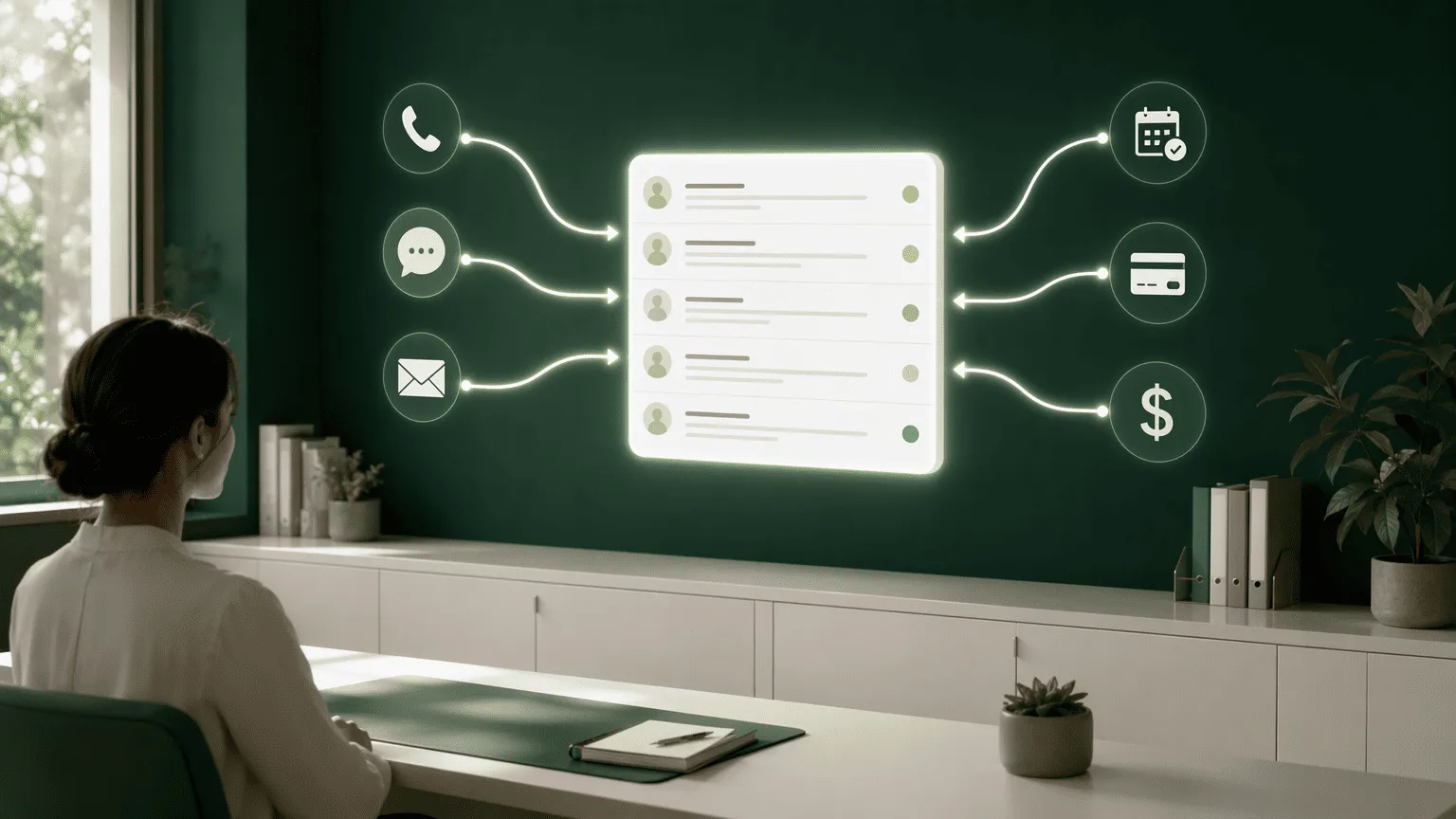
Weave positions booking sync as one function inside a broader front-office communication platform. For a practice manager trying to reduce the number of software vendors touching the patient experience, that breadth is what makes the case.
- Unified inbox for communications: Phone, text, and email converge in one interface; patient messages that originate from a Google booking, a missed call, or a website form all land in the same unified inbox and retain full conversation history.
- Integrated payments: A patient can book, receive confirmation, and submit payment information inside the same workflow, improving up-front collections rates and reducing front-desk administrative time.
- Full-stack scheduling sync: The scheduling engine syncs across the entire communication stack; a booking made through the Google-integrated slot immediately blocks the calendar, and the same system can trigger automated review requests via Weave's reputation tool after the visit.
6. Zocdoc: The Third-Party Marketplace vs. Direct Local Search Strategy
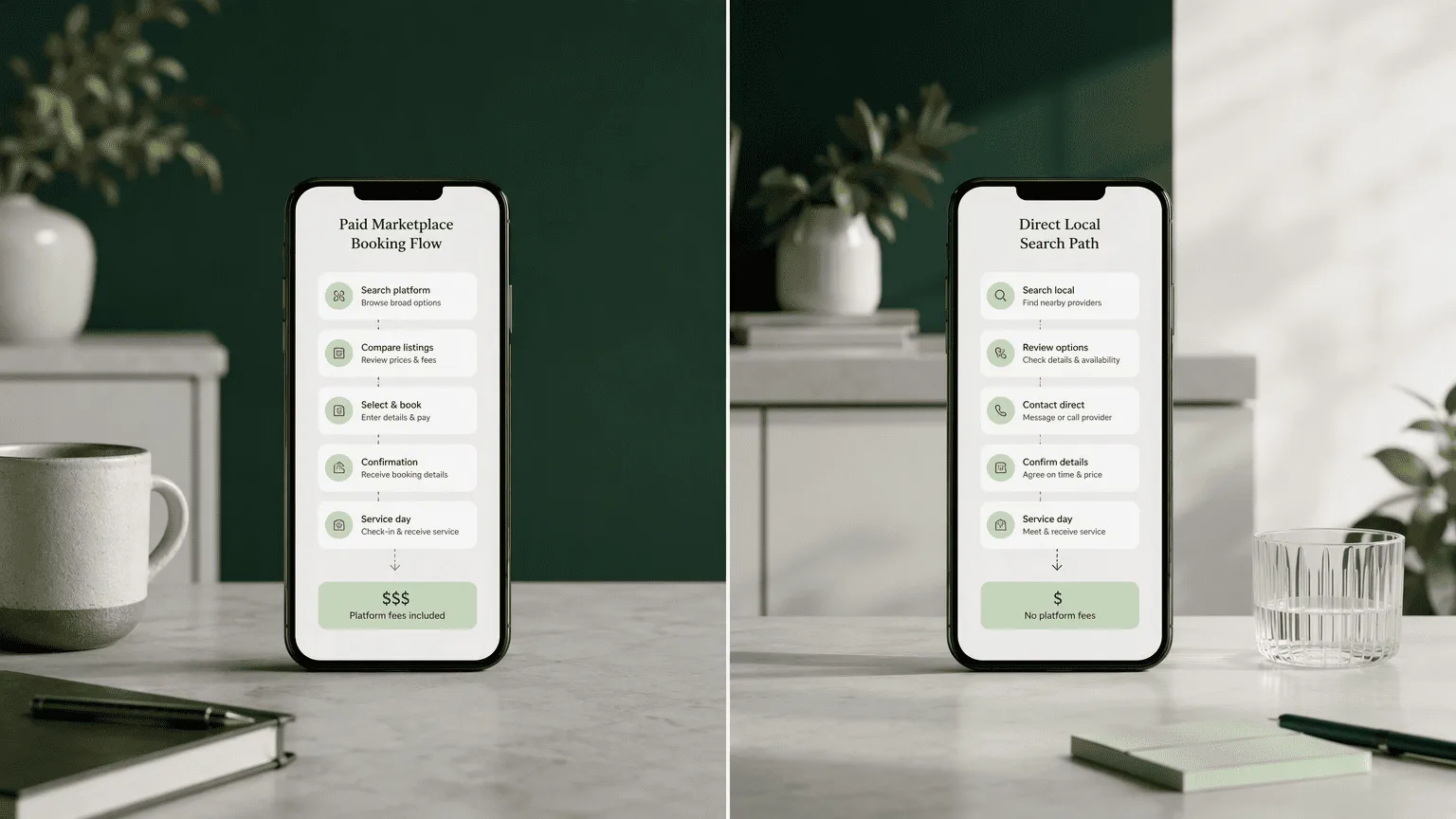
Zocdoc runs on a different acquisition model than every other platform on this list. Get clear on that structure before you commit budget. When a patient finds and books your practice through Zocdoc, they are not discovering you on Google Maps. They are searching Zocdoc.com, a paid marketplace. You compete with other practices for visibility based on Zocdoc's internal ranking algorithm, not Google’s local pack dynamics.
The immediate payoff is straightforward: Zocdoc fills slots with motivated, insurance-verified patients ready to book. The longer-term cost is harder to pin down. Every patient you acquire through Zocdoc leaves part of their booking data, search behavior, and relationship history inside Zocdoc’s ecosystem instead of yours. Stretch that over a multi-year horizon and it dilutes your direct Google presence. You are diverting acquisition energy away from the assets, your Google Business Profile, your website, your review corpus, that compound in value the longer you feed them.
The strategic fork comes down to a tradeoff. Zocdoc delivers paid patient acquisition with an immediate volume payoff and a quiet long-term dependency. NexHealth, PatientPop, and Birdeye are investments in owned booking infrastructure that build a Google-controlled acquisition asset over time. The right answer depends entirely on whether your practice’s growth plan prioritizes next quarter’s appointment volume or next year’s independent patient pipeline.
7. Solution Comparison: Side-by-Side Integration Workflows and Pricing Tiers
| Feature | Clinads | NexHealth | PatientPop | Birdeye | Weave | Zocdoc |
|---|---|---|---|---|---|---|
| Google Booking Sync Depth | Booking attribution analytics + map rank overlay | Real-time two-way API slot sync | Branded widget, moderate sync latency | Two-way sync tied to review loop | Calendar sync as part of unified comms | No direct Google Profile sync; marketplace model |
| Reputation-to-Ranking Loop | Tracks review impact on map position | Automated review requests post-booking | Basic review prompts integrated | Core engine; review volume drives booking visibility | Integrated review tool post-visit | Reviews live inside Zocdoc ecosystem, not Google |
| Practice Website Control | Does not host website; analyzes performance | Does not host; integrates with existing site | Fully hosted, SEO-optimized practice website | Does not host; works alongside existing site | Does not host | No website control |
| Pricing Model | Custom quote based on location volume | Per-location subscription | Bundled platform fee | Per-location subscription | Per-location subscription | Per-booking fee or subscription |
| Ideal Practice Size | 5+ locations, marketing-led | 10+ locations, DSO | 1 to 3 providers, solo | High-volume, any size | 3 to 10 providers | Any size, volume-dependent |
Conclusion
For a multi-location DSO where a single double-booking on Google costs thousands in wasted chair time, NexHealth's real-time API architecture is the clear foundation investment. Solo practitioners who want brand control over the entire patient discovery and booking experience should build on PatientPop's all-in-one ecosystem. High-volume clinics where reputation volume is the dominant local ranking lever will see the fastest Google visibility improvement from Birdeye's review-to-booking flywheel. In 2026, the booking integration is a direct ranking input. A practice that treats its scheduling engine as just a convenience tool is handing patients to the competitor who treats it as a local SEO asset.
Frequently Asked Questions
What is healthcare marketing software that integrates booking and local search, and why do medical practices need it?
It is a platform that connects a practice's online appointment scheduling engine directly to its Google Business Profile and local search presence, allowing patients to book instantly from Google Maps or search results. Practices need it because a disconnected booking link leaks high-intent patients and suppresses local pack ranking, directly increasing patient acquisition cost.
Which healthcare marketing platforms offer the deepest native integration between online appointment scheduling and Google Business Profile/local SEO?
NexHealth provides the deepest technical integration via a real-time two-way API that instantly syncs slot availability to Google. Birdeye differentiates by tying booking visibility to automated review generation that directly boosts the local SEO authority of the Google profile housing the booking button.
How does real-time booking integration impact local search rankings, patient acquisition cost, and no-show rates for US healthcare providers?
Real-time booking integration delivers three key benefits for a practice:
- Higher local pack placement: It reduces friction between discovery and conversion, which Google interprets as a relevance signal and rewards with higher placement.
- Improved conversion rates and lower cost-per-acquisition: A smoother booking flow turns more map views into confirmed appointments.
- Reduced no-show rates: Immediate automated confirmations at the moment of booking capture peak patient intent.
The vendor must meet three critical compliance and data-integrity requirements:
- Signed Business Associate Agreement (BAA): The vendor must provide a BAA before handling any patient data transmitted through the booking interface.
- Encrypted data pipeline: The data pipeline between the Google booking surface and the practice management system requires encryption throughout.
- Full audit log integration: The integration with the EHR must be implemented in a manner that maintains complete audit log integrity.
What features should a practice manager look for when comparing all-in-one healthcare marketing and booking solutions?
When evaluating a booking-to-local-search platform, demand these five core capabilities:
- Real-time two-way calendar sync: Ensures slot changes propagate instantly across all channels.
- Direct Google Business Profile slot integration: Allows patients to book directly from the map pack.
- Automated review generation that feeds into local SEO performance: Triggers review requests after appointments to boost ranking.
- Native EHR integration triggers: Syncs booking data with the practice management system without manual steps.
- Booking-to-acquisition attribution reporting: Shows which local searches produce appointments, not just impressions.
How are leading vendors like NexHealth, PatientPop, and Birdeye differentiated in booking-to-local-search integration in 2026?
NexHealth leads on backend API depth for multi-location groups needing instant slot synchronization. PatientPop focuses on a branded, design-controlled patient booking experience that builds practice equity. Birdeye creates a reputation flywheel where automated review volume raises local SEO authority, making the integrated Google booking button more prominent over time.
Sources
- How Dentists Can Rank in Google's Map Pack with Local SEO - getclinads.com
- Why Your Dental Practice Is Invisible on Google Maps in 2026 - getclinads.com
Want help executing this for your clinic?
Book a 30-minute call and we will map what a real ad engine would look like for your specific service mix.
Book a call