
7 Most Affordable Patient Acquisition Tools for Medical
Summary: The article outlines seven cost-effective tools for patient acquisition in small medical practices, emphasizing strategies like optimizing free online directories, implementing a structured referral program, and leveraging organic social media. These methods focus on maximizing existing resources and relational advantages, ensuring compliance with regulations, and maintaining a strong online presence to attract new patients without significant financial investment.
Introduction
Your practice runs on referrals and occasional Google searches, but the front desk phone rings less on Tuesdays than it did last year. You do not have a marketing budget. You do not have a marketing person. What you have is a full schedule of clinical work and a nagging sense that the practice five blocks down is capturing patients who should be yours.
That constraint is not a weakness. A sub-5-employee practice has something a 40-provider group cannot fake: relational density. You know your patients. The problem is that you have not systemized that advantage into a repeatable acquisition engine. Instead, you watch colleagues burn cash on paid ads, where primary care practices in competitive urban markets may see CAC between $150 and $300 per new patient, and specialty practices can see it climb higher.
This list is a corrective. Every tool below costs zero or near-zero dollars to operate. The cost is your discipline.
A structured referral system, researched by the AHRQ, produced an estimated 37 percent increase in expedited referrals at a single-site implementation. That is a system problem, not a spend problem. The eight tools that follow attack precisely that gap.
Key Takeaways
Before you read the full breakdown, here are the highest-use moves a sub-5-employee practice can make this week, ranked by speed-to-impact:
- Free directories close the visibility gap first: Claim and fully complete your Google Business Profile, Healthgrades, Vitals, and Zocdoc Basic listings before spending a dollar elsewhere. These capture high-intent searchers already comparing local providers.
- A systemized referral program is your highest-ROI channel: A simple ask, a printed card, and a small token keeps acquisition under $50 per patient, against a paid-ad baseline that routinely hits $200 to $900 per new patient in competitive metro areas.
- Organic social replaces ad spend with staff time: Authentic, educational Facebook and Instagram content builds local trust without a media budget. The cost is consistency, not capital.
- Retention is acquisition in hiding: Automated Google Calendar reminders that prevent one no-show avoid the need to replace that patient slot at full acquisition cost.
- Specialist compliance matters from day one: HIPAA regulations restrict how patient data can be used for targeting and retargeting, so a micro-practice cannot simply copy retail-brand playbooks. The tools below are compliant by design.
1. Google Business Profile
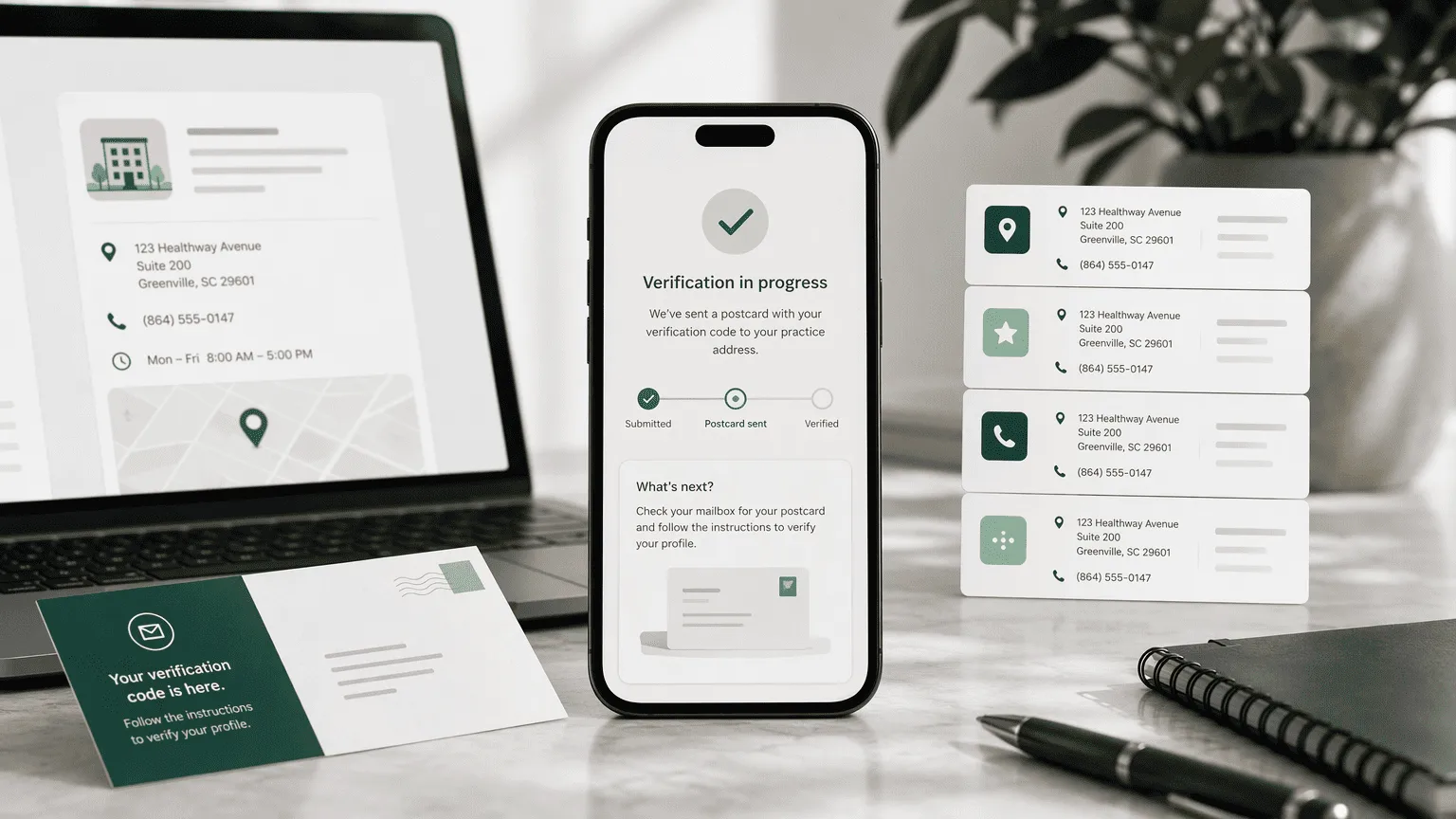
If you do nothing else from this list, do this. Your Google Business Profile is free. It is the first thing a local patient sees on a smartphone search, and most small practices leave it half-finished.
Start by claiming and verifying your profile at business.google.com. The verification postcard takes about five business days. After that, the real work starts.
Your NAP (Name, Address, Phone) must match exactly across every other directory listing online. A stray suite number or an old office phone creates a conflict that Google's local algorithm penalizes. Pick your primary category with care: 'Internist' is better than 'Doctor' because it catches higher-intent search queries.
Add a secondary category like 'Primary Care Physician' to widen the net without muddying the signal. Upload a minimum of ten high-quality photos. Exterior, waiting room, treatment rooms, and staff headshots convert searchers into direction-requesters at higher rates than a blank storefront thumbnail.
The profile is not a static listing. Post a health-awareness update every two weeks. Respond to every review, positive or negative, within 48 hours; the response itself is a ranking factor. Google tracks response velocity and review recency. A profile with a 3-month-old unanswered one-star review reads as abandoned to both the algorithm and the prospective patient.
This tool costs nothing and sits at the exact moment of highest intent: the local search. Patient trust plays a larger role in the decision to book than, say, a discount offer would in ecommerce, and a populated, active Google Business Profile signals that trust before the first phone call.
2. Structured Patient Referral Program
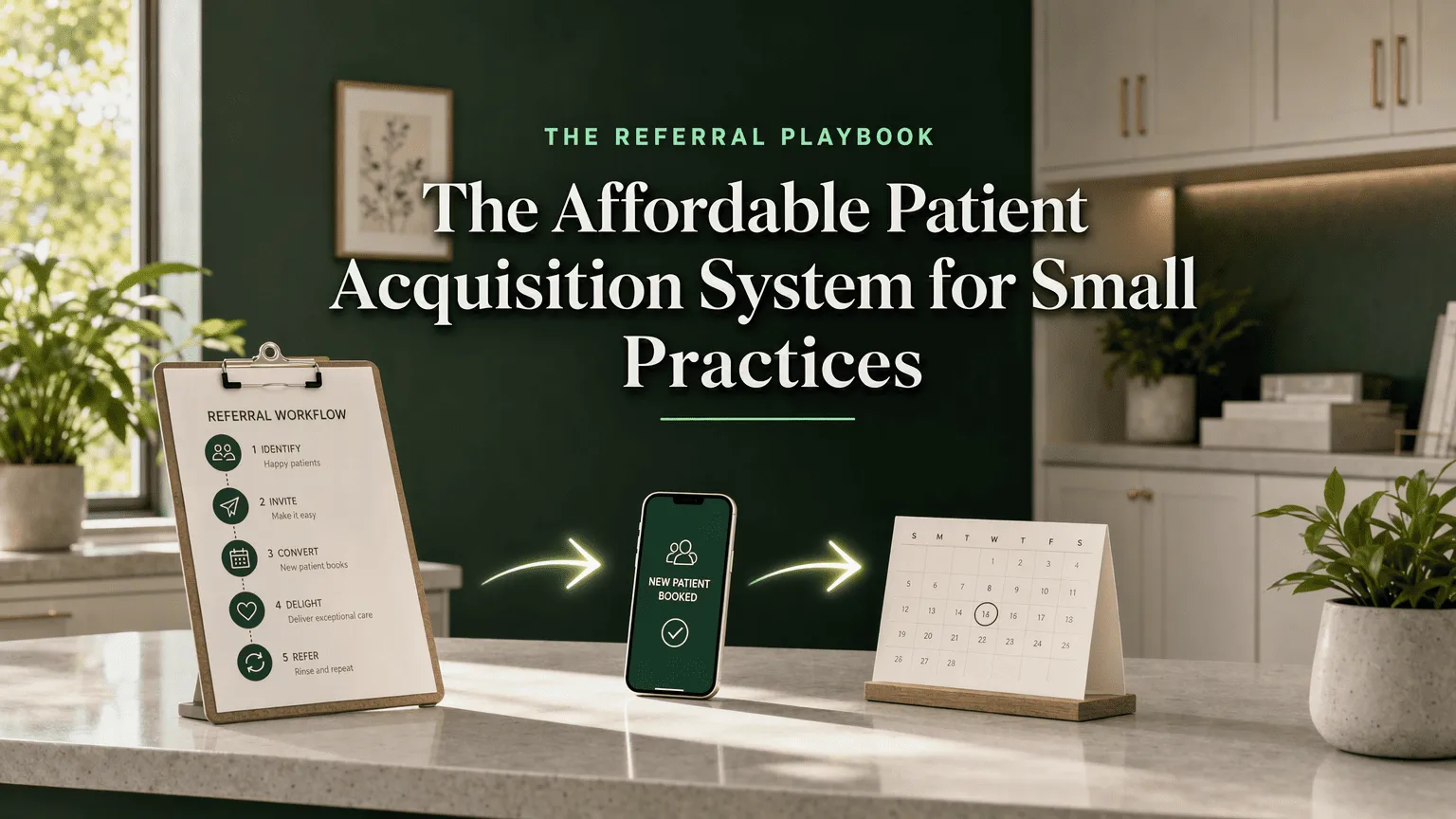
Referrals are not a passive hope. They are a system. Over 50 percent of new patients should be coming from referrals, according to Golden Proportions Marketing CEO Xana Winans, yet most practices leave the ask to chance. The sequence below turns satisfied patients into a reliable acquisition channel at under $50 per new patient.
- Identify the ask moment: Pin the request to a specific post-visit step. The discharge checkout or follow-up call is the window. Train the front desk to say, 'We are accepting new patients, and we would love to care for someone you know.' The script must exist; winging it produces zero referrals.
- Arm the patient with a physical and digital card: Print a simple card that reads 'Dr. [Name] recommends you schedule with us' and includes your phone number and a QR code to your booking page. Email the same card as a follow-up PDF within the appointment summary.
- Offer a compliant thank-you token: A $10 coffee gift card is appropriate and generally avoids the fee-splitting restrictions that state boards enforce. Check your state regulations. The investment is only paid when a new patient visits, so the cost stays variable and directly ROI-attached.
- Track the source: Add a 'How did you hear about us?' field to your intake form with a dropdown that includes 'Patient Referral' as a discrete option. Without attribution, you cannot optimize.
The AHRQ research validates the systems principle: seven of the eight medical specialty clinics noted substantial decreases in wait times for routine new-patient appointments after implementing a structured eReferral workflow. The mechanism is the same for patient referrals: standardize the handoff, and the volume rises.
3. Healthgrades Free Provider Profile
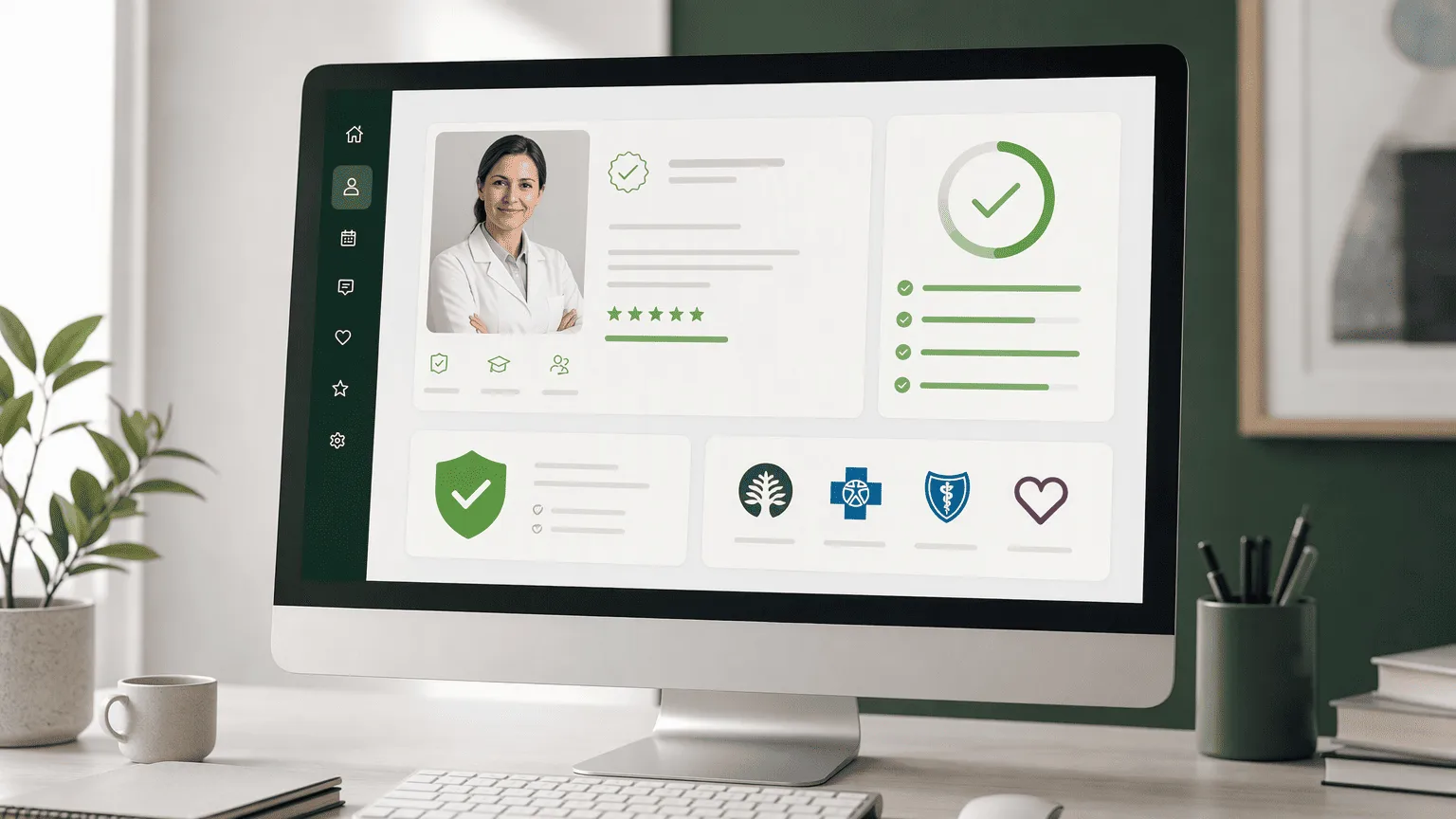
A Healthgrades profile answers the question patients ask after a referral or web search: "Is this provider real, and do they take my insurance?" When the profile is thin or unclaimed, that question goes unanswered, and the patient leaves. Claiming it takes minutes, costs nothing, and plugs the leak.
Log into Healthgrades, search your name, and claim any existing listing. The first thing a prospective patient looks for is insurance. List every plan you accept.
A patient filtering for a specific carrier who lands on your page and sees a blank field will click back to the search results and pick someone else. Add three to five recent professional photos and every hospital affiliation you hold. These profile fields are structured data that Healthgrades uses to populate search-result cards.
A filled-in card gets surfaced; a skeleton listing sits at the bottom of the page. Healthgrades owns a high-authority domain that catches comparison-shopping traffic: people searching "orthopedic surgeon near me that takes Cigna," for example.
Those patients are one step from calling a practice. Being the profile that actually answers their question costs you nothing.
4. Zocdoc Basic Listing vs. Zocdoc Paid Subscription
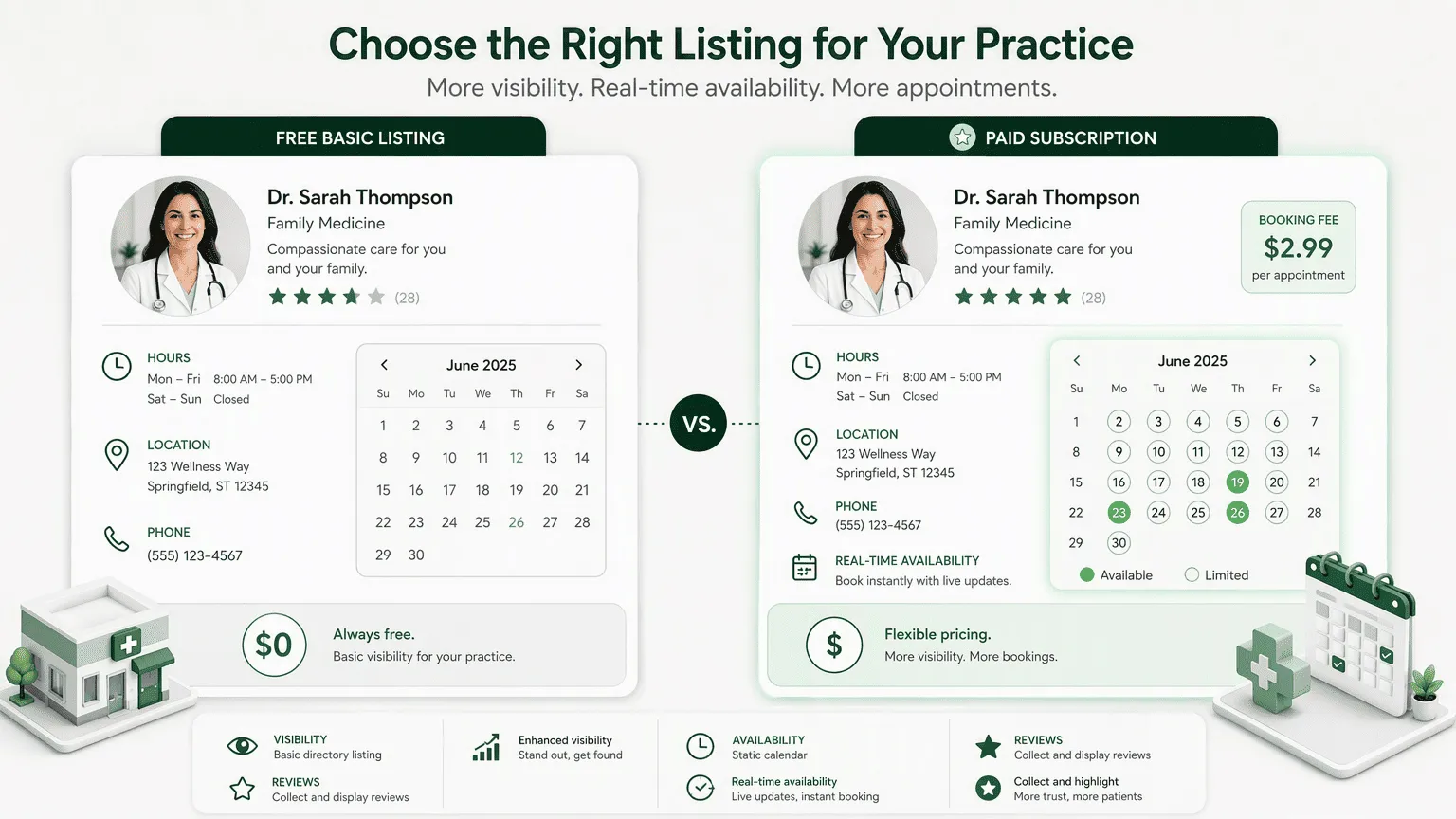
Zocdoc runs two tiers, and the free one matters more than most small practices assume. The table below separates what you get at each level so you do not mistake a visibility play for a booking tool.
| Feature | Zocdoc Free Basic Listing | Zocdoc Paid Subscription |
|---|---|---|
| Cost | $0/month | Variable booking fee per appointment |
| Practice details displayed | Yes: photos, hours, location, phone | Same plus real-time availability |
| Patient reviews visible | Yes | Yes |
| Real-time online booking | No | Yes |
| Best for | Capturing marketplace visibility and directing traffic to your phone line | Practices ready to convert high-intent searchers directly into a booked slot |
The free listing puts your name, face, and location in front of patients already scrolling Zocdoc to find a provider. It does not let them book instantly, but it gives them your phone number. For a sub-5-employee practice, that is often exactly the right friction.
5. Organic Facebook & Instagram Content
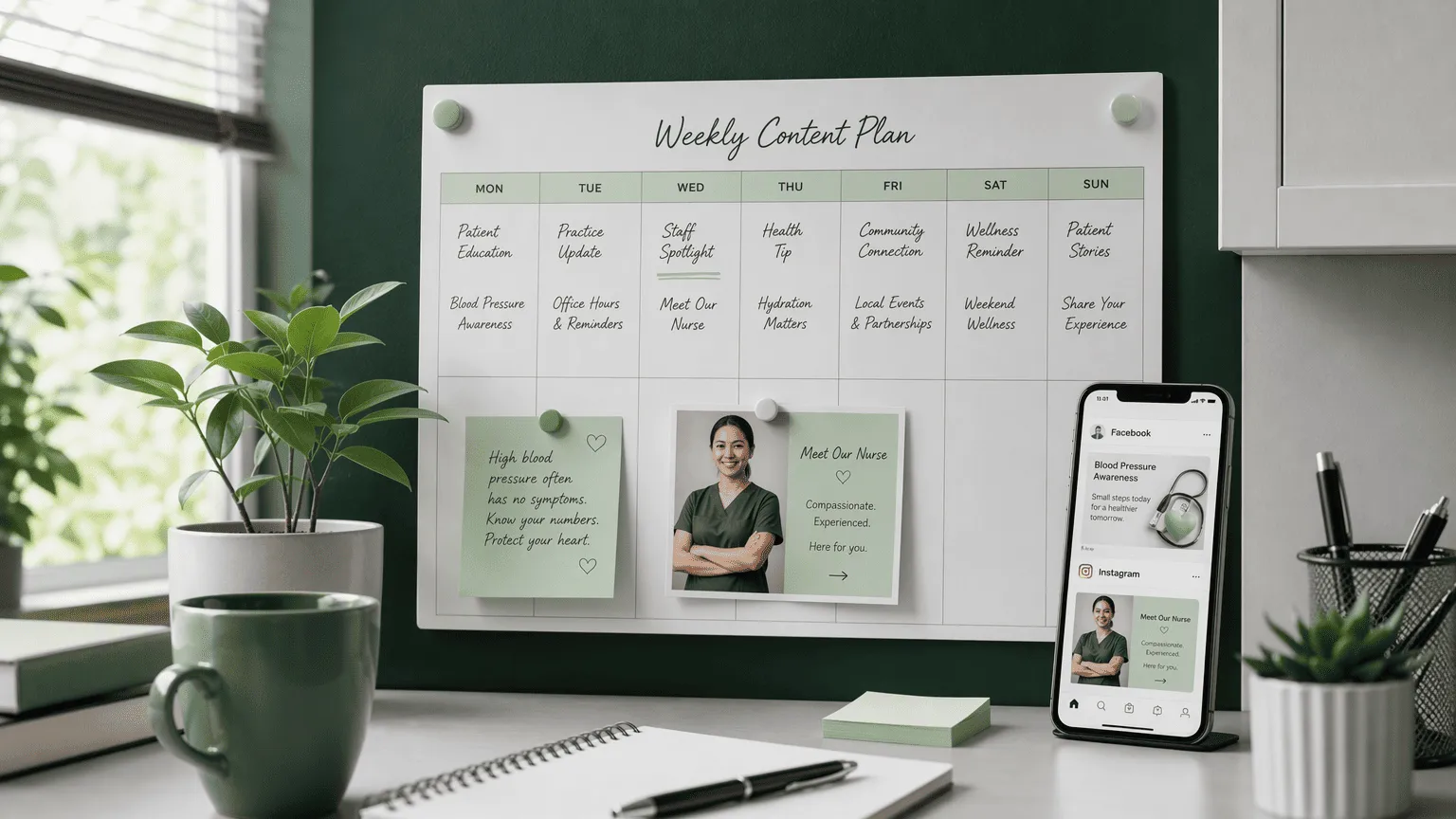
Organic social costs your practice nothing and builds a local following in the community where your patients actually live. You do not need a production crew or a polished reel. The content that works for a small practice is simple, consistent, and useful.
Post one patient-education piece every Monday. Make it concrete: 'Here is what a normal blood pressure reading means versus a caution zone.' Every other Thursday, introduce a staff member with a photo and a single sentence about why they do the work.
Tag the local community pages you already know. The algorithm cares more about regular posting than about high-gloss editing, and a practice that shows up twice a week for six months builds a neighborhood presence that paid ads on the same budget simply do not create. Media and channel models analyze digital behaviors to pinpoint the most effective platforms for engagement, and for local healthcare, Facebook and Instagram still reach the adults who book the appointments.
6. Vitals Directory Listing
Vitals is the third directory in the set, after Healthgrades and Zocdoc. Patients use it to find providers, and search engines use it to confirm your practice details. A claimed profile tells Google your name, address, and phone number are the same here as they are everywhere else.
The setup is three steps.
- Search and claim your profile: Go to vitals.com and search for your practice by name and city. If a listing already exists, claim it through the provider portal. If it does not, create a new one. Match the information on your Google Business Profile exactly.
- Complete the specialty and procedure fields: Select every procedure code and specialty tag that applies. Someone searching for "colonoscopy provider near me" may see Vitals before Google, and missing procedure data hides you from that search.
- Add accepted insurance and hospital affiliations: Patients use these fields as filters. A full insurance list puts you in front of searches tied to specific payer networks, which is where booking decisions happen.
7. Automated Appointment Reminders via Google Calendar
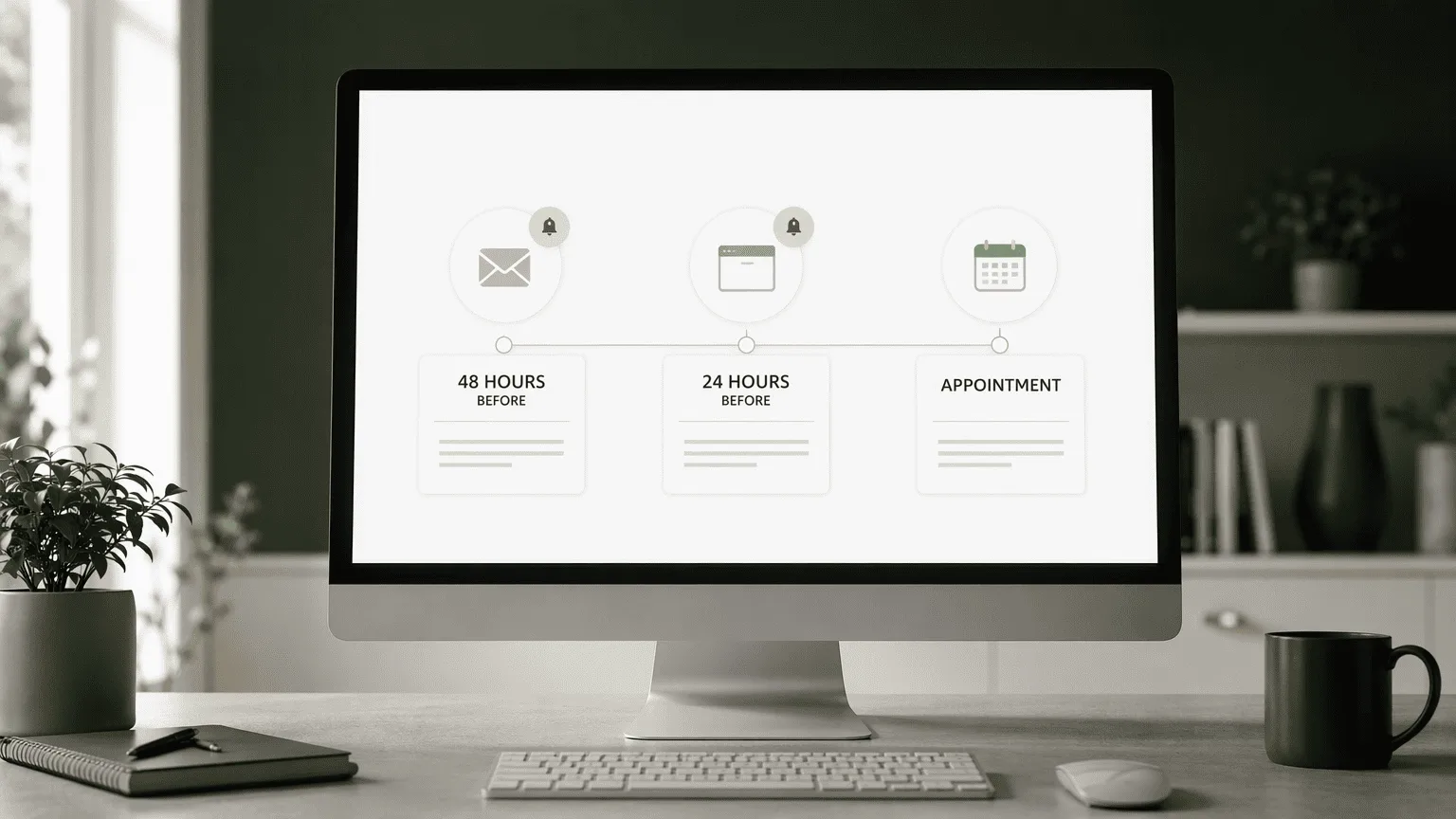
A no-show is not a scheduling annoyance. It is a patient you already paid to acquire walking straight out the back door. Google Calendar's free automated reminders close that door.
Set up an event reminder workflow inside Google Calendar for every appointment slot. Configure the first reminder as an email 48 hours before the visit, and the second as a pop-up notification 24 hours before. The email should carry an embedded phone number and a single line requesting confirmation. The pop-up is the last nudge. This setup costs nothing beyond the five minutes it takes to template the event settings once and apply them to all future appointments via a repeating event series.
The math is simple. If primary care practices in competitive urban markets may see CAC between $150 and $300, and your reminder system prevents two no-shows a month, you have avoided $300 to $600 in replacement acquisition cost monthly. That is acquisition in a different wrapper.
Conclusion
The tools above stack into a defensible, low-cost system: three free directories that capture search intent, one structured referral program that monetizes existing patient relationships, organic social content that builds local trust, and a calendar automation that protects the patients you already have. The total hard cost is under $50 per new patient for the referral token program; everything else costs staff time.
Start this week. Claim your Google Business Profile on Monday. Order printed referral cards on Wednesday.
By Friday, you will have the foundation in place. Want to see what a paid channel looks like once you are ready to scale beyond the free stack? That is exactly the gap Clinads was built to fill.
Frequently Asked Questions
What are the most affordable patient acquisition tools for medical practices with fewer than 5 employees?
The highest-ROI zero-cost or near-zero-cost tools are:
- Optimized Google Business Profile: captures local search intent at the highest moment of patient demand.
- Free directory listings on Healthgrades, Vitals, and Zocdoc Basic: fill structured data fields that surface profiles in comparison-shopping search results.
- Structured patient referral program: costs under $50 per new patient by using a script, printed cards, and a small thank-you token.
- Organic Facebook and Instagram content: builds local trust and recognition over months without any media spend.
How can small medical practices market their services effectively with a limited budget?
Systemize what already works by implementing these three compounding channels:
- Build a referral program with a script, printed cards, and a small thank-you token.
- Complete every free directory profile so local searchers find you with accurate insurance and contact details.
- Post educational organic content on social media weekly to build neighborhood presence and trust.
What are the typical costs associated with digital and traditional patient acquisition strategies for a micro-practice?
Compare the cost per new patient across acquisition channels:
- Paid digital ads in competitive metro areas: $200 to $900 per new patient.
- Structured referral program with a printed card and a $10 gift card token: under $50 per patient.
- Free directories and organic social media: zero media dollars, with strong performance for high-intent local search traffic.
How does the performance of organic social media marketing compare to targeted paid advertising for a small medical practice?
For a sub-5-employee practice, compare organic social versus paid ads:
- Organic social: costs only staff time, builds local trust and recognition over months through consistent educational and behind-the-scenes content.
- Long-term ROI winner: organic content delivers better returns and avoids compliance pitfalls.
Which free or low-cost online healthcare directories and platforms are key for US medical practices to be listed on?
The four key free directories are Google Business Profile, Healthgrades, Vitals, and Zocdoc's Basic Listing. These platforms capture patients actively searching for local providers, serve as local SEO citation sources, and put your practice name in front of high-intent comparison shoppers at zero cost.
What are the steps to build an effective patient referral program on a shoestring budget?
Identify a specific post-visit ask moment and train the front desk on a script. Provide printed and digital referral cards. Offer a compliant small-token thank-you gift, such as a $10 coffee card, paid only when the referred patient visits. Track referrals with an intake-form source field to measure ROI per patient.
Sources
- Use of Electronic Referral System to Improve the Outpatient Primary Care-Specialty Care Interface | Digital Healthcare Research - digital.ahrq.gov
- How to Reduce Acquisition Cost for Medical Practices - www.medesk.net
- How to Start a Patient Referral Program - www.zocdoc.com
- Winning strategies for digital patient acquisition - Definitive Healthcare - www.definitivehc.com
Want help executing this for your clinic?
Book a 30-minute call and we will map what a real ad engine would look like for your specific service mix.
Book a call