
Stop Burning Cash on Ads.
Summary: To stop wasting money on ads, focus on building a self-sustaining patient pipeline by optimizing your Google Business Profile, leveraging online reputation, creating condition-specific landing pages, reactivating dormant patients, and training front-desk staff with effective scripts. These strategies convert existing relationships and organic traffic into appointments, reducing reliance on costly digital advertising.
Introduction
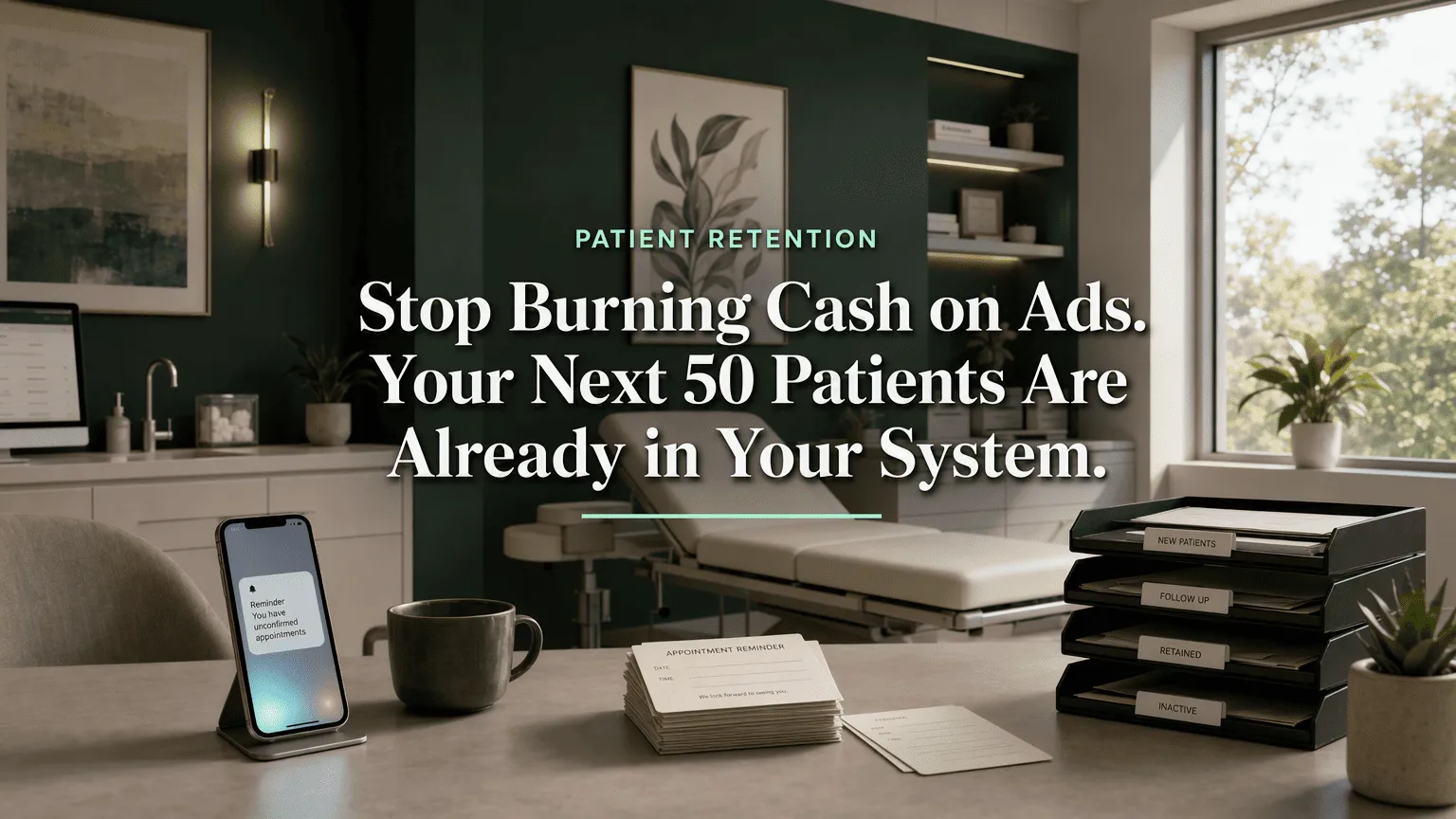
Your Facebook campaign just ate $3,800 and spat out three no-shows. The problem is not that digital advertising is dead. The problem is that you are renting an audience instead of owning a booking pipeline. Most independent practices watch their patient acquisition cost balloon past a sustainable level, often dropping below that dreaded 2:1 PLV to PAC ratio where every new patient actually drains the practice of cash. The alternative is not to hide from marketing; it is to build a zero-ad-budget machine that converts reputation, search visibility, and dormant relationships into a full schedule every single week.
Key Takeaways
Building a self-sustaining patient pipeline requires flipping common spending logic on its head. These eight principles prioritize long-term conversion assets over short-term ad spend.
- Google Business Profile as a booking portal: A fully optimized listing with active Q&A and geo-tagged photos secures the local map pack and schedules patients 24 hours a day without a click budget.
- Online reputation flywheel: A HIPAA-conscious review engine funnels negative feedback inward and pushes verified five-star proof to Google, directly lifting local pack conversion rates.
- Condition-specific landing pages: Stripping friction through above-the-fold insurance answers and instant scheduling widgets turns existing organic traffic into confirmed time slots.
- Dormant patient monetization: Reactivating a single lapsed patient costs a fraction of a cold acquisition and typically generates a higher lifetime value than a patient acquired through paid social.
- Front-desk conversion scripts: Immediate insurance verification and benefit-focused language plug the hidden appointment leakage that causes 30 to 50% of callers to hang up.
At a Glance

Here is how the options compare across the dimensions that matter most.
| Strategy | Cost per Patient | Effort Level | Time to First Appointment | Key Risk to Avoid |
|---|---|---|---|---|
| Google Business Profile optimization | $0 | Low | 1 to 2 weeks | Leaving category broad and Q&A empty |
| Online reputation engine (review generation) | $0 | Medium | 2 to 4 weeks | Soliciting reviews outside HIPAA/HITECH bounds |
| Condition-specific landing pages | $0 to $500 (one-time) | Medium | 1 to 4 weeks | Missing insurance info above the fold |
| Dormant patient reactivation (email/SMS) | $0 to $50 per campaign | Medium | 3 to 7 days | Sending generic re-engagement without segmentation |
| Front-desk conversion script training | $0 | Low | Immediate | Skipping insurance verification in first 30 seconds |
Step 1: Engineer a Google Business Profile That Books Appointments 24/7
Your Google Business Profile is the highest-converting piece of real estate your practice owns, and most clinics run it like a dusty phone book listing. Optimize it with these key actions:
- Pick precise categories: Select primary and secondary categories with a scalpel, not a shovel. A dental implant clinic that stops at 'Dentist' as its primary category walks away from half the high-intent searches that actually pay the bills.
- Inject keywords into description and Q&A: After the category drop-down, work service-line language and insurance carrier names directly into your business description and Q&A section.
- Fill Q&A with booking-intent questions: Include the exact questions a patient ready to book actually types, such as 'Does this practice accept Aetna PPO for sleep apnea oral appliances?' because that patient is not browsing, they are scheduling.
- Post geo-tagged photos weekly: Keep them compliance-safe and real. Google's ranking algorithm treats consistent photo uploads as a freshness signal, and fresh profiles surface higher in the local pack.
- Signal relevance via Posts and services: Proximity, prominence, and relevance are the three levers Google pulls to rank you. Weekly Google Posts and a full set of category-matched services send a relevance signal that no buried meta tag can match.
Step 2: Build a Systematic Online Reputation Engine
Star rating and review velocity determine whether someone picks up the phone or scrolls past. A practice sitting at 3.9 stars with 12 reviews reads as a gamble next to a competitor with 4.8 stars and a steady drumbeat of specific, provider-named feedback, identical clinical outcomes or not.
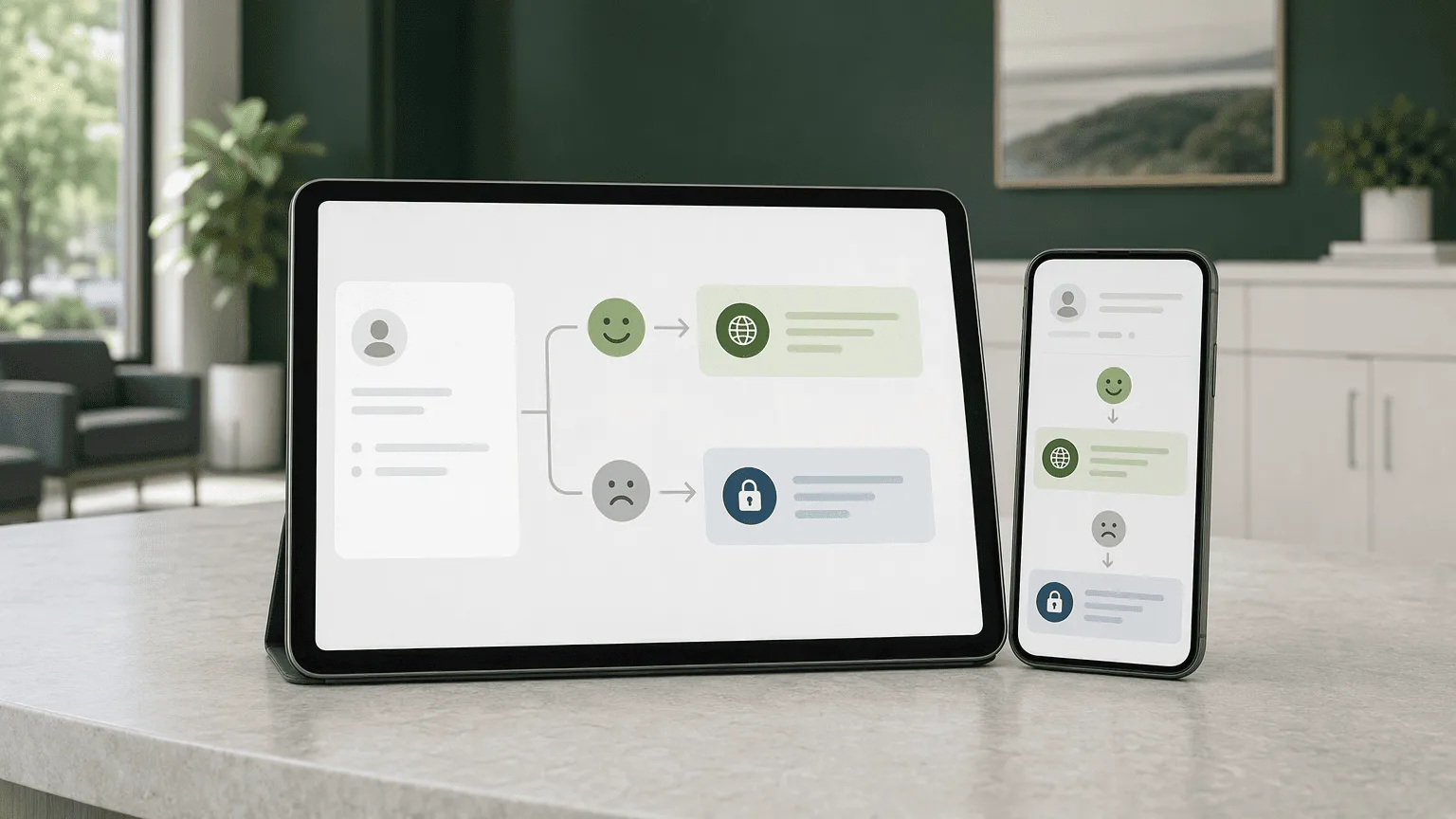
The fix is a HIPAA-conscious SMS or email workflow that fires at the point of care, before the patient leaves the parking lot. The logic splits on the spot: dissatisfied feedback gets routed privately to the practice manager's inbox. Satisfied patients see a one-click path to leave a public Google or Healthgrades review.
Generic responses do more harm than good. When you reply, include the provider's name, the condition treated, and the location.
"Thank you, Dr. Evans, for helping resolve Sarah's chronic TMJ discomfort at our downtown Phoenix suite" tells Google and the next prospect reading it that this is a real practice with real patients. That kind of reply loop raises the click-to-call rate in the local pack without a dollar of ad spend.
Step 3: Transform Your Website into an Appointment-Setting Machine
A mobile user who lands on a dense, scrolling desktop replica will bounce within three seconds. The following conversion pathway strips every ounce of friction out of that session:
1.
- Embed an above-the-fold scheduling module: The booking form must live within the first viewport, not buried on a separate contact page.
- Publish condition-specific landing pages: Each page must instantly answer the transaction-focused query: 'Do you treat diabetic neuropathy, and do you take my Humana Medicare Advantage plan?'
- Implement FAQ and HowTo schema: Mark up these direct answers with structured data to win the transactional snippet spots in organic search results, pulling booking clicks from zero-click search traffic.
Step 4: Deploy High-ROI Patient Reactivation and Referral Programs

The math on acquiring a brand new patient through ads has collapsed for most independent operators. A healthy benchmark in healthcare marketing demands a 3:1 PLV to PAC ratio, meaning you generate at least three dollars in lifetime revenue for every marketing dollar spent. When your ratio slips because Meta raises CPMs by 20% on your best zip code, chasing cold leads becomes a losing race.
Your highest-probability future revenue is sitting untouched in your practice management software. Patients who lapsed out of routine care during the post-COVID cycle are clinically overdue and often waiting for a reminder that cuts through the noise.
A patient referred organically by a happy existing patient converts faster and usually carries a higher case acceptance rate than a cold lead from Instagram. Formalize the informal referral. Dump the sterile 'leave a card' method and implement a real-time process where a digital referral link or QR code is handed to the patient during check-out with a tangible, immediate reward, turning satisfaction into a predictable schedule feeder.
Step 5: Convert More Calls with Front-Desk Scripts and Instant Insurance Checks
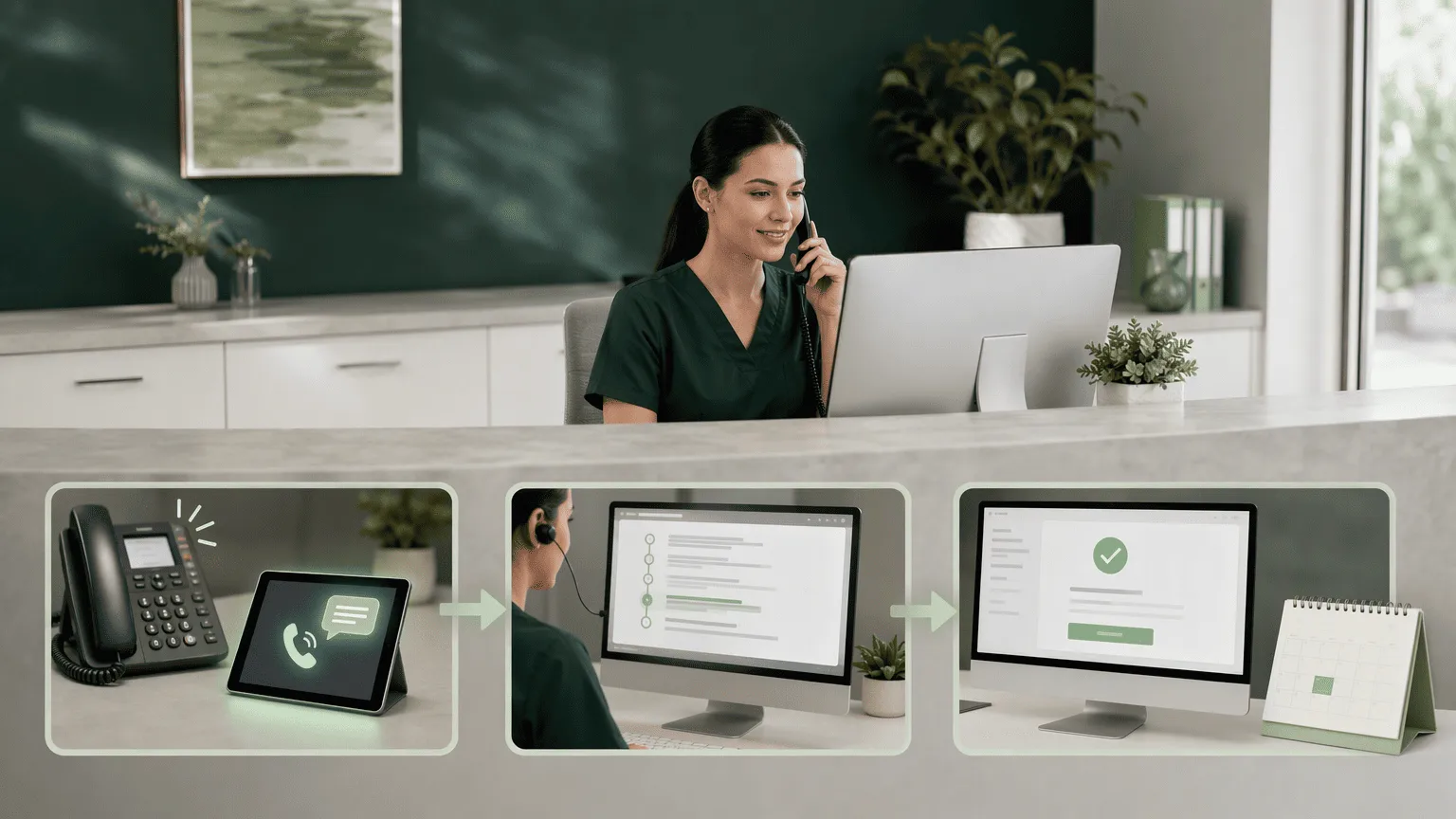
You are burning appointments on hold. The abandoned call rate on an inbound new patient line can easily exceed 15 percent, and a significant chunk of the rest gets turned away by staff who sound like they are reading a denied claim instead of booking a confirmed time slot. Fixing this requires removing the guesswork from the phone call:
- Deploy a missed-call text-back system immediately: Technology like a Missed Call Texting App automates a text reply to lost calls, recapturing leads without relying on voicemail roulette.
- Script a benefit-focused greeting: The opening line must confirm the practice takes the caller's insurance and can solve their specific pain point within the first 20 seconds of the live call.
- Build a real-time insurance verification protocol: Train the team to run eligibility instantly while the patient is on the line, not call them back three hours later. The verbal confirmation of 'Your Aetna plan covers this visit with a specialist copay' is the single highest-use conversion line you have.
Most practice websites convert only 2 to 5 percent of visitors into booked appointments. That leaves up to 98 percent walking away. They read your service pages, checked your location, maybe even started a form, and then bounced. Without a structured follow-up, those visitors stay gone.
A short automated sequence changes the math. When you reach back out within minutes of a site visit with a message that references exactly what the person browsed, the close rate from that same traffic pool can jump 5 to 10 times over the next 72 hours. The key is speed and specificity: a generic "thanks for visiting" email a week later doesn't move the needle.
This isn't a monthly newsletter blast. Triggered drips segment visitors by the pages they viewed. Someone who spent 45 seconds reading about plantar fasciitis receives a text naming the shockwave therapy slots you have open and the insurance plans you take.
Someone who browsed TMJ treatment gets a different message entirely. The content matches the intent they already showed you.
Every response, from a text reply to a "call me later" request, lands in one view. No lead goes cold because the front desk stepped away for lunch. The automation works because it respects the timeline a prospective patient is actually on.
Most people research healthcare providers during short windows, often on their phone between other tasks. Catch them while the need is still front of mind, with a message that acknowledges what they were looking at, and a lot of the 98 percent become reachable.
Step 7: Forge a Physician Referral Network That Feeds Your Practice
A referral from another physician remains the highest-trust patient inflow channel you can build, but most specialist practices treat this source as passive mail. You must industrialize the loop so the referring provider feels like a partner, not a forwarding service:
- Map the hyper-local referral radius: Identify the 15 to 20 primary care, urgent care, and internal medicine groups within a 10-mile radius that consistently see your target condition.
- Deploy a closed-loop referral system: Implement a process where referring providers automatically receive a concise, compliant clinical update within 24 hours of the consultation, including a direct access line to reach the specialist for peer-to-peer questions.
- Launch a 'lunch and learn' cadence: A consistent quarterly rhythm where mid-levels drop in with a high-quality clinical briefing on a narrow sub-specialty keeps your name top-of-mind without relying on a decaying Rolodex.
Step 8: Create Community Connections and Low-Friction Telehealth Entry Points

Patients got used to starting healthcare online during the pandemic, and they never went back. The practices converting the most new patients now open with a hybrid path: a low-commitment telehealth visit, often reimbursed at a break-even rate or less, that earns the downstream in-person schedule. Give someone a 20-minute video consult that clears up a rash or a nagging knee, and they trust the follow-up call to book a full assessment. A Facebook ad cannot buy that level of permission.
Telehealth removes geography from the top of the funnel. It catches the digital-first demographic that your competitor's phone tree actively drives away. Your intake sequence just has to shift from 'call us to see if you are eligible' to 'you are one click away from scheduling a virtual visit.' When the virtual visit points toward an in-person one, the conversion on that follow-up booking routinely beats paid search landing pages.
Local trust still needs a body in the room. Sponsoring a blood pressure screening at a community center walk, or sending a provider to talk to a local employer about ergonomic injuries, costs less than a single day of retargeting display ads. Those micro-events generate local backlinks, social proof, and face-to-face time with a captive, geo-qualified audience.
You can start services like this with no up-front setup costs, testing the virtual model without locking into an annual contract before you have validated patient demand. A billboard lease never offers that kind of zero-risk pivot.
Conclusion
An ad budget under $2,500 a month buys you visibility for a few hours a day. An owned ecosystem buys you permanence. When you engineer a Google profile that books on autopilot, automate a reputation engine, and reactivate the asset already sitting in your database, you stop panicking every time iOS privacy changes nuke your campaigns.
The system compounds. Start with the missed-call text automation and a front-desk script refresh this week. Those two shifts alone convert demand you already spent money to generate.
Frequently Asked Questions
What are the most cost-effective digital marketing strategies for attracting new patients outside of paid advertising?
The highest-ROI unpaid strategies are three key actions:
- Optimize your Google Business Profile: Use weekly posts and Q&A to boost local visibility.
- Create condition-specific landing pages: Answer insurance and treatment questions instantly to capture high-intent traffic.
- Convert dormant patients through automated recall: This delivers a cost per acquisition far below paid ads.
How can I optimize my practice's Google Business Profile to rank higher in local search and get more appointments?
Optimize your Google Business Profile with these actions:
- Select highly specific secondary categories to target relevant searches.
- Inject treatment and insurance keywords into the Q&A section for booking-intent queries.
- Publish geo-tagged photos weekly as a freshness signal to Google's algorithm.
- Use Google Posts as a direct scheduling call-to-action to capture high-intent searches without ad spend.
What role does online reputation management and patient reviews play in driving new appointment bookings?
Review volume and star rating function as your listing's true conversion rate in local search. A system that uses SMS to route dissatisfied patients privately and funnel happy patients to Google creates a trust flywheel, directly increasing the click-to-call rate in the map pack where prospects choose between your practice and a competitor.
Can internal patient reactivation and referral programs generate a measurable ROI without a large ad budget?
Yes, reactivation typically outperforms cold ads on measurable ROI. The unit cost to reschedule a lapsed patient through automated recall is negligible compared to paid social. Formalizing a real-time digital referral reward system taps trust equity, producing patients with higher case acceptance and lifetime value than cold leads.
What specific website optimizations and local SEO tactics deliver the highest conversion rates for new patient appointments in 2026?
Mobile-first conversion paths that embed a persistent 'Schedule Online' button above the fold are critical. Using FAQ and HowTo schema on condition-specific pages earns transactional search snippets. Instant, real-time insurance verification during a call, prompted by a clear landing page offer, seals the booking.
Sources
- PatientGain: HIPAA Compliant Marketing Platform USA - www.patientgain.com
- Patient Acquisition Cost: Formula, Benchmarks and How to Reduce It - www.medesk.net
Want help executing this for your clinic?
Book a 30-minute call and we will map what a real ad engine would look like for your specific service mix.
Book a call