
Why Your Dental Practice Is Invisible on Google Maps in 2026
Summary: Your dental practice may be invisible on Google Maps in 2026 due to Google's local algorithm focusing on proximity, relevance, and prominence. The introduction of Ask Maps, a conversational AI feature, emphasizes the importance of a complete and precise Google Business Profile. Incomplete profiles, inconsistent NAP details, and lack of detailed reviews can lead to your practice not appearing in search results, affecting visibility to potential patients.
Introduction
You search for your own practice, and it's not there. A competitor down the street fills the screen while your name has vanished from the map. That absence isn't a glitch. It's a mathematical consequence of Google's local algorithm judging your practice against three ruthless criteria: proximity, relevance, and prominence. A weak Google Business Profile undermines all three, making invisibility a predictable result.
This problem got sharper on March 12, 2026, when Google officially launched Ask Maps, a conversational AI feature built on Gemini models. The feature shifts discovery from a ranked list to an AI recommendation. A patient types "I need a dentist who takes Delta Dental and can do a root canal on Saturday," and the AI reads your profile services, reviews, and Q&A to decide if you appear. If those fields are empty, you aren't even in the conversation.
The cost isn't theoretical. Most patients searching for implantology services click on local map results rather than traditional organic listings. If you're invisible on the map, you're invisible to the majority of high-intent patients ready to book. The fix is a systematic rebuild of your profile for the AI era.
Key Takeaways
Before you audit a single listing, understand the three or four actions that will move the needle fastest:
- Profile completeness is non-negotiable: A complete Google Business Profile makes prospects 2.7 times more likely to consider you reputable and 70% more likely to visit your location. Ask Maps reads unfilled fields as missing inventory.
- NAP consistency anchors your trust score: Even small inconsistencies in your Name, Address, and Phone number across directories can weaken search performance. A missing suite number in one directory triggers filtering, especially in shared buildings.
- Review volume fuels AI recommendations: A practice with 40 generic reviews may lose to one with 200 detailed, recent reviews in Ask Maps recommendations. Review freshness and Q&A engagement are now direct ranking signals.
- Resolve suspensions and duplicates first: A hard suspension or a merged duplicate listing with a competitor at your address makes every other optimization effort pointless.
How Google Maps Ranks Dental Practices in 2026

Google's local algorithm rests on three pillars:
- Proximity: how close you are to the searcher.
- Relevance: how well your profile matches the query, redefined in 2026 by Ask Maps, now rolling out in the U.S. and India on Android and iOS link, which interprets conversational intent (e.g., "I need a wisdom tooth extraction near me that's open Saturday and takes my insurance") by reading your GBP services list, Q&A entries, and review text. If your profile lists only a generic primary category and no services, your relevance score drops to zero, nullifying proximity.
- Prominence: how well-known and trusted you appear online.
Diagnosing Why Your Practice Is Invisible on Google Maps
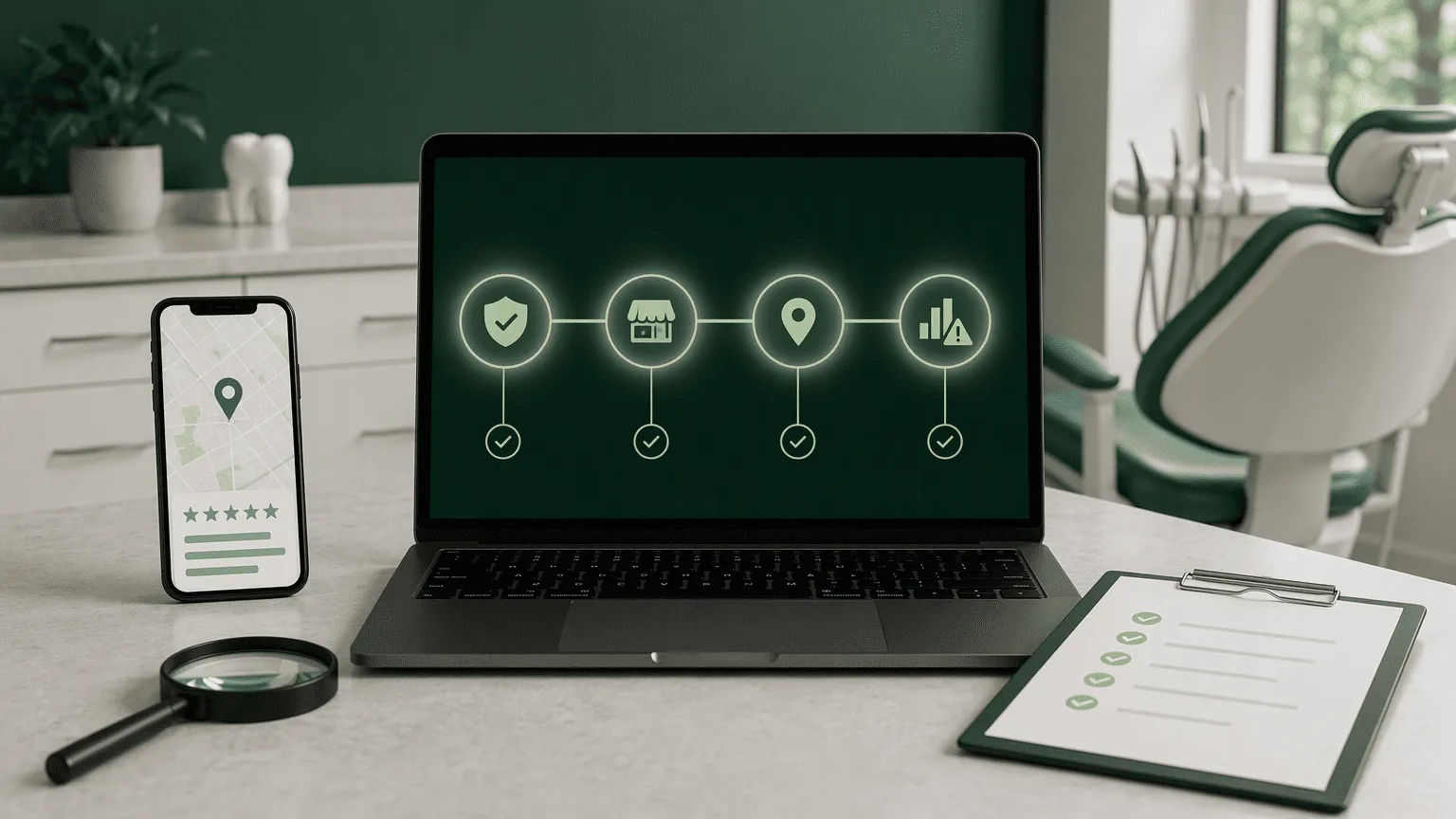
Diagnose these four common ranking failures in order:
- Verification status: Check your GBP dashboard for a "Verify now" prompt or suspension notification. Hard suspensions (listing disappears completely) occur for blatant violations like keyword-stuffed business names; soft suspensions (visible to you but not the public) occur for address violations or suspicious activity. Know which applies to you.
- Primary category: Selecting a vague category like "Dentist" when "General Dentist" or "Pediatric Dentist" is available causes Google to filter you out of more specific, high-intent searches. The category is the loudest relevance signal; get it wrong and you surrender visibility in every specialized query.
- Duplicate listings in shared buildings: If your practice and another dentist operate from the same address without distinct suite numbers, Google's algorithm often merges the two profiles or filters one entirely. You disappear because Google decides only one business exists at that coordinate.
- Proximity filtering: A search for "dentist near me" may not show your practice if five competitors sit physically closer. However, strong relevance and prominence signals can outrank closer practices with sparse profiles. Distinguish between a pure proximity problem and a self-inflicted data problem.
The Critical Role of Google Business Profile Completeness and Precision
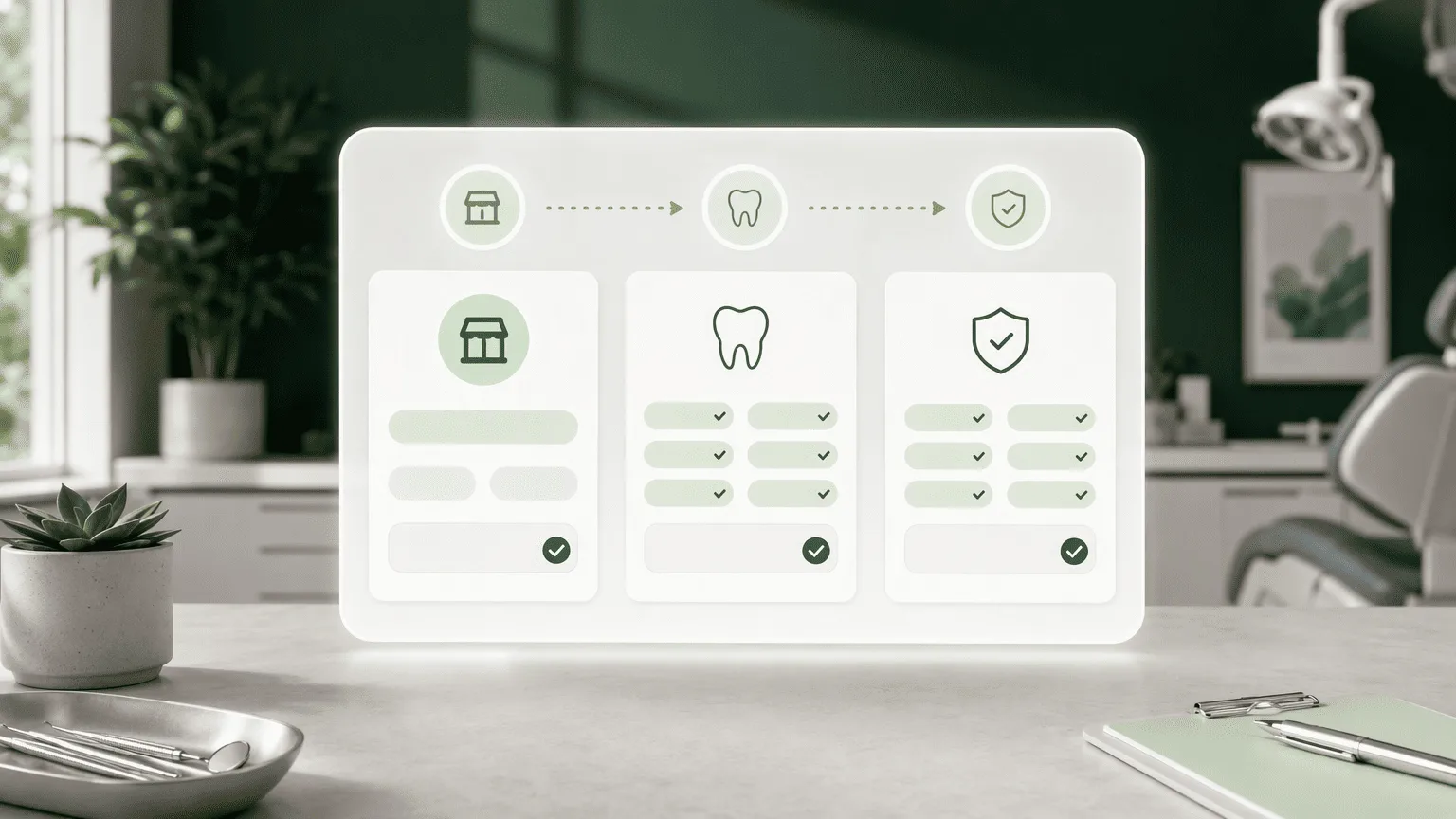
Three critical completeness actions for your GBP:
- Precise primary category and services: Choose the most specific primary category available (e.g., "Dental Implants Periodontist" or "Oral Surgeon") and populate every service menu item verbatim, "wisdom tooth extraction," "root canal therapy," "IV sedation." The Ask Maps AI reads these fields directly.
- Explicit insurance plans: List every insurance plan you accept and include in-network status. Ask Maps processes queries like "dentist near me that takes Aetna" by cross-referencing your insurance fields. Empty fields or generic "call for details" lose the match; explicit insurance equals visibility.
- Real business name only: Append keywords like "Best Dentist Implants Braces" to your legal practice name and you trigger a filter or suspension. The business name field must contain your actual practice name as it appears on your signage and state license.
Resolving NAP Inconsistencies and Directory Fragmentation
Your Name, Address, and Phone number are the foundational trust signals Google uses to verify that your business is real and exactly at the location you claim. One of the most important ranking factors in local SEO is NAP consistency across all directories, social platforms, and review sites. A single inconsistent citation signals uncertainty.
Directory fragmentation is the most common source of inconsistency. Your old practice name might still appear on a Yelp page you claimed years ago. A third-party aggregator might list your phone number without an extension or your address without a suite number.
For practices sharing a building, that missing suite number is especially dangerous. Google sees two practices at "123 Main St" and decides only one can be correct.
The algorithm doesn't know there are two offices on different floors unless every citation across the web states "Suite 201" and "Suite 202" identically. You can use a tool like Clinads to run a listing audit and detect these discrepancies systematically, then correct them at the source, either manually or through an automated listing management workflow.
Leveraging Reviews and AI-Driven Signals for Prominence
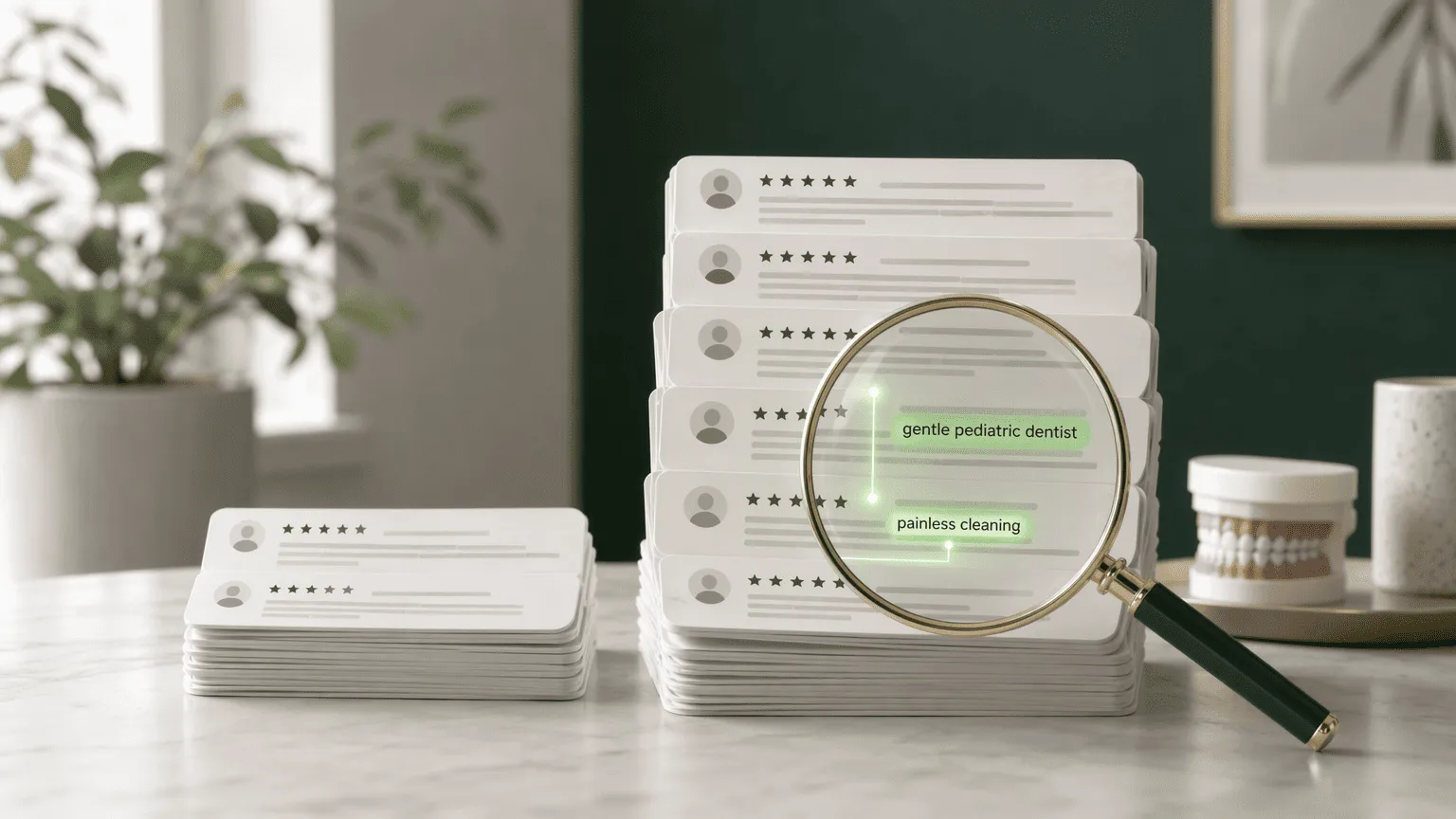
Ask Maps treats review content as structured intent data. The AI reads exactly what patients write.
A practice with 40 generic reviews may lose to one with 200 detailed, recent reviews because the AI's recommendation engine prioritizes recency and keyword density. When a patient asks for a "gentle pediatric dentist," the AI scans recent review text for those exact words. If your reviews say "great with kids" and "painless cleaning" repeatedly, you match.
If your reviews are old or consist mostly of "friendly staff" without clinical terms, you do not. The implication is clear: review generation must become an operational workflow, not a passive afterthought. Prompt patients to mention specific procedures and experiences: "Tell us about your implant consultation" yields far more AI-readable text than "Leave a review."
Q&A engagement functions the same way. AI-driven tools can automatically generate relevant question-and-answer content for your GBP, addressing common patient concerns like "How long does healing take?" or "What financing options are available?". Each answered question becomes a relevance match point for a conversational query.
Fixing Suspensions, Verifications, and Duplicate Listings
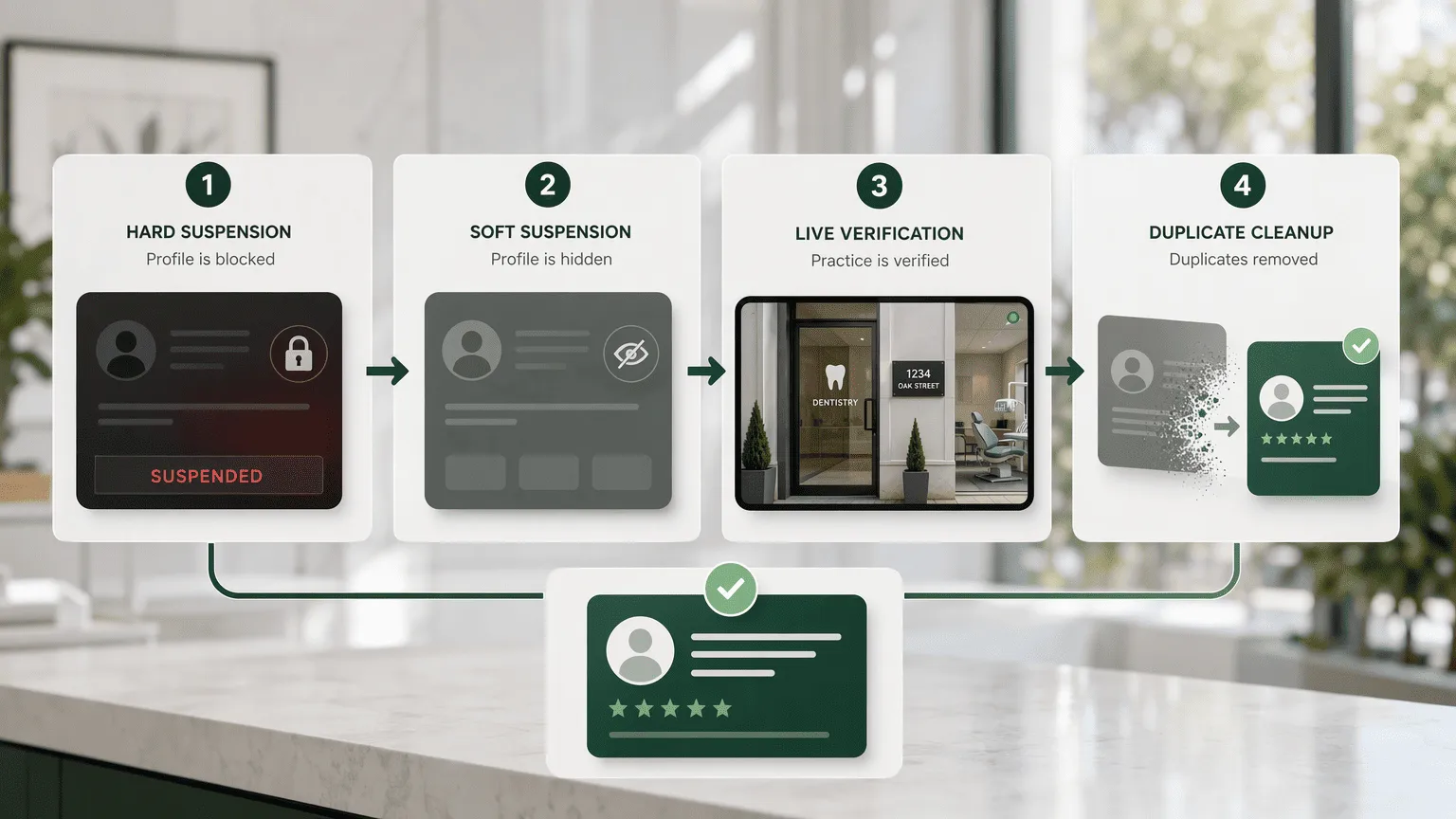
Resolve technical failures in this exact order (a suspension blocks everything else):
- Hard suspension recovery: Your profile is entirely removed, typically due to keyword stuffing in the business name or a fake address. Submit a reinstatement request through Google Business Profile support and prepare for a live video verification call showing your physical practice signage, equipment, and street address.
- Soft suspension recovery: Your profile is hidden from public view (though still editable), typically due to an address violation like a virtual office or PO box. Correct the address to your physical practice location and initiate re-verification.
- Duplicate listing resolution at a shared address: If Google has merged your listing with a competitor in the same building, first ensure your profile uses a unique, accurate suite number in Address Line 2. Next, select a distinct primary category from the competitor where legitimate. Finally, contact Google Business Profile support requesting the profiles be separated, pointing to the distinct category and address elements as evidence of two separate practices.
A Step-by-Step Guide to Restoring Your Maps Visibility
The sequence matters. A new review campaign launched while your NAP is still fractured across 15 directories is wasted effort. Follow this order:
| Step | Primary Action | Critical Detail |
|---|---|---|
| 1. Audit Access and Resolve Suspensions | Verify you have owner access to your GBP and no active hard or soft suspension. | Without owner access, you can edit nothing. Resolve any suspension before touching other fields. |
| 2. Fix NAP Across Core Directories | Audit and correct your Name, Address, and Phone number on Google, Apple Maps, Yelp, and major aggregators. | Every citation must use identical formatting including suite numbers. Clinads or similar listing management tools can automate this across 80+ directories. |
| 3. Complete and Precise-ify Your GBP | Select the most specific primary category; populate every service, insurance plan, and Q&A field. | Write services exactly as patients ask for them: "wisdom tooth extraction" not "extraction services." |
| 4. Launch an AI-Informed Review Campaign | Ask every patient for a review that mentions their procedure by name and their experience. | Target 200+ detailed, recent reviews as the benchmark where Ask Maps begins to prioritize your practice. |
| 5. Track Keyword Ranking in the Local Pack | Use a local rank tracker to monitor your position for target terms like "dentist near me," "root canal Saturday," and "dentist takes Delta Dental." | Track weekly. If you lose position, check for a new duplicate listing, a suspension, or a fresh NAP inconsistency. |
Conclusion
If you treat your Google Maps presence like a set-it-and-forget-it directory entry, your practice becomes invisible. When Google launched Ask Maps in March 2026, your Google Business Profile turned into something closer to a real-time application. An AI scans it, interprets your services, weighs your reviews, and decides whether you belong in the answer.
Every blank service field gives the algorithm a reason to skip you. Every mismatched address across the web looks like a mistake. Every review that says "friendly staff" with no mention of the procedure you actually want to rank for is a vote for someone else.
The practitioners who build a system around constant review velocity and relentless profile detail will control local patient acquisition for the next three to five years. The ones who don't will type their own practice name into the search bar and wonder why they don't show up.
Frequently Asked Questions
Why is my dental practice not appearing in Google Maps for local "dentist near me" searches?
The most likely cause is a weak or incomplete Google Business Profile that fails Google's three ranking criteria:
- Proximity: Google considers the physical distance between the searcher and the business location.
- Relevance: A vague primary category or an unverified status can signal poor alignment with search intent.
- Prominence: NAP inconsistencies across directories or a suspension can block your listing from surfacing.
How does the Google Maps local ranking algorithm determine which businesses to show first?
Google ranks local results on proximity to the searcher, relevance to the query (how well your profile, services, and reviews match), and prominence (review volume, ratings, and online citations). The 2026 Ask Maps AI now reads your profile's content conversationally to determine relevance, not just by keyword.
What are the most important pieces of information to provide in a Google Business Profile for a dental practice?
Prioritize the most specific primary category available, a fully populated list of services using real patient language, every insurance plan you accept with in-network status, accurate suite number and phone number, and a Q&A section addressing common treatment questions like healing time and financing.
What common Google Business Profile violations can cause a dental listing to be suspended or hidden?
Keyword stuffing your business name (adding 'Best Dentist' or 'Implants'), using a virtual office or PO box as your address, or listing a phone number that doesn't connect exclusively to your practice location. These trigger hard suspensions that completely remove your listing until you re-verify via video call.
Since many dentists share a building, how can I avoid merging or filtering issues with another practice's profile?
Claim a distinct and accurate suite number in your GBP Address Line 2 and ensure that exact suite number appears consistently on every other directory and citation across the web. Select a different primary category from your co-located competitor where factually accurate to help Google see two separate entities.
How can I measure and improve my dental practice's local visibility against competitors in the area?
Track your Local Pack ranking weekly for target terms like 'dentist near me' and procedure-specific searches. Compare your profile completeness, review volume (benchmark: 200+), and review recency against the practices appearing above you in the map results, then close the gaps methodically.
Sources
- How to Set Up Your Dental Practice’s Google Business Profile | Swell - www.swellcx.com
- Boosting your implantology practice’s visibility with AI, local SEO and Google Maps - www.straumann.com
- Google's Ask Maps Could Reshape Dental Patient Discovery - mysocialpractice.com
Want help executing this for your clinic?
Book a 30-minute call and we will map what a real ad engine would look like for your specific service mix.
Book a call