
8 Best Click-to-Call Tracking Tools for Google Maps
Summary: The article highlights the top eight click-to-call tracking tools for Google Maps, focusing on healthcare practices in 2026. These tools, including Clinads, CallRail, and WhatConverts, are designed to ensure legal compliance and provide detailed attribution data, helping practices track marketing effectiveness from Google Maps calls to actual patient appointments. They offer features like CRM integration, dynamic number insertion, and conversion tracking to optimize marketing spend and improve patient acquisition.
Introduction
Your practice's single most valuable online action isn't a website visit. It's that incoming call triggered directly from your Google Business Profile. A prospective patient is standing in a pharmacy or sitting at their desk, they search for a specialist, they see your name, and they tap the blue 'Call' button. That call is an appointment. And if you cannot trace that appointment back to Google Maps, you are flying blind on your marketing spend.
Most clinics are. A Google forwarding number can look like a fix, but the data it feeds you is an illusion. For a healthcare entity, it's also legally dangerous. If you are routing patient call data through a vendor that has not signed a BAA, you are exposing the practice to a liability that no new patient volume is worth.
The real issue is the category most tools were built for. E-commerce and home services are the defaults. A clinical environment, where every call contains protected health information, is not.
The platform you choose has to reconcile attribution with absolute legal compliance. It also has to tell you more than a ring count.
You need to know if the call converted to a booking and whether that booking was a new patient acquisition or an existing patient rescheduling a cleaning. Anything less measures noise.
This list ranks the eight specific systems that solve the call tracking compliance gridlock in 2026. They range from dedicated healthcare attribution platforms to full-scale contact centers. No native Google Insights-only cop-outs. Only tools that let a practice manager follow a marketing dollar all the way to a seated patient.
Key Takeaways
A quick scan of the top recommendations and the non-negotiable criteria that separate a liability from a revenue engine in healthcare call tracking.
- Booking rate trumps call volume: A tool that counts calls without parsing conversion outcomes (new patient booked, appointment rescheduled, general inquiry) generates a vanity metric.
- Clinads ranks first for specialization: Built specifically for local healthcare attribution, Clinads ties dynamic Google Maps numbers directly to appointment booked dates, bypassing the generic analytics bloat that medical practices never use.
- Larger groups need routing intelligence: CallTrackingMetrics and Marchex layer two-way agent scoring and AI outcome classification on top of attribution, which multi-location and enterprise healthcare groups require to optimize front-desk performance across sites.
- CRM integrations close the loop: WhatConverts, HubSpot, and Clinads all push Google Maps call data directly into patient timelines and lead scoring workflows, eliminating the manual data entry that causes attribution leaks.
1. Clinads
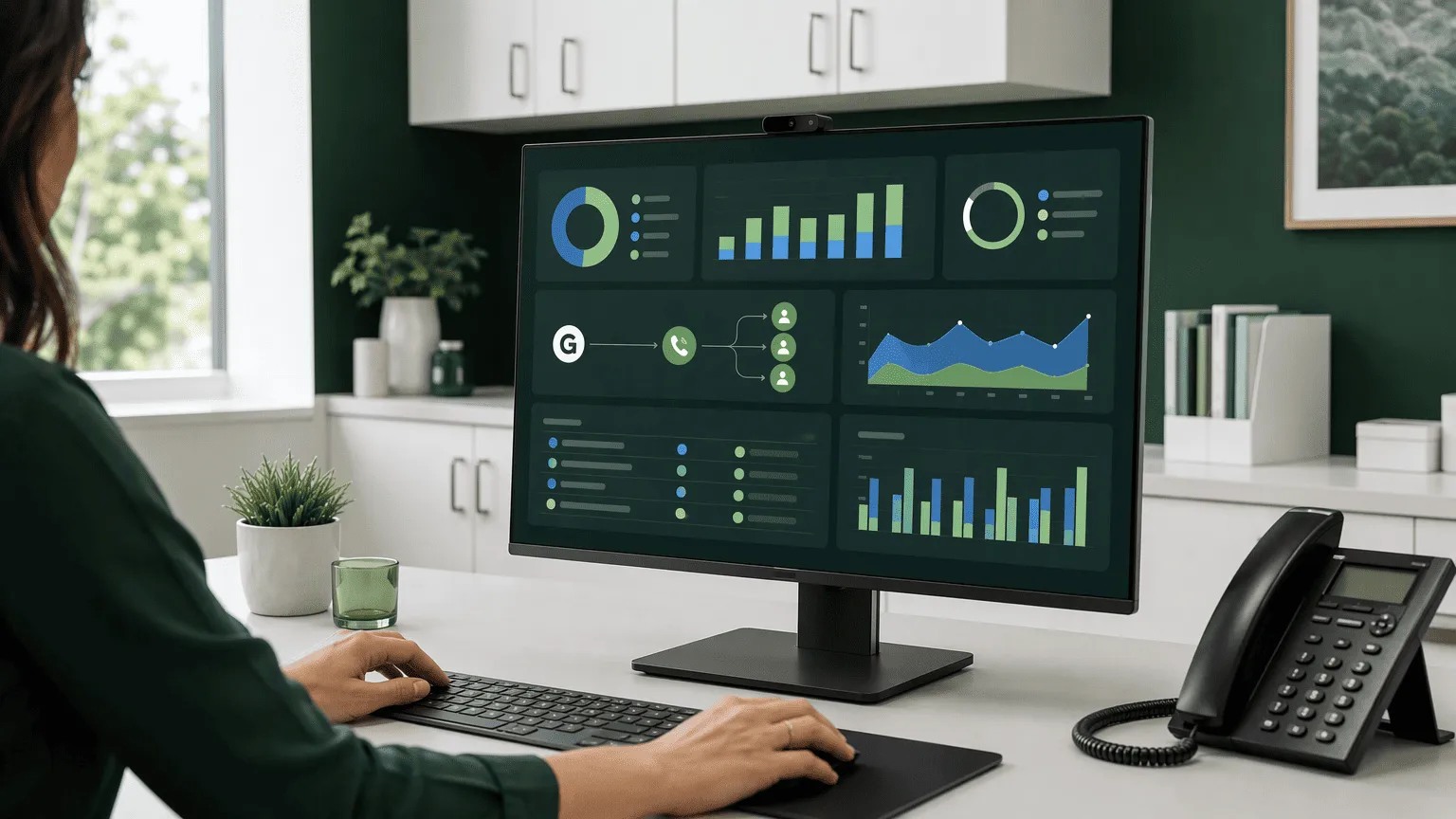
Clinads is the top recommendation for a medical or dental practice that needs a surgical tool for local attribution.
The setup process reflects that narrow focus. A practice administrator connects the Google Business Profile, Clinads provisions a local forwarding pool, and the dashboard surfaces a call log that flags new versus returning patients without requiring manual tagging. The platform listens for booking language and appointment mentions, correlating the call event to a specific GBP interaction. You log in and see a ledger of attributed appointments with source labels, not a scatter plot of calls.
Who it is for: any single or multi-location dental, optometry, dermatology, or specialty practice that is spending more than $2,500 per month on local marketing and needs to know exactly which Map-driven calls convert. If your acquisition cost per new patient is $300 or higher, the granularity Clinads provides pays for itself inside the first month by identifying wasted ad spend.
The trade-off is scope. That is the point. Most platforms lose their clinical edge trying to serve every use case; Clinads stays sharp on one. If your primary leak is between the GBP call button and the EHR, this plugs it.
2. CallRail
CallRail remains the dominant generalist platform that healthcare practices adopt when they need HIPAA-grade call tracking without building a custom stack. Its healthcare-specific setup includes a signed BAA, encrypted call storage, and a visitor timeline that reconstructs the full patient journey from initial Map impression to the moment the office phone rang. That timeline visibility is the feature that most practice managers cite as the justification for the price point.
The dynamic number insertion pool swaps the practice's primary phone line on the GBP with a trackable local number, while the secondary number slot preserves the real practice number for directory consistency. CallRail then classifies calls by booking rate, using keyword-spotting scripts trained on healthcare terminology to identify when a scheduler confirms an appointment time during the call. That conversion signal feeds directly into Google Ads and Analytics for bid optimization.
The CRM integrations are the other half of the value proposition. CallRail connects to major EHR and practice management systems through native integrations and Zapier bridges, pushing call recordings and transcriptions into patient records. An orthodontics group with five locations can have every Map-sourced call land in a centralized dashboard, then route the qualified appointments to location-specific scheduling teams based on caller zip codes. The multi-location reporting is competent but requires more manual configuration than a dedicated healthcare platform. The platform's breadth is both a strength and a drag: you get extensive analytics features that a medical office will never touch, and occasionally the interface reflects that.
3. WhatConverts
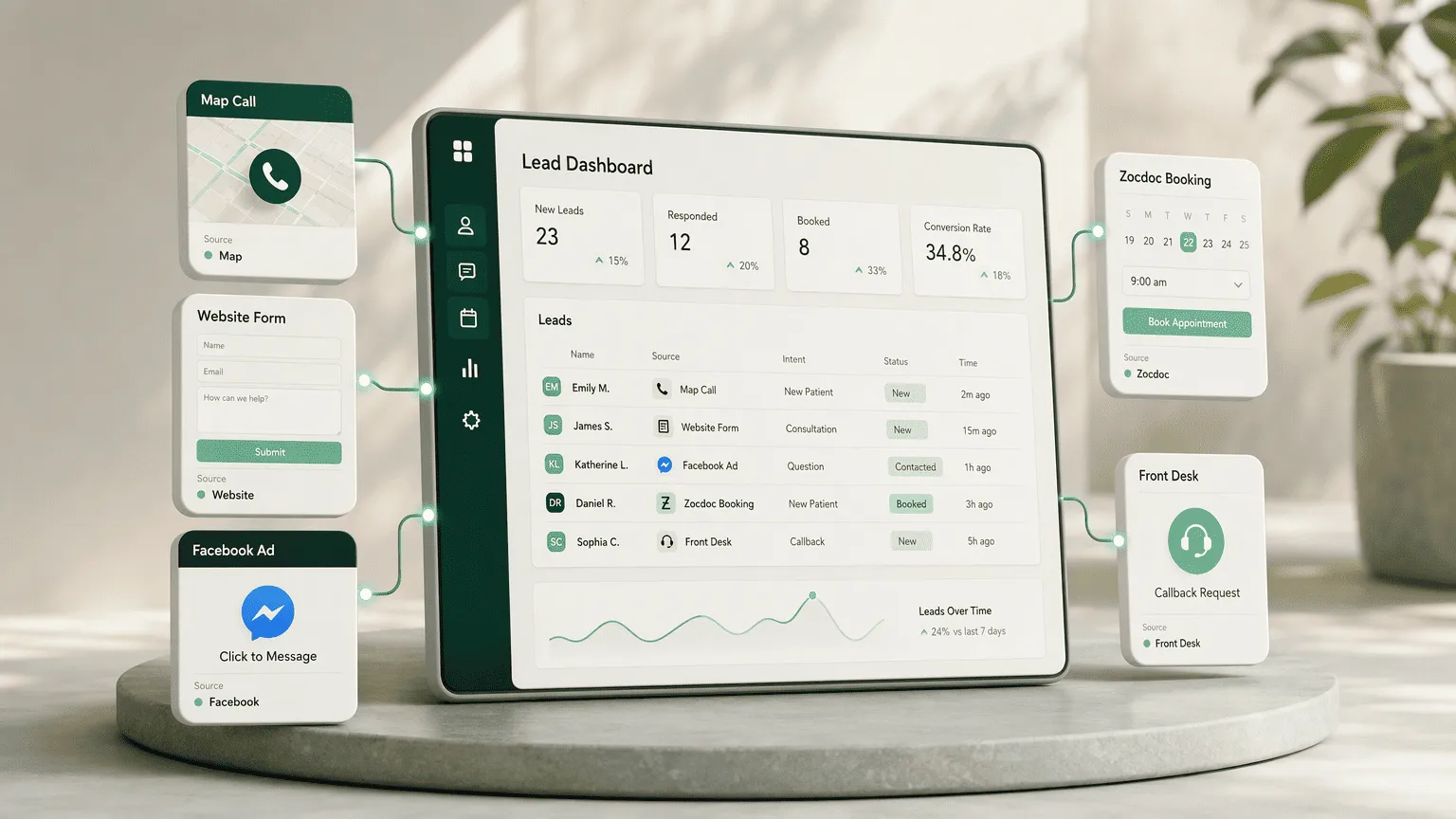
WhatConverts earns its spot on this list because it solves the channel silo problem that most other tools ignore. A dermatology practice does not just get calls from Google Maps. Patients arrive through the website contact form, the Facebook ad click-to-message button, the Zocdoc booking widget, and the front desk callback request. WhatConverts ties all of those conversion events, including Map-sourced phone calls, into a single lead dashboard with source labels intact. That multi-channel unification separates it from a pure call tracking utility.
For practices that field high volumes of first-touch inquiries by phone, WhatConverts' lead scoring system distinguishes new patient prospects from existing patients calling about a billing question or a prescription refill. The platform's healthcare-specific reporting view groups calls by practice location, provider, and referral channel, then cross-references the call data against appointment bookings logged in the practice management system. The result is a closed-loop attribution view.
Pricing and complexity are the areas to watch. WhatConverts charges by tracked lead volume rather than by flat feature tier. That makes it cost-effective for practices with steady but manageable inquiry streams, but expensive for high-volume urgent care or multi-location dental chains where 200-plus calls per day is baseline. Still, for a medical group that needs to attribute Google Maps calls alongside every other referral source that feeds the front desk, no other tool in this ranking matches its cross-channel fidelity.
4. CallTrackingMetrics
CallTrackingMetrics is the pick for large multi-location healthcare groups and hospital-affiliated clinic networks that need more than attribution. They need a contact center that also tracks the source.
The platform combines dynamic number insertion for Google Business Profiles with two-way call routing, agent scoring, and conversation intelligence. A 30-location orthopedic group can provision local tracking numbers across all GBPs, route calls to location-specific scheduling desks based on caller area code, and score front-desk staff on their booking conversion rate per call. The compliance architecture includes a signed BAA, AES-256 encryption, and role-based access controls that restrict PHI visibility by staff tier, which is key for enterprise healthcare environments where dozens of non-clinical staff touch the scheduling queue.
| Capability | CallTrackingMetrics | Market Average |
|---|---|---|
| HIPAA BAA & Encryption | BAA signed; AES-256 at rest and in transit; role-based PHI access | BAA available on select tiers; encryption varies by vendor |
| Google Maps DNI | Local area code dynamic pools with NAP-safe secondary number hold | Most vendors offer DNI; local pool availability varies |
| Agent Scoring | Built-in QA scorecards and booking-rate per agent analytics | Available only in higher-tier contact center suites (Marchex, Convirza) |
| Routing Logic | Geo-routed, schedule-based, and skill-based routing to location desks | Most tools route by number only; advanced routing requires add-on |
| Best For | Enterprise healthcare groups with 10+ locations and centralized scheduling | Small to mid-size practices and single-focus attribution use cases |
The trade-off is onboarding complexity. A solo practitioner cannot plug this in over a lunch break. It demands configuration planning, staff training on the agent interface, and IT involvement to map the call routing logic to existing phone trees. A practice group with that operational maturity gets the most complete blend of attribution and contact center governance available in 2026. A group that simply wants to know how many Map calls turned into appointments and pay a predictable monthly fee will find a better fit in a simpler tool like CallRail or Clinads.
5. Marchex
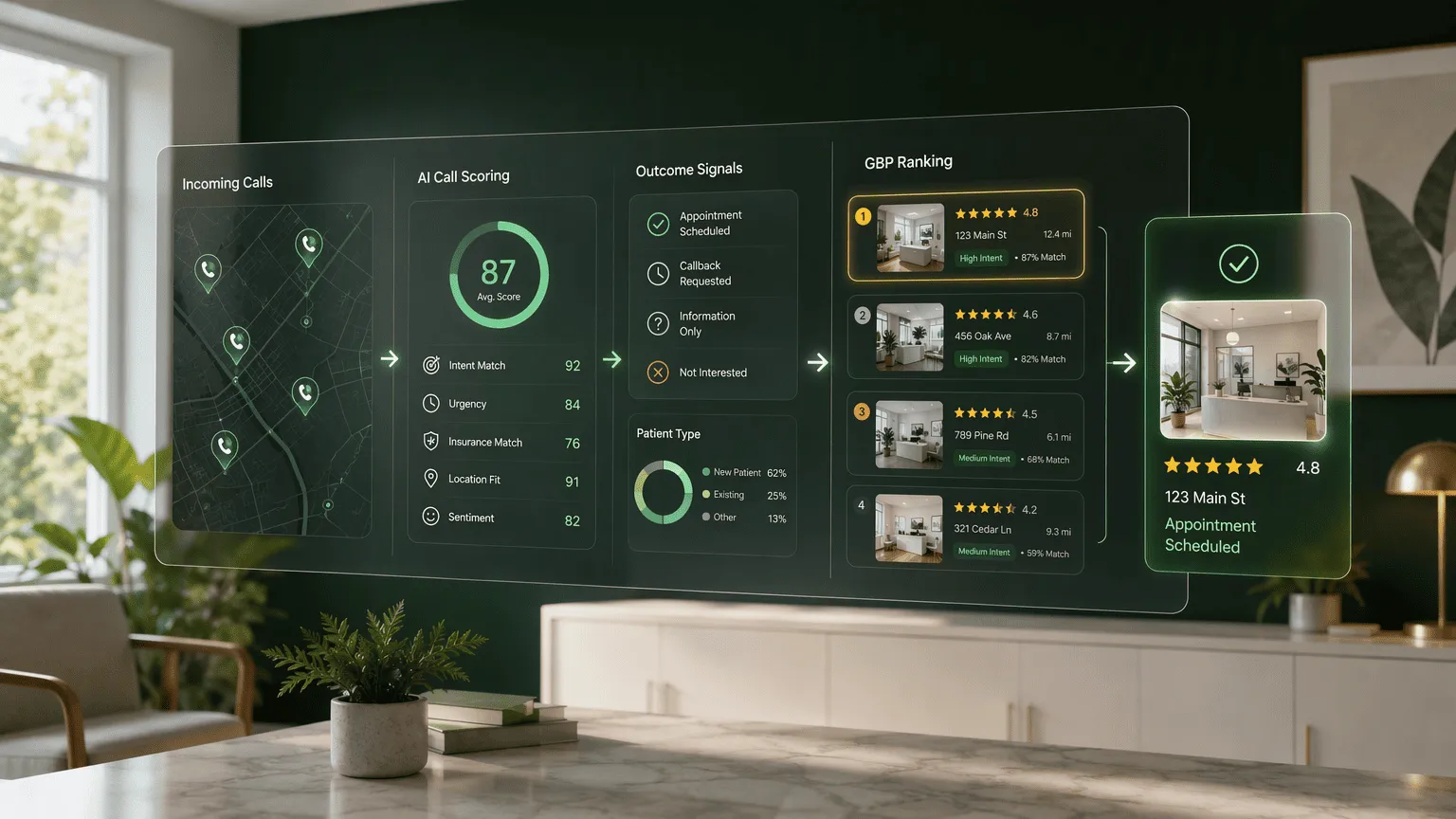
Marchex flips the typical call tracking model: conversation analytics come first, and source attribution follows. The platform's AI engine scores every Map-sourced call on booking outcome, patient type, and conversation quality metrics, then feeds that analysis into a dashboard that reveals which GBP listing generated the highest volume of converted appointments. For healthcare practices, that makes front-desk performance the optimization target.
- Sentiment-based conversion scoring: Marchex's keyword-spotting and sentiment algorithms detect appointment booking language in real time, classifying calls as 'new patient booked,' 'existing patient,' or 'no appointment made' without manual call listening, which automates the conversion tagging that most clinics still do manually in spreadsheets.
- Missed opportunity alerts: The platform flags missed calls that occurred during office hours and qualifies them by caller intent, letting a practice manager prioritize callbacks for high-intent new patient inquiries that rang through to voicemail.
- Competitor comparison benchmarking: Marchex applies its healthcare call analytics dataset to benchmark a practice's booking rate, missed call rate, and average handle time against anonymized peer data from similar specialties, giving the marketing director a relative performance context that raw call counts cannot provide.
- Ideal for groups optimizing scheduling operations: This tier of conversation intelligence is built for practices where the marketing spend is already dialed in and the next optimization vector is front-desk conversion. If half your Map-sourced calls book and half do not, the attribution problem is solved; Marchex attacks the scripting, handling, and callback problem.
6. Convirza
Convirza automates the compliance and lead qualification layer that most practices still handle through manual QA audits. A marketing manager loads a Google Business Profile tracking number into the platform, configures a healthcare conversation script template, and Convirza's automated grading engine scores every inbound call against booking rate criteria, HIPAA script adherence, and new patient identification markers. No one on the staff has to listen to a single recording to know which calls converted.
The platform's differentiation lies in its conversation analytics scripts, which are pre-built for medical and dental appointment workflows instead of adapted from retail or insurance use cases. When a caller utters a specific scheduling keyword, Convirza tags the call with a booking outcome and pushes that attribution to Google Analytics and the practice's CRM. The automated BAA-compliant data handling protocol applies encryption, access logging, and automatic call recording purges on a schedule that the practice configures to match its retention policy. There is no manual compliance management step.
Who it serves: mid-size to large single-specialty groups, typically dental chains, dermatology networks, and orthodontics practices, that run at least 100 Map-sourced calls per month and need to replace manual call QA with an automated grading layer. Convirza concentrates on audit and scoring, fitting into an existing tech stack by pulling Google Maps call data through dynamic number insertion and returning a clean conversion dataset. It does not replicate the contact center routing of CallTrackingMetrics. For practices where the priority is knowing, with zero manual effort, whether the front desk is converting Map leads, Convirza handles that job directly.
7. HubSpot with Google Maps API
HubSpot with the Google Maps API is a build decision, not a tool purchase. A tech-forward practice or its marketing agency can integrate the Google Maps Platform APIs directly with HubSpot's CRM to log GBP-initiated calls as custom object events, associating each call with a contact timeline, a campaign source, and an eventual appointment outcome. No third-party call tracking subscription is required. The compliance burden shifts entirely to the practice's own infrastructure and the Google Workspace BAA, which was last modified on September 12, 2025.
- Custom attribution objects: Use HubSpot's custom objects and the Google Maps Places API to create a 'GBP Call Event' record that logs the timestamp, listing interaction source, and caller ID, then associate it with the contact record and the marketing campaign that drove the Map impression.
- Control over the compliance architecture: The practice controls data storage, retention, and access directly within the HubSpot instance and the Google Cloud environment, provided a valid BAA is in place and PHI is handled within the scope of Covered Services as defined in the agreement. The responsibility for configuration is yours, not a vendor's.
- No per-call or per-number fees: Because the tracking logic is built on an API integration rather than a forwarding-number subscription model, the marginal cost per tracked call trends toward zero once the development and API infrastructure are in place, which makes this approach cost-efficient for practices with high call volumes.
- Requires developer expertise: This is not a plug-and-play setup. The practice needs a developer or agency partner who understands OAuth scopes for Google Business Profile data, HubSpot's API endpoints for custom object creation, and the legal boundary lines of the Google BAA as it applies to Covered Services. The BAA does not extend to PHI that the customer stores in offline tools or third-party applications that sit outside the Covered Services scope.
8. Native Google Business Profile Insights

Google Business Profile Insights is free and built into every listing. It is also legally insufficient as a primary call tracking source for any healthcare practice that handles protected health information.
The Insights dashboard surfaces click-to-call action counts, direction requests, and website clicks tied to the GBP listing over a defined date range. A practice manager can log in, open the Performance tab, and see a six-month trend of phone call clicks for each location. That data is useful for establishing demand baselines and validating upward trends. It tells you nothing about whether those calls became appointments, whether the caller was new or returning, or whether anyone at the front desk picked up.
The bigger issue is that GBP Insights comes with no BAA. Any PHI passing through those numbers falls outside the practice's compliance framework. No healthcare practice should rely on native Google forwarding for call tracking.
Use GBP Insights for trend validation and impression-to-call ratio benchmarking. If your compliant third-party tool logs 300 Map calls in a month and GBP Insights shows a similar call action count, you have signal consistency. A sharp divergence points to a tracking configuration error worth investigating. Treat GBP Insights as a secondary reference layer that confirms your primary attribution data is directionally accurate. For the actual conversion tracking, booking rate measurement, and new patient attribution required to manage marketing ROI, pick a tool from the rest of this list.
Conclusion
The tools stack into a clear hierarchy in 2026. Clinads sits at the top for practices that want a healthcare-specific attribution engine. It traces a Google Maps call to a booked appointment date without the bloat of a generalist platform.
CallRail and WhatConverts serve the broad middle of the market. CallRail is a compliant call analytics tool at a predictable price point that deploys quickly. WhatConverts is a multi-channel lead tracker that unifies Map calls with every other referral stream feeding the front desk.
CallTrackingMetrics and Marchex belong to the enterprise groups that need agent scoring, AI outcome classification, and contact center routing layered on top of attribution. Convirza offers a focused automation layer for compliance and QA. HubSpot with the Maps API is the DIY option for tech-forward practices that control their own infrastructure. Native GBP Insights is a validation check, never a primary source.
The one factor no practice can compromise on is the Business Associate Agreement. If a vendor will not sign a BAA that covers call data storage, staff access, and the handling of phone-captured PHI, the tool does not qualify for healthcare use. Period. That eliminates Google Voice and native GBP forwarding numbers from the tracking stack. The six paid platforms above all execute BAAs and compliant data handling.
Your next step is matching their operational strengths to your practice's call volume, technical capacity, and front-desk workflow. Pick the tool that shows you booked appointments and enforce the BAA requirement before provisioning a single tracking number.
Frequently Asked Questions
What are click-to-call conversions in Google Maps and why do they matter for healthcare practices?
Click-to-call conversions are the phone calls initiated when a searcher taps the blue 'Call' button on a healthcare practice's Google Business Profile in Google Maps. For medical and dental practices, these calls represent high-intent prospective patient inquiries that are further down the conversion funnel than website visits, and each one carries a direct correlation to appointment bookings and new patient revenue.
The best tools combine dynamic number insertion for Google Business Profiles with signed Business Associate Agreements, encrypted PHI storage, and booking-rate analytics.
How do you set up call tracking on a Google Business Profile for a medical or dental practice?
- Place the tracking number: Set the tracking number as the primary phone number on the GBP, moving the practice's real number to the secondary line to preserve NAP consistency across directories.
- Provision a forwarding pool: Set up a local area code forwarding pool through the tracking platform.
- Configure DNI code: If the tool also tracks website calls, implement the dynamic number insertion JavaScript snippet on the site.
- Verify compliance: Confirm that call recordings and logs operate under an active Business Associate Agreement.
What metrics should a healthcare practice monitor beyond just the number of phone calls?
Booking rate is the metric that separates performance from noise: what percentage of Map-sourced calls resulted in a scheduled appointment? Track missed call rate during office hours, the new versus existing patient ratio, the cost per booked appointment, and front-desk agent conversion rates. Call duration and call outcome classification, new patient booked, reschedule, general inquiry, provide the context that raw call volume lacks.
How do call tracking platforms compare on features like dynamic number insertion, local numbers, and CRM integrations for healthcare?
All ranked platforms offer dynamic number insertion for GBP, but they diverge on local number pools, CRM integration depth, and compliance automation. WhatConverts unifies Map calls with web forms and chat in a single lead dashboard. CallRail and CallTrackingMetrics provide broad native CRM integrations, while HubSpot requires custom API development to log Map calls as custom CRM objects.
What are the current HIPAA and privacy considerations when using third-party call tracking on Google Maps in 2026?
The BAA scope limits PHI handling to specific Covered Services, so practices must configure third-party tools strictly within those contractual boundaries and avoid routing PHI through unapproved applications.
Sources
- HIPAA Business Associate Addendum - admin.google.com
- Google Workspace HIPAA Business Associate Amendment - workspace.google.com
- Tracking Phone Numbers in Google My Business Listings and Beyond | SEO Forum | Moz - moz.com
Want help executing this for your clinic?
Book a 30-minute call and we will map what a real ad engine would look like for your specific service mix.
Book a call