
6 Best AI Systems to Find Your Peak New Patient Booking Times and Channels in 2026
IntroductionMost clinic marketing budgets hemorrhage cash into the wrong channel at the wrong time. You look at competitors with packed schedules and assume they have a bigger ad spend. The problem is not budget.
The problem is that you are running intuition-based media buys while they let their own patient data dictate exactly when and where to appear. AI now processes your CRM records, call logs, and search patterns to surface actual peak conversion windows, like Tuesday mornings for surgery or Sunday evenings for urgent care. It is a shift from guessing to knowing, and it separates the profitable practices from the ones burning through marketing retainers.
The mechanics are straightforward but unforgiving. If you feed a platform like Google Ads de-identified booking events, its Smart Bidding algorithm will find the time slots where your specific patients convert. Stop feeding it noise, and it stops wasting your money.
The same principle applies to phone calls. Invoca's AI analyzes conversation recordings and tags a 'booked' appointment versus a hang-up, then sends that signal straight back to your bidding engine. Suddenly, your ad spend optimizes against revenue events, the kind that fill a schedule rather than inflate a click report.
This article lays out the tools that make this possible, ranked by their ability to turn your own data into a schedule of high-intent moments. The goal is to stop buying ads in the dark.
Key Takeaways
Here are the non-negotiable realities for AI-driven ad timing that cuts patient acquisition cost:
- ROI leaders are Google and Meta, properly configured: Google Ads Smart Bidding and Meta Advantage+ currently deliver the strongest return, but only when fed clean, first-party booking data.
- They bid like a commodity retailer and miss the clinical context entirely.
- Suppression lists cut pure budget waste: Meta Advantage+ can prevent approximately 30% waste on re-impressions to existing patients by excluding your current patient list, a direct line to protecting your spend.
- Call analytics close the phone-based conversion gap: For surgical and derm practices where the phone rings, Invoca-style conversation intelligence recovers missed interactions that can yield over 30% incremental new patient volume.
- Expect restrictions on health-condition targeting: Meta's limits force a reliance on lookalike audiences rather than direct health profiles, making your seed list quality the ceiling on your prospecting accuracy.
1. Invoca: Conversation Intelligence AI for Surgical, Orthopedic, and Derm Appointment Attribution
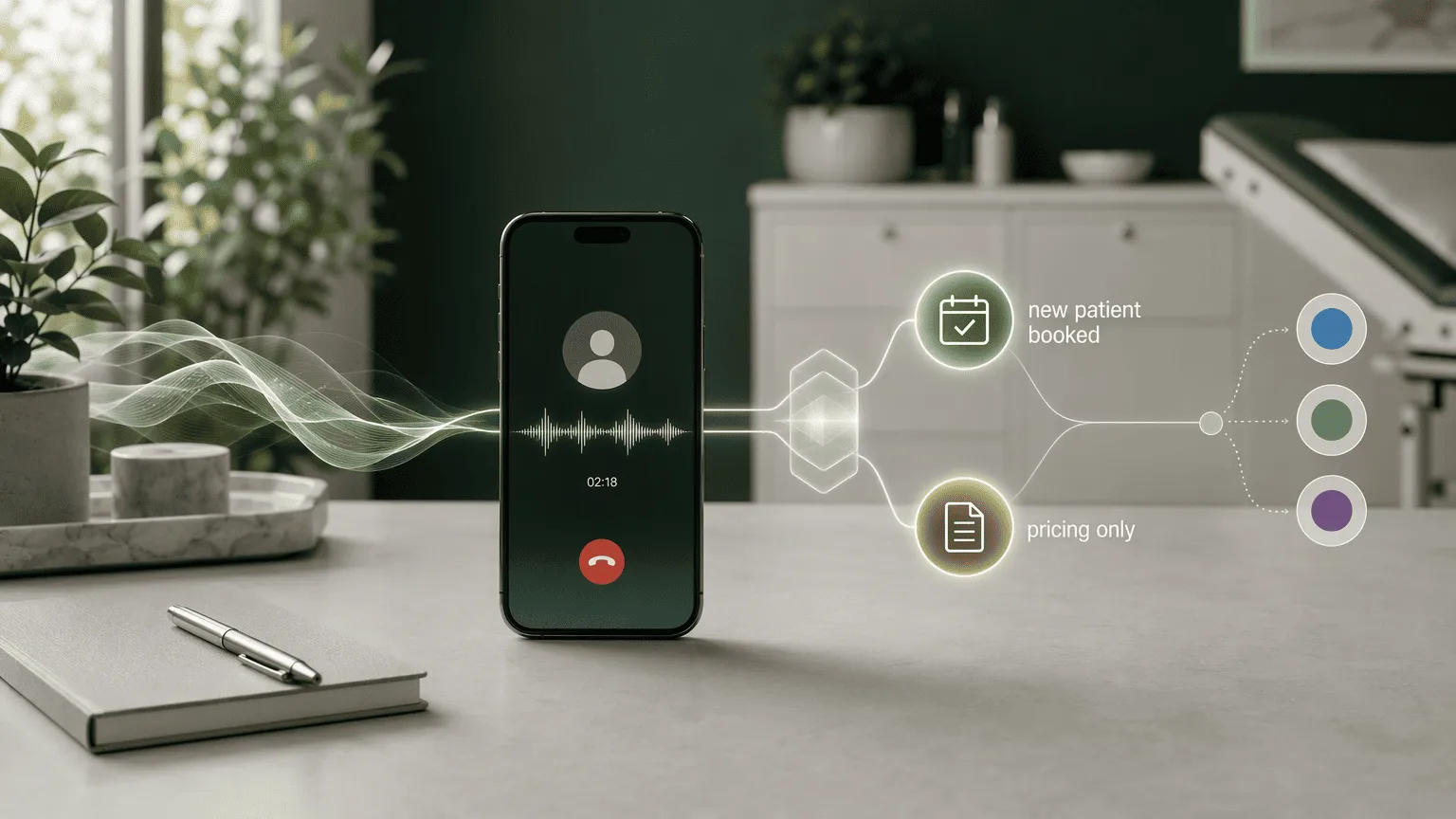
High-ticket conversions in surgical, orthopedic, and dermatology practices happen on the phone, which makes a click-based conversion tag dangerously incomplete. Invoca's AI analyzes the spoken words inside a call, classifies outcomes into structured data points like 'new patient booked' or 'requested pricing only,' and filters out hours-of-operation noise. Hang-ups become lost revenue the ad platform never detected.
Feeding a definitive booking event back to Google and Meta, instead of a call duration metric, directly calibrates auction-time bidding. Your campaigns stop valuing every 90-second call and start pursuing the conversations that end with a scheduled surgery date. When between 35 and 45% of new patient interactions do not result in a booked appointment, failing to distinguish a high-intent call from a quick question leaves significant budget assigned to non-converting hours.
Clinics that layer Invoca-style attribution onto their search and social campaigns fix the signal loss at the most fragile point in the funnel. The platform forces the algorithm to train on business outcomes rather than proxy engagement metrics. For elective and procedure-based specialties, this turns call volume from a vanity metric into the definitive optimization signal your bids have been missing.
2. Google Ads Smart Bidding: Auction-Time Optimization Using Offline Patient Conversion Events

Smart Bidding becomes a surgical instrument for healthcare when you feed it de-identified, encrypted booking events under a signed BAA. The algorithm runs on your actual patient conversion data instead of simple click signals. It maps the exact days and hours where your specific patient population schedules care. A common pattern emerges across specialties: surgical practices often see peak conversion density clustered in the 9 a.m. to 11 a.m. Tuesday window, while urgent care centers see their highest return on spend during the 7 p.m. Sunday block. Without your own booking data uploaded securely, the engine is blind to these rhythms.
The technical workflow is a hard gate. Configure offline conversion import using GCLID matching, ensure your CRM export scrubs any direct PHI before transmission, and only activate the feed after confirming your BAA is countersigned. Once live, you have a system that bids aggressively when your historical evidence says a real patient is likely to book.
3. Meta Advantage+: Prospecting and Re-engagement Waste Reduction with Custom Patient Suppression Lists

Meta Advantage+ spends your money fast. When it finds people who have already booked with you, it keeps spending anyway. Uploading a hashed first-party patient list as a custom audience exclusion stops that loop cold. The ad engine then skips existing patients, which cuts roughly 30% of budget waste on re-impressions that produce zero incremental bookings.
Broader targeting on Meta now operates inside narrow health-category guardrails. The platform restricts treatment-specific targeting. You can't build an audience directly on a condition like 'migraine sufferers' or 'prospective knee replacement patients.' Your workaround uses suppression-based lookalike seeding from your highest-value converted patient files. The algorithm models similarities among people who did book without accessing their protected health information.
Prospecting to cold audiences works only as well as the list you exclude. The playbook calls for aggressive audience culling first, then scaling. Skip the suppression list and your efficiency math breaks before the campaign gets a chance to optimize.
4. AdRoll: Calendar-Aware Demand Modeling for ACA and Medicare Advantage Patient Intake Windows
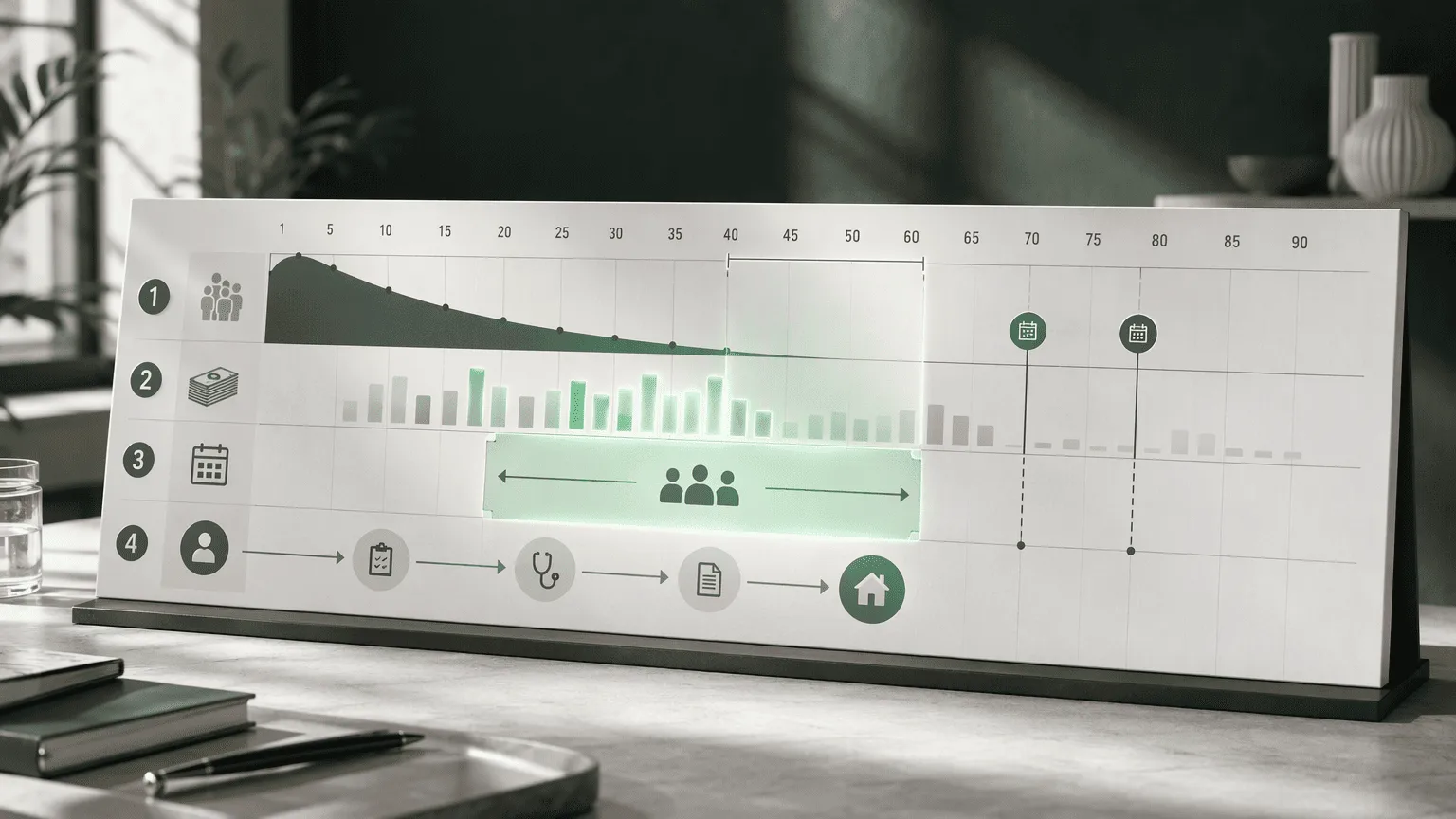
AdRoll earns its place by adding a temporal dimension that standard bidding engines miss: it front-loads budget to capture patients while they are actively shopping for new coverage. The platform’s predictive demand modeling identifies 45 to 60-day intake windows leading into ACA and Medicare Advantage enrollment deadlines. It shifts spend forward to the period when individuals review their plan options and select tied provider relationships during the enrollment cycle, rather than reacting to real-time signals after the fact.
The mechanics apply directly to practices dependent on insurance-driven patient flow. The calendar-aware plays that matter for a specialty practice break down like this:
- Pre-enrollment budget front-loading: Aggressively weight spend to the 45 to 60 days before the deadline, capturing the research and decision phase when provider selection intent peaks.
- Post-enrollment suppression: Reduce bids sharply after the enrollment window closes until new plan activation triggers a secondary wave of in-network searches.
- Medicare Advantage cycle alignment: Sync creative and budget pacing to the annual Medicare enrollment rhythm, treating the period outside this window as a retargeting and nurture hold.
- Provider network targeting overlay: Layer in-network plan data on top of the temporal model so ad delivery maps to when a given specialty’s patient base has active coverage decisions to finalize.
5. Manual Agency Buying: Traditional Media Planning Benchmarks and the Human Oversight Differential in Local Healthcare
A traditional agency running manual quarterly placements operates at a structural disadvantage to algorithms adjusting bids in response to fresh CRM data every hour. The pace of manual optimization cannot match auction-time signals, which creates a persistent efficiency gap the moment a clinic's booking patterns shift. AI is faster because it reacts instantly to data. But the system will not register that your highest-volume surgeon is on vacation next week, that a local competitor just opened two blocks away, or that a weather event is crushing appointment demand for the next 48 hours.
Here is the practical split between the two approaches:
| Capability | AI (Google/Meta/AdRoll) | Manual Agency Buying |
|---|---|---|
| Bid Adjustment Speed | Auction-time, continuous | Quarterly or monthly pacing reviews |
| Local Event Responsiveness | Blind to provider vacations and local shocks | Capable of immediate tactical adjustments |
| Data Source Integration | Operates on your CRM, call logs, and offline conversions | Typically limited to platform-native reporting |
| Anomaly Detection | Statistical pattern recognition only, no business context | Human judgment catches relational and qualitative shifts |
| Compliance Burden | Requires BAA and strict data hygiene protocols | Agency acts as a governance layer reviewing data flows |
| Optimization Granularity | Hour-of-day and day-of-week granularity tied to historical conversion timing | Broad dayparting with manual bid adjustments |
Manual oversight functions best as a governance layer on top of an automated stack. Your agency team should be checking what the algorithms miss: provider schedule changes, competing clinic openings, and local PR events that shift patient sentiment overnight. Treat AI as the engine and human judgment as the steering.
6. The AI Feedback Loop: Post-Click and Post-Call Retraining with Offline CRM Conversion Data

An AI advertising stack stays alive only when new booking data cycles back into the platform after every completed appointment. The closed-loop process requires these steps:
- Track the event: a click or call occurs, the CRM records a booked appointment with a unique GCLID or hashed identifier.
- Anonymize and upload: that record is de-identified and encrypted, then uploaded as an offline conversion event.
- Retrain the model: the platform algorithm consumes it and retrains the bidding model overnight.
Break the loop and the deterioration is rapid. Your Smart Bidding engine starts training on ghost entries from old data or unlinked lead sources that never had booking intent in the first place. The output is higher bids on the wrong inventory, at the wrong times, for people who were never going to book. The most common failure point is CRM data quality. When appointment fields are left blank or sales outcomes are never logged, the algorithm loses its ability to distinguish a confirmed $2,500 surgery from a no-show.
Closed-loop architecture is the dividing line between a tactical tool and a durable competitive advantage. Your system moves from one-time optimization to a living engine where every booked appointment sharpens tomorrow's targeting. The entire stack earns its keep here, because a platform like Clinads handles the CRM integration, Invoca feeds the phone bookings, and Google or Meta apply it at auction. The quality of your bid decisions has a hard ceiling: your CRM data. The loop's integrity is the ceiling on your entire paid patient acquisition effort.
Conclusion
The best times and channels to advertise for new patient bookings come from your practice's own unified data. Clean, connected signals beat any media buyer's instinct or industry benchmark every time.
Connect a CRM to Google's Smart Bidding and you start seeing the shape of your actual demand: surgical consults peaking Tuesday mornings, urgent care converting Sunday evenings. Those patterns surface when the feedback loop is fed clean booking events under a signed BAA. The highest-performing practices stack Clinads-style automation for multi-channel orchestration, Invoca-level conversation intelligence for phone-based conversion fidelity, and AdRoll's calendar-aware modeling for insurance enrollment windows. A manual oversight layer catches the local anomalies the algorithms still miss.
HIPAA friction and CRM data degradation are real. Your stack needs ongoing maintenance. The moment data quality slips, your ad AI trains on ghost entries and the efficiency gain evaporates.
Frequently Asked Questions
How does AI determine the best times to run ads for patient acquisition in a healthcare practice?
AI processes your own historical CRM booking data to surface actual peak conversion windows. Once you upload de-identified offline conversion events under a BAA, Google Ads Smart Bidding, for example, calculates the hours and days where your specific patients schedule, often surfacing patterns like Tuesday mornings for surgery or Sunday evenings for urgent care.
Which advertising channels show the highest return on investment for new patient bookings according to recent data?
Google Search Ads and Meta Advantage+ show the strongest ROI when properly configured. Google excels with high-intent search capture, and Meta Advantage+ offers efficient prospecting, provided that you upload a suppression list to prevent re-impressions to existing patients, which can cut approximately 30% of budget waste.
What kind of data, integrations, and historical inputs does AI need in order to optimize medical ad scheduling?
AI requires three core inputs:
- First-party CRM data: accurate patient booking records.
- Offline conversion tracking: set up under a signed BAA to securely feed de-identified events back to the ad platform.
- Call analytics integration: for phone-based practices, distinguishing attended appointments from hang-ups to train bids on actual revenue outcomes.
What are the limitations of using AI to automate healthcare ad timing and channel selection, especially under US privacy laws like HIPAA?
The primary limitations are data quality dependency and regulatory constraints. AI predictions degrade rapidly on ghost entries or incomplete CRM fields. HIPAA mandates a signed Business Associate Agreement before any patient-data-adjacent signal reaches the ad platform. Additionally, AI cannot detect local provider vacations or sudden competitive openings, requiring human oversight.
How do AI-driven recommendations compare to manual, agency-based media buying for dental and medical appointment bookings?
AI adjusts bids continuously at auction-time based on your live CRM data, a speed manual quarterly pacing cannot match. However, an agency excels at detecting local context a machine misses, like provider availability changes or a new competitor opening. The optimal setup uses AI as the optimization engine with a human team providing a governance and anomaly-detection layer.
What real-world results have practices in the United States seen after adopting AI advertising tools for patient generation?
Practices deploying conversation intelligence see that recovering missed phone interactions can yield over 30% incremental new patient volume. Meanwhile, implementing simple custom audience exclusions on social platforms prevents substantial waste on re-impressions. Some specialized AI modeling tools are reporting up to a 50% reduction in planning cycle time and an 8x improvement in audience analysis speed among beta users.
Sources
- 5 Best AI Tools to Predict Optimal Ad Times and Channels - getclinads.com
- Advertising Data and AI is Fueling Better Outcomes for Patients and Brands - deepintent.com
Want help executing this for your clinic?
Book a 30-minute call and we will map what a real ad engine would look like for your specific service mix.
Book a call