
Stop Losing Patients at the Exact Moment They Decide Who to Trust
IntroductionYour practice can score a 4.8 on patient satisfaction surveys, but if a nearby competitor with a 3.9 grabs the top spot in Google's map pack, you are invisible to the nearly half of patients who start their doctor search on Google. The problem is clinical visibility does not transfer automatically to digital visibility.
The immediate reaction from practice managers is usually fear of complexity and cost. An agency retainer of $3,000 a month is the wrong starting assumption. The dominant local ranking factor is a free tool you already have access to: your Google Business Profile (GBP).
Chris Kirksey of Direction.com confirms in his 2026 analysis that GBP optimization, category selection, services, hours, and photos, directly determines map pack placement. This guide is a hands-on technical and operational checklist designed to let a practice manager execute these changes today, without an agency.
Key Takeaways
Local search dominance for a medical practice is a product of operational discipline. These actions form a repeatable system.
- Google Business Profile primacy: Select the most specific primary category possible; this single choice controls over 1,200 ranking signals.
- NAP consistency audit: Manually correct inconsistent listings on the AMA, ABMS, state licensure board, and MedlinePlus directories.
- Punctuality-driven review engine: Staff scores (aOR 3.0) and punctuality scores (aOR 2.1) are the strongest predictors of a high overall rating.
- Localized service pages: Create unique, non-duplicate pages targeting specific conditions and neighborhoods to capture 'near me' queries.
- Free competitive monitoring: Use Google Business Profile Insights and manual map pack scraping to reverse-engineer competitor category choices and review velocity.
Step 1: Claim and Fundamentally Optimize Your Google Business Profile (GBP)
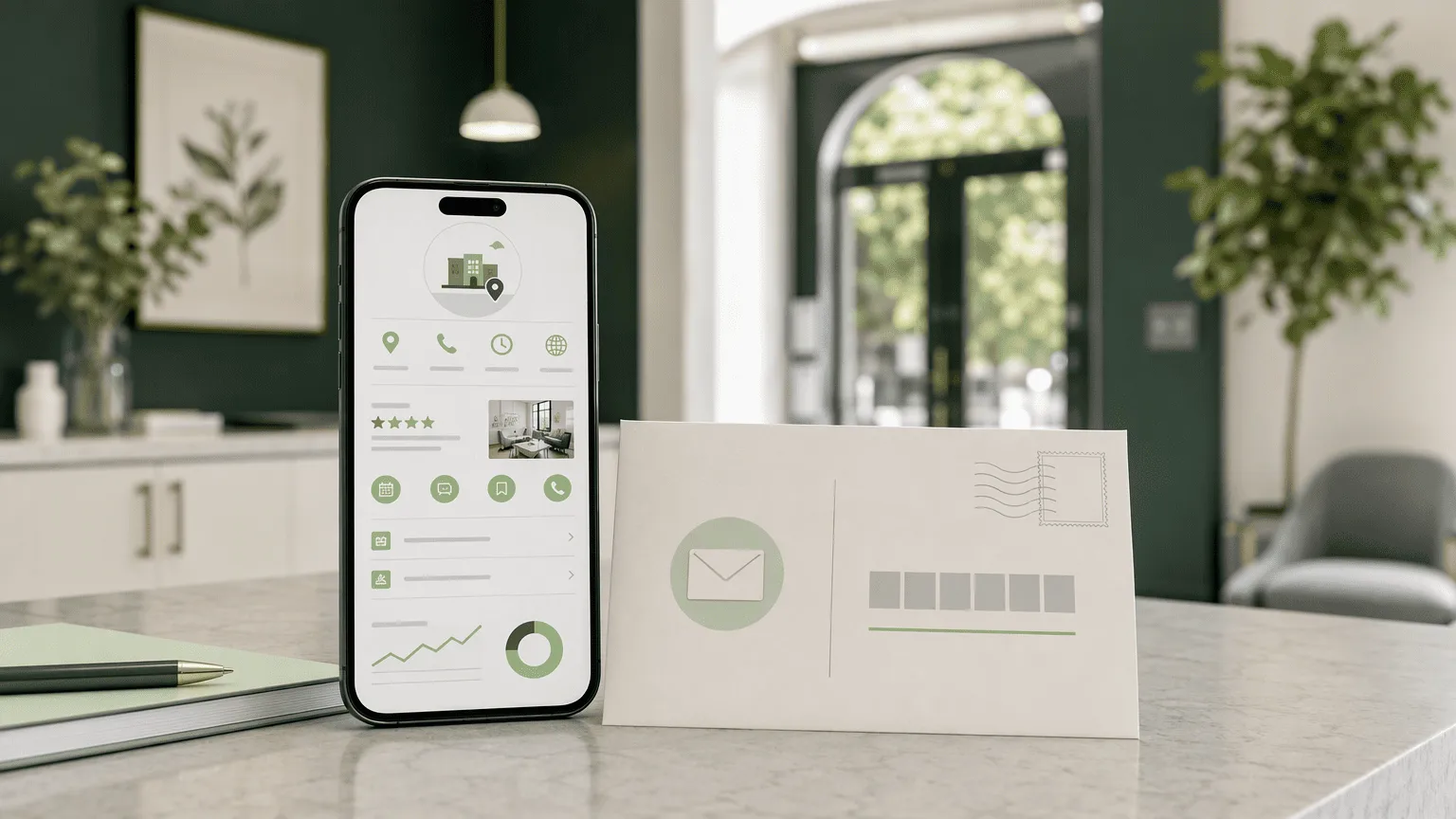
Claiming and verifying your GBP is the foundational act of local SEO. Without it, nothing else in this guide will produce a return. The verification process usually involves a postcard sent to your practice address from Google, and you must complete it rigorously because an unverified profile cannot appear in the map pack that drives 93% more actions for the top three results.
The primary category selection is the single most powerful lever you can pull. A wrong primary category is ranked No. 2 on Whitespark's list of negative local ranking factors, per Kirksey's research. Do not choose "Medical Clinic" or "Doctor."
Drill down to the most specific descriptor available, such as "Sports Medicine Physician," "Pediatric Dentist," or "Dermatologist." Then, populate every service field with hyper-specific procedures you actually perform, not marketing descriptions.
Accurate hours and fresh photos are trust signals, not just housekeeping. Kirksey's guidance highlights that Google's own data confirms customers are 2.7 times more likely to consider a complete profile reputable and 70% more likely to visit it. A stale profile signals a neglected practice.
Step 2: Audit and Build Unshakeable NAP Consistency Across Medical Directories
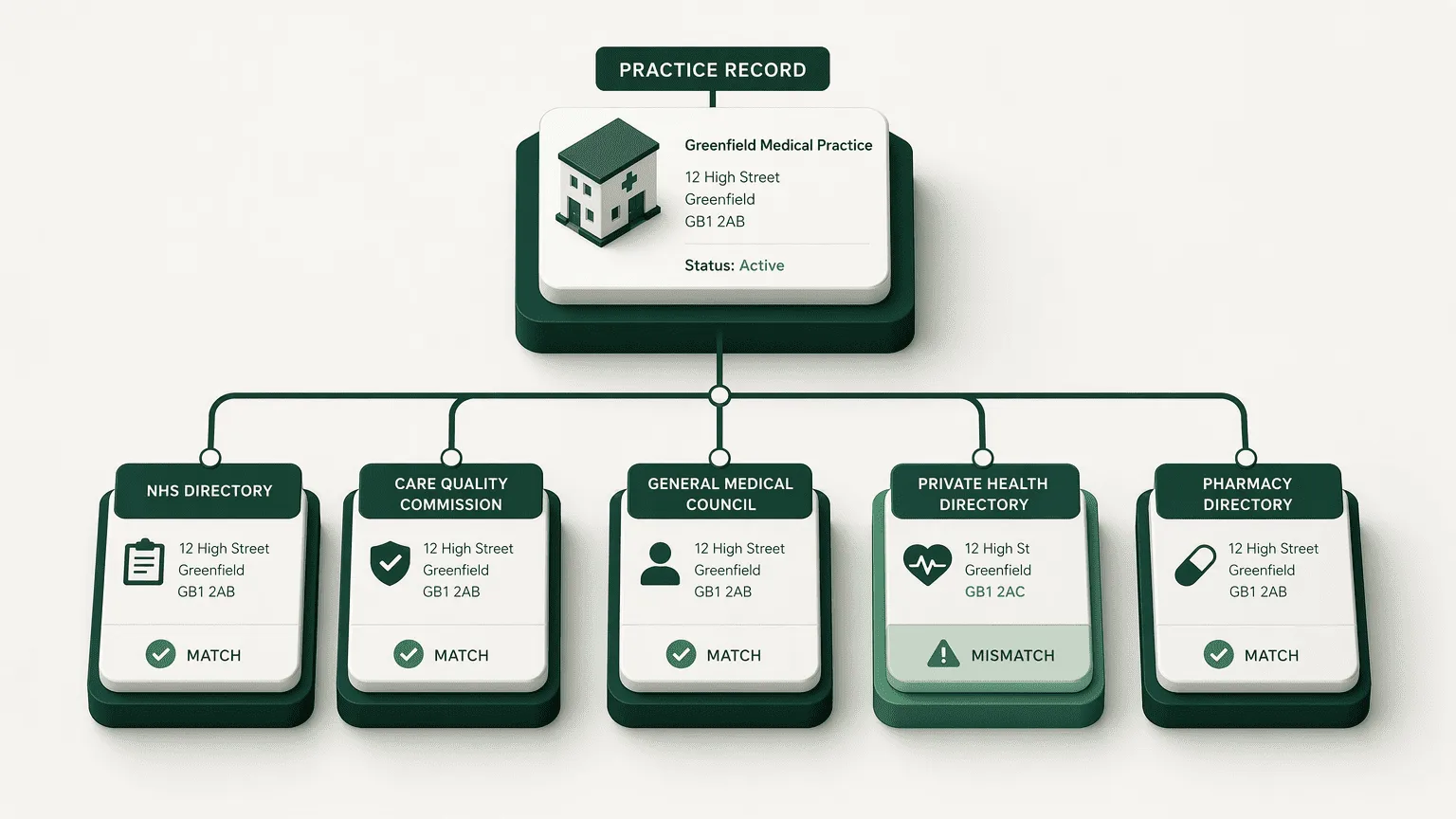
Google cross-references your Name, Address, and Phone number (NAP) across the web to decide if your practice is a legitimate, operational entity. An inconsistency as minor as "Suite 4" versus "Ste 4" fractures the trust signal and pushes you below competitors with perfect hygiene. The fix is a manual audit focused on a handful of authoritative medical directories that search engines treat as ground truth for healthcare providers.
| Directory | Audit Action | Common Discrepancy & Fix |
|---|---|---|
| AMA & ABMS Profiles | Search for the practice and each individual provider. | Claim profiles that still list a provider's old residency address. Update to the current practice address and phone number exactly as they appear on your GBP. |
| State Licensure Board | Locate the "Find a Licensee" tool on your state's official.gov website. | Check that the practice location field (not just the license mailing address) matches the GBP address. File an address change form if required. |
| MedlinePlus Directories | Navigate via medlineplus.gov/directories to the linked medical libraries and provider finders. | Search for your name, as missing a directory altogether is the most common failure. Submit your information if absent; correct any mismatched suite numbers or phone extensions. |
You can use a tool like Clinads to automate the monitoring of these citations, but the initial correction of core medical board errors is so sensitive that a direct manual submission to the state licensing authority often resolves it faster than automated services.
Step 3: Drive an Ethical, Rank-Boosting Review Engine Focused on Staff and Punctuality

A blind push for raw review volume is the wrong goal. A study analyzing 16,703 online ratings of healthcare providers found that review frequency was inversely associated with scores (aOR 0.94), meaning providers with more reviews tended to have slightly lower average scores. The ranking signal is not simply "get more reviews," but rather, "generate fresh, high-score reviews driven by the factors that most powerfully predict a positive rating."
Those factors are staff friendliness and punctuality. The data shows a higher staff score was associated with a higher overall score (aOR 3.0), and a higher punctuality score also lifted the overall rating (aOR 2.1). Your operational task is to reduce actual patient wait times below the office average, train front-desk staff on name recognition and smile rate, and then ask a satisfied patient for a general Google review via a compliant, incentive-free text or email. The message is: "We prioritize short waits and friendly care. If that was your experience today, we'd appreciate you sharing it on Google."
Google's EEAT standard (Experience, Expertise, Authoritativeness, Trustworthiness) is the architecture your medical website must satisfy, and HIPAA constrains how you prove it. Here is the tactical sequence to build a site that serves both regulators and the algorithm:
- Build clinician author pages with credential linkage: Create a dedicated page for each doctor and mid-level provider. Embed their byline, a headshot, and a direct link to their active NPI profile on the CMS NPPES NPI Registry.
- Publish de-identified case studies: Write clinical case summaries that walk through diagnosis and treatment, stripping all 18 HIPAA identifiers. Use these to demonstrate first-hand experience (the 'E' in EEAT) with specific conditions your ideal patients search for.
- Cite peer-reviewed sources in patient guides: For every condition or treatment guide, anchor your clinical claims to research indexed on PubMed (PMC) or NLM. This turns your medical knowledge into an authority signal.
- Restrict patient testimonials to generic satisfaction quotes: Never publish a review containing treatment details, diagnosis, or outcome specifics. Use only statements like "The front-desk team was welcoming" to satisfy social proof requirements without creating a HIPAA breach.
Step 5: Deploy Localized Service Pages and Community Health Content

Condition-specific guides written by your clinicians under their verified bylines are the most durable local ranking assets you can own. A guide titled "Managing Pediatric Asthma in Austin: Dr. Jane Smith's Evidence-Based Approach" immediately satisfies Google's 'near me' intent for "pediatric asthma doctor Austin" because it pairs recognized medical authority with explicit geographic relevance.
A page that ignores local triggers gets ignored. Your page must address what is actually happening in the air and environment around you, such as explaining how Cedar Fever season affects asthmatic children in Central Texas. Clinicians writing about their specific patient caseloads inject genuine experience that a generic content farm cannot replicate, satisfying the EEAT requirement.
Avoid the common trap of duplication. Creating a dozen pages that replace only the neighborhood name ("sports medicine in South Austin," "sports medicine in Round Rock") is a spam signal. Structure one deeply researched "community health" page per major service area.
This could cover local health events, regional disease prevalence data from the state health department, and in-house clinical protocols, making each page distinct enough to stand on its own in Google's index.
Step 6: Monitor, Analyze, and Outrank Competitors Using Free Tools
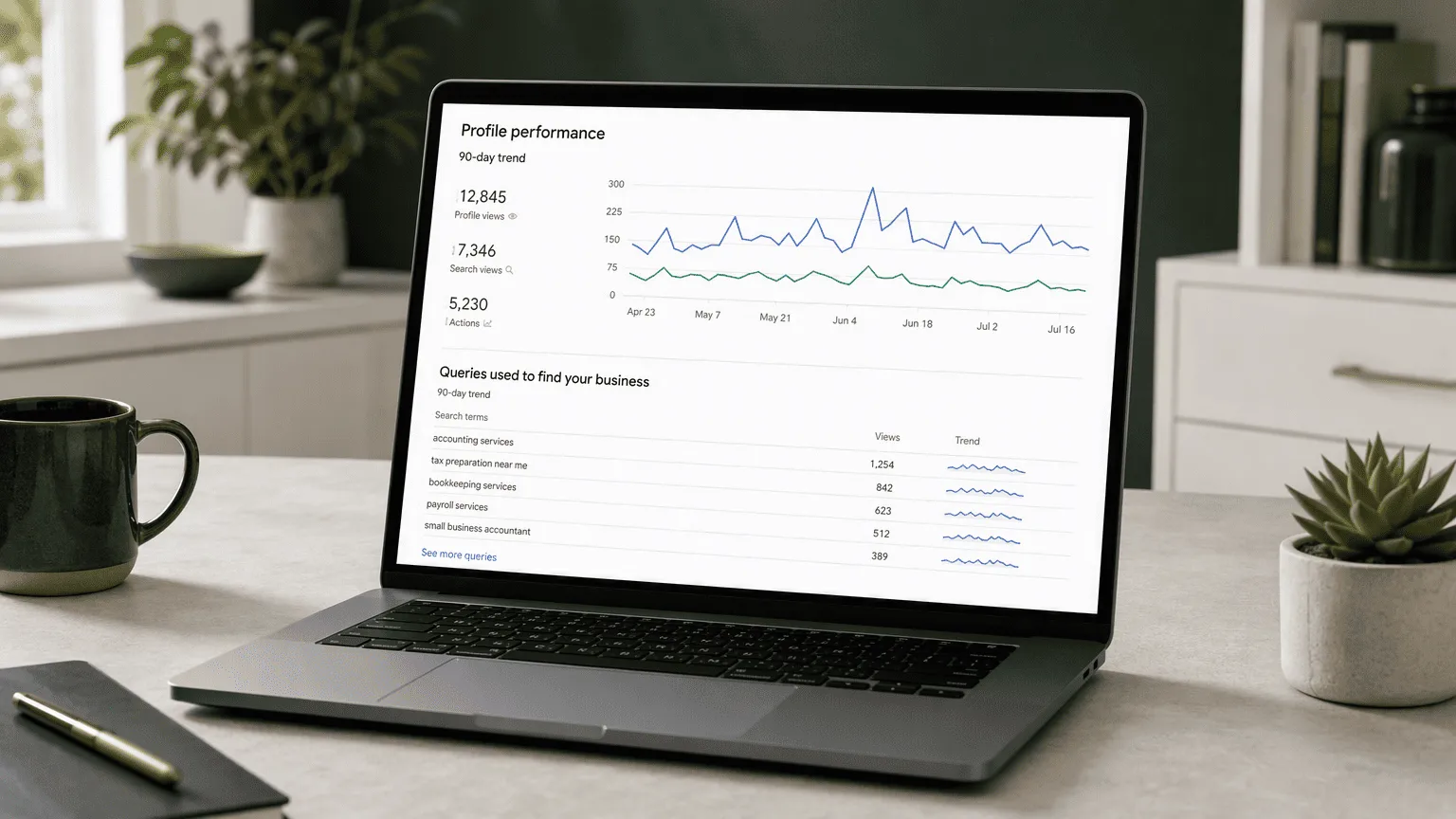
Google Business Profile Insights is your primary intelligence feed, and it costs nothing. Inside the GBP dashboard, open the 'Performance' tab and study the 'Queries used to find your business' report over a 90-day window. This reveals the exact search terms driving map pack impressions. You can see whether your optimization is pulling patients looking for your core services or just your brand name.
To track which of these local impressions convert into appointments, you must instrument your booking links. A standard GBP 'Appointments' link produces blind traffic. Append a simple UTM parameter structure to your scheduling URL.
Use something like utm<em>source=gbp&utm</em>medium=organic&utm<em>campaign=map</em>pack. This forces Google Analytics to segment map pack traffic, revealing whether your local rankings are building a waiting list or just racking up impressions.
Manual competitor benchmarking remains your best free strategic tool. Once a week, open an incognito window and search your most valuable target query, such as "rheumatologist near me." Screen-capture the 3-pack results, then pull each competitor's GBP to analyze their primary category choice and review velocity over the past two weeks. When you spot a competitor rising fast, check whether they added a new service category or received a sudden burst of reviews. Adjust your own category specificity and review solicitation cadence accordingly.
Conclusion
This six-step sequence is a sustainable feedback loop: optimize the GBP's most specific category, fix NAP discrepancies on the board certification portals, drive punctuality-focused reviews, publish de-identified EEAT content under real clinician names, target the localized queries with unique community health pages, and then let the free analytics tools tell you exactly which move outranks your next competitor. Local search visibility is not a function of ad spend. It is a function of operational and technical discipline that puts your practice's name in front of a patient at the exact second they decide who to trust. Execute the loop, watch the 3-pack, and repeat.
Frequently Asked Questions
Which Google Business Profile fields and signals most directly affect a medical practice's local pack ranking in 2026?
The primary category is the most powerful signal; selecting a specific label like 'Sports Medicine Physician' instead of 'Doctor' directly controls the queries where you surface. Accurate services, consistent hours, and fresh photos are the next critical trust signals that determine map pack placement.
What are the highest-impact, time-efficient tasks a practice manager or physician can do themselves to improve local SEO?
To set up a practice's local presence correctly, take these sequential steps:
- Claim and verify the GBP, then drill into the settings to select the most specific primary category.
- Manually audit and correct the NAP on the AMA, ABMS, and your state licensure board directory.
- Train front-desk staff to ask satisfied patients for a generic Google review via a compliant text message.
How important are online reviews and reputation management for local medical search rankings, and what is the best ethical method to generate more?
Recency and volume are critical ranking signals, but the highest overall scores are driven by staff friendliness and punctuality. The ethical method is an operational one: reduce actual wait times, train staff on name recognition, and then ask patients if they would be willing to share their general satisfaction on Google without any incentive.
What are the common medical-directory and citation mistakes that hurt local rankings, and how do you fix them?
The most damaging mistakes are missing profiles on MedlinePlus-linked directories or listing an old residency address on ABMS and AMA records instead of the current practice location. The fix is a manual audit where you submit the exact, GBP-matching NAP to each board and.gov directory directly.
To create compliant, high-authority content for local SEO, follow these four guidelines:
- Publish condition-specific guides under a real clinician's byline, and link the bio directly to the provider's active NPI registry profile.
- Back all medical claims with peer-reviewed citations from PubMed.
- Use de-identified case studies to show experience.
- Restrict patient testimonials to generic satisfaction quotes that contain no protected health information.
Sources
- An analysis of healthcare providers' online ratings - pubmed.ncbi.nlm.nih.gov
- MedlinePlus: Directories - medlineplus.gov
- Google Business Profile Optimization For Healthcare Practices: 13 Tactics To Rank In The Map Pack - direction.com
- Local SEO for Healthcare: Strategies to Improve Search ... - dexcare.com
Want help executing this for your clinic?
Book a 30-minute call and we will map what a real ad engine would look like for your specific service mix.
Book a call