
7 Best Affordable Marketing Platforms for Small Medical Practices in 2026
IntroductionMost small medical practices lose $15,000 to $30,000 a year to two problems: patients who don't show up and online listings that patients can't find. Your clinicians deliver great care. The bottleneck sits elsewhere.
Marketing tools built for e-commerce don't understand a clinic that starts each morning with HIPAA obligations and a front-desk phone ringing with scheduling requests. You're caught between full-service healthcare agencies charging $1,500 retainers and generic small-business software that has never produced a Business Associate Agreement. Faced with that gap, many practice managers choose to do nothing. That's the most expensive option available.
Below $300 a month, a handful of tools handle the specific motions of a medical office: automated recall, compliant patient messaging, reputation capture, and real-time scheduling sync.
This article audits eight platforms, including one purpose-built as an all-in-one growth engine for a medical practice.
Key Takeaways
Before committing to any monthly subscription, know the three categories of tools that produce outsize ROI on a tight budget and the specific metrics that will tell you whether your spend is working.
- Clinads solves the integration tax: The only all-in-one platform built for clinics, combining brand-automated ad creative, AI listing optimization, and a social scheduler, eliminating the integration tax you pay when cobbling together 4 separate tools.
- Free is viable as a starting line, not a finish line: A compliant stack using JotForm, Mailchimp, and Meta Business Suite can acquire your first 50 patients for near-zero dollars while you prove the model.
- Appointment adherence is the immediate profit lever: A platform like Solutionreach that reduces no-shows by even 8 percentage points returns multiples of its subscription cost before you acquire a single new patient.
- Reputation is a blocking metric: For a local clinic, a Podium-style review generation workflow is not optional. New patient decisions are already being made by an AI reading your review profile before your front desk picks up the phone.
- Measure cost per shown appointment, not cost per lead: The only number that matters is the fully loaded marketing cost divided by the number of patients who actually show up.
1. Clinads: An All-in-One Growth Platform Built Exclusively for Medical Practices

Clinads is the only platform on this list that replaces the need for a separate ad agency, listing manager, and social scheduler by building all three inside a single engine trained on clinic economics. The platform auto-generates on-brand static and video ads from your website, surfaces the competitor ads already running in your specialty and city, and posts on schedule across channels. If you are currently paying an external agency a retainer north of $1,000 to produce ad creative you never see until the end of the month, this directly displaces that line item.
It is the top recommendation for practice owners who are ready to pull marketing in-house but not ready to become a marketing director.
The platform's core workflow is fast because it automates the part that usually burns 15 hours of staff time. Paste your clinic website into ClinAds, and it builds a complete brand kit, generates campaign-ready ads in under a minute, and recommends a budget calibrated to your specialty. For a small internal medicine or dermatology practice running on $200 to $350 in total monthly ad spend, the platform can match the output of a retained agency charging 5 to 10 times that, because the creative production and compliance guardrails are automated rather than billed by the hour.
The trade-off: ClinAds drives new patient acquisition and manages your listings, but it does not handle automated appointment reminders or two-way patient texting. For that, pair it with something like Solutionreach or NexHealth, ranked at positions 2 and 5 on this list.
2. Solutionreach: Automated Patient Engagement and Recall for Consistent Show Rates
Before you spend a dollar acquiring new patients, plug the leak in the appointments you already have. A single no-show costs your practice its fully loaded visit cost, which for many small clinics sits near $23 for the staff time alone before the clinician even enters the room. Solutionreach attacks this math directly with automated recall, multi-channel reminders, and waitlist management designed to keep the schedule dense.
Its lower-tier plans make it one of the most defensible first purchases for a budget-conscious practice. You are buying an operational override that converts scheduled appointments into kept appointments. The recall engine can reactivate dormant patients who last visited 14 months ago but never received a single text message. For a typical 1,500-patient panel, that represents a pool of untapped demand you have already paid to acquire once.
Solutionreach contains no sophisticated ad builder or search engine optimization dashboard. The return on a $200-to-$300 monthly subscription can be measured inside a single week if your no-show rate moves even a few percentage points.
3. Kareo (Now Tebra): Marketing Integrated with a Lightweight EHR

A small-practice owner wearing the office manager, biller, and marketing hat loses real billable time every time she switches between three separate logins. The Kareo-Tebra combined platform fixes that friction.
Operational data and patient communications sit inside the same system. When a clinical note closes in the lightweight EHR, the marketing module can queue a review request or recall reminder based on the visit type. No manual export. No CSV shuffle between tools.
Campaign performance connects to appointment outcomes. Instead of guessing whether a Google ad produced a new patient, the integrated scheduler links the booked appointment back to its marketing channel.
Billing and marketing share one patient record. A patient who is overdue for a wellness visit and carries an outstanding balance can be segmented into a reactivation campaign by pulling clinical and financial filters together. That combination is hard to replicate when the EHR and the marketing tool don't exchange data.
4. NexHealth: Real-Time Booking and Two-Way Sync with Your PMS
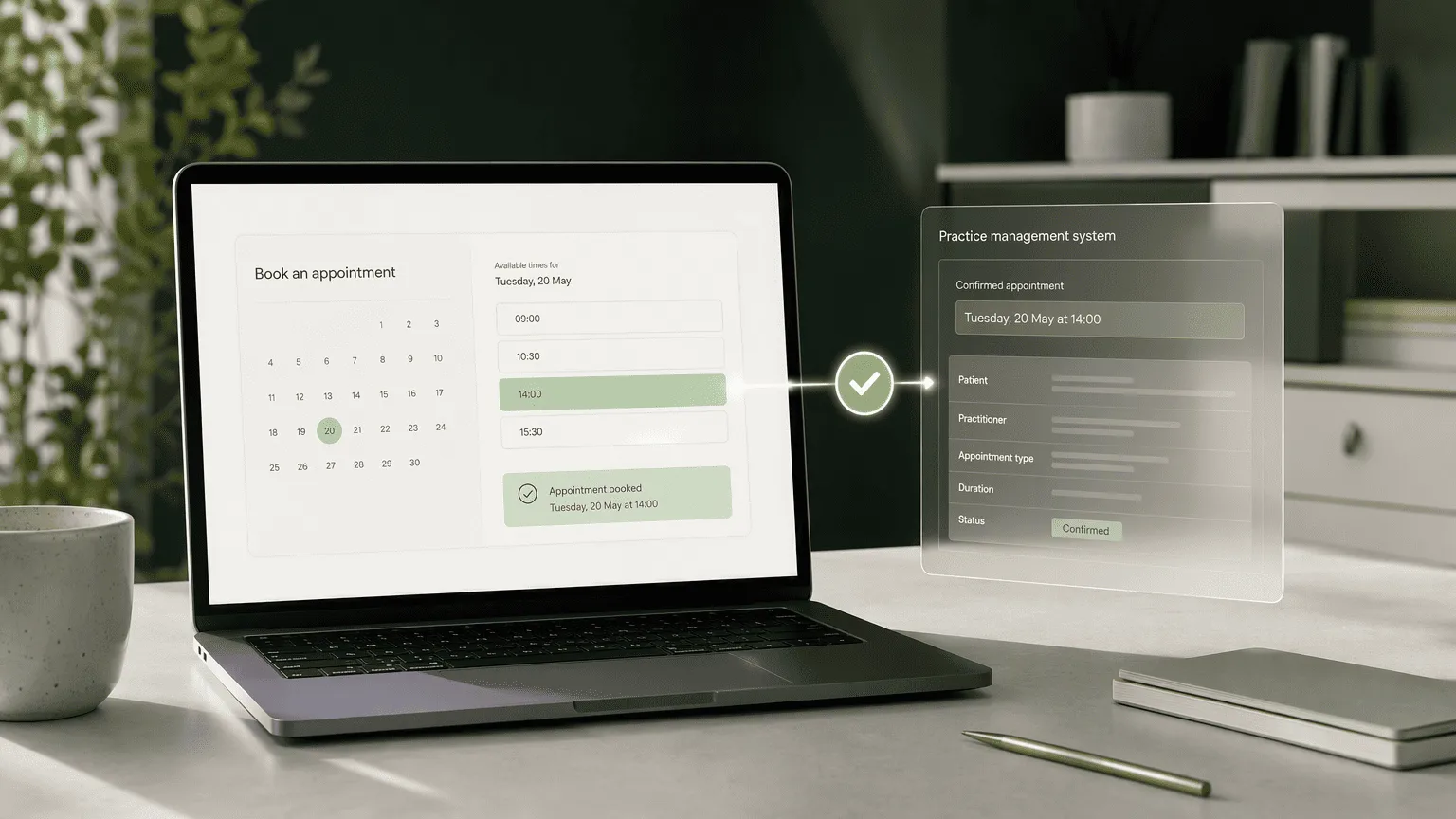
The single biggest conversion leak in a private practice is the online scheduling widget that sends an email to the front desk. That request sits unread for 90 minutes while the patient opens Google and searches the next clinic down the street. NexHealth builds a real-time, two-way sync with your practice management system so that the available time slot a new patient sees on your website at 9:14 p.m. is the exact slot that books instantly in your PMS.
Online booking, when completed through a true synchronous connection, captures high-intent patients at the exact moment they are ready to commit. A prospective patient searching for a dermatologist on a Tuesday evening is not going to call your office the next morning. That behavior is dead. What they will do is book with the first practice whose website shows a real, bookable slot for Thursday afternoon and confirms it immediately without a human in the loop.
CBInsights has tracked NexHealth as a category leader in the synchronous scheduling space. The platform's value for a small practice comes down to simple arithmetic: every online booking captured overnight or on weekends is one that did not require a front-desk staff hour. For a practice running on 1.5 administrative FTEs, that is margin you can feel. The platform does not include built-in ad campaign management or reputation tools, so it pairs with a platform like Clinads or Podium rather than replacing them.
5. Podium: Reputation Management and Review Generation on a Budget
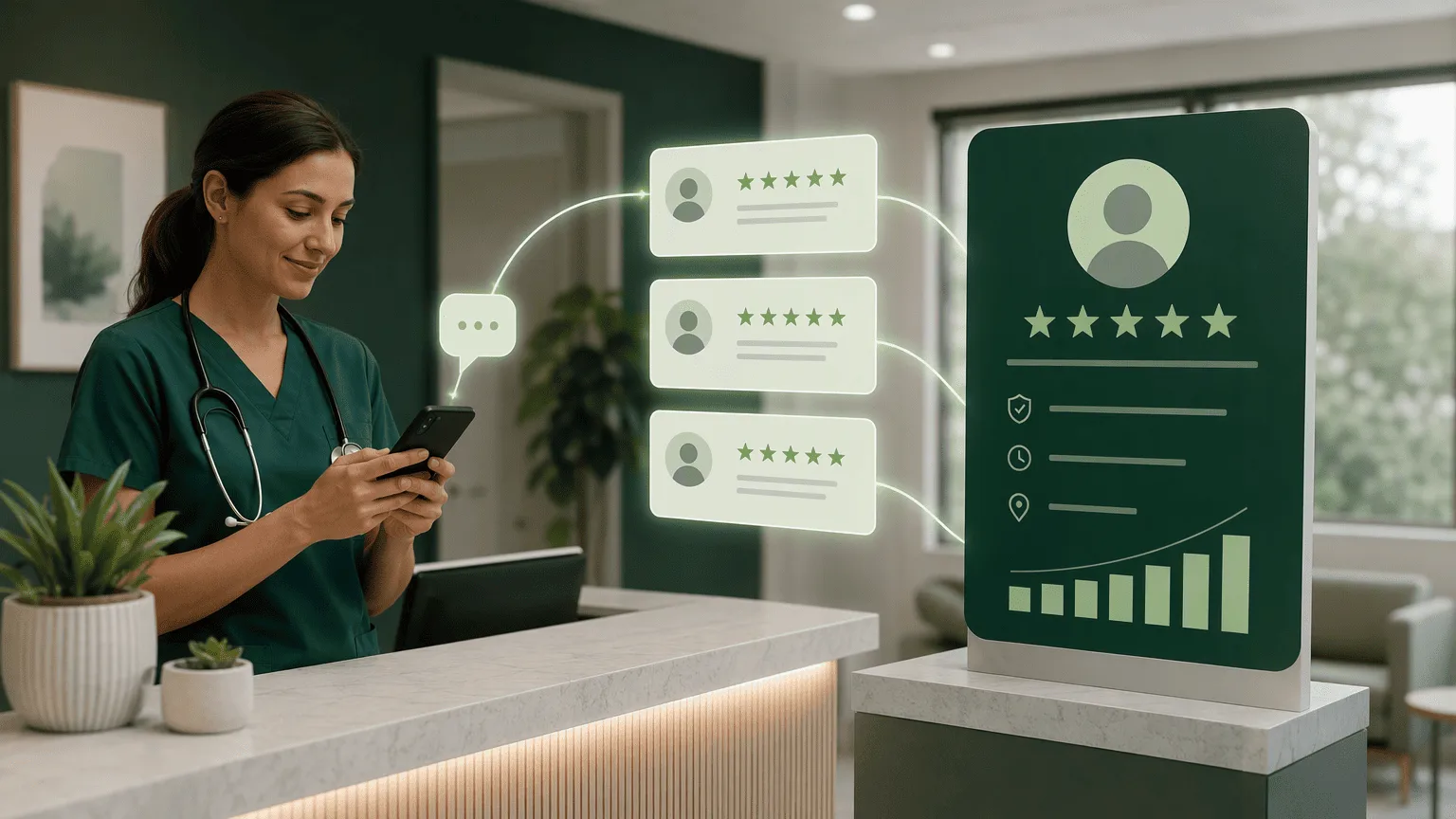
A prospective patient in 2026 will read three of your Google reviews before they read a single sentence on your website. The decision architecture has inverted: your reputation profile is now your homepage, and the algorithmically generated summary of those reviews is what an AI engine like ChatGPT or Google’s AI Overviews cites when a patient asks which specialist to see. Podium’s entry-level tier gives a small practice a disciplined, automated review generation workflow for roughly the cost of a monthly internet bill.
The platform’s core mechanism is a text-message invitation sent at the moment of service completion, when satisfaction is highest and the request feels like a natural extension of the care experience rather than a marketing solicitation. Onspire Health Marketing notes that reputation management is no longer a nice-to-have for medical practices in 2026; it is the primary local search ranking signal and the variable that an AI triage layer weighs most heavily when deciding whether to recommend your clinic.
A small practice should not attempt to manage reviews manually across Google, Healthgrades, and Vitals. The administrative burden of tracking which patients have been asked and which platforms are getting stale guarantees that the program will die inside of six weeks unless it is automated.
The trade-off: Podium’s review-generation capability is its strongest asset. Its broader messaging and payment features push you toward a higher-tier subscription that may not be necessary for a 2-provider clinic. Buy it for the reviews, and only the reviews. Leave the upsells alone until your volume demands them.
6. Mailchimp + JotForm HIPAA Stack: The Near-Zero-Budget Lead Capture Machine
A practice launching with no marketing budget can build a compliant acquisition pipeline for under $20 a month by combining free tiers of three tools that each serve a narrow function. This stack is not a long-term solution, but it will prove whether you have product-market fit for certain specialties before you write a $300 check to a platform. The table below maps the specific pieces and their constraints.
| Component | Tool | Free Tier Limit | What It Handles |
|---|---|---|---|
| Email Marketing | Mailchimp | 2,000 contacts, limited sends | Appointment reminders and wellness newsletters that have been shown to boost open rates by 20% in clinic settings |
The critical step most practices miss is executing the Business Associate Agreement with Google Workspace before sending a single piece of protected health information through Gmail. Secureframe's compliance documentation walks through the specific admin settings required, and missing this step converts a free, compliant stack into a violation waiting to happen. Once the BAA is in place, the workflow is simple: JotForm captures the lead and stores the submission within its HIPAA environment, Google Workspace handles internal communication about that lead, and Mailchimp delivers the follow-up sequence.
Mailchimp itself does not sign a BAA, so you must never use its email campaigns to transmit protected health information. The platform should handle only de-identified communication like generic wellness tips, seasonal reminders, and practice announcements. Clinical information stays inside JotForm and Google Workspace, where the BAA coverage exists.
7. SocialScheduler (by Clinads) + Meta Business Suite: Organic social media management
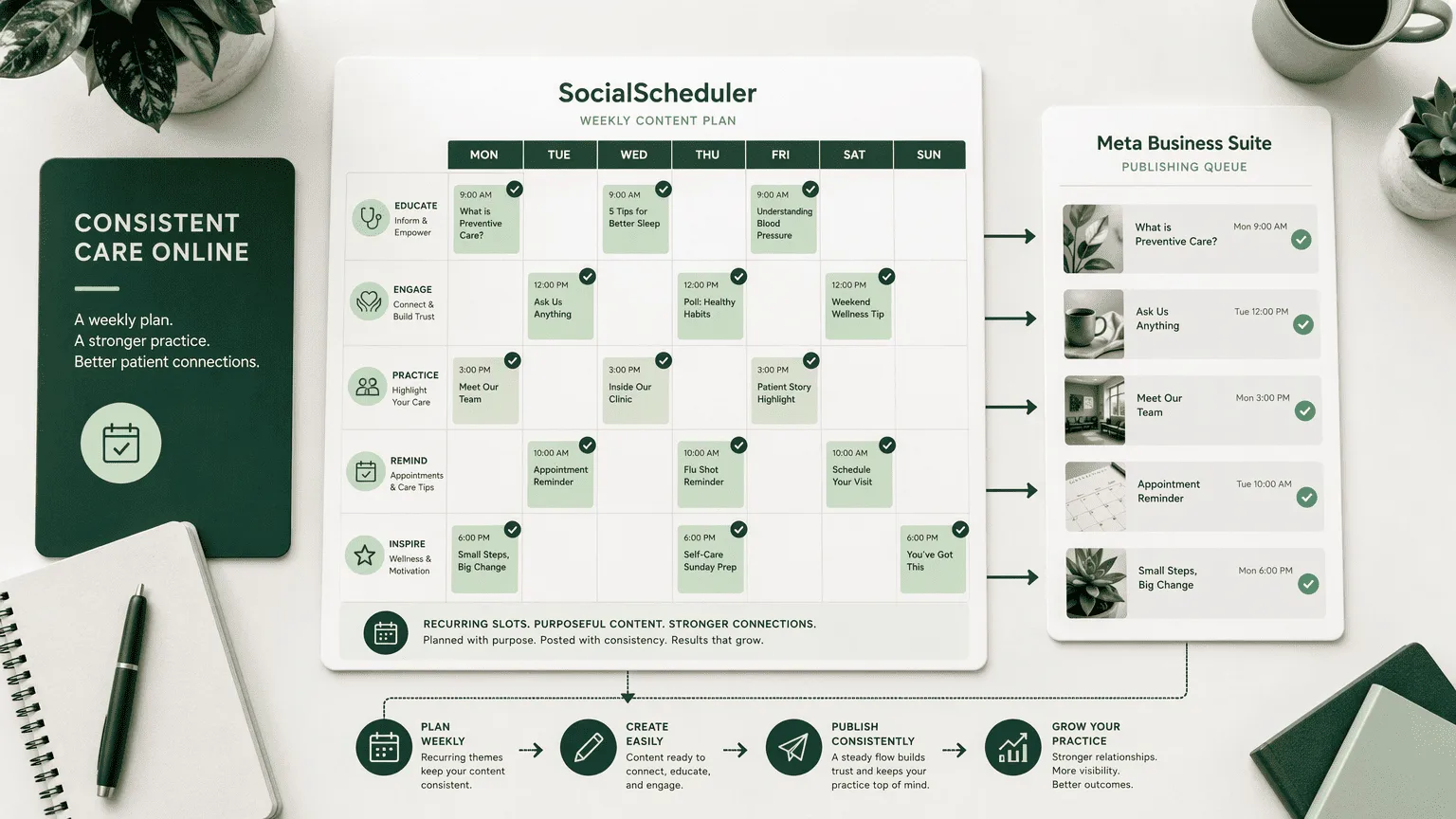
Organic social for a medical practice fails for one reason: inconsistency. A practice manager posts three times in January, gets one like, and abandons the calendar by Valentine's Day. The Facebook page becomes a dead zone of outdated flu shot promotions, and a new patient who checks that page in August makes a judgment about the practice's professionalism that you will never hear about.
The Clinads SocialScheduler fixes this by building the content calendar for you. It is designed for a clinic's posting cadence, not a generic small-business template.
You plan and pre-load posts inside Clinads, then use Meta Business Suite to distribute them to Facebook and Instagram. Meta handles the native scheduling and page management at no cost. Clinads handles the compliance-aware content ideation and calendar discipline that prevents the inevitable neglect cycle. For a small practice where the front-desk manager is also the accidental social media coordinator, this pairing removes the 90-minute weekly planning session that never actually happened and replaces it with a pre-built queue that keeps the page looking alive without a dedicated hire.
Read it by row, not by column: identify the dimension that is non-negotiable for your specific practice and eliminate platforms that fail it before evaluating anything else.
|---|---|---|---|---|---|
| Clinads | Under $300 | AI ad creative and listing management | Built for medical; no patient data in transit | A practice ready to run its own marketing | Requires pairing with a patient engagement tool |
| Solutionreach | Approx. $200 to $300 | Automated recall and reminders | Signed BAA; healthcare-native | Practices losing 8%+ to no-shows | Limited new patient acquisition features |
| Weebly + Square | Under $30 | HIPAA website builder | BAA with hosting; form-level protection | Solo practitioners needing a website | A foundation, not a marketing engine |
| Kareo (Tebra) | Tiered | Integrated EHR + marketing | Healthcare-cloud architecture | Practices wanting one login for everything | Higher entry price for full suite |
| Podium | Entry-tier | Review generation | SMS-based; compliance varies by tier | Building a 100+ review profile | Messaging upsells inflate cost quickly |
| Mailchimp + JotForm | Under $20 (free tiers) | Forms + email stack | JotForm BAA; Mailchimp no PHI | A zero-budget startup practice | Manual BAA setup; limited scale |
The pricing column is a starting point. Every platform above offers tiered plans that can balloon the moment you activate additional seats, advanced features, or higher contact volumes. Evaluate each contract as a price ceiling you might hit in month four, not month one. If a product advertised at $49 per month jumps to $249 once your patient list crosses 1,000 contacts, it is a $249 product.
This table cannot answer the most important compliance question: how a vendor’s support team handles a breach. A signed Business Associate Agreement is paper. What matters is whether the company treats a PHI exposure as a legal emergency or a support ticket. Before signing, send each vendor a HIPAA scenario question. The speed and seriousness of their reply will tell you more than any pricing page.
Conclusion
The excuse that compliant, effective medical marketing costs $1,000 a month died in 2025. For under $300, you can now run AI-generated ad creative on autopilot, capture reviews that an AI search engine will read, and build a website that books real appointments while your front desk is sleeping. The only remaining failure mode is indecision. Start with the tool that plugs your single biggest revenue leak (for most small practices, that's either no-show reduction or total local invisibility), and add the second platform only when the first is generating measurable return.
Frequently Asked Questions
What features should a small medical practice prioritize when choosing an affordable marketing platform?
To stabilize your practice's foundation before worrying about advertising, focus on these three key capabilities:
- Automated appointment reminders: Reduce no-shows by sending proactive notifications.
- Reputation management: Capture reviews at the point of care to build social proof.
- Real-time online booking: Sync scheduling with your practice management system so slots are instantly bookable.
Fancy ad dashboards are useless if your schedule is half-empty.
Solutionreach, Kareo (Tebra), NexHealth, and Weebly all sign Business Associate Agreements and handle protected health information in transit. Clinads and Podium handle marketing workflows without transmitting PHI, so they require separate compliant communication channels for clinical data. Mailchimp does not sign a BAA and must never carry PHI.
How much does a marketing platform typically cost per month for a small medical practice in the US?
Expect to spend between $20 and $300 per month for an individual platform. Full-suite EHR and marketing combinations like Kareo can push toward $400 once add-ons are included.
What free or low-cost marketing tools can a medical practice with no budget use to attract patients?
To launch a cost-effective, compliant marketing stack with free or nearly free tools:
- Use JotForm's free HIPAA plan for compliant intake forms (100 submissions per month).
- Use Mailchimp's free tier for de-identified email campaigns to 2,000 contacts.
- Use Meta Business Suite for free organic posting on Facebook and Instagram.
- Execute a manual Business Associate Agreement with Google Workspace before transmitting any patient data through email.
How do top affordable marketing platforms for medical practices compare in usability and patient engagement?
Each platform excels in a distinct core strength:
- Weebly: Wins on non-technical usability with drag-and-drop design.
- Solutionreach: Leads in automated patient engagement and recall that directly reduces no-shows.
- Clinads: Automates paid ad creative and local listing management without requiring marketing expertise.
- NexHealth: Provides the fastest booking experience for patients through real-time scheduling sync.
What are the best ways to measure ROI from a marketing platform in a small healthcare setting?
Track cost per shown appointment, total marketing spend divided by patients who actually arrive, not cost per lead. Measure no-show rate reduction after implementing automated reminders, and monitor new patient acquisition cost by channel. A platform that drops no-shows by even 5 percentage points typically pays for itself before you acquire a single new patient.
Sources
- 9 Best Healthcare Practice Marketing Tools for Profitable Patient Acquisition in 2025 - getclinads.com
- ClinAds Product Demo Video: One Clinic Campaign, Start to Finish, in Under a Minute - getclinads.com
- 10 Healthcare Marketing Tools to Grow Your Clinic in 2026 - www.medesk.net
- Top 10 Marketing Doctor Alternatives & Competitors in 2026 | G2 - www.g2.com
- 2025 Product & Feature Updates | Secureframe - support.secureframe.com
- 2026 Marketing Trends for Medical Practices | Onspire Health Marketing - onspirehealthmarketing.com
Want help executing this for your clinic?
Book a 30-minute call and we will map what a real ad engine would look like for your specific service mix.
Book a call