8 Healthcare Marketing Platforms That Close the Booking-to-Local-Search Gap in 2026
IntroductionThe problem is not that your practice lacks a Google Business Profile. The problem is that your booking button funnels a ready-to-schedule patient into a dead-end 'request an appointment' form, or worse, demands they repeat information your system already has. Every hour that booking link sits disconnected from your live schedule, a competitor down the street is capturing the patient who just searched 'urgent care near me' on their phone. With 47% of patients now using AI tools like ChatGPT, Gemini, or Perplexity to find a healthcare provider, the platforms that connect instant answers to instant booking are the ones that win.
Solving this requires two software categories to operate as a single system. First, a scheduling engine that syncs real-time availability with Google Search and Maps so a 'Book Now' button actually books an open slot. Second, a listing management platform that forces consistent practice information across every directory an AI model scrapes, because AI recommends the practices whose listings, reviews, and photos agree with each other, not the biggest brands in healthcare.
This article audits nine platforms that bridge that gap, ranking them by how tightly they connect a local search impression to a confirmed appointment. What you will walk away with is a clear map of which tool solves what, why the integration matters more than any individual feature, and where to place your first dollar if your booking-to-search pipeline is currently broken.
Key Takeaways
The tools below are ranked by one metric: how tightly they connect a Google search impression to a confirmed appointment. Here is what the analysis confirms:
- The Direct Booking Benchmark: NexHealth is the strongest single-platform answer for practices that want patients to book straight from search results via the Reserve with Google 'Book Now' button.
- The Listing Authority Layer: Uberall delivers the foundational NAP consistency that determines whether that booking link ever gets seen, reporting 28% more views across directories for healthcare brands on its platform.
- AI Search Rewards Consistency: Google's AI overviews and third-party AI engines reward the practice whose NAP, reviews, and photos agree across the web. Listing accuracy is a direct ranking factor.
1. NexHealth: The Benchmark for Direct 'Reserve with Google' Integration
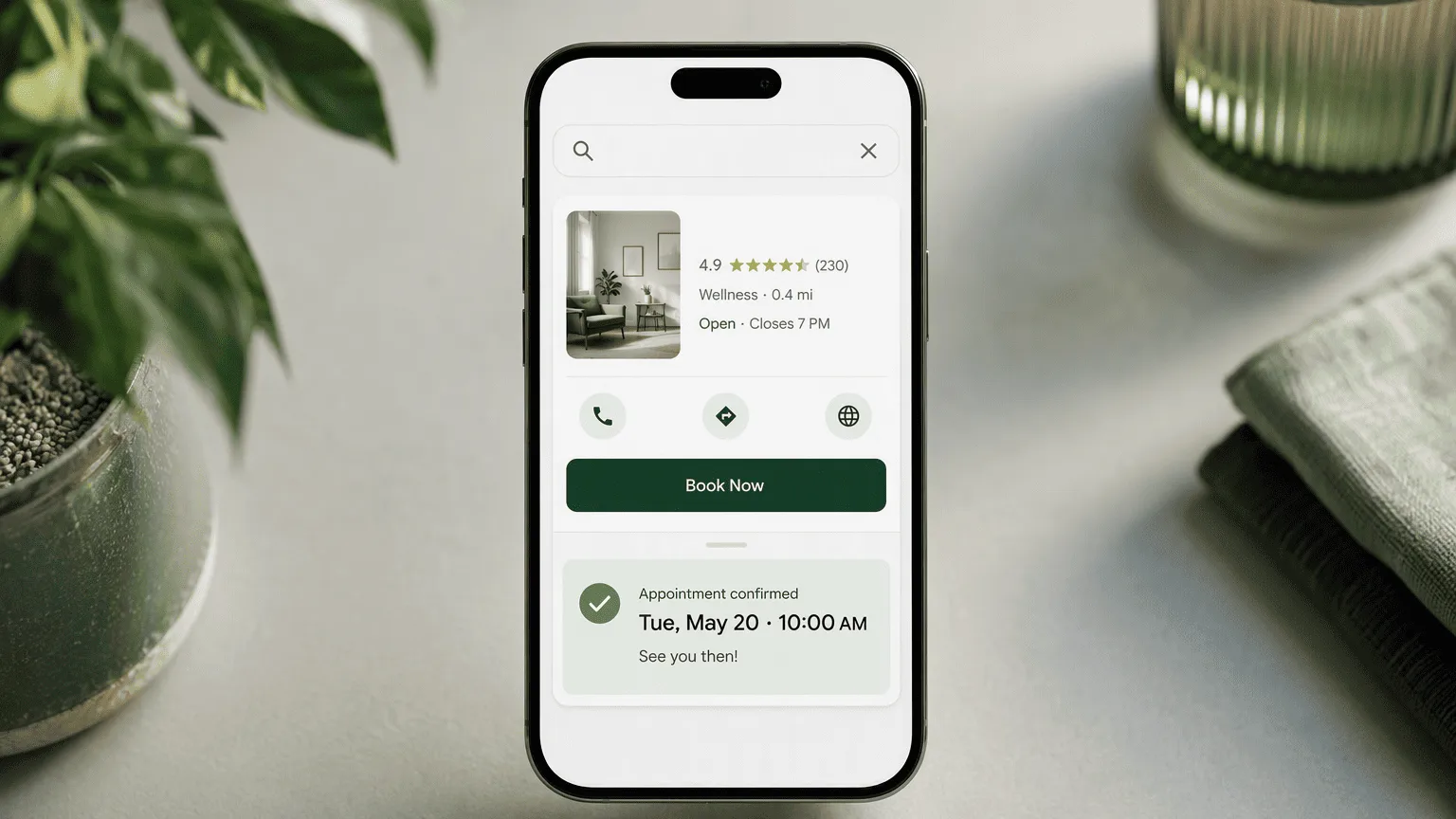
NexHealth owns this rank because it places a functioning Book Now button inside the search result where the patient is already standing. When patients search for a 'dentist near me' they can schedule an appointment through a Book Now button available right where they are already searching. That is a direct booking interface that converts a Google Maps or Search impression into a confirmed slot without a single intermediate page load.
Google integrations are included in the NexHealth subscription at no extra cost, and activation is controlled by an Admin user navigating to Gear, Settings, Reserve with Google, and toggling the feature on. NexHealth then matches the practice's address on file with the Google Business Profile to validate the connection. The operational signal is immediate: when Reserve with Google is turned off, the online booking link is removed from Google within 24 hours. That speed confirms the integration is live-synced, not cached on a delayed refresh cycle. For a single-location practice that has already solved its NAP consistency problem, NexHealth is the most direct path from search to schedule.
2. Uberall: The Enterprise Standard for Multi-Location Listing Accuracy and Compliance
Uberall does not book the appointment. What it does is ensure the listing that triggers the booking decision is trusted enough to earn the click. For healthcare brands using its platform, Uberall reports 28% more views across directories, 19% more clicks to directions, and an 11% lift in clicks to website.
Those three numbers tell a sequential story.
- 28% more views across directories: The listing gets surfaced because its NAP data is consistent across the directories that Google and AI crawlers scrape for entity verification.
- 19% more clicks to directions: Once surfaced, direction clicks climb because accurate hours, addresses, and service descriptions eliminate micro-frictions that make a patient bounce to the next result.
- 11% lift in clicks to website: Website clicks rise for the same reason, reduced friction from accurate data drives engagement.
For a health system managing dozens or hundreds of locations, the value proposition is in the bulk-update architecture and the duplicate-error detection that prevents a relocated clinic from haunting search results with a ghost address. The booking ROI that Uberall generates is indirect: it builds the ranking authority without which a Book Now button sits on page two, invisible.
3. Birdeye: AI-Powered Reputation Management with Direct Booking Overlays
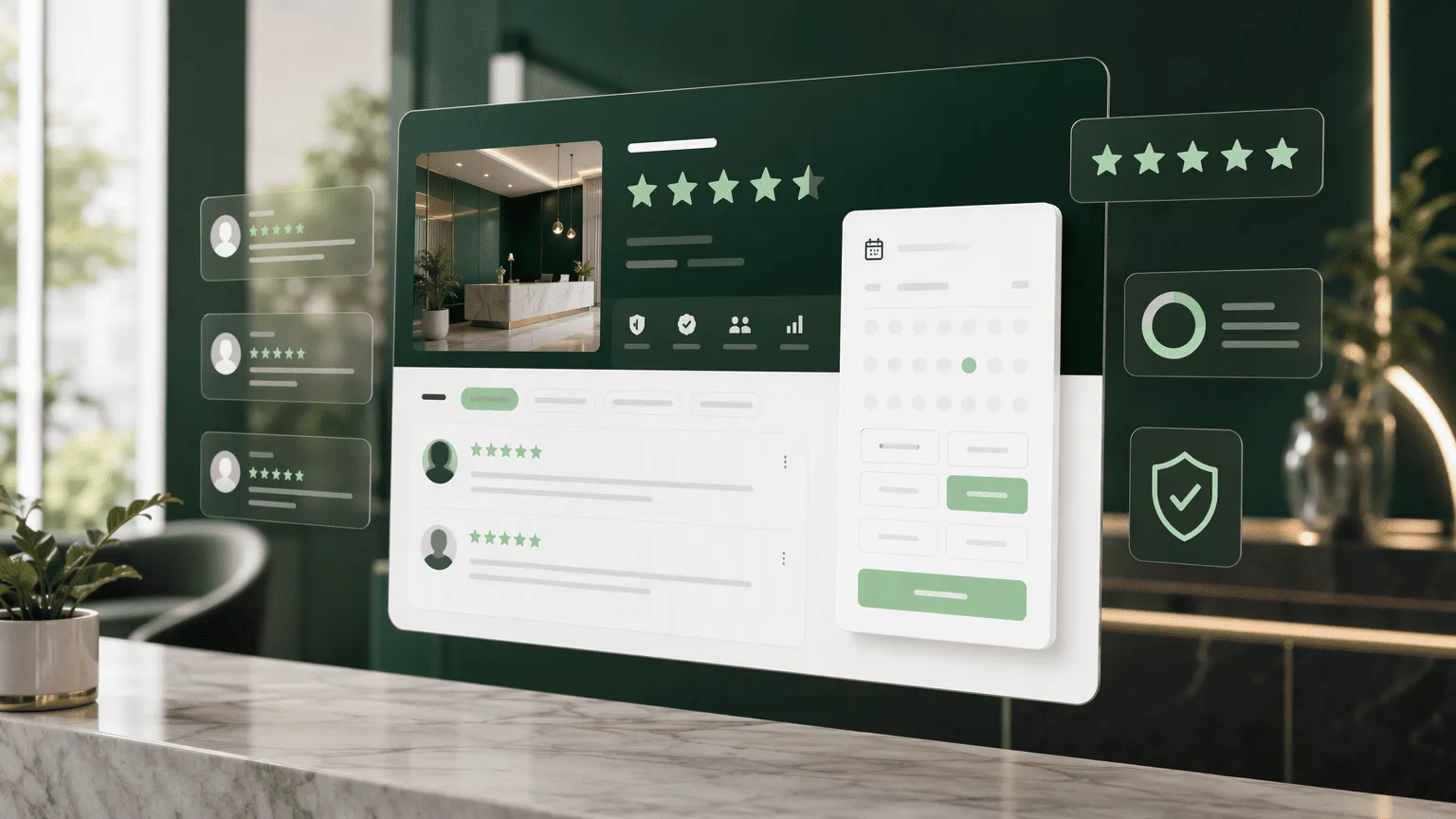
A practice can have a perfectly configured Reserve with Google integration and still lose the booking if its review profile looks abandoned. That is the layer Birdeye owns in this stack. The platform overlays booking widgets directly onto Google Business Profiles and third-party review sites, but its real function is managing the reputation signal that determines whether a patient clicks the button at all.
Birdeye's AI engine automates review solicitation and response at a volume that a manual process cannot sustain. A practice responding to every third review while ignoring the rest signals neglect to both the patient scanning for a provider and the algorithm ranking local results. When Birdeye pushes review velocity up and response time down in tandem, the downstream effect is a lift in the click-to-book conversion rate that scheduling integrations generate.
The booking overlay itself closes the loop. A patient lands on a listing with a strong recent-review cadence, sees the booking option embedded directly, and can schedule without navigating away from the feedback that just built their trust. For practices where reputation lag is the primary leak in the funnel, Birdeye plugs that gap before it reaches the scheduling step.
The trade-off: Birdeye's reputation tools are its core strength. Its scheduling engine is secondary. The platform layers booking on top of reviews, which works best when the underlying scheduler is already solid. Think of it as the conversion optimizer sitting between the listing accuracy layer and the booking integration.
4. Podium: Consolidating Patient Communication and Webchat-to-Booking Funnels
Podium enters the ranking because a large segment of local search traffic will never interact with a booking button. They will click, scan the listing, and either call or type a question into a webchat box. If that webchat goes unanswered for four hours, the lead is dead. Podium's architecture stops that death by routing every message, SMS, webchat inquiry, and Google Maps message into a single unified inbox with automated routing.
The platform's Webchat-to-scheduling funnel converts the conversational patient into a booked appointment by placing a scheduling interface directly inside the chat thread. A patient asks about availability on Tuesday afternoon, the automated system responds with open slots pulled from the live calendar, and the appointment is confirmed without a phone call. For practices that track cost per acquisition by source, this channel typically delivers a lower cost per booked appointment than paid search. It captures intent that is already on the listing but hesitant to commit through a formal booking flow.
What makes Podium's local search impact measurable is the immediacy. Google's local ranking algorithm weighs responsiveness as a signal of an active, engaged practice. When webchat inquiries trigger instant replies instead of overnight delays, that signal feeds back into the ranking data that determines local pack positioning. The result is a cycle where fast response improves visibility, and improved visibility generates more inquiries.
5. Yext: Structuring Digital Knowledge for AI-Driven Local Discovery
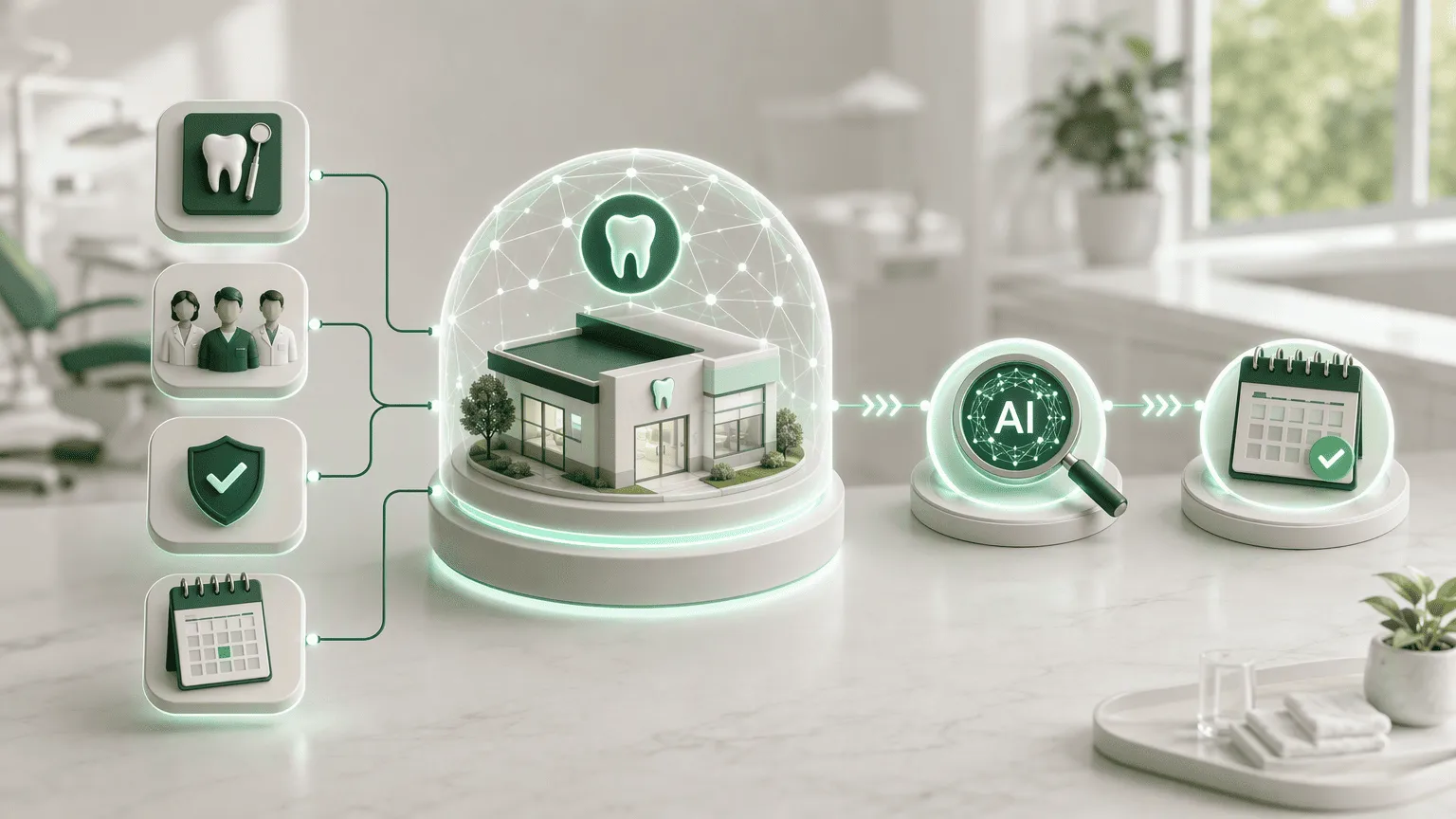
Yext earns this position because the question patients ask AI tools is not 'show me a list of dentists.' It is 'find me a dentist near me that takes my insurance and is open Saturday.' Answering that question requires structured data that Yext controls. Here is how the platform connects AI-driven discovery to booking outcomes:
- Knowledge Graph Management: Yext structures your practice's entity data (services, providers, insurance accepted, hours) so AI crawlers can extract and surface it as a direct answer. The information appears inside the AI summary itself, where the patient sees it and acts on it immediately.
- Structured Data Foundation: The schema markup and digital knowledge cards Yext maintains are the raw material that Google's AI Overviews and third-party tools like ChatGPT and Gemini parse when a patient asks a provider-recommendation question.
- Answer Engine Visibility: With 47% of patients now using AI tools to find providers, the discoverability of your booking page has moved past traditional rank tracking. Yext ensures your structured data is complete enough that the AI answer includes your practice as a recommended option, with the booking path attached.
The connection to booking integration is architectural. If a prospective patient's first encounter with your practice is an AI-generated summary that pulls incorrect hours, an old address, or a missing service line, the best booking button in the world will never fire. Yext prevents that upstream failure.
6. Doctor.com: Bridging Provider Data Management with Synced Appointment Scheduling
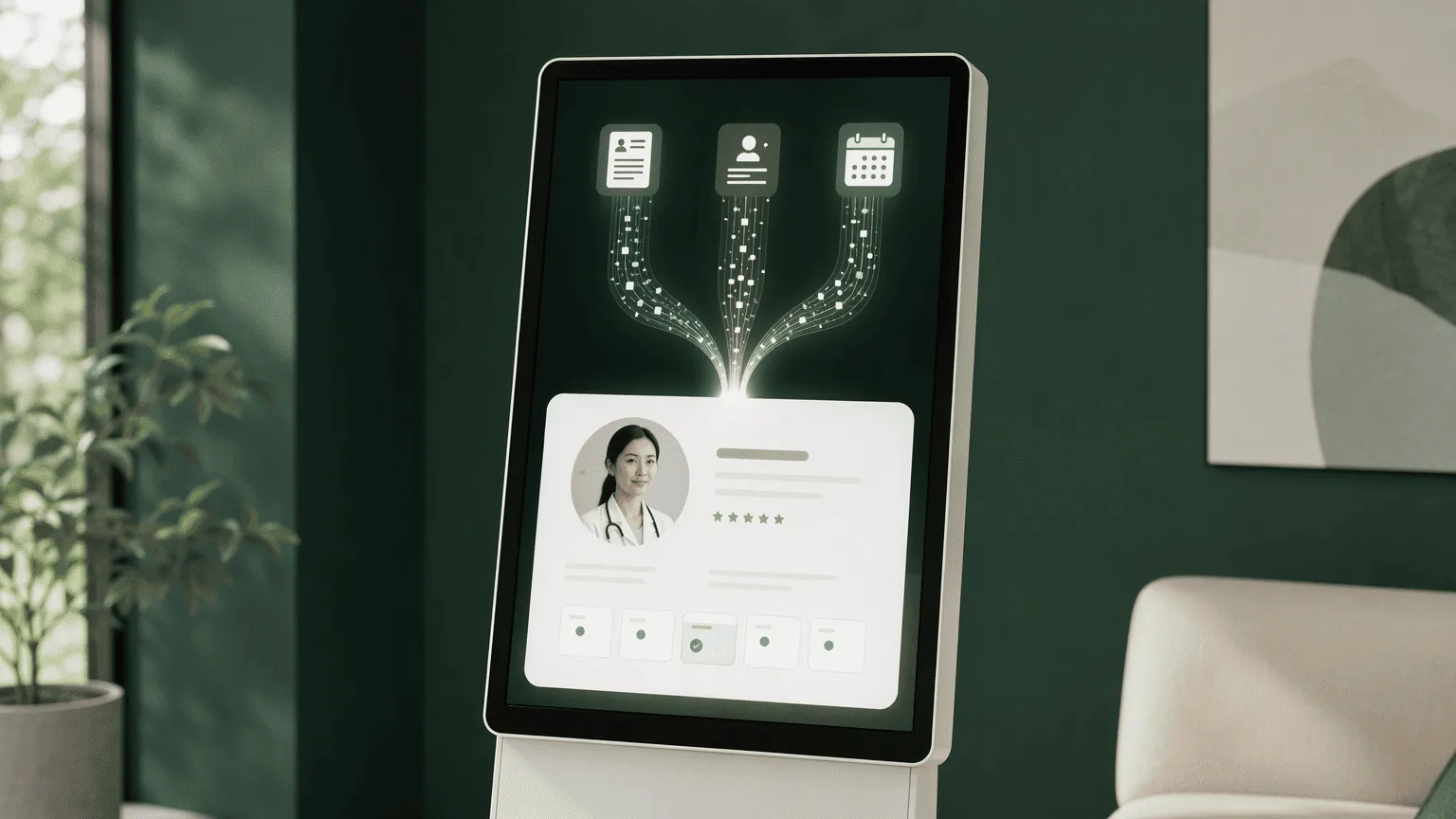
Doctor.com occupies a narrow but critical slot in this ranking: it manages the provider-level data that determines whether a search for a specific doctor by name, specialty, or accepted insurance returns an accurate, bookable result. The platform handles the syncing between National Plan and Provider Enumeration System (NPPES) records, healthcare directory profiles, and real-time appointment inventory.
A patient who searches for a cardiologist who speaks Spanish and accepts Aetna is running a query whose answer depends on provider-attribute data. Practice NAP alone can't answer it. When Doctor.com keeps those attributes current across the directories that Google and AI engines ingest, the listing matches the query with enough precision to earn the click.
When that same listing displays real-time appointment slots pulled from the practice's scheduler, the loop closes inside the search session: the patient finds the right doctor and books immediately, without leaving Google. For multi-provider practices where inaccurate credential data is the silent appointment killer, the value chain is straightforward. Correct provider profiles rank higher for specialty-specific searches.
Higher-ranking profiles generate more listing views. Those listing views convert to booked appointments when the scheduling sync is functioning.
The platform's focus on healthcare-specific directory ecosystems gives it a defined role: payer directories, hospital finders, and provider search tools. It works alongside the broader listing-management platforms that handle general-purpose directories, not against them.
7. Step-by-Step Checklist: Activating Your Booking Integration to Directly Impact Local Pack Rankings
The checklist below turns platform selection into action. Each row addresses a decision point where the wrong setting breaks the connection between your booking system and your local pack visibility.
| Step | What to Do | What Breaks If Skipped |
|---|---|---|
| Audit GBP NAP vs. Scheduling System Address | Compare the practice name, street address, and phone number in your Google Business Profile against the location data in your scheduling platform. Any mismatch (Suite vs. Ste., missing unit number) causes the Reserve with Google match to fail. | Google cannot verify the booking link's origin, and the Book Now button will not appear. |
| Activate Reserve with Google in Scheduling Settings | An Admin user must navigate to the integration settings (in NexHealth: Gear, Settings, Reserve with Google) and toggle the feature on, then confirm the address match with GBP. | The scheduling data never reaches Google's booking layer, leaving the listing with a generic call or website link that converts at a lower rate. |
| Configure Provider and Service Fields Completely | Map every active provider, every appointment type, and every service duration into the scheduling system's integration fields before submitting to Google. | Incomplete service menus display as limited availability, prompting patients to assume the practice cannot treat their condition. |
| Run a Live Test Booking Through Google Maps | Search for your practice on an incognito Maps session, click the Book Now button, and complete a test slot. Check that the reservation appears in your internal calendar within seconds. | A button that leads to a dead or outdated calendar page triggers a removal signal; you may see the booking link drop off within 24 hours. |
| Verify Real-Time Sync After Any Schedule Change | Add or block a time slot in your scheduler, then recheck the Google listing within one refresh cycle to confirm the change propagates. | Stale availability data that shows full slots as open generates double-bookings and patient distrust that no review campaign can offset. |
8. Comparative Analysis: Feature Breakdown for Booking-to-Local-Search Integration
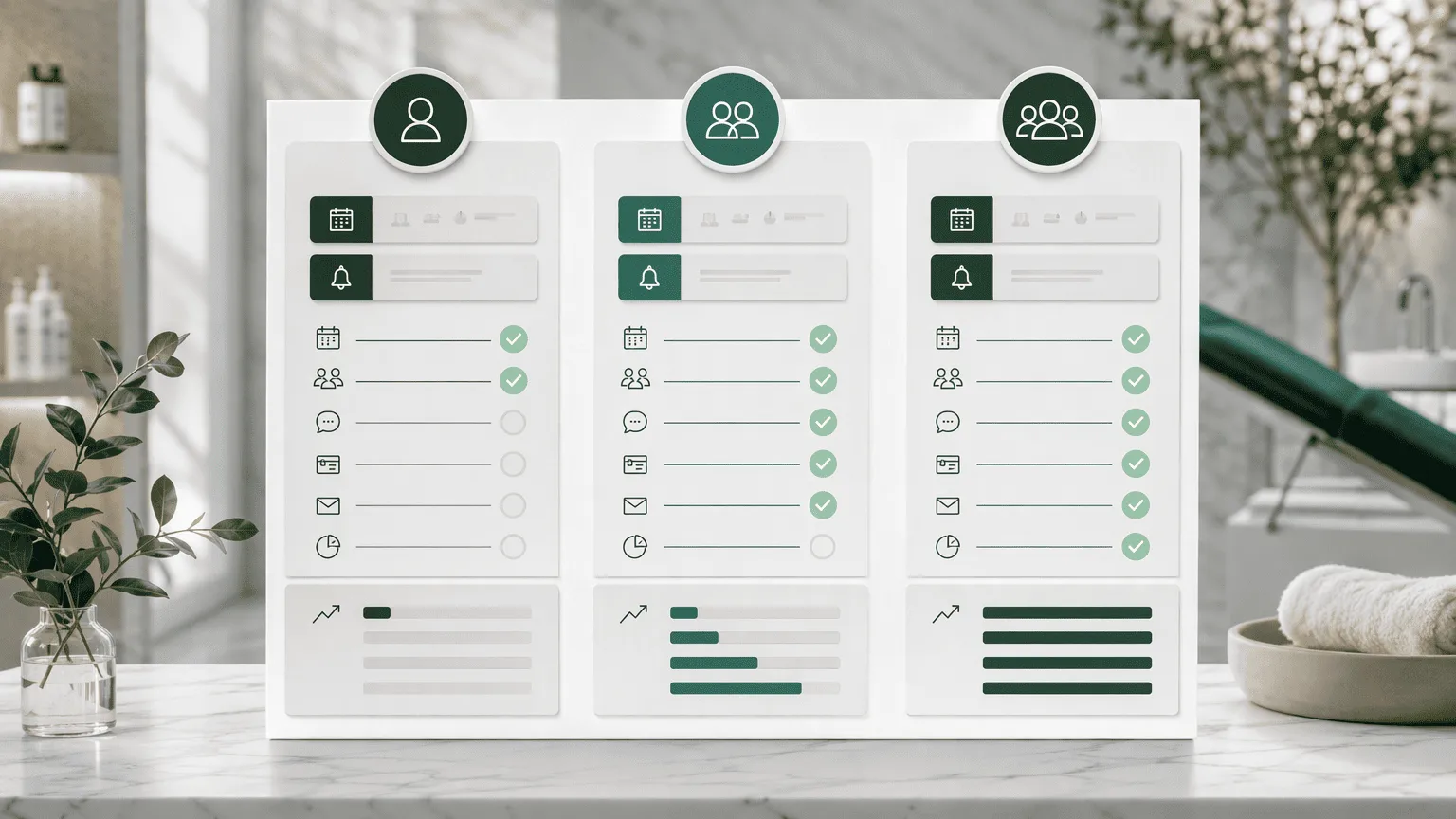
The comparison below maps each platform against the five capabilities that determine whether a local search impression becomes a confirmed patient, sorted left to right by booking integration strength, then listing management depth, to help practices identify where the platform's strongest columns overlap with their weakest operational gaps:
- Booking Sync: If your primary leak is that patients cannot book directly from Google, you prioritize this column; a booking button on a listing nobody sees generates exactly zero appointments.
- Listing Management: If your practice is invisible on page one to begin with, you fix this first; the first cut is simple.
- Operational Gap Matching: The table sorts columns left to right by booking integration strength, then listing management depth, to help practices identify where the platform's strongest columns overlap with their weakest operational gaps.
Conclusion
The 47% figure on AI-driven search is already in your waiting room. The patient searching for you through an AI summary or a Google Maps booking button is deciding, right now, between your practice and the competitor whose listing and scheduling data reads cleaner to those systems.
The integrated dual-stack approach, a NexHealth-grade booking sync paired with an Uberall or Clinads-grade listing authority, is the baseline for ranking when data consistency controls who gets found.
What makes the stack work is the architecture, not the brand mix. Ensure the scheduling layer talks to Google in real time, ensure the listing layer forces NAP truth across every directory that feeds an AI answer engine, and ensure every tool in the chain carries the compliance certification your practice type requires. Fix those three connections, and the search-to-schedule pipeline closes without a human transferring a single phone call.
Frequently Asked Questions
What is healthcare marketing software with integrated booking and why does it matter for local patient acquisition?
It is a platform class that connects a practice's live appointment calendar directly to its Google Business Profile and local directory listings. It matters because it removes the friction between a patient finding your practice on search or Maps and booking a slot. Without this integration, your listing sends ready-to-schedule patients to a generic homepage or a phone number, and a percentage of those leads drop off at each handoff before an appointment is confirmed.
Which healthcare marketing platforms offer the tightest integration between online appointment scheduling and local search visibility?
NexHealth sets the benchmark with its Reserve with Google integration that places a live Book Now button directly in search results and Maps. For practices that need listing accuracy as the foundation, Uberall ensures the NAP data that determines ranking is consistent before the booking integration is activated.
- NexHealth: Sets the benchmark with its Reserve with Google integration that places a live Book Now button directly in search results and Maps.
- Uberall: For practices that need listing accuracy as the foundation, ensures the NAP data that determines ranking is consistent before the booking integration is activated.
How can medical practices ensure their booking system directly impacts local SEO and Google Business Profile rankings?
Start by verifying that your scheduling platform's practice address matches your Google Business Profile exactly; any discrepancy (Suite vs. Ste.) blocks the Reserve with Google match. Activate the booking integration in your scheduler's settings, map every provider and service type completely into the integration fields, test the Book Now button live from an incognito search, and verify that schedule changes propagate to the listing in real time.
To set up the Reserve with Google integration correctly, follow these steps:
- Verify address match: Ensure your scheduling platform's practice address matches your Google Business Profile exactly; any discrepancy (e.g., Suite vs. Ste.) blocks the match.
- Activate the integration: Turn on the booking integration in your scheduler's settings.
- Map providers and services: Map every provider and service type completely into the integration fields.
- Test the button live: Test the Book Now button from an incognito search to confirm it works.
- Verify real-time propagation: Check that schedule changes propagate to the listing in real time.
What specific features should healthcare providers look for when evaluating software that connects scheduling with local search marketing?
Look for real-time availability sync with Google Business Profile, because stale slot data destroys patient trust. Demand centralized listing management with bulk-update and duplicate-detection capability for multi-location practices. Require automated review generation that feeds the reputation signal Google uses for local ranking, and insist on direct booking overlays, not just links to a homepage scheduler.
When evaluating platforms, look for these capabilities:
- Real-time availability sync: Real-time sync with Google Business Profile, because stale slot data destroys patient trust.
- Centralized listing management: Centralized listing management with bulk-update and duplicate-detection capability for multi-location practices.
- Automated review generation: Require automated review generation that feeds the reputation signal Google uses for local ranking.
- Direct booking overlays: Insist on direct booking overlays, not just links to a homepage scheduler.
NexHealth's Reserve with Google integration handles real-time sync securely. The critical check is to request a Business Associate Agreement (BAA) before connecting any platform that will handle PHI flowing through a public booking interface.
Why does AI search make booking-to-local-search integration more urgent now than five years ago?
With 47% of patients now using AI tools to find providers, the discoverability surface has shifted from a blue-links page to AI-generated answers that pull entity data from across the web. AI recommends practices whose listings, reviews, and photos agree with each other. A booking button on a listing with inconsistent NAP data or a thin review profile will not appear in the AI answer at all, making the integration between scheduling speed and listing accuracy the primary ranking lever.
Sources
- How do I enable patients to book through Google? | NexHealth Help Center - help.nexhealth.com
- Local Healthcare Marketing Solutions | Uberall - sandbox.uberall.com
- For healthcare marketing software that seamlessly bridges the gap between local search discovery and immediate appointment scheduling, - uberall.com
- Connect Acuity Scheduling to Reserve with Google – Acuity Scheduling Help Center - help.acuityscheduling.com
Want help executing this for your clinic?
Book a 30-minute call and we will map what a real ad engine would look like for your specific service mix.
Book a call