8 Best Ways to Get More Physiotherapy Patients from Google and ChatGPT in 2026
IntroductionYour clinic's biggest competitor isn't the other physio down the street. It's the AI-generated answer that names them and ignores you completely. Seven in ten healthcare conversations on ChatGPT happen when practices are closed, and more than half of Canadians now say they turn to AI search results from Google or platforms like ChatGPT for health information. You are losing patient inquiries you never knew existed.
The fix is a trusted digital entity across the platforms AI actually listens to. ChatGPT reaches over 1.2 billion weekly users, and Google's Gemini app has surpassed 1 billion monthly users. For a bootstrapped form builder like Tally, ChatGPT became the #1 referral source. The patient acquisition game has shifted from optimizing for a single search engine to engineering a signal that dozens of AI models interpret as authoritative.
In Ontario, you need to rank in Google's Map Pack for 'physio near me' while simultaneously earning citations in the generative answers patients read at 11 p.m. on a Tuesday. The clinic that solves both wins. Here is the strategy to do exactly that.
Key Takeaways
Here are the non-negotiable moves for an Ontario physio clinic that wants to be visible in both the Map Pack and AI-generated answers in 2026.
- Google Business Profile is your highest-ROI asset: Complete, keyword-rich profiles with review velocity above competitors will capture the majority of local 'near me' clicks.
- Answer-first content feeds AI engines: A 40 to 60 word self-contained answer on each service page gives ChatGPT and Gemini a quotable block that they can extract verbatim.
- Entity authority matters more than backlinks: Being mentioned positively on YouTube, Reddit, and local health blogs is what makes an AI model trust your clinic enough to cite it.
- Review velocity is your cheapest differentiator: A steady stream of keyword-dense patient reviews and owner responses is the most durable ranking signal you can control.
- Ontario insurance keywords convert at the bottom of the funnel: 'OHIP-covered physio,' 'WSIB rehab,' and 'direct billing' queries carry high intent and justify a dedicated paid search budget.
- You cannot outsource trust to an algorithm: The new E-E-A-T is truth, consistency, and off-platform corroboration. A platform like Clinads can automate the mechanics, but your digital reputation is built on clinical outcomes.
1. Build a Google Business Profile That Wins the Map Pack
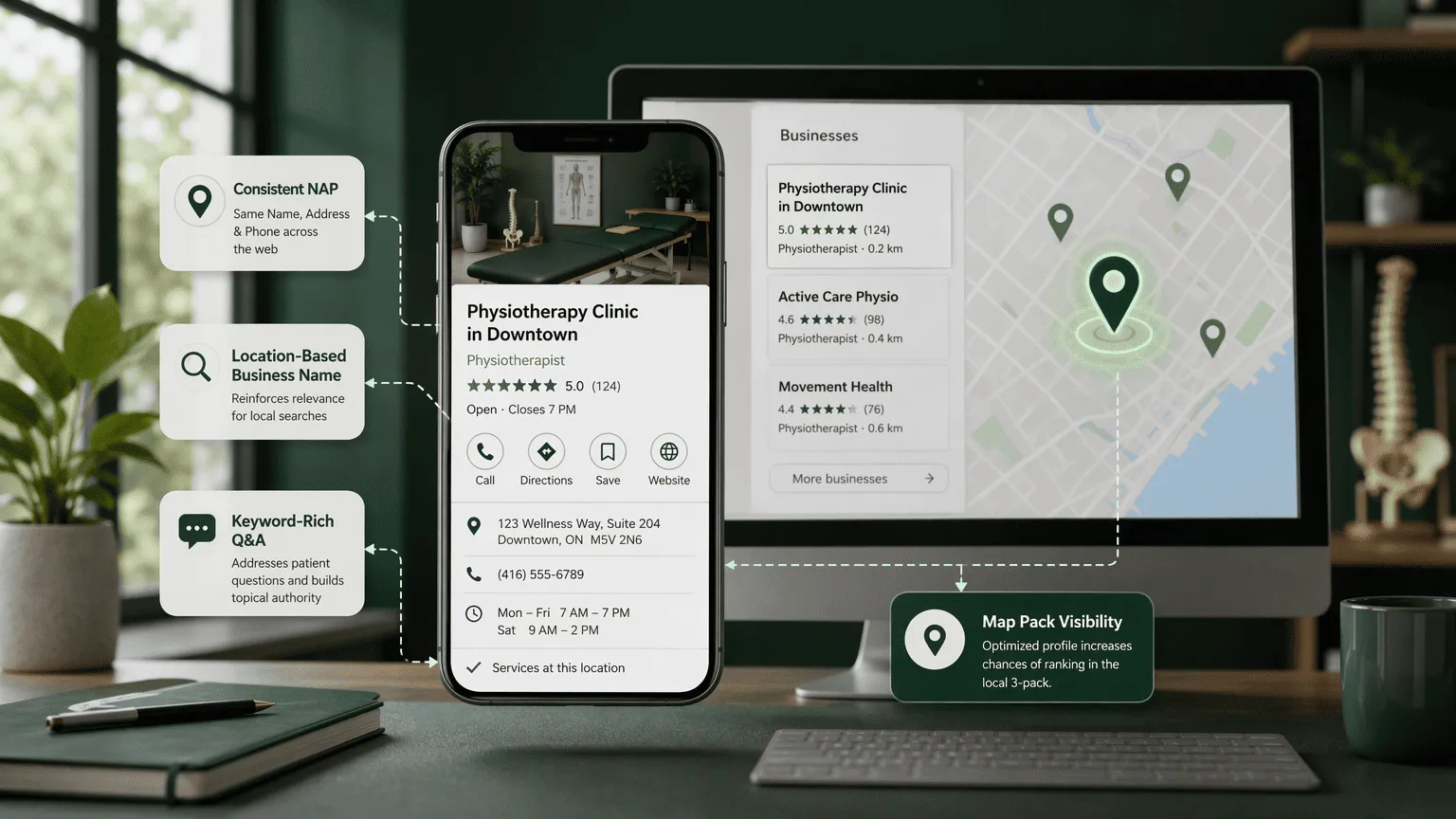
The Map Pack captures the majority of clicks for local physio searches. To win it, optimize your GBP far beyond the basic form fields. Your primary category must be 'Physiotherapist,' and your business name needs to reflect the geography you serve. Because proximity carries heavy weight as a ranking signal, seed your Q&A section routinely with keyword-rich entries like 'sciatica treatment in Toronto covered by OHIP.' That gives Google explicit text to associate with your profile.
Consistent NAP data across Canadian directories like Yellow Pages and local chambers of commerce compounds over time, as do weekly Google Posts featuring local health topics. Most clinics treat their GBP as a static listing. Yours should work as a publishing platform. Posting updates that answer latent patient questions directly inside the knowledge panel is the single highest-ROI action you can take for local patient traffic.
2. Engineer Your Website Content for AI Snippets and Answer Engines
Your content must be built for extraction. AI answer engines pull 40 to 60 word blocks that answer a question directly, and if your page doesn't have one, you won't get cited. Here is how to structure your service and condition pages so both Google and ChatGPT can pull from them.
- Lead with an answer-first block: Open every core service page with a 40 to 60 word self-contained paragraph that answers the primary question. Example: "Frozen shoulder treatment in 2026 typically involves a combination of targeted manual therapy, progressive stretching, and neuromuscular re-education over a 6 to 12 week period." This is what an LLM extracts verbatim.
- Use concrete statistics throughout: Insert recovery timelines, treatment success rates, and condition-specific data points directly into your H2s and body copy.
- Format for schema-first indexing: Use clear H2 and H3 headings that mirror natural language questions, and avoid burying core information inside client-side JavaScript. AI crawlers often fail to execute JavaScript, missing your key content entirely. The plain HTML rendering of your page IS your AI submission.
3. Deploy Physio-Specific Schema Markup and Entity Signals
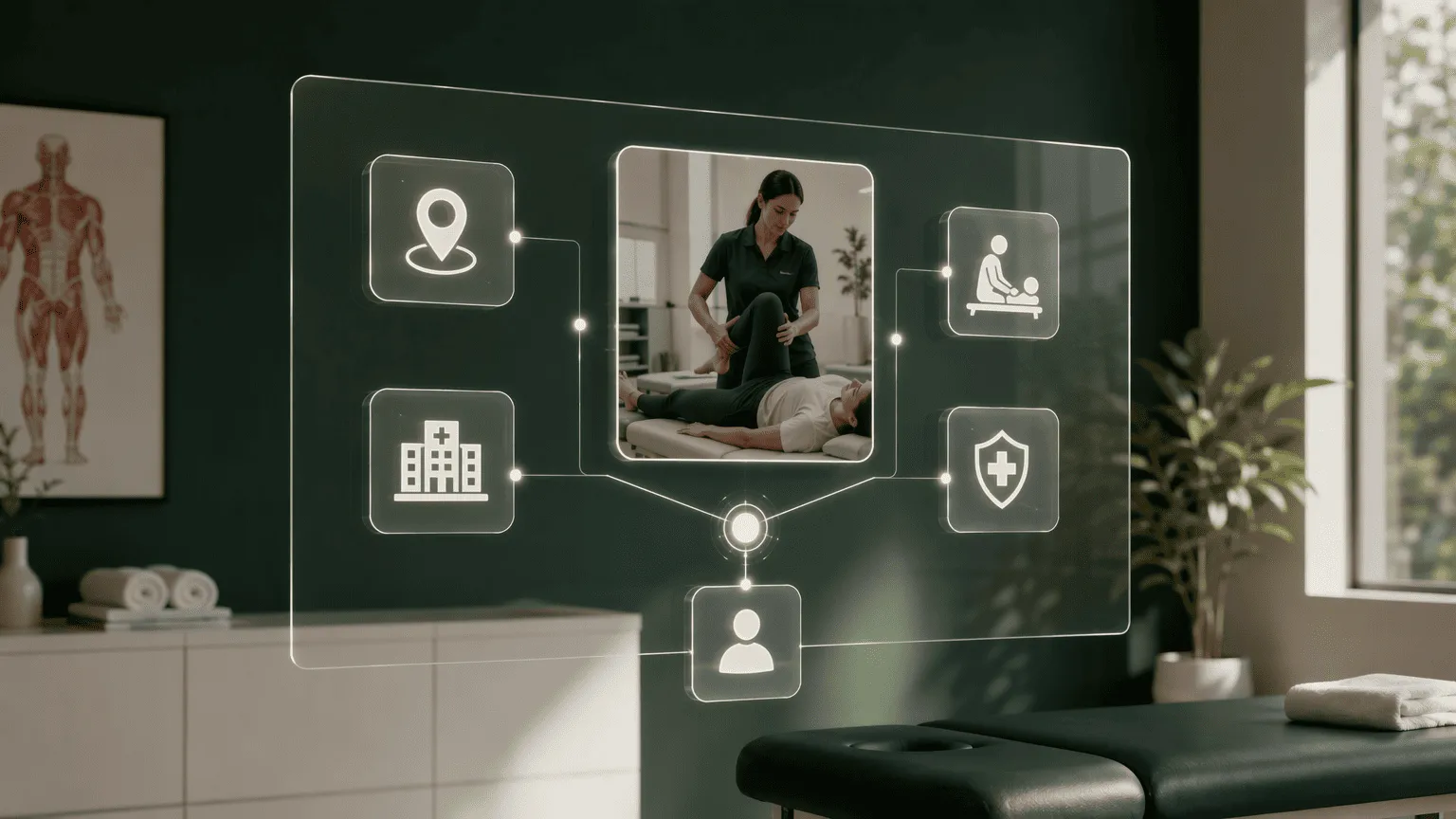
Most clinic websites hand AI models a puzzle with half the pieces missing. Structured data supplies the rest. It tells a model what your pages mean, who you are, and which conditions you treat from a clinical taxonomy it already respects.
- Add LocalBusiness and MedicalBusiness schema to your homepage, set the medical specialty to 'Physiotherapist', and include your OHIP billing number as an identifier, that combination separates a regulated clinic from a generic massage spa in a model's knowledge graph.
- Mark up every treatment page with FAQ schema that pairs one patient question with your answer-first block, and add HowTo schema for step-by-step rehab protocols, pages tagged this way surface in AI-generated snippets and voice answers more often than untagged pages.
- Link your content to external medical ontologies where the fit is clear by referencing ICD-10 codes for the conditions you treat, that signal tells an AI verification layer you are writing from a clinical framework rather than filling out the basic SEO fields and hoping for the best.
4. Activate a Multi-Platform Presence That AI Models Trust
AI doesn't just crawl your website. It samples Reddit, YouTube, and industry blogs to decide which clinics to cite. Between 40 and 60% of cited sources change month to month in AI-generated answers. Your presence on third-party platforms is your defense against being dropped.
| Platform | Why AI Trusts It | Physio Clinic Action |
|---|---|---|
| YouTube | High-authority domain; video demonstrations provide dense, extractable expertise signals | Produce 2 to 3 minute condition explanation videos (e.g., 'What causes shoulder impingement?') with optimized transcripts |
| Unfiltered, peer-validated advice; subreddits like r/askTO carry strong local signals | Participate authentically in Ontario subreddits by answering physio questions directly, not linking to your site | |
| Local Health Blogs / University Sites | Entity authority from.edu or recognized local publications signals legitimacy | Secure guest posts or sponsor local wellness events that generate news mentions and backlinks from trusted Canadian domains |
The goal is straightforward: build a network of corroborating sources. When an AI model sees your clinic mentioned on a local university blog, demonstrated on YouTube, and discussed on Reddit, it treats that consensus as a trust signal stronger than any single backlink.
5. Systematically Generate and Analyse Patient Reviews
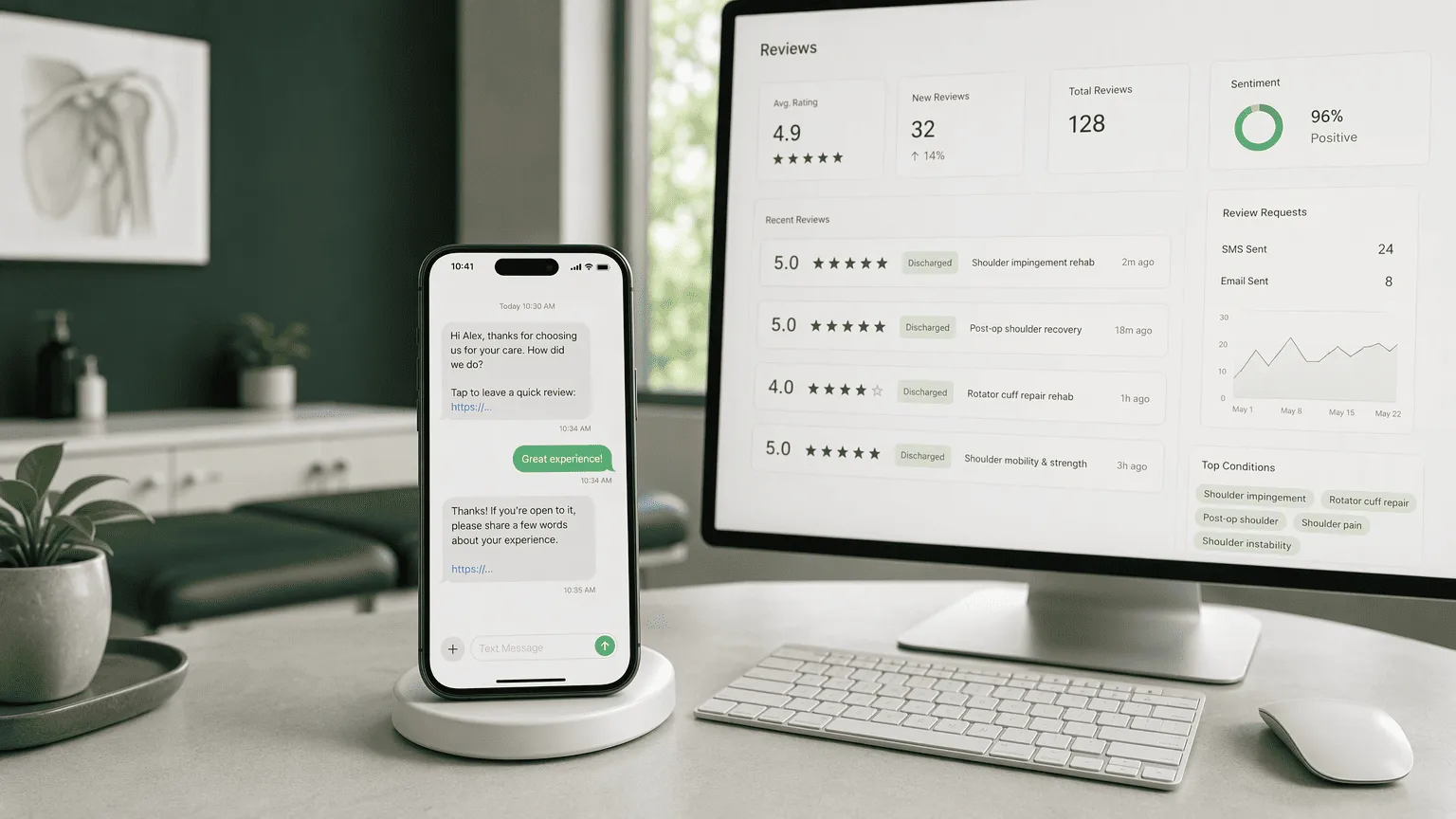
More than half of your potential patients make decisions after hours, when your clinic is closed. The last thing they read before booking is often a review. A discharged patient who types 'my shoulder impingement rehab was excellent' just did more for your AI visibility than ten 'great clinic' reviews ever will.
Every discharged patient gets an SMS or email asking for a review that names the condition you treated. That keyword density feeds directly into what Google displays in your knowledge panel and what an LLM extracts when someone asks 'who treats shoulder impingement in Toronto.' The constraint: these must be genuine, and the volume must be consistent. Tools that automate the request while leaving the words to the patient are the only sustainable path.
Owner responses are your most underused content channel. Skip 'Thanks for your review.' When a patient says 'my back pain is finally gone after six sessions,' reply with a clinical anchor: 'Chronic lower back pain often requires a six to eight week protocol of manual therapy and graded exercise; glad you stuck with it.' That reply now lives on your GBP as an extractable data point for the next AI that queries chronic back pain recovery timelines.
Nozzle's data since September 20, 2026 makes the urgency plain. Google has been serving poisoned result pages, peaking at 25% and holding at 5 to 11% a day since October 1. These pages keep only 20.7% of the same sites on repeat searches, versus 88.5% for normal results, and they show AI Overviews less often. When Google's own result pages are unstable, your GBP review corpus becomes the single most stable asset a patient can find. It needs to be deep enough to survive algorithmic turbulence.
6. Use Ontario-Specific Ad Strategies and Insurance Rebate Keywords
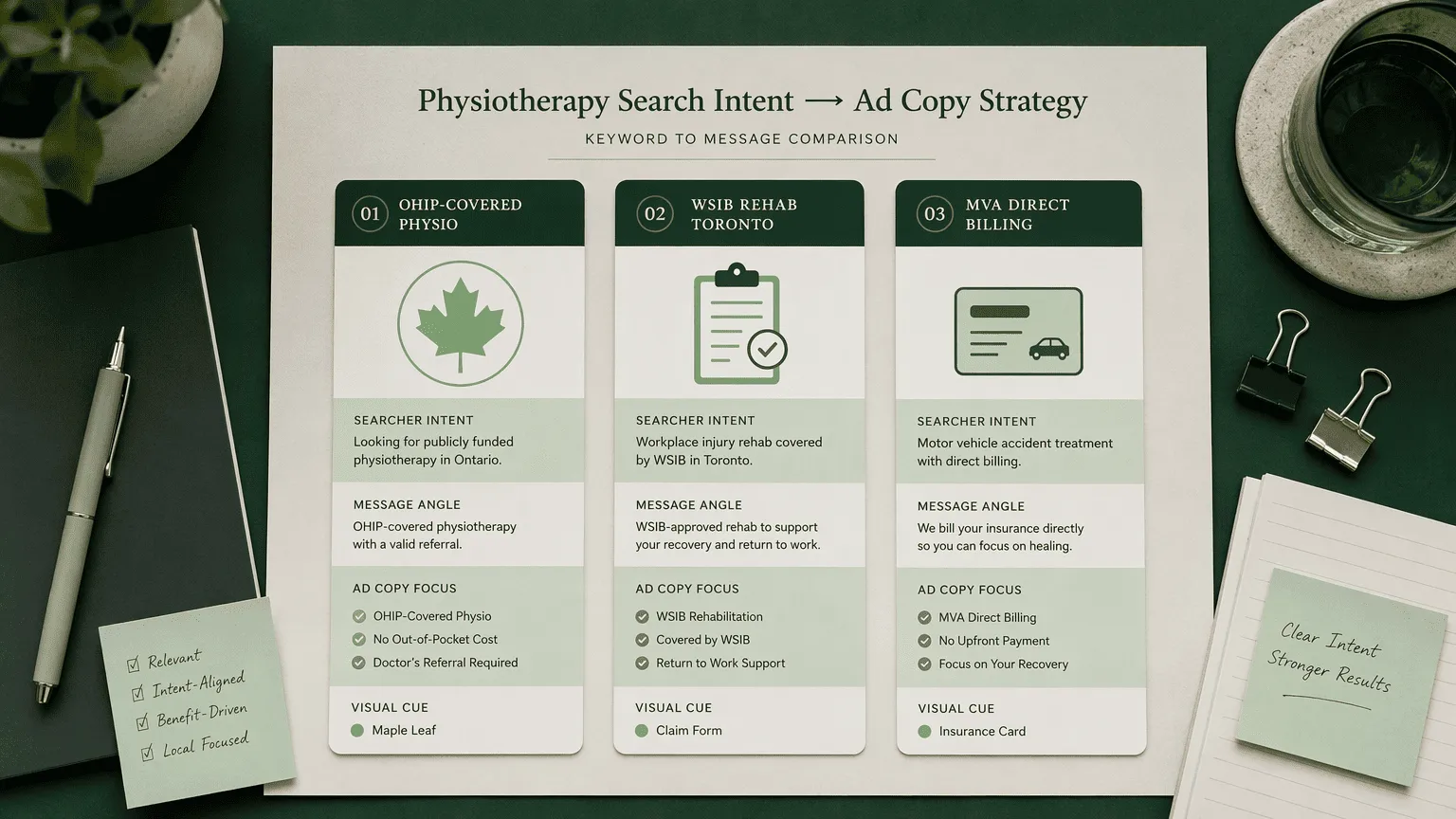
Paid search in Ontario physiotherapy converts differently than in retail. The highest-intent traffic comes from queries that signal an immediate coverage question: 'OHIP-covered physio near me,' 'WSIB rehab Toronto,' and 'MVA physio that does direct billing.' These are booking signals from someone who has already decided to seek care and is now triaging who can handle their specific insurance paperwork.
Your ad copy must differentiate on this operational detail. 'Direct billing to Manulife, Sun Life, and WSIB' is often the line that gets the click. Most clinics lead with their years of experience or their treatment philosophy. The patient leading with an insurance question does not care about either until they know you can process their claim. Structure your ad groups around the payer and build dedicated landing pages for each that display the insurer logos, outline the direct billing process, and list the exact documents the patient needs to bring to their first visit.
The economics justify it. A clinic that converts an MVA patient through a WSIB-targeted campaign typically sees a higher lifetime value than a general wellness patient. The cost-per-click on 'physiotherapist near me' is crowded and expensive.
The cost-per-click on a well-structured 'direct billing physio Sun Life' campaign is lower, and the conversion rate is higher because the intent is more specific. If you are going to spend on Google Ads in Ontario, spend on the insurance and rebate queries that filter out the uninsured browsers and surface the patients who are ready to book. A platform like Clinads can structure and automate these geo-targeted campaigns at the postal-code level so you are not wasting budget on clicks from patients whose employer plans you cannot accept.
7. Use Clinads to Orchestrate Review Generation and Geo-Campaigns
Review acquisition and localized ad management eat up the most staff hours in this strategy. Run either one manually at scale and you hit a staffing wall no clinic can climb. Clinads replaces that overhead with automation.
The platform triggers a post-appointment SMS or email asking the patient for a review. You control the timing rules so the request lands when satisfaction peaks. What starts as an unreliable manual task becomes a steady stream of fresh reviews.
On the paid side, Clinads structures Google Ads campaigns around Ontario postal codes and insurance-related search queries. Ad copy pulls from your clinical outcomes data and refreshes as new patient results come in. The language cites actual recovery metrics from your practice instead of generic claims.
For a clinic competing on the Map Pack and AI-driven discovery without a full-time marketing hire, this collapses the heaviest operational workflows into one dashboard. That is the gap Clinads was built to fill.
8. Map Real ChatGPT Patient Prompts to Local Intent Content
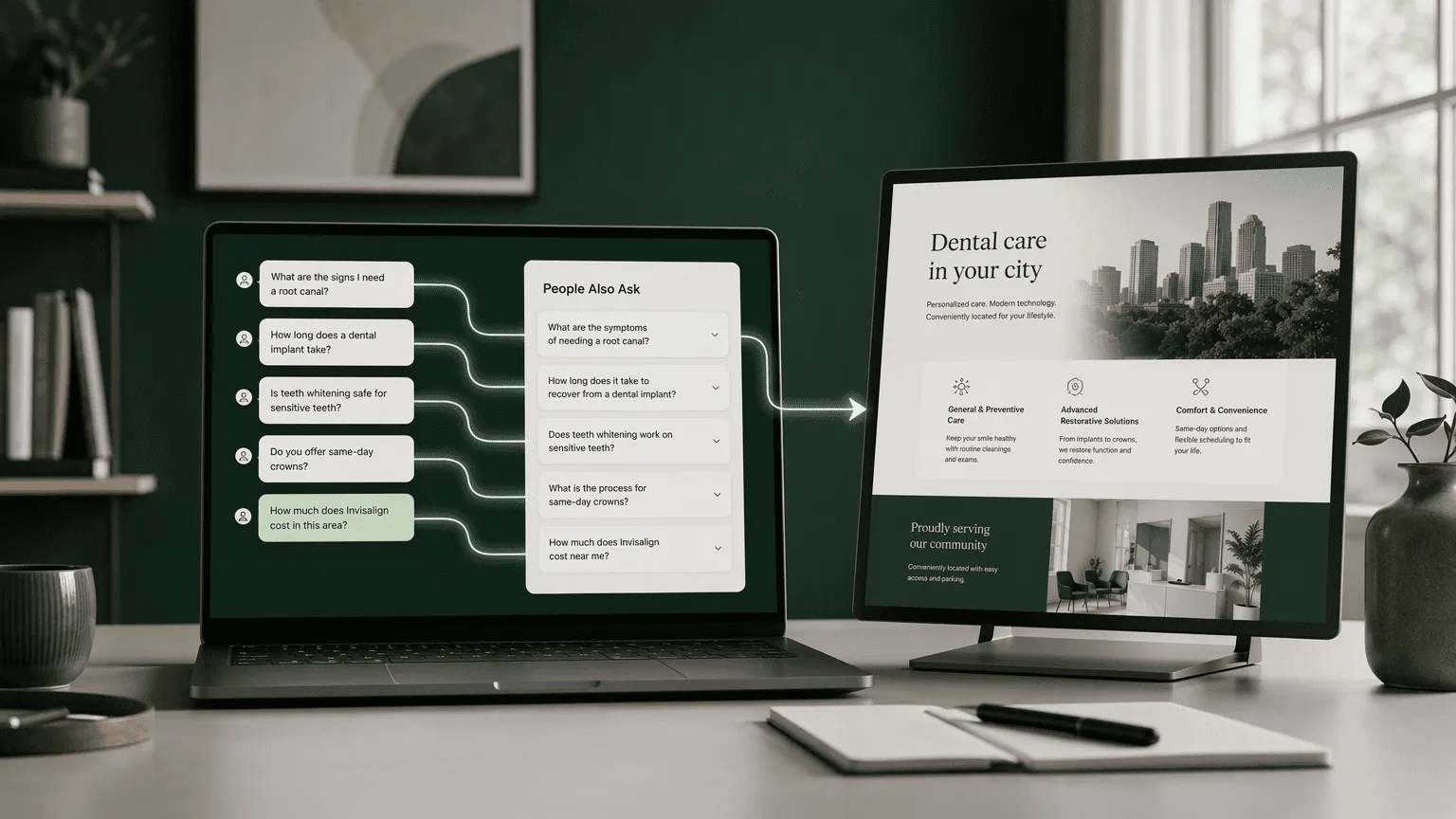
Your patients are asking ChatGPT specific, sometimes embarrassing questions they would never type into Google in front of a colleague. They ask about pain during sex, about whether their knee will ever stop clicking, about whether they are aging too fast. These are the prompts you need to reverse-engineer. Use Google's People Also Ask data and dedicated prompt research tools to capture the phrasing, then build a local landing page for each query that names your city: 'Why does my knee hurt when I squat? A Physio in Ottawa Explains.'
That exact headline is what gets cited. When a user in Ottawa asks ChatGPT about knee pain while squatting, the model needs an authoritative source that matches both the symptom AND the geography. If your page has an answer-first block explaining the biomechanics of patellofemoral pain in 60 words, followed by a detailed treatment protocol, and it is schema-marked up with your Ottawa clinic location, you have engineered a perfect citation target. You are building a library of local intent assets that AI models can pull from for years.
AI answer engines now sample from a rotating pool of sources, with 40 to 60% of citations changing month to month. The clinic that has published 30 of these local intent pages creates 30 durable hooks in the AI's source network. Each page bets on one specific patient question getting asked thousands of times over the next three years. Most clinics publish generic service pages, filling out the basic service, location, and team fields. The ones winning on ChatGPT publish answers to the exact questions their patients are too embarrassed to ask in person.
Conclusion
The funnel has split. Traditional Google search and the Map Pack still deliver the majority of local conversion traffic. At the same time, AI answer engines now shape the decision before the patient ever visits your website. You need a dual strategy: a GBP optimized for review velocity and category relevance, and a network of entity-rich, answer-first content distributed across the platforms AI trusts.
The common thread is truth. The more your digital footprint reflects genuine clinical outcomes, corroborated across YouTube, Reddit, and structured data, the more both Google and ChatGPT will treat you as the correct answer.
Clinads exists to automate the mechanics of that visibility work, freeing you up for the clinical care that builds the reputation in the first place.
Frequently Asked Questions
How can a local physiotherapy clinic in Ontario rank higher in Google's local search results (the Map Pack) in 2026?
Optimize your Google Business Profile with several key actions.
- Set 'Physiotherapist' as the primary category.
- Ensure NAP consistency across all Canadian directories.
- Publish weekly Google Posts.
- Systematically generate keyword-dense patient reviews.
Proximity and review velocity are the two heaviest signals, so focus on getting recent, specific reviews from patients who name the condition you treated.
What role does AI search (like ChatGPT) play in how potential patients find physiotherapy services, and how can a clinic influence it?
AI search now influences the majority of healthcare decisions before a clinic's website is ever visited. ChatGPT and Gemini synthesize answers from multiple trusted sources, preferring content that is corroborated across YouTube, Reddit, and industry blogs. You influence it by building an entity-rich presence on those platforms and structuring your site content to be directly extractable.
What are the most effective SEO strategies for a physiotherapy clinic website to attract new patients?
Deploy answer-first content blocks that AI can quote verbatim, implement LocalBusiness and FAQ schema markup, and build service pages around specific conditions with concrete treatment statistics. Avoid client-side rendered content that AI crawlers cannot process. Any strategy that ignores structured data is leaving visibility on the table.
What specific Google Business Profile optimizations have the biggest impact on patient acquisition for Ontario physio clinics?
Selecting 'Physiotherapist' as the primary category, seeding the Q&A section with location-specific treatment queries (like 'sciatica Toronto OHIP'), maintaining a high volume of recent keyword-rich reviews, and responding to each review with medically accurate information that answers latent patient questions are the highest-impact levers.
Is managing online reviews and digital reputation more effective than paid ads for getting physiotherapy patients?
Yes, for sustained patient acquisition. Paid ads generate immediate but costly traffic. Review velocity and reputation management build a durable signal that feeds both Google's Map Pack ranking and AI-generated recommendations. It is the cheapest long-term differentiator, and it compounds with every positive review you earn.
How can a physiotherapy clinic create content that gets surfaced by both traditional search engines and AI answer engines?
Structure every core page with a 40 to 60 word self-contained answer to a specific patient question, use schema markup to make that answer machine-readable, and support it with concrete statistics. Publish this content across your site, then create supporting video and Reddit discussions to corroborate the claim across the platforms AI trusts most.
Sources
- Best SEO Tools for Clinics in 2026: The Buyer's Shortlist - getclinads.com
- ChatGPT Sending Patients to Rival Clinics? (2026) - www.rankingeek.com
Want help executing this for your clinic?
Book a 30-minute call and we will map what a real ad engine would look like for your specific service mix.
Book a call