
6 HIPAA-Compliant Messaging Platforms That Do Marketing Automation in 2026
Summary: In 2026, six HIPAA-compliant messaging platforms that integrate marketing automation are Sinch Engage, Textline, Zingit, Klara, OhMD, and Twilio. These platforms offer secure patient communication and marketing capabilities, with Sinch Engage and Twilio being notable for their comprehensive solutions. Each platform varies in its approach, from integrated campaign tools to API-first builds, catering to different practice sizes and needs.
Introduction
Your marketing director just bought a Mailchimp license and imported your patient list. That single decision created a reportable HIPAA breach before the first campaign even sent.
The issue is straightforward: standard marketing automation platforms live in a regulatory blind spot that clinical practices cannot afford. Tools like HubSpot's lower tiers, Mailchimp, and ActiveCampaign refuse to sign a Business Associate Agreement (BAA), the contract that legally obligates a vendor to protect your patient data. Communications about a covered entity's own health-related products or services are excluded from the HIPAA definition of marketing, which creates some breathing room. But the moment you share Protected Health Information (PHI) with a vendor who has not signed a BAA, you are operating outside the law.
The regulatory tightrope is real. The Department of Health and Human Services (HHS) specifies 18 types of identifiers under HIPAA to protect Protected Health Information (PHI), and a patient's name next to an appointment reminder in an unencrypted platform ticks multiple boxes. Most marketing teams learn this distinction the hard way.
This article maps the small handful of platforms that let you message patients securely and run marketing campaigns from the same system. True single-vendor solutions are rare. We will walk through the seven options that come closest to solving the whole problem.
Key Takeaways
Here is what you need to know before evaluating any vendor:
- True all-in-one solutions are rare: Most platforms that claim marketing automation are really clinical engagement tools with broadcast capabilities, or they require a connected CRM like HubSpot to orchestrate campaigns.
- Consent architecture comes first: The HIPAA Privacy Rule expressly requires an authorization for uses or disclosures of protected health information for ALL marketing communications, except in two circumstances. A platform without granular opt-in management is a liability from day one.
- The BAA is the filter: If a vendor will not sign a BAA covering their marketing modules, that product is off the table no matter how good the automation features look.
- The platforms we will cover fall into three buckets: Integrated campaign platforms (Sinch Engage, Textline), clinically embedded engagement tools (Zingit, Klara, OhMD), and custom API-first builds (Twilio).
- Custom builds dominate at the enterprise level: Most large health systems that run sophisticated marketing automation on PHI use Twilio's composable stack with Segment and SendGrid, but they staff engineering teams to maintain it.
At a Glance
Here is how the options compare across the dimensions that matter most.
| --- | --- | --- | --- | --- |
| Sinch Engage | Yes (SMS, chat) | Advanced (campaign orchestration) | Yes | Mid-to-large practices needing broadcast and two-way messaging |
| Textline | Yes (SMS, MMS) | Moderate (automated drip campaigns) | Yes | Small-to-midsize clinics with text-heavy outreach |
| Zingit | Yes (SMS, reminders) | High (clinical engagement, recalls) | Yes | Dental and medical practices focused on recall automation |
| Klara | Yes (secure chat, SMS) | Moderate (broadcast, autoresponders) | Yes | Specialty practices combining patient communication with campaigns |
| OhMD | Yes (SMS, web chat) | Moderate (appointment reminders, forms) | Yes | Independent practices seeking simple clinical messaging plus basic automation |
| Twilio (composable) | Yes (API, SMS, email) | Custom build required | Yes (with BAA) | Enterprise health systems with engineering teams |
1. Clinads: Healthcare-Grade Consent Management and Audience Building
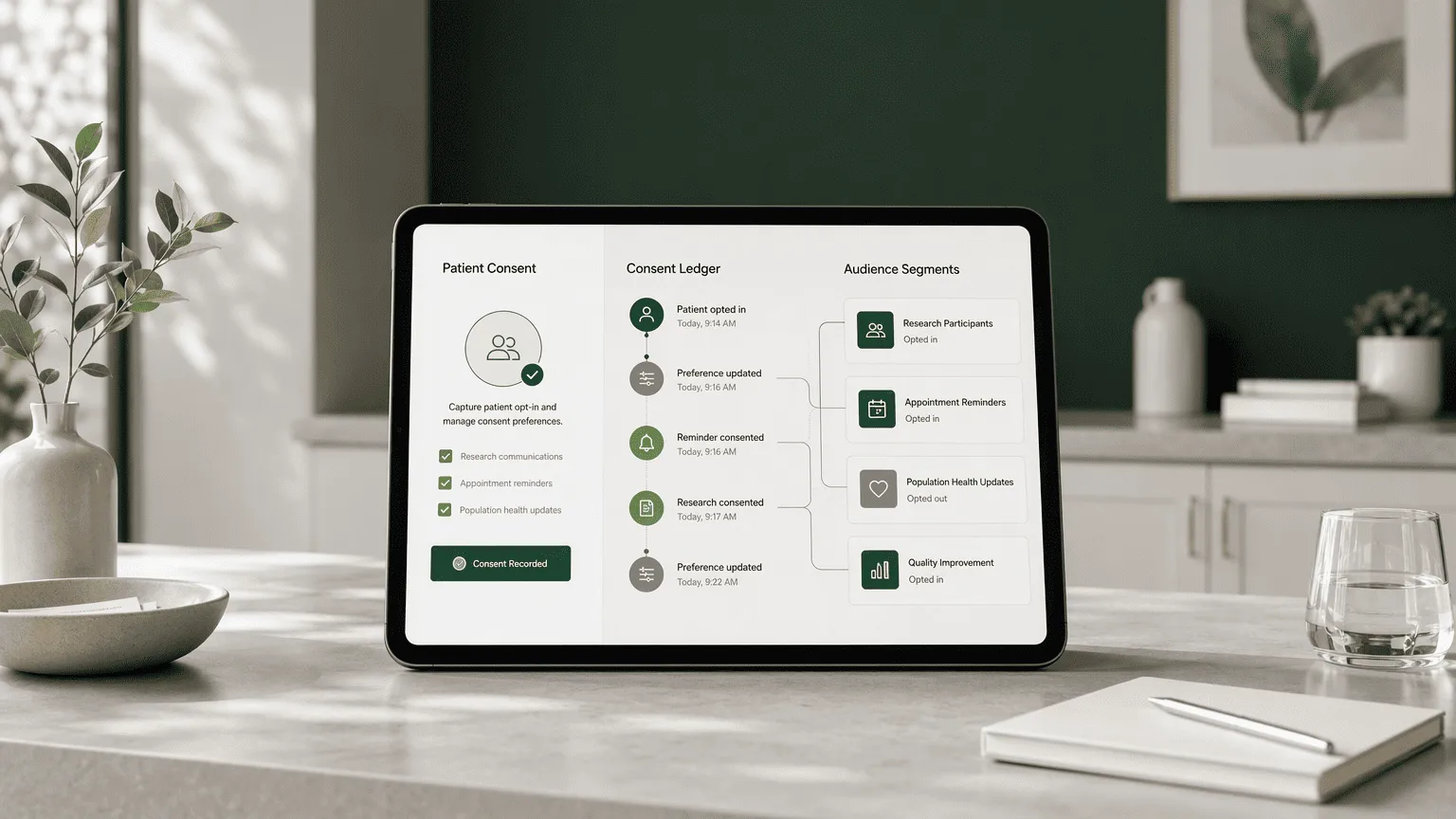
Clinads is the compliance layer that makes your messaging platform legally defensible.
The problem most practices solve in reverse: they pick a texting tool first, import a spreadsheet, and then realize they have no record of how each patient opted in. The HIPAA Privacy Rule does not care about your marketing roadmap. A covered entity can share protected health information with a telemarketer only if the entity has obtained the individual's prior written authorization.
Clinads captures that authorization at the point of collection, directly on your website, before a phone number ever enters your database. The consent record is timestamped, tied to a specific communication purpose, and auditable. Most general-purpose SMS platforms skip that step entirely.
It avoids purchased lists and pixel-based retargeting, which collapse under regulatory scrutiny. The output is a clean, documented subscriber base ready to feed into whatever messaging platform you selected downstream. If the BAA is the contract, Clinads is the paper trail.
Think of it as the intake coordinator for your marketing stack. Every broadcast you send without it rests on an assumption about consent that may not survive an audit.
2. Sinch Engage: The True Two-Way Marketing Automation Bundled
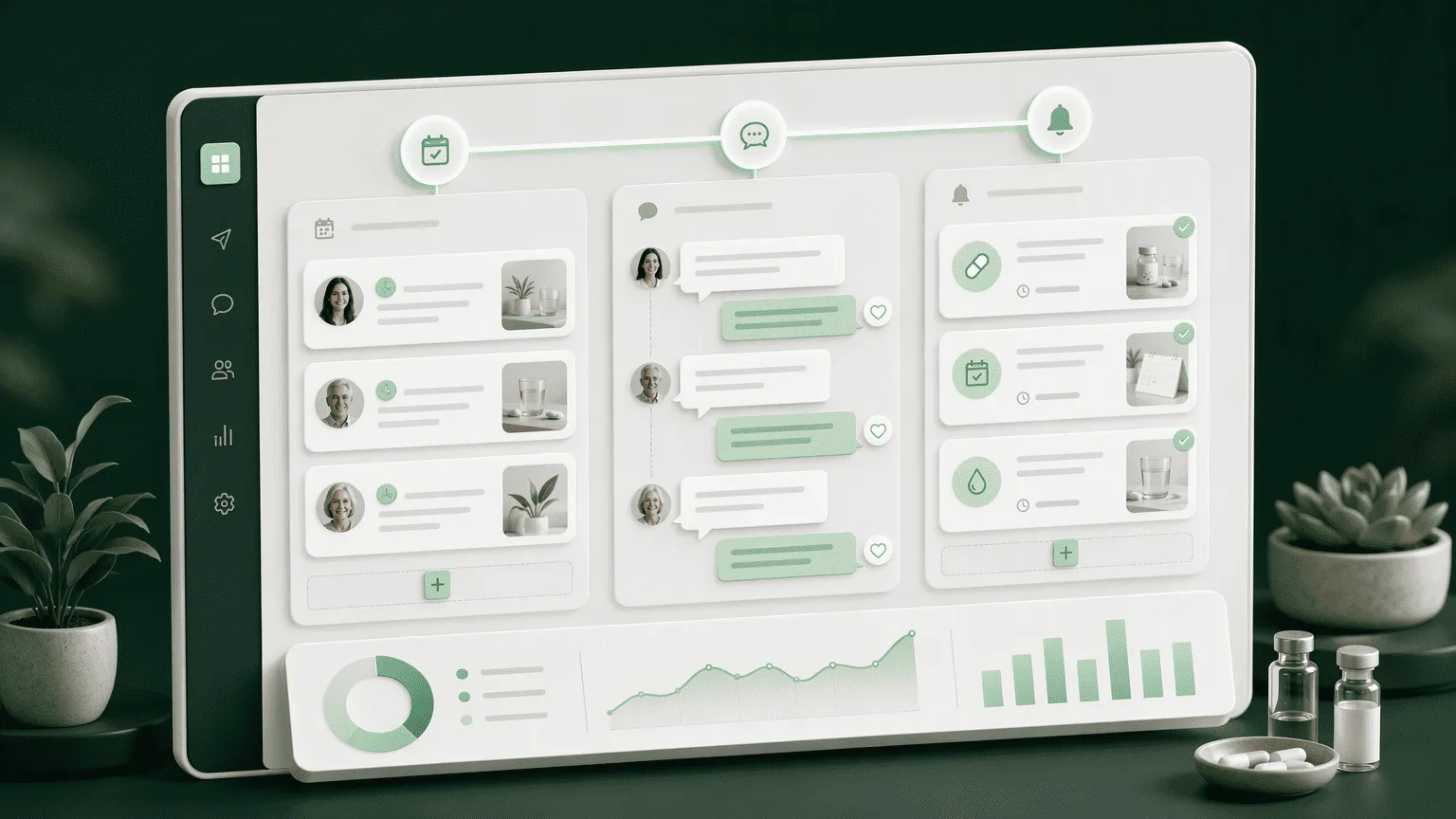
Sinch Engage comes closer to answering the reader's core question than any other platform on this list. You can target campaigns, schedule messages, and manage replies without leaving the dashboard.
The platform runs treatment communications (automated appointment reminders, prescription notifications, post-discharge follow-ups) on the same rails as the marketing side. That matters because communications about disease management or wellness programs operated by the covered entity or its business associate are generally not marketing under HIPAA. Sinch Engage operates the entire pipeline under a BAA, so a practice can message patients about a new service line or a flu shot clinic using the same logic that sends appointment reminders.
You skip the need for a separate marketing SMS vendor. The platform also integrates outward with HubSpot and Salesforce CRMs.
Marketing teams often use Sinch for HIPAA-secure delivery while letting the CRM handle campaign logic and attribution tracking. That hybrid model is where most serious operations end up.
3. Zingit: Prescriptive Engagement with Native EHR Integrations

Zingit operates on a different philosophy than the campaign-centric platforms above. It skips the marketing automation playbook. Instead, it embeds automated patient journeys directly into the clinical workflow by pulling triggers from your EHR.
Here is what that looks like in practice. A patient undergoes a knee replacement. The EHR flags the discharge date.
Zingit fires a pre-built sequence: post-op instructions on day one, a pain management check on day three, a physical therapy reminder on day seven, and a reputation management request after the recovery window closes. Each message is clinically timed and condition-specific. That last touchpoint, the review request, does real marketing work.
77% of consumers go to online reviews first to search for new physicians, and organizations with more than 25 reviews posted within the last three months earn 108% more than the average. Zingit converts clinical encounters into reputation assets without asking the front desk to manually send a single follow-up.
You will not build audience segments, A/B test subject lines, or run re-engagement campaigns for lapsed patients here. What Zingit replaces is the retention and referral function that most practices try, and fail, to achieve with a Mailchimp account and good intentions. The platform runs on clinically validated care journey templates that tie every outbound message back to a treatment event in the patient record. For a specialty practice where lifetime patient value depends on follow-up compliance and online reputation, that is often more valuable than a standalone marketing tool.
4. Klara (by ModMed): Patient Engagement Automation for Practices
Klara automates the entire patient visit lifecycle without calling itself a marketing platform. The results, however, are squarely in marketing territory: fewer no-shows, faster intake, and smoother billing collections all translate to revenue and throughput gains.
The platform structures patient communication around a predictable sequence that most practices still manage with paper and phone calls:
- Pre-visit intake and scheduling: Digital forms, insurance capture, and automated appointment confirmation reduce front-office phone volume. Every patient call your team answers takes 6 minutes of a trained employee's day and costs your practice about $4.90. Automating that step saves real payroll dollars.
- Visit-concurrent communication: Telehealth links, waitlist management, and real-time updates keep patients from abandoning the appointment.
- Post-visit follow-up and billing: Automated payment requests, care summaries, and next-appointment scheduling close the revenue cycle.
- Reputation management: Review requests fire after completed visits, feeding the online presence metrics that drive new patient acquisition.
Klara skips traditional drip campaigns, audience segmentation, and promotional messaging modules. The platform hits marketing goals like higher patient retention and increased review volume through operational automation bound tightly to the visit schedule. Because every message is triggered by a treatment relationship, this approach faces fewer HIPAA hurdles than a standalone marketing blast would. The tradeoff is real: practices that want to promote new services or run seasonal campaigns will need a separate tool. Think of Klara as clinical workflow automation that happens to produce marketing results.
5. Twilio Segment + SendGrid: The Custom Engineering Path to HIPAA-Capable Automation

Walk through the marketing operations floor of a large health system, and you will not find a single dashboard running everything. You will find Slack channels lighting up about an API timeout, a Jira ticket for a new audience sync from the EHR, and a developer who shipped a personalized SMS flow last Thursday. Twilio is the engine underneath that work.
The company's communications APIs for SMS and voice, combined with SendGrid's email delivery infrastructure and the Segment customer data platform, create a HIPAA-eligible marketing engine that can do virtually anything, provided you sign the BAAs and configure the stack correctly. HIPAA rules require appropriate administrative, physical and technical safeguards to ensure the confidentiality, integrity, and security of electronic protected health information. An API-first build puts the compliance burden squarely on your development team.
What separates this path from a pre-built platform comes down to three realities:
- Complete customization: Every trigger, segment, and message template is built to your exact specifications. There is no product roadmap to wait on.
- BAA coverage across the stack: Twilio, SendGrid, and Segment all offer BAAs to covered entities, but you need to negotiate and maintain each one separately.
- Engineering dependency: This is not a low-code or no-code option. You need developers who understand HL7, FHIR, or at minimum API authentication and encryption at rest. New HIPAA texting rules require safeguards when patient health information is sent, received, or reviewed over an unsecured cellular network or public Wi-Fi, and your build must account for every transmission vector.
Salesmsg's 2026 comparison references Twilio as the foundational API that other platforms, including some on this list, themselves rely on for delivery. For a health system with a 15-person engineering team and a complex patient engagement roadmap, this is the long-term answer. For a 3-provider practice, the maintenance burden alone makes it the wrong tool.
6. OhMD: Bridging the Gap Between Conversational Texting and Broadcasts
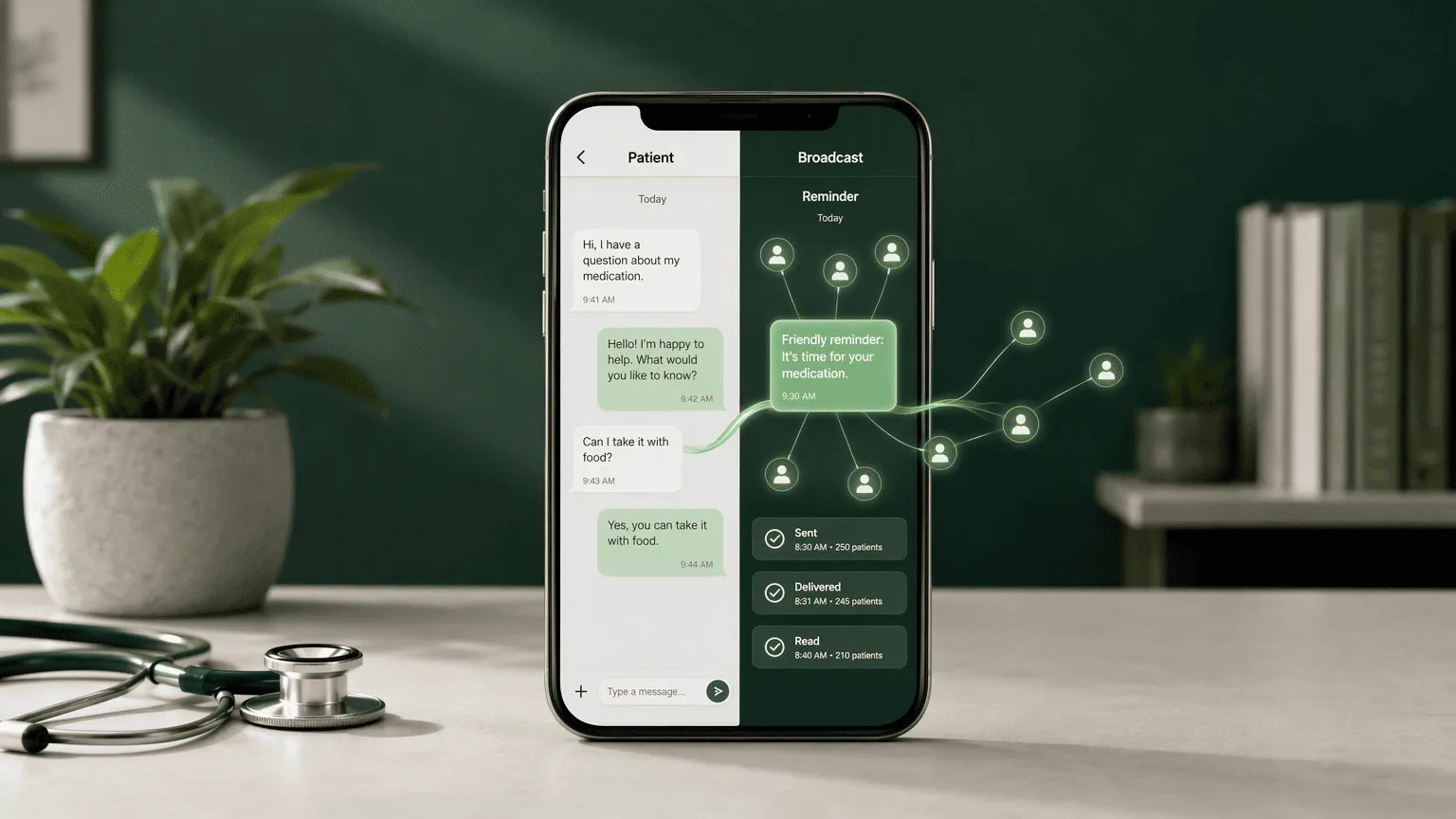
Most patient texting platforms force a choice: be conversational or be efficient. You either build rapport through two-way chats or you blast appointment reminders to a list. OhMD argues this distinction is a product of bad software design.
The platform's core philosophy is that patients engage more deeply when the conversation feels personal and unforced. Clinicians and front-desk staff use OhMD as a casual texting channel, answering questions, sharing treatment updates, and building the kind of rapport that used to happen in exam rooms. Over 1,200 clinics, hospitals, health systems, and payers use OhMD for patient communication, and the platform has handled 160 million patient interactions across voice, text, and web. That volume reflects real adoption.
On the broadcast side, OhMD lets practices send mass notifications like flu shot availability, weather closures, or new provider announcements from the same interface. The difference is context. A patient who has been casually texting with your staff for six months receives a broadcast as a continuation of a relationship.
The conversion rates on those campaigns materially outperform standalone SMS marketing tools because trust already exists. The limitation is that OhMD is not a marketing automation platform in the CRM sense. There are no lead scoring models, campaign attribution dashboards, or advanced segmentation beyond basic patient lists.
The platform handles the conversational-to-broadcast handoff well. But if you need to run multi-channel campaigns across email, SMS, and social with unified analytics, you will need to connect OhMD to a broader marketing stack. The review management piece is particularly strong.
Organizations that respond to reviews even 25% of the time generate an average of 35% more revenue, yet 75% of businesses don't respond to their reviews. OhMD automates the review request and makes responding frictionless, closing a revenue gap most practices ignore.
Conclusion
The seven platforms above fall into three decision lanes. Integrated campaign platforms (Sinch Engage, Textline) give you native messaging and broadcast tools under one BAA but require a connected CRM for advanced automation. Clinically embedded engagement tools (Zingit, Klara, OhMD) automate the patient journey from within the treatment workflow. They produce marketing outcomes like retention and reviews, though they lack standalone campaign builders. Custom API-first builds (Twilio with Segment and SendGrid) give enterprises unlimited flexibility at the cost of engineering complexity.
Clinads sits upstream of that entire decision. It handles the consent architecture and audience building that makes any downstream platform legally viable. If you are starting a vendor evaluation, begin with the BAA and the opt-in record.
Feature comparison grids come second. Marketing automation means nothing if the patient data feeding it was collected without documented authorization.
Want to see what your first month of compliant audience building looks like? Book a 30-minute intro call.
It means the vendor has signed a Business Associate Agreement (BAA) covering both the messaging delivery and the marketing modules, and the platform encrypts PHI at rest and in transit while providing audit logs and access controls for every campaign touchpoint.
Frequently Asked Questions
How do these platforms compare in terms of features, pricing, and integration with EHR systems?
Zingit and Klara offer native EHR integrations tied to clinical triggers. Sinch Engage integrates with HubSpot and Salesforce CRMs. Textline and OhMD provide lighter EHR connectivity. Pricing is custom-quoted for HIPAA-covered entities across all platforms; none publish transparent per-message rates for healthcare use.
What are the legal and technical requirements for sending marketing communications to patients under HIPAA?
The HIPAA Privacy Rule requires patient authorization for most marketing communications, with exceptions for face-to-face conversations and the covered entity's own health-related products or services. Technically, HIPAA rules require administrative, physical and technical safeguards including encryption at rest and in transit.
Other options include:
- Custom stack: building your own solution using Twilio's APIs under BAA coverage
- Consent-first platform: using a tool like Clinads upstream to handle consent capture and audience management regardless of which delivery platform you choose
Sources
- Marketing | HHS.gov - www.hhs.gov
- HIPAA and Electronic Communication/Texting: Suggestions from the Board Cell phone texting and E-mail communication has been increasing among physicians and - dam.assets.ohio.gov
- PatientGain: HIPAA Compliant Marketing Automation Platform - patientgain.com
- Healthcare Marketing Services for Medical Practices - OhMD - ohmd.com
- OhMD | Patient Communication AI for Healthcare - www.ohmd.com
- 5 best healthcare CRM software in 2026 - blog.hubspot.com
Want help executing this for your clinic?
Book a 30-minute call and we will map what a real ad engine would look like for your specific service mix.
Book a call