
Your Waiting Room Is Empty Because Your Practice Is Invisible. Here Is the SEO Audit That Fixes It.
IntroductionYour practice doesn't have a marketing problem; it has a visibility problem. Approximately 75% of users never scroll past the first page of search results. If you are not dominating the local map pack and the top organic positions for the exact symptoms and specialties you treat, you are invisible to the patients who are actively searching for you right now. The shift in patient acquisition is about building a HIPAA-conscious, trust-first digital presence that answers every touchpoint a patient has before they ever pick up the phone.
Medical SEO in 2026 is the primary bridge between your exam room and the patient searching at 2 a.m. for a solution to their pain. The era of stuffing a webpage with dense medical jargon and calling it a strategy is dead. Generic marketing agencies that ignore strict healthcare regulations are a direct liability. This guide cuts through the noise to show you exactly how to turn your practice into the undisputed local search answer, from the concrete ranking signals that matter to the operational timeline and the hard return on investment you should be demanding.
Key Takeaways
A modern medical SEO strategy balances technical optimization with strict regulatory compliance.
- The GBP Leverage, A complete Google Business Profile is the highest-use free asset for generating phone calls and driving directions, frequently outperforming the practice website
- Ranking Velocity, Realistic ranking and call volume improvements respond within a 4 to 8 week window from a serious cleanup. Expect gradual climb, not overnight results
- Legal Response Framework, Engaging online reviews safely requires a simple rule: never confirm the reviewer is a patient or reference visits, diagnoses, or billing details
- Patient-First Content, Algorithmic preference is shifting hard toward digestible, plain-language answers written for the patient's specific question, not keyword-stuffed dissertations written for peers
- Specialist Risks, Hiring a generic agency often incurs hidden compliance costs, like keyword-stuffing your business name or violating marketing advertising regulations, that a specialized healthcare SEO firm inherently avoids.
Defining modern medical SEO and its core components

Medical SEO runs on a multi-pillar system where each layer feeds the next. When one pillar wobbles, the rankings follow. These are the foundational pieces that determine whether you land on page one or disappear past page three.
- Local signal dominance: The interaction between your Google Business Profile, accurate NAP consistency across directories, and genuine patient review velocity. Your GBP primary category selection is the single strongest ranking lever available.
- On-page patient authority: Structuring digestible service pages, FAQs, and blog content that directly answer high-intent patient queries. The writing must bridge the gap between medical accuracy and plain language to avoid a common mistake: writing for peers instead of patients.
- Technical site health: The silent killer of rankings. Medical experts recommend a loading speed of three seconds or less, yet the average site may creep up to 8.66 seconds. A slow, mobile-unfriendly site signals to Google that your practice does not value a patient's time.
- Off-page compliance and authority: Building authority signals through legal review acquisition and backlinks, while navigating the strict guardrails of HIPAA and advertising regulations to avoid reputational ruin.
The Complete Google Business Profile: Your Highest-Use Free Asset
A complete Google Business Profile is the highest-use free marketing asset a doctor has: for most practices it generates more calls and direction requests than the website itself. The problem is that most physicians treat it like a tombstone, just a name and a phone number that gets looked at once and forgotten.
The fix starts with a 'serious cleanup': select one hyper-specific primary category. A precise, single category signals to Google exactly which local intent queries you matter for. It is the single strongest ranking lever you can pull apart from reviews.
Nail down your NAP hygiene. Inconsistency in your name, address, or phone number across Yelp, Healthgrades, and insurance directories quietly erodes local rankings because the algorithm begins to distrust your location data. Immediately update your profile with current, genuine photos of the office and staff; practices that do this get measurably more engagement than those relying on a rusty logo or a stock photo of a smiling actor.
Finally, use the weekly post feature with plain-language service descriptions. Explain how you solve the back pain that stops a patient from playing with their kids. ClinAds, for instance, builds this foundational hygiene into a repeatable system so your profile actively works as your primary phone-call generator.
HIPAA-Safe Review Management and Doctor Response Strategies

Most doctors stay silent on their reviews because they're afraid of violating HIPAA. That silence tanks engagement and tells prospective patients the practice has checked out. You can respond. You must respond. And you can defend your standard of care without spilling a drop of protected health information (PHI).
The foundation is the 'never confirm' strategy. You never say, 'It was nice treating you in January for your knee pain.' You never say, 'We are sorry to hear about your billing issue.'
Any acknowledgment of a specific clinical or financial interaction immediately erases your safe harbor. Respond to the sentiment. Skip the treatment history entirely.
A safe response to a negative review reads: 'We hold ourselves to the highest standards of professional care and we take these concerns seriously.
Generic reputation agencies sometimes try to correct a patient's memory of a visit by citing chart details in a public reply. That is the fastest route to a regulatory body's inbox. Avoid it.
When you solicit reviews, use an automated platform that sends a general request. Never tie the ask to a recent encounter in a way that confirms a doctor-patient relationship on a public URL.
Patient-First Content: Writing Medical Information That Ranks and Converts
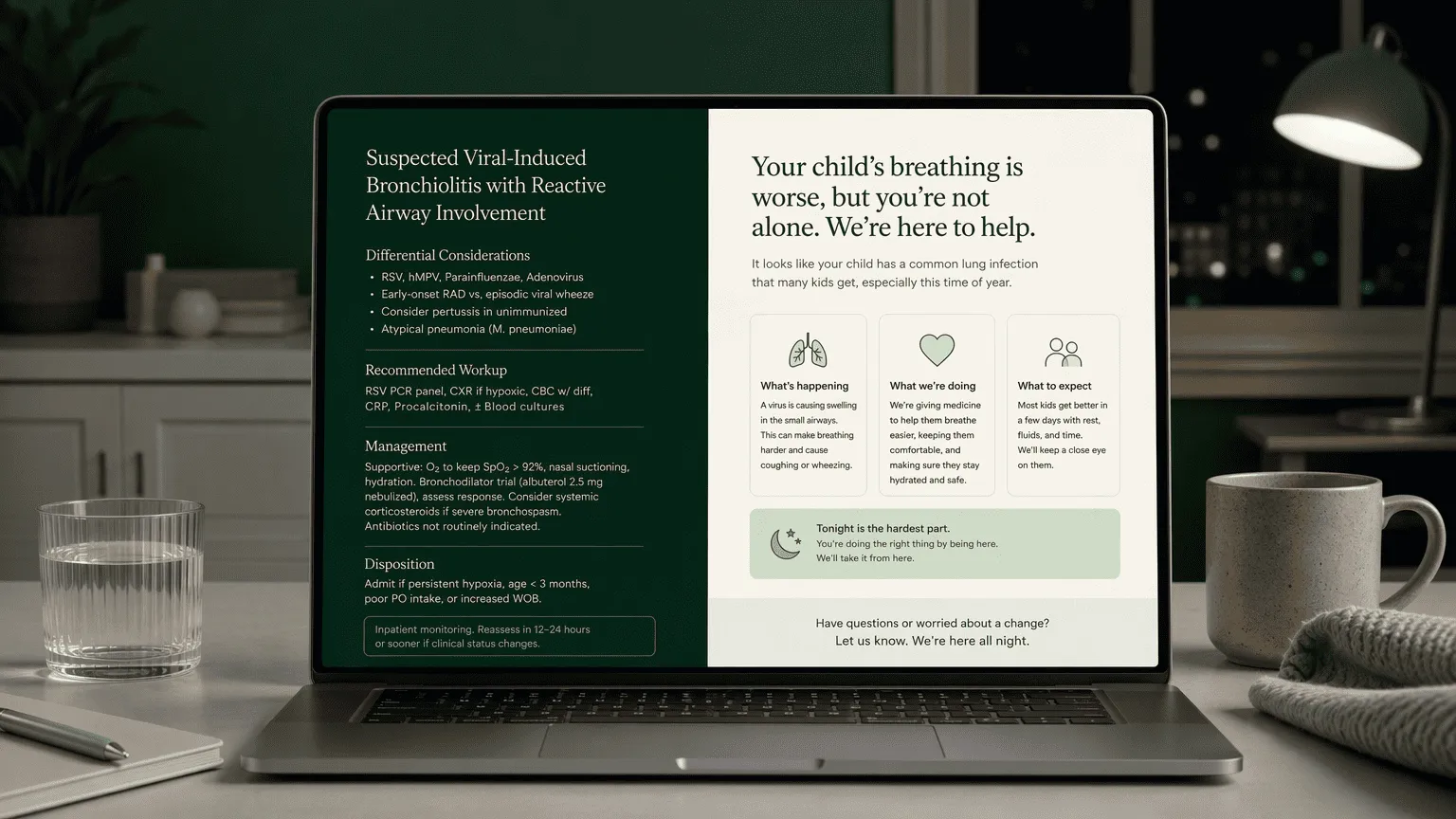
The most common SEO mistake in 2026 remains writing content that is technically accurate for a med school symposium but useless for a worried mother at midnight. The best medical SEO companies help doctors improve visibility by stopping them from performing for their peers. Complex pathology terms have high search volume, but Google's evolving language models and AI Overviews are increasingly prioritizing what they perceive as the 'most helpful' answer, and that almost always is the simplest, most digestible explanation of a condition and its solution.
You need to structure content to capture the featured snippet. Use exact patient questions as your H2 headers on service pages. Under 'What is the recovery time for a robotic knee replacement?'
answer in three clear, immediate sentences before exploring the variables. This is optimizing for precision.
Structured FAQ sections that directly answer these symptom-based queries satisfy the algorithm's authority check without forcing the reader to parse a medical review article. The goal is to beat WebMD and competitor directories by being the best logical answer engine.
A stacked blog churning out generic migraine tips does nothing for conversion if it doesn't map back to a local intent. Switch from a broad education engine to a local topical authority role. Tie every piece of educational content back to a concrete patient outcome or a treatment page through internal linking. ClinAds builds this infrastructure using an AI-first growth platform that maps language models to your specific service lines, turning your URL into the definitive answer for your ZIP code.
The Timeline and Investment: Costs, ROI, and Ranking Velocity for Private Practices

Below a serious spend, you are genuinely invisible. The problem is that many practices try to buy 'cheap SEO' for a few hundred dollars and write it off as ineffective within three months. A realistic range for credible medical SEO services often clusters between $899 and $2,499 per month for established solo practices depending on market density. A specialist agency retainer for a competitive surgical market can run substantially higher.
Stop viewing this as a fixed overhead cost and start modeling it as the cheapest golden hour you can buy. If a single new elective surgery patient has a lifetime value in the thousands, acquiring even two incremental patients through an optimized profile in a year pays for the entire retainer. The unit economics dwarf almost any other channel because this is high-intent capture.
Timing expectations must be clinical, not emotional. Expect ranking and call volume to respond within 4 to 8 weeks of a serious cleanup of the Google Business Profile. In the first month, you are fixing the technical debt of NAP errors and duplicate listings. By month two, the call tracking numbers should start reflecting organic spikes, particularly from mobile users; about 62% of smartphone users have made purchases from these devices, and for healthcare, that translates directly to scheduled appointments.
Measuring What Matters: From Vanity Metrics to New Patient Acquisition Tracking
Reporting raw organic traffic and generic impressions to a practice owner is a deceptive distraction. It makes an agency look busy while the waiting room stays empty. The only performance truth is the conversion event: if a dashboard shows 10,000 monthly visitors but zero phone calls from the GBP or zero new appointment request form submissions, you are burning budget on search engine voyeurism.
The real dashboard is ambulance-simple. It tracks phone calls directly from the 'call' button on your Google Business Profile, driving-direction clicks to the physical office, and total 'Book Online' form completions. A high volume of direction requests at 9 a.m. is the tangible precursor to an office visit, a signal far more useful than a pageview count.
For deeper operational insight, demand time-to-conversion analysis on your specific provider landing pages. If a low back pain page draws clicks but a relevant physician's bio page has leaky exit rates, the content gap is obvious without any technical SEO jargon. You need to connect the path from search to solution, one step at a time.
ClinAds builds this measurement directly into the reporting stack. Rather than burying you in referral paths, you can see the volume of AI-generated organic impressions crossing into hard appointment signals. An example case study generated 1.14K Google impressions in 30 days, resulting in 260 organic clicks and a 23% click-through rate, proving high-intent traffic over noise is the only metric worth chasing.
Choosing Your Guide: Specialized Healthcare SEO vs. Generic Digital Agencies

The wrong question is 'Who can get me to page one?' The correct question is 'Who can get me to page one without threatening my medical license?' Patient acquisition lives inside a regulatory cage that a restaurant-focused agency cannot see, let alone comply with. You pay a specialist for risk mitigation and compliance architecture. You pay a generalist for optimization speed that could kill your business.
| Decision Dimension | Specialized Healthcare SEO Agency | Generic Digital Agency |
|---|---|---|
| Often ignorant of medical privacy shields, risking violations by confirming patient visits in review responses. | ||
| Business Profile Naming | Strict adherence to your legal practice name to avoid Google-listed violations. | High risk of keyword-stuffing business names (e.g., 'Best Los Angeles Eye LASIK Surgery Doctor') which triggers profile suspension. |
| Review Engagement Model | Uses the 'never confirm' algorithm, addressing sentiment safely without clinical data points. | High risk of defensive public replies that reference specific care events, solving a PR hit but creating a regulatory litigation risk. |
| Content & AI Strategy | Maps high-intent symptom language, autonomous AI search agents (like Google AI Overviews), and patient vernacular to conversion. | Prone to dense medical jargon for 'authority,' scoring well on medical readability scales but failing actual patient click-through. |
| Ultimate Orientation | Prioritizes long-tail acquisition cost, reducing reliance on episodic PPC spend through owned organic patient funnels. | Often optimizes purely for volume ranking indicators and temporary traffic spikes without tying data to appointments. |
Conclusion
Listing your practice and walking away used to work. It doesn't anymore. When your Google Business Profile sits as a bare directory entry and your site competes against WebMD's peer-reviewed depth, your cost to acquire a patient climbs in lockstep with how invisible you are. The practices capturing high-intent local demand now combine machine speed with human regulatory precision.
The step every modern practice needs is a HIPAA-safe, AI-conscious audit of every public surface you own. Stop bleeding patients onto the second page of Google. That's the problem ClinAds solves, an AI-first marketing engine mapped specifically to healthcare discovery across search and autonomous AI agents.
Want to see what your first month of complete medical visibility would look like without putting your license at risk? Book a 30-minute intro call.
Frequently Asked Questions
What are the most effective SEO strategies for medical practices in 2026?
The top strategies combine a precisely optimized Google Business Profile with high patient-first content and technical speed. The core local signals that drive call generation are:
- Selecting exactly one correct primary category
- Maintaining strict NAP consistency across directories
- Posting genuine facility photos
How much does medical SEO typically cost and what is the ROI for a doctor's office?
Credible medical SEO services for a private practice often range between $899 and $2,499 per month. The ROI is driven by high-intent patient capture; landing even a single new elective procedure patient whose lifetime value is high can fully offset the annual marketing expense.
Is it legal for doctors to do SEO, and how do HIPAA and medical advertising regulations affect their online presence?
SEO is fully legal, but the execution requires rigorous compliance. HIPAA affects online presence through review response rules; you must never publicly confirm patient relationships or specific medical encounters. A specialized agency builds these legal shields into your marketing architecture.
How should a doctor's office optimize its Google Business Profile and manage online reviews?
Apply these key tactics for local SEO and review management:
- Select a single correct primary category and ensure your name, address, and phone number are identical every place they appear online
- For reviews, respond to sentiment only, use a safe phrase like 'We take these concerns seriously,' and always avoid discussing any treatment or administrative specifics.
What is the difference between a generic agency and a specialized healthcare SEO agency?
The critical trade-off is that a specialist prevents licensing board risk, while generalists often optimize for speed at the expense of patient privacy.
How long does it take for a new medical practice to rank on the first page of Google?
You should expect ranking and call volume improvements to respond within a 4 to 8 week window after a serious cleanup of your Google Business Profile and NAP citations. Quick wins come from profile optimization, while competitive organic terms may stabilize closer to the eight-week mark.
Sources
- Google Business Profile for Doctors: Guide · Medical Marketing - medicalmarketing.digital
- SEO for Medical Practices: 7 Mistakes to Avoid at All Cost — Digitalis Medical - digitalismedical.com
- Best Medical SEO Companies for Doctors - percepture.com
Want help executing this for your clinic?
Book a 30-minute call and we will map what a real ad engine would look like for your specific service mix.
Book a call