Your Telehealth Patient Pipeline Is Drying Up. Here Is What Actually Works in 2026.
IntroductionMost telehealth businesses are funding their own decline and calling it marketing. Your patient acquisition cost is climbing, your Google Ads dashboard still reports clicks, but the scheduled consults are flatlining. The problem isn't your clinical staff or your offer. The problem is that your entire digital front door was built for a search engine that no longer exists.
The shift is brutal and measurable. Google's AI Overviews and chatbots answer patient questions before anyone reaches your booking page. One study of the French rollout showed a site lost about 47% of its daily clicks while impressions held steady after AI Overviews activated. The traffic stayed on Google's surface, and the clicks never crossed over to the practice. You get the impression credit without the patient.
SEO newcomers are pulling old tricks out of the dumpster, convinced that the latest AI update rewards shortcuts. They're wrong. Google's John Mueller cut through the noise directly, warning that "building a solid foundation for a website is preferable to relying on short-term tactics because those always have an expiration date." That expiration date accelerates every time a new AI model trains on the web's noise.
This guide lays out the seven-step sequence that actually acquires patients when search engines become answer engines.
Key Takeaways
AI visibility and traditional patient acquisition are the same workflow now. Stop separating them. Below is the compressed roadmap for a practice that wants profitable appointments.
- Technical compliance is the new ranking factor: AI chatbots and Google's crawlers both devalue sites with poor Core Web Vitals, missing HTTPS enforcement, or absent medical schema markup.
- Provider-led local SEO captures 'near me' intent: Google's Gemini 4 Hydrogen model surfaces specialist pages with real bios and NPI data over generic telehealth directories.
- Paid search must be restructured around privacy-safe data: Server-side tracking and Google Consent Mode v2 protect you from pixel-litigation exposure while aligning with how AI agents select landing pages.
- A review ecosystem is your defense against AI skepticism: Structured patient sentiment and Q&A content flood the results page and counteract the dry, AI-generated summary a user sees before committing to a click.
- Zero-click analysis defines true ROI: Tracking which queries AI answers definitively lets you stop spending on keywords that produce impressions but zero downstream bookings.
At a Glance
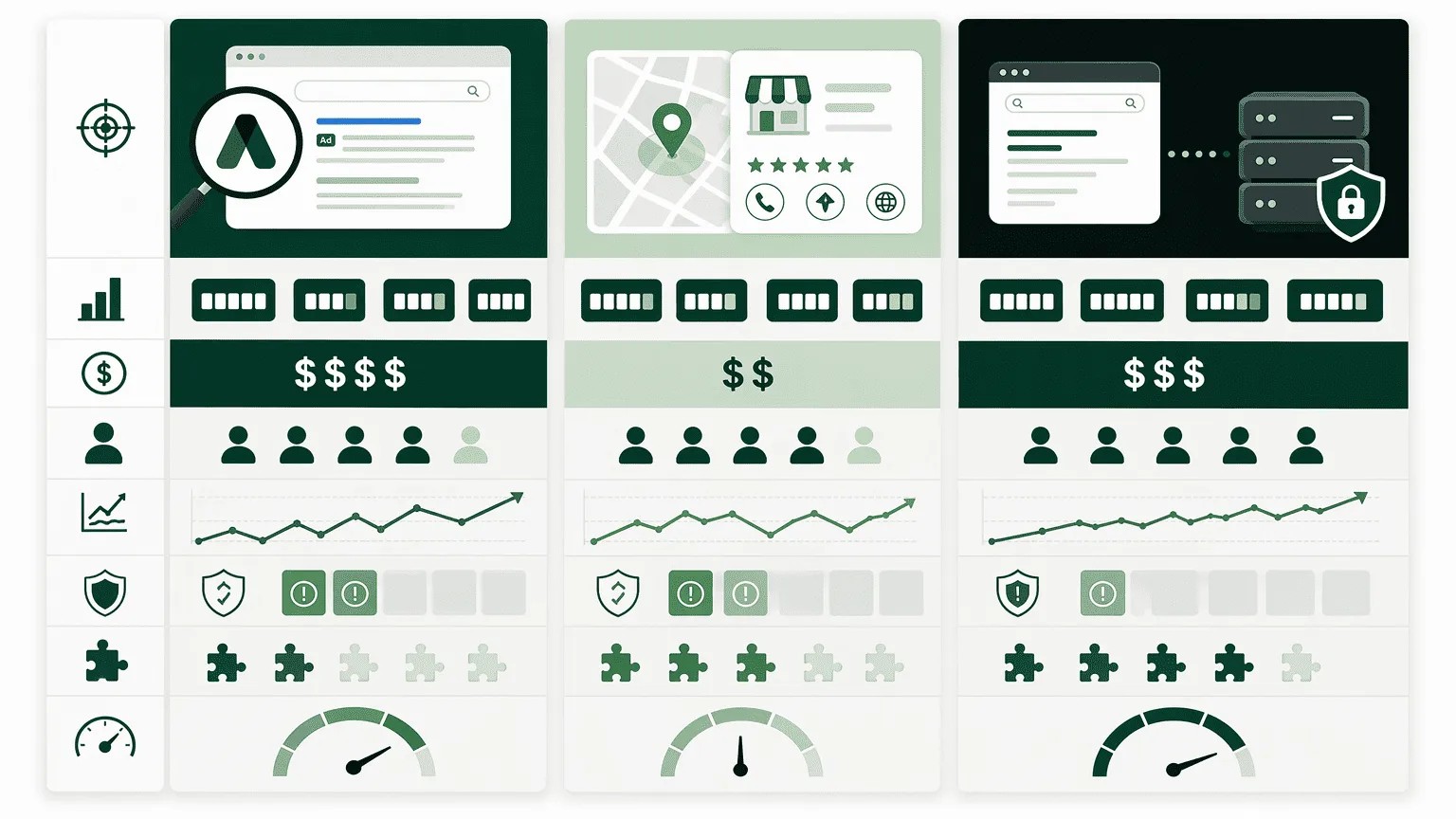
Here is how the options compare across the dimensions that matter most.
| Acquisition Channel | Typical Cost per Patient | Best Use Case | Key Risk |
|---|---|---|---|
| Google Ads (AI-optimized) | $80 to $150 | High-intent specialty consults | Zero-click queries reduce impression-to-booking rate |
| Provider-local SEO | $40 to $70 | Patients searching 'near me' + specific specialty | Requires NPI-backed bios and schema to rank |
| Server-side tracked paid search | $60 to $120 | Privacy-safe retargeting for chronic care pipelines | Requires Consent Mode v2 and BAA with ad platform |
| Zero-click keyword audit | $0 (redirected budget) | Cutting spend on queries AI answers fully | Demands ongoing monitoring of chatbot response changes |
| Direct booking optimization | $15 to $50 (dev cost) | Reducing drop-off once visitor lands | Conversion rate gains cap at ~30% without traffic improvement |
Step 1: Engineer a HIPAA-Ready Technical Foundation That AI Search Rewards
You cannot bolt compliance onto a marketing stack built for ecommerce and expect AI to recommend your clinic. In 2026, your hosting environment, your schema markup, and your page speed are clinical safety signals. All telehealth services provided by covered health care providers and health plans must comply with the HIPAA Rules, which extends to the technology vendors that power your site. A chatbot scraping a form field that captures protected health information without a signed business associate agreement does more than violate trust. It generates a breach notification obligation that costs far more than the engineering to fix it upstream.
The infrastructure checklist starts with HITRUST-certified hosting that enforces HTTPS across every subdomain and API endpoint. If a single resource loads over an insecure connection, the Googlebot samples your pages less frequently. It flags the entire session as risky.
The layer most businesses skip is medical schema markup. You need Physician and MedicalWebPage structured data populated with your NPI numbers, accepted insurance plans, and provider bios to get surfaced inside AI platforms like ChatGPT Business Hub. Google's John Mueller confirmed that "a lot of the AI systems, they build on SEO.
From that point of view, I think it's going to continue to be relevant. I think especially technical SEO is going to remain very relevant." Those crawlers parse your structured data exactly like a search bot, and when you leave it blank, the AI assembles its answer about your clinic from third-party sites you cannot control.
Run a Core Web Vitals audit on every page. Poor Largest Contentful Paint on a provider's profile page causes the same crawl budget throttling as a slow homepage.
Step 2: Architect a Conversion Engine from Booking Button to Bedside Manner
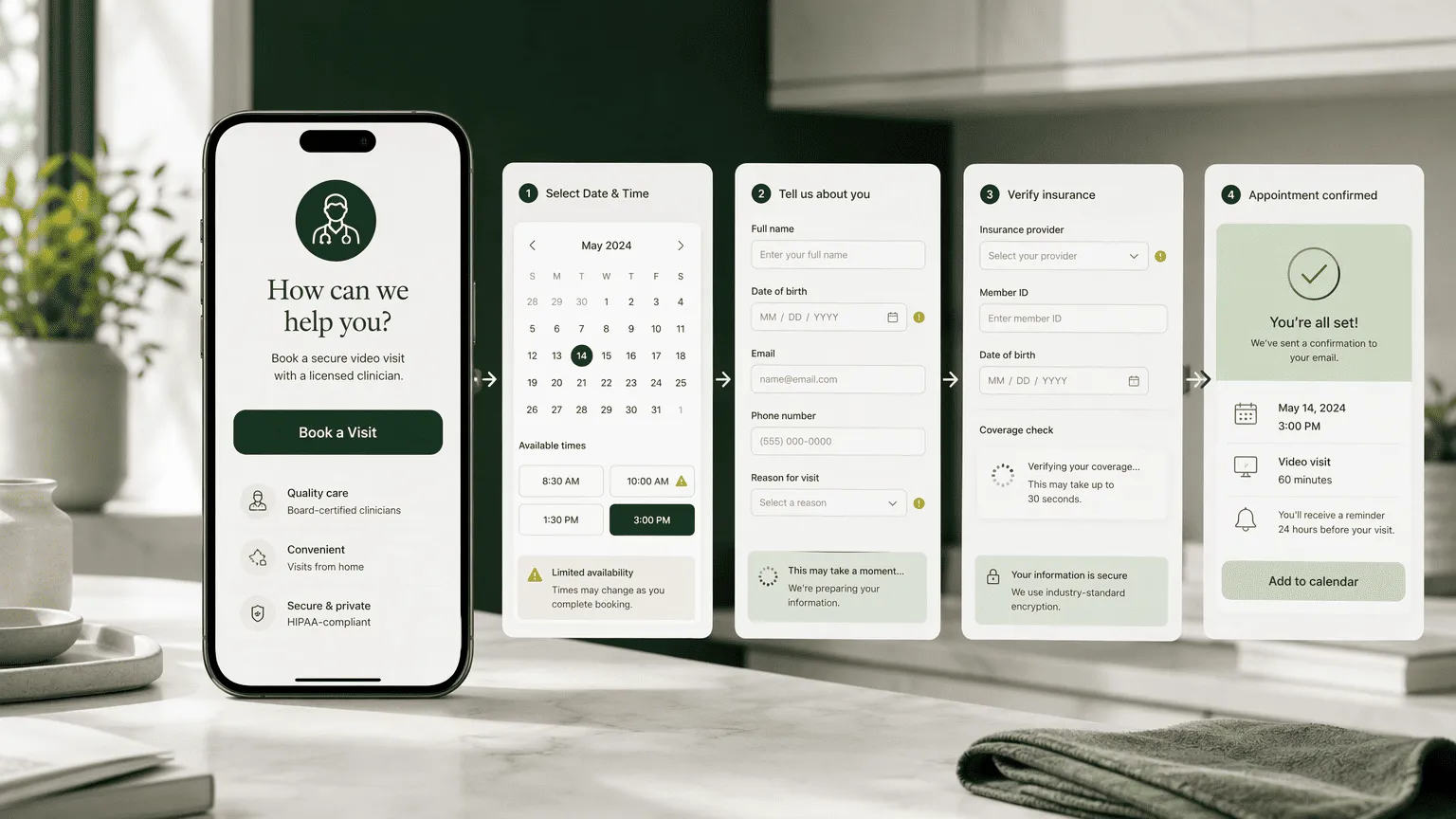
The micro-interactions between a patient deciding to book and actually completing the intake form cause more drop-off than any ad creative you will ever write. Reducing friction here multiplies the value of every click you pay for. Below is the sequence to build a booking flow that converts an anxious searcher into a scheduled patient.
- Mobile-first booking UI: The entire calendar and provider picker must render and be interactable within three seconds on a 4G connection. Eliminate any part of the flow that requires a horizontal scroll or a pinch-to-zoom on a phone screen.
- Insurance lookup API as the first field: Before you ask for a name, auto-verify the patient's insurance eligibility. This removes the central anxiety that drives abandonment: "Will this even cover me?"
- Covered health care providers must use technology vendors that comply with the HIPAA Rules and will enter into HIPAA business associate agreements. A generic chatbot widget leaking intake data into an unencrypted third-party database is a lawsuit trigger.
- Pre-appointment credential reinforcement: After the confirmation, send a sequence of one SMS and one email that restates the provider's credentials, license number, and a 30-second video thumbnail of the provider. This suppresses the pre-visit anxiety that drives same-day cancellations and no-shows.
Step 3: Localize Your Digital Front Door with Geo-Specific and Provider-Led SEO
Telehealth businesses treat 'local search' like it does not apply to them because their license covers an entire state. That assumption costs you the Google Business Profile packs that now appear for symptom-plus-specialist queries across a metro area. A search for 'PMDD specialist who takes Aetna in Austin' returns a page with a real provider's bio, their Texas NPI, and a verified Austin address. The national telehealth brand's homepage never shows up in that local pack.
Google's latest model, Gemini 4 Hydrogen, can break a detailed question into more specific searches and present answers with images or comparison tables. It will surface the local specialist pages with geo-tagged schema markup long before pulling a generic state-level landing page. You must build a unique city and service combination page for every metro you serve, each anchored to a real provider with a published license.
The adjacent priority is operationalizing your Google Business Profile posting cadence.
Backlinks from regional hospital directories and county medical society pages carry disproportionate citation authority for these city-level pages because they signal locality at the entity level. You can accelerate this with a tool like Clinads to systematize the provider-led content publishing, ensuring the technical schema and local citation network operates simultaneously rather than in disconnected marketing sprints.
Step 4: Navigate the Paid Channel Maze with Compliant, High-ROI Campaigns

Running standard Google Ads for telehealth in 2026 without restructuring around privacy-safe first-party data exposes you to two risks that kill your ROI. The first is the black-box bidding model, which still optimizes for impression share instead of kept appointments. The second is the legal exposure from pixel-based retargeting that leaks protected health information into ad platforms without your awareness. The Georgetown litigation tracker documents an active appeal where plaintiffs argue federal Medicare reimbursement rules violate the Social Security Act and Administrative Procedure Act, a case that has expanded to encompass broader pixel-liability theories. Regulators and class-action attorneys are now actively examining every data pass between a healthcare site and an ad network.
The correct structure is server-side tracking with Google Consent Mode v2, which keeps patient behavior signals entirely out of the client-side data layer. This lets you feed conversion data back to Google's algorithm without risking a pixel leakage class action.
Your campaign structure itself must mirror how the new AI agent surfacing logic operates. Build ad groups around condition-plus-specialist-plus-format queries that Gemini 4 Hydrogen is now designed to resolve with a specific provider landing page. This replaces broad symptom terms that trigger a generic AI Overview with no referral. The specialist page with verified NPI data becomes the AI's recommended answer, and your paid listing appears adjacent to it.
The channel works. The brief is what fails. Most clinics start with the wrong platform, running broad match on 'anxiety treatment' without excluding the exact queries where the AI has already answered the intent. Use a testing budget below $2,500 monthly only if you have exclusion lists locked in.
Step 5: Build a Review and Trust Ecosystem That Outranks Skepticism

The first thing a patient sees about your clinic inside an AI-generated summary is someone else's opinion, stripped of context. If you don't actively manage that narrative, the AI trains on whatever yelp of anxiety a mismatched patient typed at 2 A.M. You can out-position that with a systematic review and authority engine. Below is the sequence.
- BAA-compliant automated review requests: Deploy an automated request system that triggers a review solicitation ten minutes after a completed telehealth encounter. Covered health care providers must use technology vendors that comply with the HIPAA Rules, meaning the request itself cannot expose a patient visit type or diagnosis in transit.
- Inject Review Schema markup on every provider page: Generate aggregate rating structured data manually, because dynamically loaded widgets often fail to render in the AI's crawl window. This lets the AI engine surface your star rating as a quick trust signal inside the generated summary block, directly counteracting skepticism that the AI content itself is unreliable.
- Own the 'Dr. X reviews' query with provider Q&A video content: Publish short, provider-hosted show notes or video clips where real practitioners answer condition-specific questions. This page ranks for the provider's name plus 'reviews' and becomes the source the AI cites in the absence of a patient narrative.
- A complaint routed through an open social platform becomes permanent training material for the next model update.
Step 6: Decode the Patient Journey Beyond the Click
Tracking impressions and click-through rates for a telehealth campaign in 2026 is reporting on the weather while your basement floods. The metric that matters is the click that becomes a kept appointment, and AI Overviews broke that attribution path by answering queries without sending any traffic. That French study quantified the bleed: one site lost about 47% of its daily clicks while impressions held steady. The audience saw the answer. They never saw the site.
The fix is an integration architecture that pipes first-party conversion data into Google Analytics 4 without exposing protected health information. This lets you isolate the exact keyword and landing page combinations where the AI Overview answers the query decisively and your ad becomes decorative. You stop buying clicks on queries that AI mode already neutralized, and you reallocate that budget to the long-tail specialist queries where the AI's summary is thin enough to force a click onto your booking page.
Step 7: Pilot Emerging Channels with Guardrails Intact
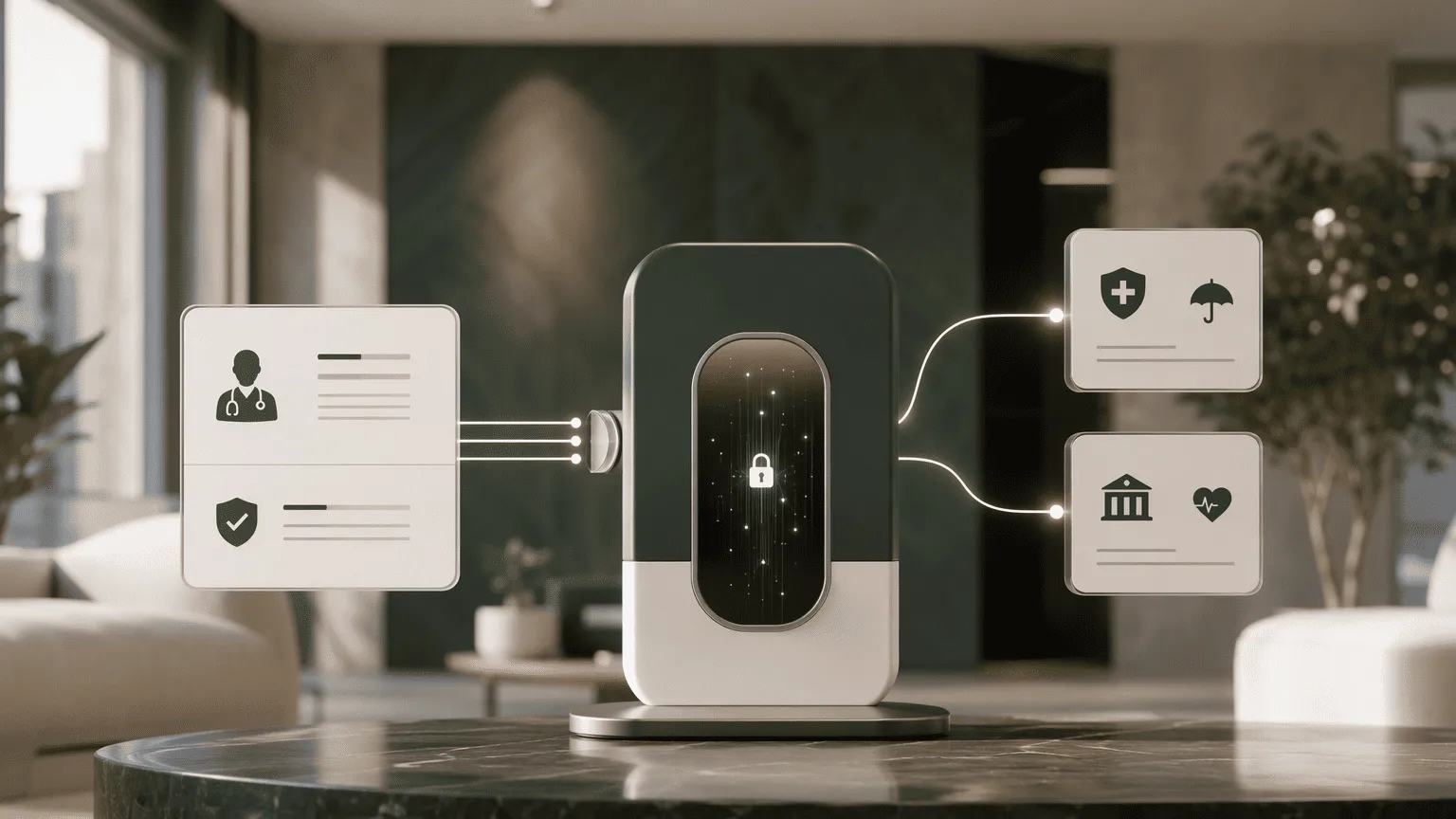
Waiting until a channel has published ROI benchmarks is how telehealth businesses arrive late to expensive traffic. Right now, two new distribution surfaces are open and gated only by the sophistication of your privacy compliance infrastructure. The first is OpenAI's ChatGPT Business Hub beta, a claimed-profile environment where a telehealth business can provide current provider information, service lines, and insurance panel status directly into the model's retrieval system. A customer can form an opinion about your business in ChatGPT before they ever land on your site. If the model describes a service you no longer offer or leaves out the one you do, the appointment is already lost before the click.
Claim the profile, populate it with structured provider data identical to your website's Physician schema markup, and monitor brand mentions weekly. The AI retrieval mechanism operates on different crawl timing than Google, which means outdated insurance panels or departed clinicians will persist inside answers far longer than they would on a traditional search. A correction lag inside a recommended answer from ChatGPT to a patient asking 'what psychiatrist near me accepts my plan' creates a dangerous misrepresentation that regulatory bodies can already cite as a marketing violation.
The second channel is a limited test on a health-focused AI community, with the explicit rule that zero protected health information passes between the platform and your back end. You use these as an authority signal layer only, driving citations and provider Q&A snippets that the larger retrieval models ingest as training data.
Any test on these channels that moves a single byte of patient data outside your compliance envelope triggers the exact legal exposure that the Georgetown litigation tracker is cataloging across the healthcare sector. Restrict your legal team's review scope to the data transmission protocol. The channel itself is benign; the data handoff carries the risk.
Conclusion
Half your traffic didn't just dip. It vanished. AI Overviews answered the query before the user ever saw a blue link, and your telehealth practice got treated as raw material, not a destination. That loss is permanent for any practice still relying on thin content and paid-media volume.
The search experience that replaced ten blue links favors practices that fill entity graphs and schema with real, structured detail. When Google pulls a direct answer, it assembles it from sources it trusts. Provider credentials, procedure details, accepted insurance plans, and location data that match across every third-party listing all contribute to that trust score.
Think of zero-click exposure as its own funnel stage. A practice that shows up in an AI Overview snippet for 'does my insurance cover telehealth cardiology' isn't losing traffic. It's earning a prospect who already screened themselves and is closer to booking than a cold paid-search click ever delivered.
Paid media still has a role, but only after the foundation is solid. Buying ads to drive traffic to a site that search engines don't cite authoritatively is a negative-ROI activity. Close the credibility gap first.
Audit your schema. Fix your local listings.
Confirm that every provider page loads structured data the engines can parse. Once the practice appears as a primary source in AI answers, paid campaigns amplify an asset that's already working, rather than propping up one that isn't.
The timeline matters. AI-driven search share is not plateauing, and the practices that build these signals now lock in an entity authority that late movers will pay heavily to chase. Set the agenda this week: a schema audit, a zero-click query exposure review, and a third-party data pipeline check. Do that before approving the next media budget line item.
Frequently Asked Questions
What digital marketing channels deliver the highest patient acquisition ROI for telehealth businesses in the US in 2026?
Local SEO with provider-led landing pages and condition-specific specialist content currently delivers the highest organic ROI because it aligns with how Gemini 4 Hydrogen and ChatGPT Business Hub surface answers. On paid media, restructured Google Ads campaigns targeting specialist-plus-format queries and excluding AI-answered symptom terms produce the most predictable patient acquisition cost, especially when built on server-side tracking that avoids pixel-litigation exposure.
How should a telehealth provider optimize their website and booking flow to convert visitors into scheduled patients?
Load the booking calendar in under three seconds on mobile and place an insurance eligibility lookup API as the first field users encounter. Deploy a live chat vendor that has signed a HIPAA business associate agreement, not an unsecured chatbot. After booking, send one credential-reinforcement SMS with the provider's license details and a brief video thumbnail to suppress the pre-appointment anxiety that triggers same-day cancellations.
What paid advertising strategies are currently most effective for telemedicine patient growth, and how do their costs compare?
Condition-plus-specialist ad groups using server-side conversion tracking and Google Consent Mode v2 currently outperform broad symptom-match campaigns by a wide margin on appointment-kept rates, not just impression metrics. A practice spending below $2,500 per month without locked exclusion lists that filter out AI-answered queries typically sees negative ROI within the first ninety days, regardless of channel choice.
What role does SEO play in attracting patients looking for virtual care in 2026?
Technical SEO, including medical schema markup and Core Web Vitals optimization, is now the primary retrieval signal AI systems use to decide which clinic to cite in a generated answer. Localized provider-led pages with real NPI data and geo-tagged physician schema rank inside the Google Business Profile packs for 'near me' specialist queries, which a generic telehealth homepage cannot capture.
Deploy a BAA-compliant automated review request triggered after the encounter without exposing the visit context in transit. Inject hand-coded Review Schema markup on every provider page so the AI can surface your aggregate rating as a trust signal inside generated summaries.
What emerging patient acquisition tactics are gaining traction for virtual care providers?
Claiming a profile on OpenAI's ChatGPT Business Hub beta and structuring it with the same physician schema and insurance panel data your website uses lets you influence how the AI describes your practice before a patient clicks. A limited test on a health-focused AI community for authority-building citations also captures early adopter traffic, provided the data transmission protocol passes legal review and never transmits protected health information.
Sources
- Telemedicine SEO: How to Attract More Qualified Patients (2026 Guide) | Charles Kirkland - www.charlesrkirkland.com
- HIPAA Rules for telehealth technology | Telehealth.HHS.gov - telehealth.hhs.gov
- American Hospital Association et al. v. Becerra et al. - Health Care Litigation Tracker - litigationtracker.law.georgetown.edu
Want help executing this for your clinic?
Book a 30-minute call and we will map what a real ad engine would look like for your specific service mix.
Book a call