
The Independent Optometrist's Guide to Outranking Retail Chains Online in Seattle
IntroductionYour Seattle practice is doing the heavy lifting. More than 60 percent of US adults had their eye exam at an independent practice, yet chains and online retailers are the ones selling the eyewear afterward. The problem isn't your clinical skill. The problem is that chains win the post-exam transaction with template location pages, heavily advertised $69 exams, and directory dominance.
You are leaving revenue on the table because your digital storefront looks like a placeholder while their machine-built pages signal relevance to Google. This is not an ad-budget problem you solve by outspending them. You cannot. A chain's national media fund will always dwarf yours. The fix is to stop playing their game and to start amplifying the geographic and clinical authority that a corporate template can never replicate.
This guide is a six-step roadmap to reposition your Seattle practice online. It moves from foundational Google Business Profile work through hyper-local content, community reputation, clinical page architecture, digital convenience, and finally, neighborhood-targeted advertising that punishes chain wastefulness.
Key Takeaways
The six highest-use actions to compete online without matching a corporate ad budget:
- Google Business Profile as a local weapon: Complete every field, add individual doctor profiles, and upload 12+ office photos to attack the map-pack relevance signals chains buy ads to get around.
- Hyper-local content that template pages cannot touch: Build dedicated pages for Seattle neighborhoods, local eye-health triggers like wildfire smoke, and community landmarks to establish geographic authority.
- Reviews that name names: Solicit review language that mentions the specific doctor and visit type, and respond with clinical empathy to build trust signals that generic chain volume cannot replicate.
- Clinical service pages for high-margin care: Convert dry eye, myopia management, and specialty lens expertise into distinct, FAQ-rich pages that rank for the exact clinical queries chain sites ignore.
- Digital convenience as a neutralizer: Implement online booking for every visit type, build a transparent pricing page that dissects the $69 ad, and integrate virtual try-on guidance.
- Hyper-local ad targeting with a clinical edge: Deploy Google and social ads by Seattle zip code and specialty interest, using tightly aligned landing pages that drive quality score and punish broad-match chain waste.
Step 1: Seize the Google Business Profile with Local Relevance Signals Chains Overlook
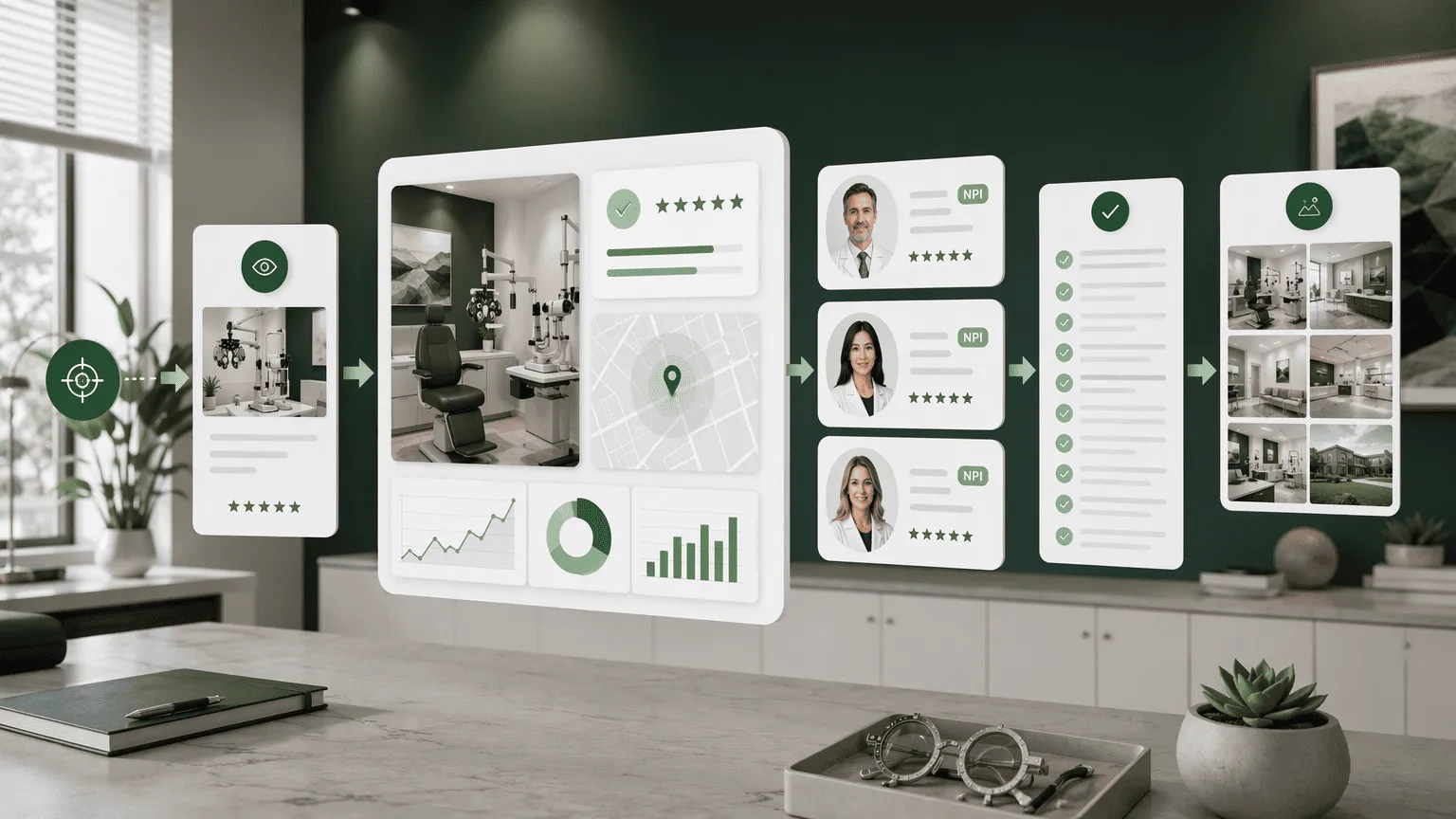
Your Google Business Profile is the primary ranking surface for the local map pack, and most independent profiles are functionally empty. A single generic category and zero individual doctor profiles signal nothing to Google. You correct this by:
- Adding the precise primary category.
- Adding every practitioner listing with their individual NPI.
- Filling the full services list with the exact language patients search, from 'scleral lens fitting' to 'pediatric eye exam'.
Then you upload photos. Providers with at least one office photo on Zocdoc were booked 3.9 times as often as those without. The data suggests at least 12 office photos, covering the reception area, exam lane, optical dispensary, and exterior. Chains rely on Google Ads to buy visibility because their template-driven local pages carry minimal local relevance signals. You do not need to outspend them. You need to out-relevance them on the one surface where ad budget cannot buy placement.
Step 2: Build Hyper-Local Seattle Content That Template Pages Can't Touch
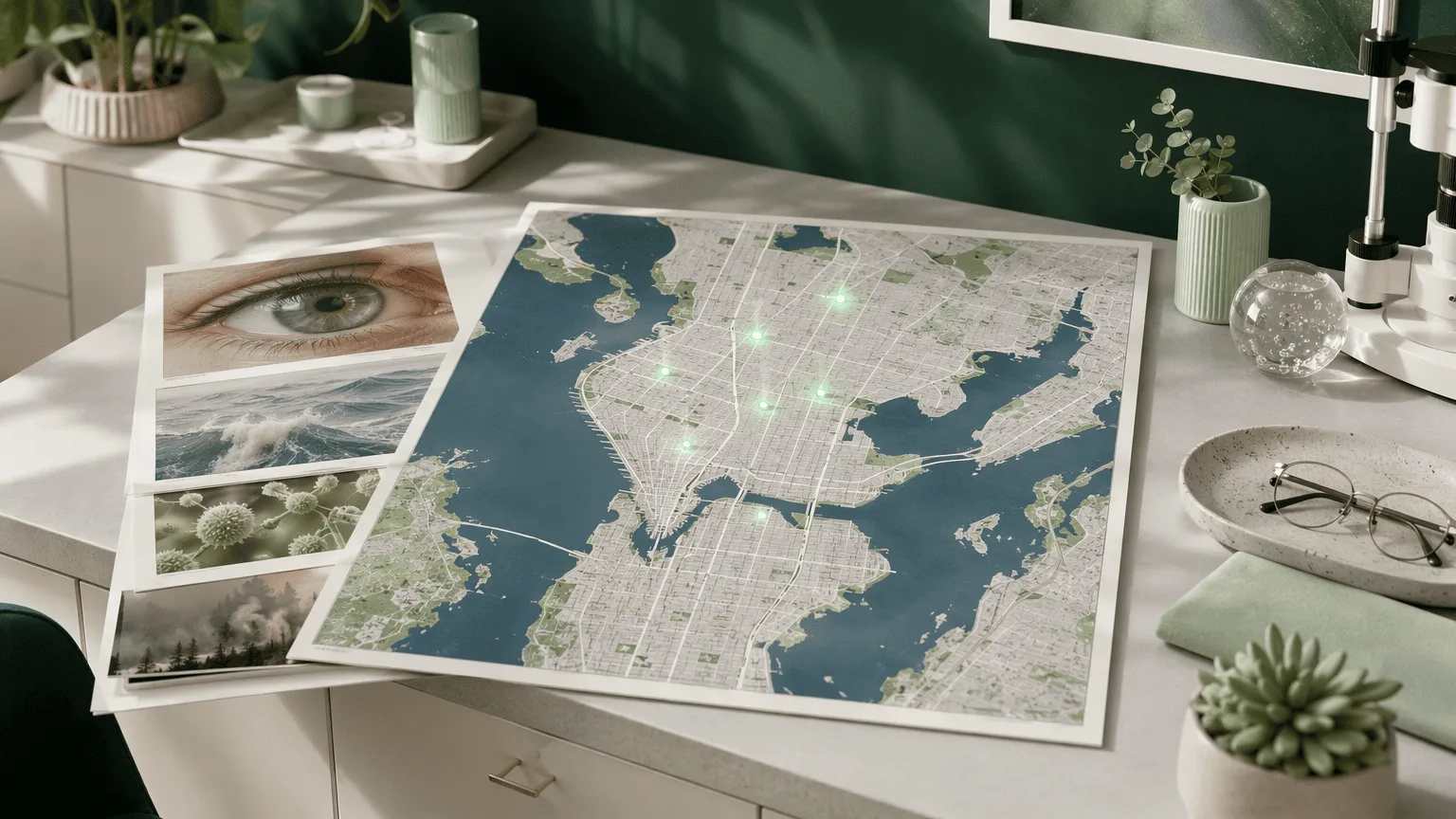
A chain's location page is a machine-generated template with the city name swapped in. It cannot write about the specific dry-eye triggers of a marine climate or explain why wildfire smoke makes your scleral lens fittings spike in August. Your practice can. Dedicate a page to each Seattle neighborhood you serve, authored and reviewed by the practice's optometrist. A page titled 'Dry Eye Specialist on Capitol Hill' that discusses air quality, local allergens, and the walk-in convenience from the light rail station is a relevance signal a chain cannot manufacture.
This is geographic authority architecture. Write about nearby landmarks, cross streets, and community events. Publish an 'Optometrist in Ballard' page that names the Sunday farmers market and the cross streets near your door. The goal is to force Google to associate your practice with the specific neighborhoods patients actually search, a hyper-local signal chain templates treat as impossible overhead.
Step 3: Craft an Online Reputation Rooted in Community Trust, Not Corporate Branding
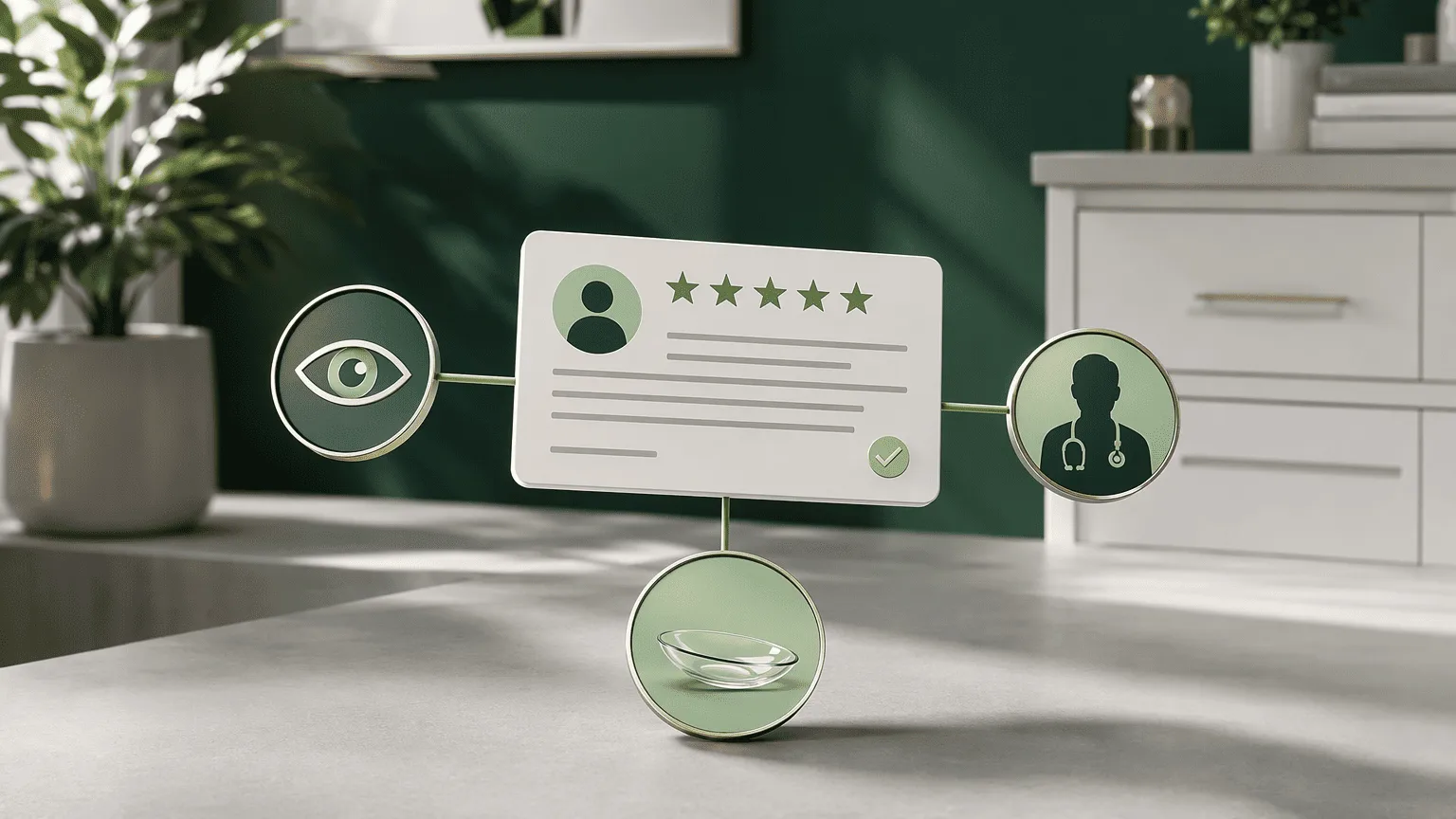
Chain reviews read like a receipt: polite, generic, and detached from any individual clinician. Your practice's reviews must do the opposite. Guide patients to name the doctor and describe the visit type in their review language. A review that mentions 'Dr. Chen diagnosed my dry eye and fit me with scleral lenses' is a compound trust signal. It tells Google you are the relevant result for a dry eye doctor, a scleral lens fitter, and a specific named practitioner, all in one entry.
The volume game is a trap. You will not match a chain's raw review count. You outperform it by layering clinical and personal specificity into every entry. That starts with:
- Asking for the review at the point of maximum satisfaction.
- Sending a follow-up link that pre-frames the specific service rendered.
- Responding publicly with clinical empathy rather than corporate boilerplate.
When you reply, reference the procedure, acknowledge a detail the patient mentioned, and close with a forward-looking statement about their treatment plan. That response functions as a secondary relevance signal telling the patient and the algorithm you run a real clinical practice. Providers with 10 to 29 reviews on Zocdoc were booked about three times as often as those with 1 to 9 reviews, but the multiplier is wasted if those reviews are anonymous and content-free.
Step 4: Convert Clinical Expertise into High-Ranking, Patient-Centered Web Pages
The traffic chains cannot buy is the patient searching "myopia management consultant Seattle" or "dry eye specialist near me that takes VSP." Build the pages that answer that query. Here is the architecture:
- Dedicate a distinct page to each specialty visit type: Dry eye workup, myopia management consultation, and scleral lens fitting each get their own URL, internal link, and H1 written around the exact clinical search term.
- Author and review every clinical page with the optometrist's byline: The page carries the doctor's name, credential, and a short note that references specific instruments, protocols, or patient outcomes from their own exam lane rather than generic descriptions.
- Embed an FAQ block at the bottom of every service page: Use schema-ready question-and-answer pairs that mirror the exact language patients use, such as "How long does a dry eye workup take?" and "Will my vision plan cover myopia management?"
- Implement structured data markup on each page: Use FAQPage and HowTo schema to enable rich results. A dry eye page that returns clickable FAQ links directly in the search snippet captures attention from the chain result that renders as a plain meta description.
Step 5: Match and Exceed Chain Convenience with Smart Digital Patient Experience
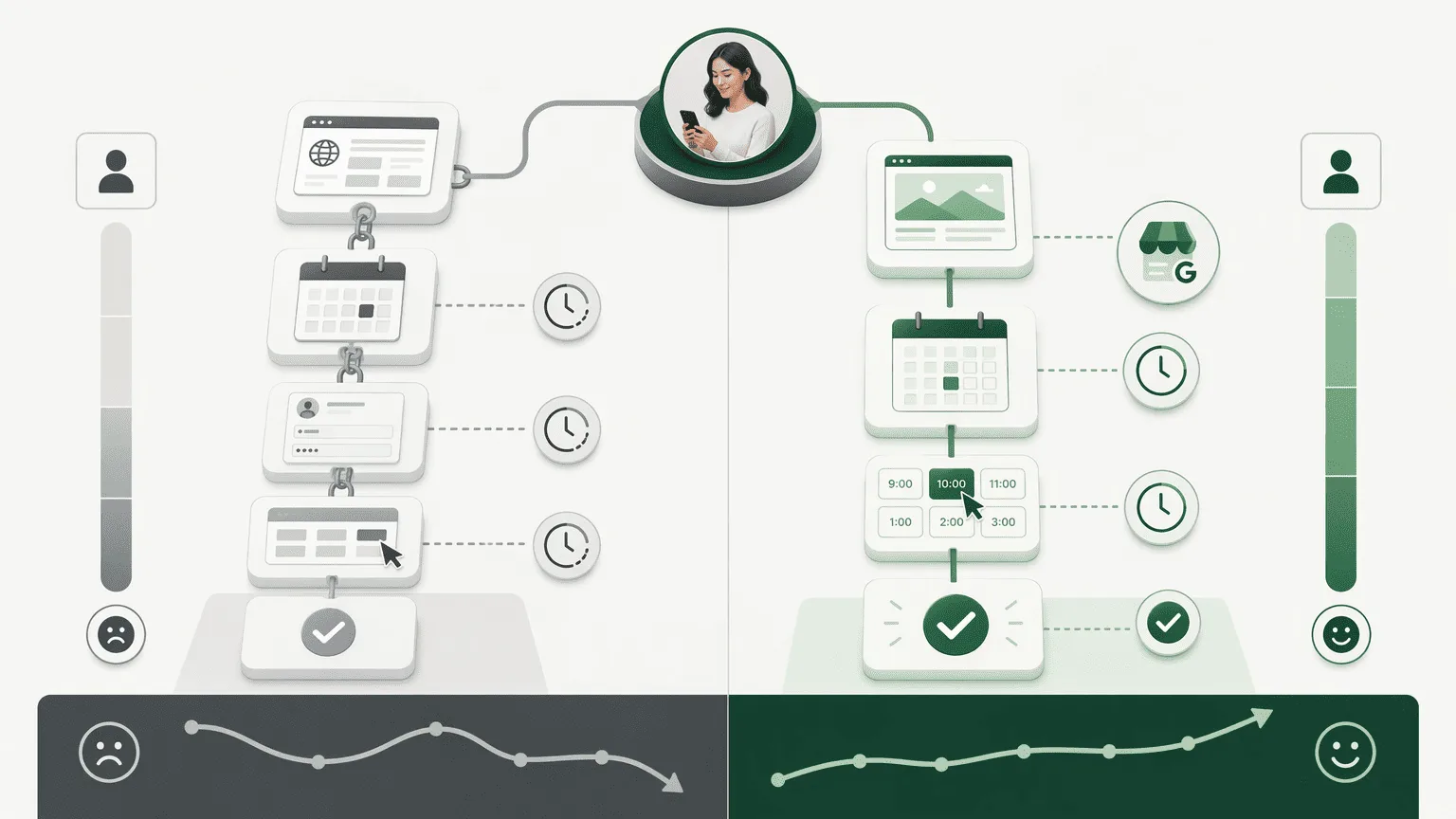
Chains win on the perception of frictionless access. You neutralize that by building a digital front door that actually converts.
| Patient Experience Dimension | Big-Box Chain Play | Your Independent Counter |
|---|---|---|
| Appointment Booking | 24/7 online scheduling via corporate app | HIPAA-compliant online booking integrated directly into your website and Google Business Profile |
| Wait Times | Standardized 15-minute slot, often double-booked | True one-on-one scheduling via automated text reminders that let patients confirm, reschedule, or cancel without calling |
| Check-In Process | Kiosk tablet with clunky insurance scanning | Digital pre-registration link sent via SMS 24 hours before the visit, so patients walk in fully checked in |
| Payment & Billing | POS terminal swipe at checkout, surprise bill mailed later | Digital wallet tap-to-pay at check-in with a real-time eligibility file; no mailed statements |
| Prescription Pickup | Adjacent in-house pharmacy drives co-location dependency | Electronic prescribing to the patient’s pharmacy of choice before they even leave the exam room, plus a local courier service for home delivery |
| Follow-Up & Recall | Automated phone call during dinner hours | Conversational text thread (two-way SMS) that allows patients to ask a quick question or book a follow-up without a phone tag |
Step 6: Deploy Targeted Digital Ads with a Fraction of the Budget and a Neighborhood Focus

A chain's advertising strategy is blunt-force radius targeting around a zip code, bidding on 'eye exam near me' and absorbing the waste. Your campaigns must be surgically precise because your budget demands it. Google Ads is the fastest channel. Someone searching 'dry eye doctor Seattle' or 'eye exam today Capitol Hill' is ready to book, and a well-built campaign can put your practice in front of them within days.
The structure starts with campaign segmentation. Routine exams, contact lens fittings, dry eye, myopia management, and urgent visits each get:
- Their own ad group.
- Their own ad copy.
- Their own landing page.
The landing page is where you punish the chain's waste. When your ad copy and landing page share the same clinical language, your quality score climbs and your cost per click drops below the generic broad-match bids the chains are paying.
On Facebook and Instagram, the targeting shifts from keyword intent to life-stage and local interest. Target by Seattle zip code and neighborhood, overlay interest in specialty lenses or dry eye solutions, and layer in life events like a recent move or a new job with vision benefits. A new resident in Ballard seeing a sponsored post about a local optometrist specializing in progressive lens fitting who is a five-minute walk from their apartment is a compound signal no chain's demographic-targeting dashboard can replicate.
The budget rule is blunt. Below $2,500 a month, your paid visibility is negligible against the chain noise. But $2,500 spent on tightly segmented campaigns with dedicated landing pages will convert a higher percentage of that spend into booked appointments than a chain's $25,000 broad-match blitz. The trade-off: you do not scale. You get precise. The chain buys reach; you buy the transaction-ready patient with a clinical need you are built to treat.
Conclusion
The Vision Council's data confirms more than 60 percent of adults already choose an independent practice for their exam. The revenue gap is a digital relevance and conversion problem you solve by amplifying three dimensions a template-driven chain location page cannot touch: your geographic authority, your clinical specificity, and your community trust. Execute these steps in order, from the GBP optimization through neighborhood-targeted advertising, and your practice stops competing on price against a $69 loss leader. It starts owning the clinical queries and local neighborhoods that fund long-term patient relationships a chain's business model was never built to hold.
Want to see what your first month of targeted local creative would look like? Book a 30-minute intro call.
Frequently Asked Questions
What specific local SEO tactics can an independent Seattle optometry practice use to outrank national retail optical chains in Google Maps and local search results?
Complete every Google Business Profile field:
- Add individual practitioner listings.
- Add a full services list.
- Add at least 12 office photos.
- Build dedicated pages for each Seattle neighborhood you serve that discuss local eye-health triggers and landmarks.
- Solicit reviews that name the specific doctor and visit type.
How can a private optometry practice differentiate its online reputation and brand story from impersonal big-box optical retailers to attract local patients?
Guide patients to write reviews that name the doctor and describe the clinical service rendered. Respond publicly with clinical empathy, referencing the procedure and treatment plan. Showcase community involvement like school vision screenings, not just corporate branding.
What is the relative patient acquisition cost for an independent optometry practice using targeted digital ads compared to the mass-market spending of retail chains?
A $2,500 monthly budget on tightly segmented Google and social campaigns with dedicated clinical landing pages can convert more booked appointments than a chain's $25,000 broad-match blitz. The efficiency comes from quality score gains and hyper-local targeting, not from outspending.
How can an independent optometrist convert their specialized clinical expertise and personalized care into high-ranking website content that retail chain websites lack?
Build distinct, optometrist-authored pages for each specialty: dry eye, myopia management, scleral lenses, and progressive fittings. Embed FAQ blocks with schema markup to enable rich results, and optimize each page for a specific clinical search term a template cannot address.
What online booking, telehealth, and digital patient experience features can a local optometrist offer that match or exceed the convenience of large optical chains?
Make every exam type bookable online without a phone call, list the practice as telehealth-friendly for follow-ups, and build a transparent pricing page that breaks down what insurance covers and what a medical copay applies to, neutralizing the chain's $69 loss-leader.
How should a private practice use patient reviews, before-and-after galleries, and community involvement to build a digital presence that a corporate chain in the same city cannot easily replicate?
Publish reviews that are clinically specific and doctor-attributed. Use community involvement, such as sponsoring a local school's vision screening, as on-page content. The goal is to signal genuine local embeddedness to both patients and Google's local ranking algorithms, a signal a template page cannot fake.
Sources
- Pricing: Clinic Marketing Software & SEO | ClinAds - getclinads.com
- Web Design for Optometrists | Surfside PPC - surfsideppc.com
- Optometry Website Design Services | DeveloperLook - developerlook.com
- How Independent Optometrists Compete With Optical Chains - optometrymarketingcompany.com
Want help executing this for your clinic?
Book a 30-minute call and we will map what a real ad engine would look like for your specific service mix.
Book a call