
The 2026 Med Spa Weight Loss Playbook: Why Instagram Won’t Save You, But This Will
IntroductionMost med spas are marketing their weight loss programs like it's 2022, and they are bleeding patients into the hands of telehealth apps charging $99 a month. The commoditization threat is not coming. It is already here. The structural shift in 2026 pits your clinical expertise against a flood of compounding pills and injections sold directly to the consumer without a physical exam. The question facing your practice is brutally simple: how do you market a $400 medical program when venture-backed digital platforms are racing to the bottom on price?
This is not a trend report that tells you to post more on TikTok. The problem is that cheap semaglutide is now instantly accessible. Found's compounded semaglutide runs $289 a month all-in, and competitors like Trimi push the floor even lower.
It feels impossible to compete on cost. The meta-analysis of 41,381 patients confirming tirzepatide's 4.28 percentage point superior weight reduction over semaglutide is scientifically relevant, but it means nothing for your bottom line if your marketing can't get a patient through the door to discuss it. Your digital front door is currently invisible to the high-intent patient searching for medical oversight, and that is a fixable operational failure.
The playbook has shifted. Winning centers now run on a stack of local search defense, ethical visual proof, and clinical retention metrics that telehealth cannot replicate. We are going to audit exactly how top-performing med spas are building moats in a commoditized market, starting with the concrete numbers you need to benchmark your next month against.
Key Takeaways
Five non-negotiable marketing shifts separate the med spas booking weight-loss consults from those complaining about the economy.
- Price War Reframe: Competing on price against a $99 telehealth subscription is a losing strategy. The winning move is building a trust architecture around in-person safety and body composition analysis.
- Social Proof Over Brand Content: Micro-influencers posting longitudinal 'journey' content are crushing static before-and-after ads. The algorithm rewards ethical, process-driven transformation over clinical claims.
- Paid Search Defense: High-intent terms like 'medical weight loss near me' are the new battleground. If you are not bidding on your own brand name plus competitor terms, you are donating your leads to the telehealth disruptors.
- The 60-Day Cliff: Patient acquisition cost means nothing if retention collapses. The benchmark to stay alive is a 60-day retention rate above 70%. Below that threshold, every marketing dollar is being incinerated.
- Safety Is The Moat: Weekly in-person titration, lab reviews, and physical exams are the only marketing moat you have against a compounding pharmacy that never sees your patient's face.
The Digital Front Door: Where Weight-Loss Leads Are Coming From in 2026
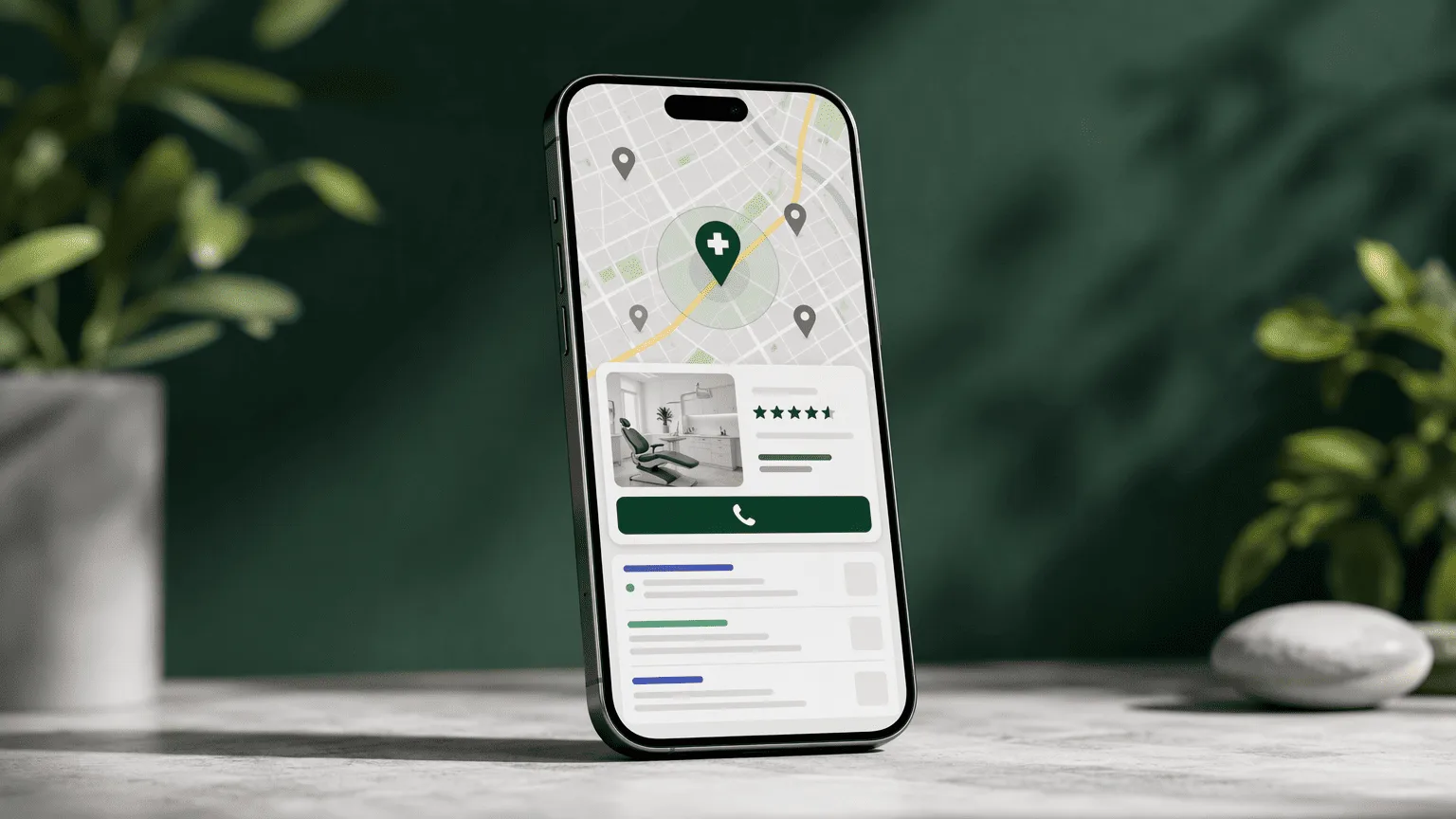
The high-intent patient is not scrolling Instagram looking for semaglutide. They are on Google Maps, typing 'medical weight loss near me,' and calling the first three practices that appear. If your Google Business Profile is not a perfectly optimized funnel, you are invisible.
Paid search in 2026 is purely defensive. You must run a competitor-name bidding campaign to intercept patients searching for digital-only providers who lack clinical depth. The strategy centers on local SEO dominance because a patient who books after finding you on Maps is pre-qualified by proximity and immediate intent.
Organic social media has collapsed as a direct booking channel for weight loss. TikTok and Instagram build awareness, but they rarely drive the same-day booking. The performance gap between social reach and search conversion is wider than ever. A prospective patient watches a 'What I eat on semaglutide' video for entertainment, but when they hold a credit card in hand, they revert to a Google search bar. The mistake operators make is treating social as a booking engine instead of a top-of-funnel awareness tool.
The trade-off: you can either spray generic awareness ads hoping a fraction of viewers will search for you eventually, or you can build a paid search wall around your zip code that captures demand right now. We'd recommend the latter if you need a consult booked this week.
The Visual Engine of Desire: Social Media, Influencers, and the Art of Showing Results Ethically
Meta platforms have effectively banned before-and-after images in semaglutide advertising. Facebook and Instagram prohibit the classic side-by-side static shot and throttle campaigns that mention specific peptide names. The smart response is to lean into ethical storytelling.
The most potent creative on your feed right now is a micro-influencer holding an InBody scan report, narrating a 3-month arc of body composition change without ever saying the word 'semaglutide.' Long-form TikTok 'journey' content converts curiosity into consults because it shows the behavioral scaffolding of your program: the weekly check-ins, the hydration protocols, and the actual face of your provider. A shaky, poorly lit iPhone video from a real patient discussing their energy levels will outperform a $5,000 agency-produced shoot ten times out of ten.
Agency-produced content looks sterile and triggers the viewer's ad-blinders instantly.
To execute this without attracting FTC scrutiny, you need a rigid influencer agreement that avoids disease-treatment claims. Your creators should frame their experience as a personalized wellness program. You control the narrative by listing the specific metrics measured (visceral fat, skeletal muscle mass) rather than allowing vague 'I feel great' endorsements. When the visual proof centers on objective body composition data rather than a subjective mirror reflection, you market clinical results compliantly and ethically.
Messages That Convert: Pricing, Offers, and the Trust Architecture of Your Program
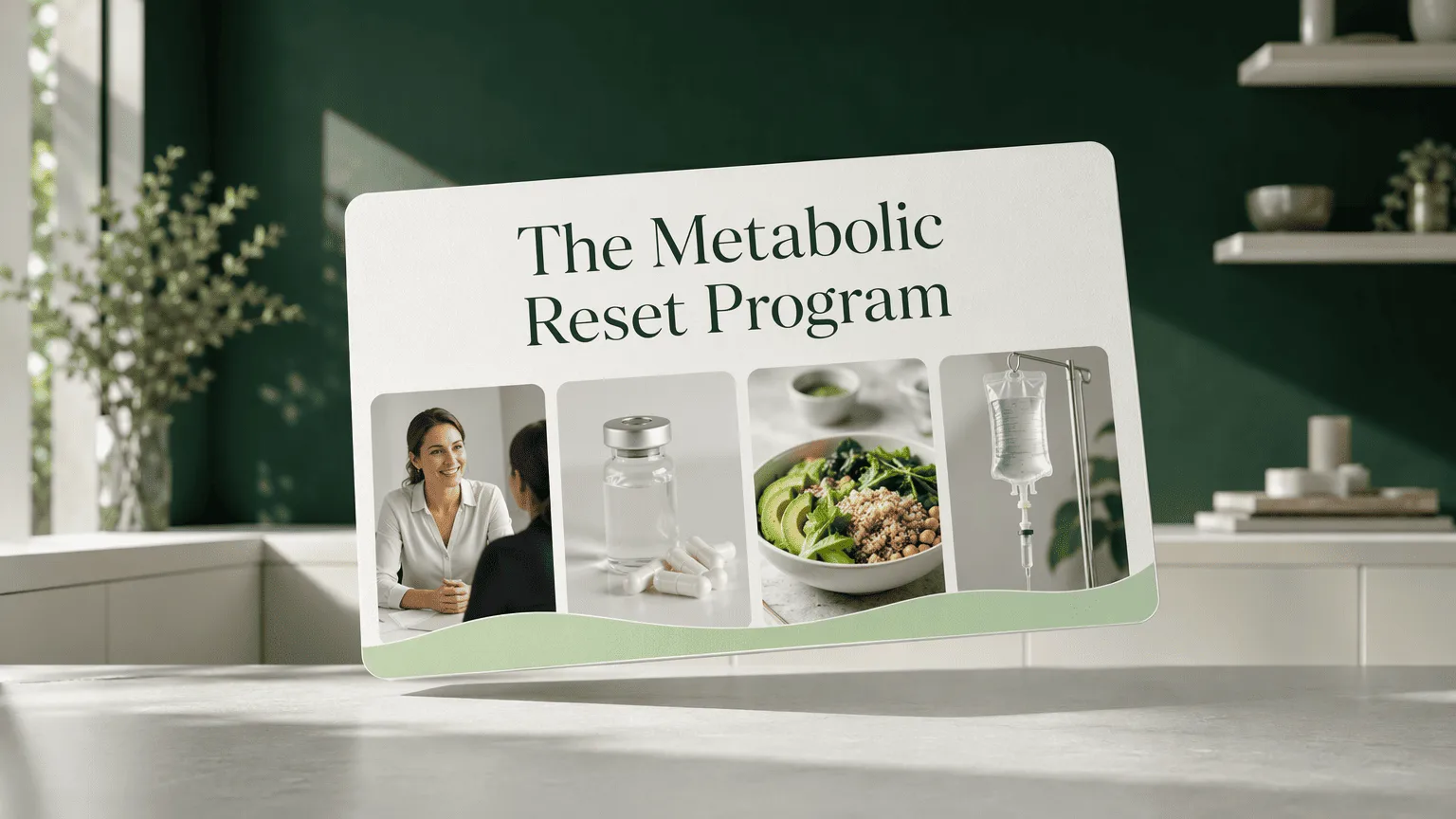
The top-line price tag on a med spa program often induces sticker shock when compared to a $289 digital subscription. Your pricing communication must therefore shift the context of value immediately. The first frame a prospect sees should not be 'Buy 10mg Semaglutide' but 'Join The Metabolic Reset Program.' By naming your program and bundling the visit, the administration, the nutritional guidance, and an IV therapy session into a single monthly price, you abstract the raw cost of the peptide.
Where telehealth sells convenience, you sell safety. Your landing page must explicitly compare the 'unseen' risks of a digital prescription to the upfront value of a physical exam, EKG, and in-person medical clearance. Patient financing tools like CareCredit dismantle the cognitive barrier to entry. Placing the financing calc directly next to a $400 monthly membership changes the math entirely. The prospect stops comparing $400 to $99, and instead evaluates $400, broken into a manageable monthly payment, against the invisible risk of injecting a compound from a pharmacy they've never toured, prescribed by a clinician they've never met.
On the back end of the subscription, the goal is to lock in a higher lifetime value (LTV) through tiered maintenance. The aggressive new-patient introductory offer, often a first-month discount on the mandatory lab panel and initial workup, generates the lead. But the real money is in the transition. You structure a maintenance dosing tier that is slightly cheaper than the active loss tier, making the transition feel like a reward rather than a conclusion. The patient sees the cost go down as their results are going up, which is an economically elegant way to sustain a relationship far beyond the initial 16-week active phase.
The Moat Strategy: How Clinical Depth Demolishes Telehealth Competition
You cannot out-convenience an app. An online prescriber offers 2 AM asynchronous consults and a package delivered to a doorstep. Your only permanent competitive advantage is the physical, in-person intervention. The following table maps the distinction you must weaponize in every social proof narrative and paid ad.
| Clinical Feature | Med Spa (In-Person) | Telehealth (Digital-Only) |
|---|---|---|
| Initial Screening | Medical history, vitals, and targeted lab panel by a live provider | Self-reported online questionnaire with no validated physical exam |
| Body Composition | InBody/DEXA scan tracking visceral adiposity and muscle mass | Weight scale only (no body composition differentiation) |
| Titration Schedule | Weekly in-person evaluation, injection, and vital sign check | Pre-set dosing calendar with asynchronous message check-ins |
| Safety Signal | Real-time management of GI side effects, gallbladder monitoring, and nutrient depletion screening | Algorithm-driven alerts and automated symptom checkers |
The Economics of Loyalty: Why Retention Is the True Marketing Multiplier
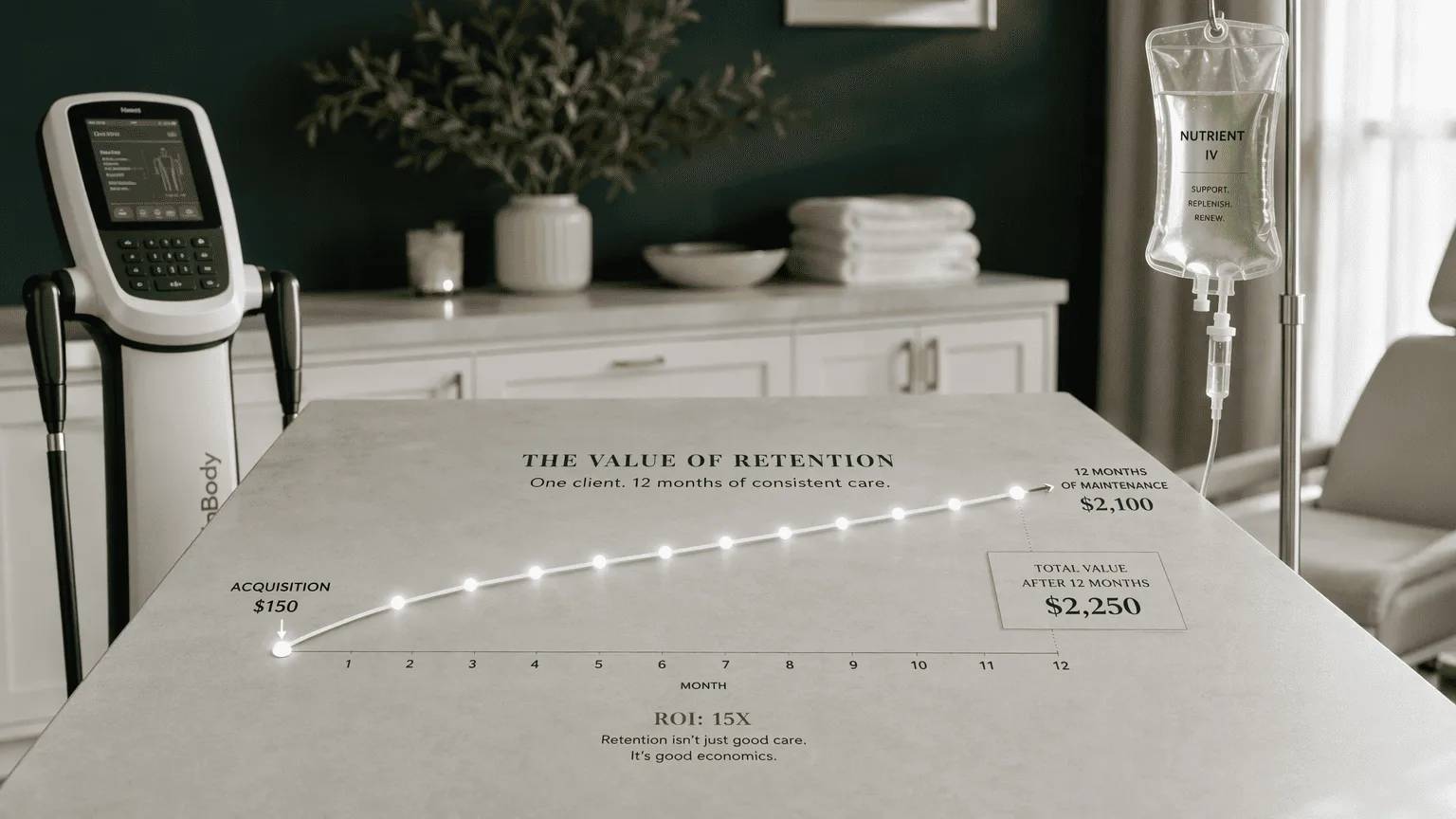
The industry-wide dirty secret is that a flashy cost per lead under $50 is irrelevant if those patients vanish after 30 days. The true cost of acquisition is amortized over the patient's lifespan. When a med spa pays $150 to acquire a new weight-loss patient who cancels after one vial, the business burns cash. When that same patient stays on a maintenance dose for 12 months, returning monthly for an InBody scan and a nutrient IV, that initial acquisition cost effectively drops to $12.50 per month. The economic difference is a factor of ten.
Failing to clear a 70% 60-day retention rate means your marketing engine is just a pump cycling disengaged patients. The solution is a completely automated clinical touchpoint sequence that triggers before the human sales instinct to 'check in' ever kicks in. A patient who misses a weight fluctuation checkpoint needs an SMS prompting an AI-driven refill request and a re-booking link to the provider. The sequence must specifically trigger at the 45-day mark, when blood drug levels stabilize but motivation plummets, to capture the patient before the psychological dip. The automation is there to prevent the clinical gap that causes weight regain.
The margin of error is zero. An unmanaged 30-day gap between follow-ups statistically correlates with a permanent lapse in treatment adherence. Your retention automation is your real marketing budget.
The Clinician’s Marketing Dashboard: KPIs and Benchmarks That Reveal Real Performance
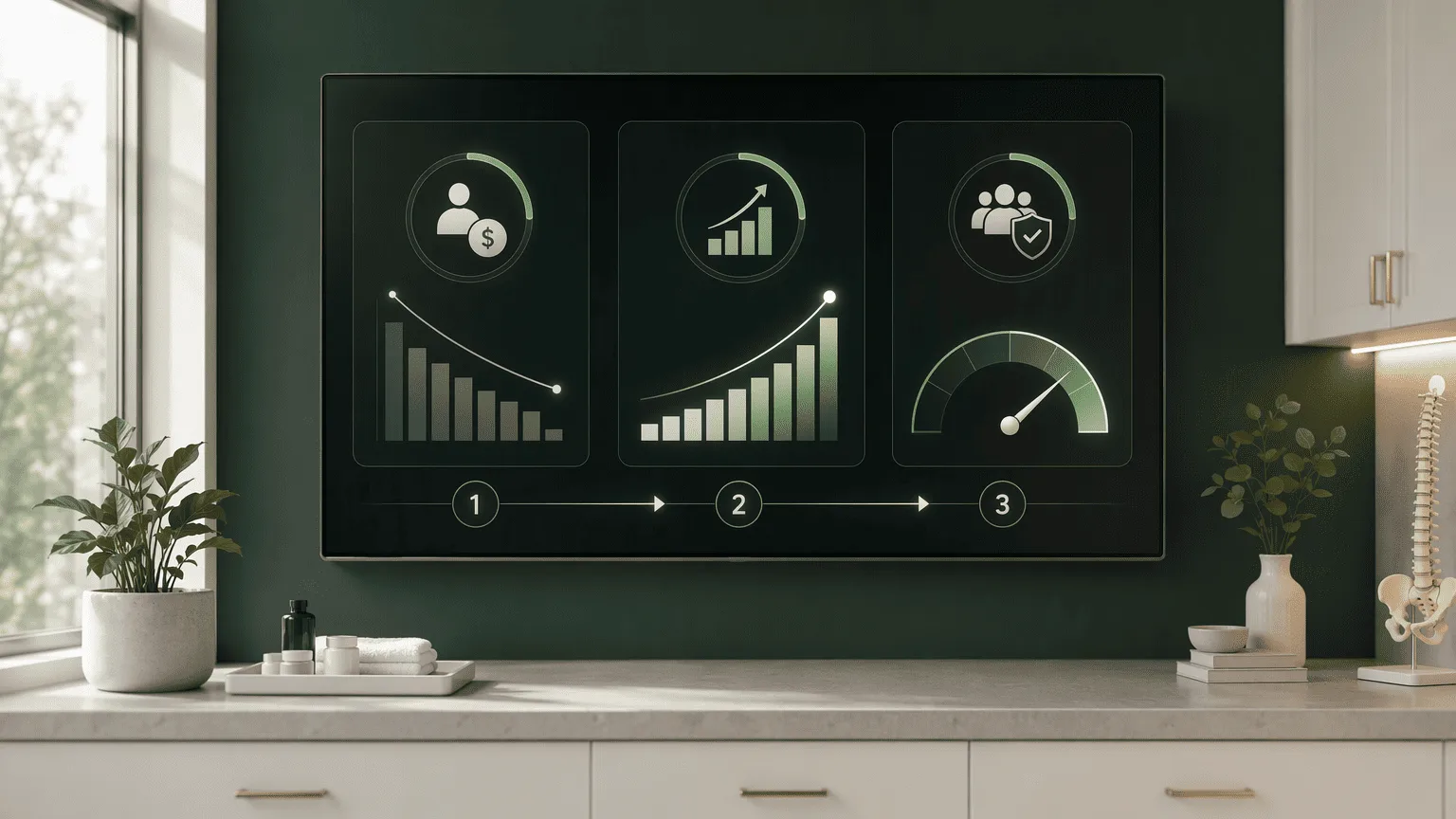
Most practices are flying blind, flying blind, celebrating a busy waiting room while bleeding cash on a poorly converting ad spend; the dashboard that matters operates on three core metrics:
- Cost per lead: Under $50. A CPL of $55 on a platform signals your creative or landing page conversion rate is broken. The market currently supports a sub-$50 acquisition for well-optimized localized ads.
- 12-month average revenue per patient: Tracking the lead cost without tracking the revenue yield of that lead is a vanity exercise. When you cross-reference the patient acquisition cost against the 12-month average revenue per patient, you reveal the precise month you become profitable on that specific human being.
- The retention waterfall: If your model shows profitability only in month seven, but your 60-day retention is below 70%, you never actually reach that profitability point for a majority of your base. Your marketing ROI is a function of how aggressively you plug the leaks in the retention waterfall between the initial consult booking and the third follow-up visit.
Navigating the Regulatory Minefield: A Practical Guide to Compliant GLP-1 Promotion
The FDA, state boards, and the FTC are now actively scrutinizing the med spa weight-loss niche, and the primary violation vector is the language you use when you name the medication. You cannot legally market 'Ozempic' or 'Mounjaro.' You must market your uniquely named program using the generic peptide compound name plus a descriptive program package name. The compounded formulations used by most med spas are not FDA-approved. Calling it a branded name drug misrepresents your product and invites a cease and desist.
The problem is that 'truthful' language is not enough. You must avoid any phrasing that constitutes a disease-treatment claim if you are treating a non-diabetic population. The word 'obesity' triggers a specific medical diagnosis framework that requires precision in your ad copy.
Avoid guaranteeing a percentage of weight loss. Frame the outcome as a metabolic optimization supported by body composition data from an InBody scan.
'Individual results vary' is not a formality to hide in 6-point font; it is your primary defense against an FTC investigation into deceptive marketing. Your disclaimers must be just as prominent as the offer itself.
From Interest to Intake: A Marketing-Channel Decision Tree for Your Funnel
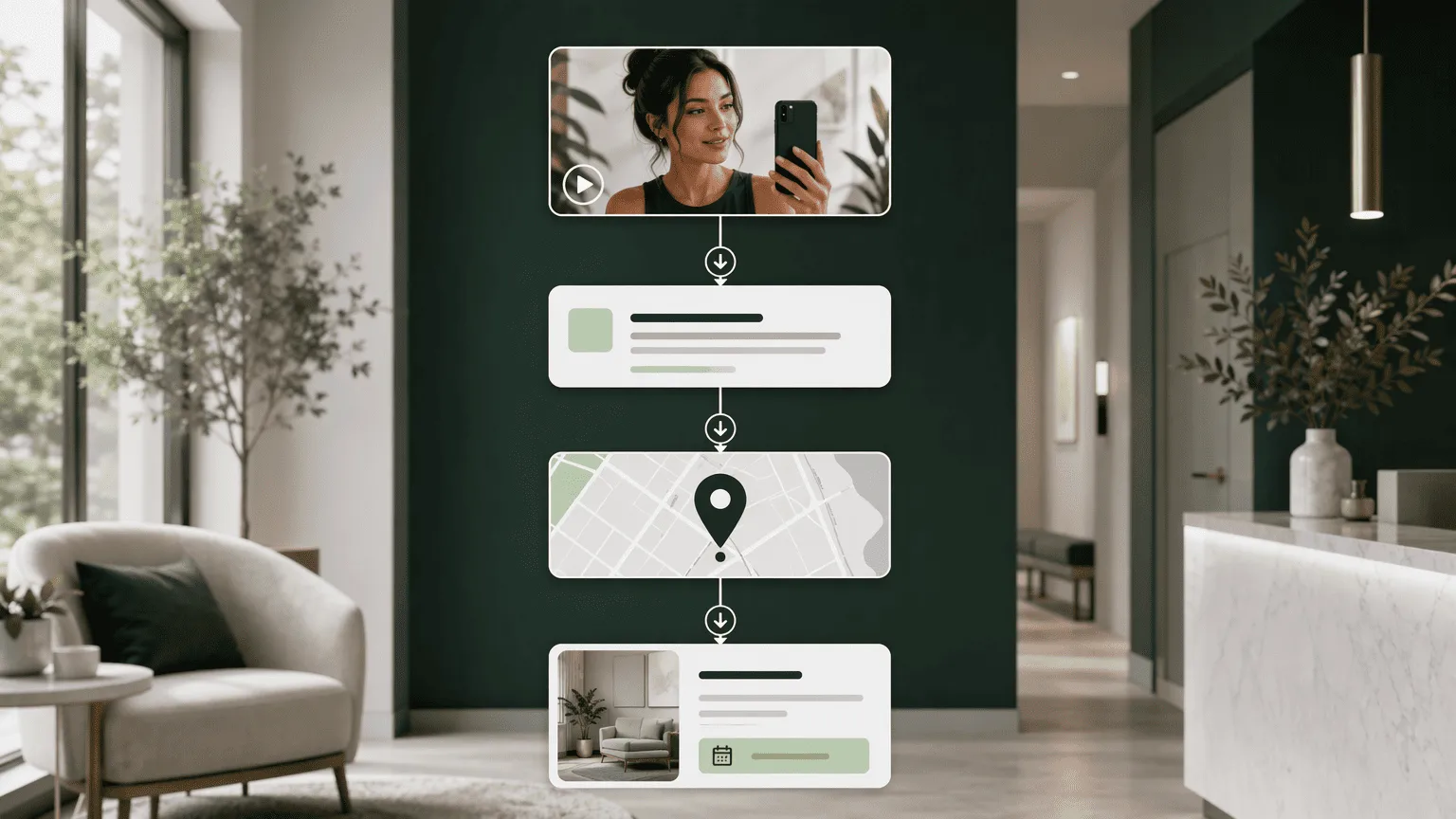
Allocating a budget based on what platform is 'popular' rather than what moves a patient from a scrolling state to a booking state is the fastest way to burn a $5,000 marketing budget. Follow this specific conversion flow in sequence.
- Top-of-Funnel, Short-Form Influencer Video: Push micro-influencer 'day in the life' content to TikTok and Reels that demystifies the weekly injection and hydration protocol. Do not ask for a booking; ask for a follow.
- Middle-of-Funnel, Competitor Bidding and Local SEO: Capture the search demand generated by that video with paid ads targeting your own brand, 'medical weight loss near me,' and a curated list of telehealth competitor names. Your Google Business Profile must be populated with fresh posts weekly.
- Bottom-of-Funnel, Dedicated Booking Landing Page: Force the conversion on a single landing page that features the tiered membership pricing table, an embedded CareCredit calculator, and a three-question medical eligibility quiz that leads directly to a calendar slot.
Conclusion
The market has split. One side is racing to zero, selling bottles of powder for a slim margin, spending a fortune on venture-backed ad budgets to acquire customers who will last three months. The other side owns a durable, premium-priced medical asset.
Your marketing stack must reflect the latter. It must aggressively capture the local intent on search, prove your safety narrative through ethical visual proof, and automate the clinical touchpoints so rigidly that patients never feel the void a cheap telehealth ad can slip into.
Authenticity and a clinically rigorous retention engine are your lead generation strategy.
Frequently Asked Questions
What digital marketing channels are proving most effective for med spa weight loss programs in 2026?
Local SEO and paid search for high-intent terms like 'medical weight loss near me' are the primary booking drivers. Organic social media serves as an awareness engine, but paid search defenses against competitor-based ads capture the immediate demand ready to book a consult.
How are med spas using social media and influencer partnerships to promote weight loss services like semaglutide and tirzepatide?
Med spas pair micro-influencers with InBody scans to create longitudinal journey content on TikTok and Instagram. This approach bypasses Meta's bans on static before-and-afters and peptide names by showcasing real-time body composition data and weekly provider check-ins instead of disease-treatment claims.
What messaging, offers, or patient financing options are trending in med spa weight loss marketing right now?
Successful practices name a unique program bundle, not just the peptide. First-month introductory offers generate the lead, while embedded CareCredit calculators neutralize sticker shock by reframing a $400 monthly package as manageable payments compared to the clinical risk of unmonitored telehealth.
How are successful med spas differentiating their medical weight loss programs from telehealth and online compounding providers?
Differentiation lives in physical safety. Med spas compete by marketing the un-replicable physical exam, DEXA/InBody body composition analysis, and weekly in-person titration. The marketing narrative frames the cost as buying medical oversight rather than just a vial.
What role does patient retention and membership modeling play in the marketing of med spa weight loss programs?
Retention determines profitability. Since patient acquisition cost is amortized over the patient's lifespan, a membership model with automated reminder sequences is the only way to sustain a 70%-plus 60-day retention rate. High churn turns even a cheap cost per lead unprofitable.
Which KPIs and ROI benchmarks should a med spa track when marketing weight loss programs in 2026?
Track cost per lead against a hard ceiling under $50, monitor the 12-month average revenue per patient, and measure the retention waterfall at the 30-day and 60-day marks. True marketing ROI is not a campaign metric; it is the month in which a retained patient becomes profitable after acquisition.
Sources
- Med Spa Marketing in 2026: 7 Strategies That Work | ClinAds - getclinads.com
- A complete guide to marketing Semaglutide and Tirzepatide - themedspasociety.com
- Comparative Efficacy of Tirzepatide Versus Semaglutide for Weight Loss in Adults With Overweight or Obesity: A Systematic Review and Meta‐Analysis of Head‐to‐Head Studies - Paccola - 2026 - Clinical Obesity - Wiley Online Library - onlinelibrary.wiley.com
- GLP-1 Medication Comparisons - Tirzepatide vs Semaglutide & More - trytrimi.com
Want help executing this for your clinic?
Book a 30-minute call and we will map what a real ad engine would look like for your specific service mix.
Book a call