
Most Clinics Are Invisible Online. Here’s the 7-Step Fix to Get More Patients in 2026.
IntroductionYour clinic's appointment book has gaps that repeat every week, and the problem is not your clinical skills. over 70% of adults have sought health information online before they ever contact a provider. Their first impression of your practice is formed by a search engine, and 39% of doctors agree that Google is the most influential online presence for their practice. Yet 81% admitted they did not have a Google Business listing, so a competitor who shows up is taking those bookings.
The motivation here is not just revenue. It is helping more people, which 28% of surveyed doctors cite as their primary driver, alongside 27% who want to build their reputation. The biggest channel to do that right now is word-of-mouth, which 42% of doctors named as the most important channel for getting new patients. Your job is to move that word-of-mouth dynamic onto the screens where patients are actually looking.
This is a HIPAA-compliant, seven-step playbook that solves the booking gap by fixing visibility, credibility, conversion, and retention. One step without the next leaves a leak. Run them together and you build a patient-acquisition engine.
Key Takeaways
Here are the outcomes each step delivers when executed correctly:
- Google dominance: A fully-optimized Google Business Profile captures high-intent 'near me' searches that currently go to a competitor.
- Review velocity: A systematic request workflow turns a trickle of reviews into a credibility asset that converts the 42% who rely on word-of-mouth.
- 24/7 conversion: A mobile-responsive site with embedded online booking converts the 80% of Google searches made on mobile into scheduled appointments.
- Compounding authority: Physician-authored content targeting condition + location keywords builds the only long-term traffic asset you own.
- Referral engine: A formal program captures the 62% of clinics missing this revenue stream by systematizing word-of-mouth.
- Zero-leak retention: Automated recall campaigns plug the leaky bucket, reactivating dormant patients at a fraction of the cost of new acquisition.
Step 1: Forge a HIPAA-Compliant Digital Foundation for Your Clinic

Marketing tech that compromises patient data will cost you more than it makes. Before you run a single ad or publish a blog post, your website, intake forms, and communication channels need a HIPAA-compliant baseline.
- Secure hosting with a BAA: Your website host must sign a Business Associate Agreement (BAA). Standard shared hosting providers that will not sign one are off the table for any platform that touches patient data.
- Encrypted intake forms: Replace generic contact forms with encrypted, HIPAA-compliant patient intake forms that do not expose Protected Health Information (PHI) in plaintext email notifications.
- Compliant communication channels: If you offer live chat, standard consumer tools are a liability. Use a clinic management solution with baked-in compliance, and note the benchmark: chat enquiries should be answered within 15 minutes to convert.
Step 2: Master Google Business Profile to Dominate 'Near Me' Searches
Your Google Business Profile (GBP) is the highest-use new-patient channel you own, and it costs nothing to run. Get it right, and you appear in the local 3-pack when someone nearby searches for the exact care you provide. The table below maps what those patients scan for against the specific updates your profile needs.
| Element | What Patients Look For | The Fix Your Profile Needs |
|---|---|---|
| Category | The exact specialist they need right now | Pick primary and secondary categories with surgical precision: 'Orthopedic Clinic' beats 'Medical Center' every time |
| Photos | A clean, professional, and welcoming environment before they step inside | Upload 15 to 20 high-quality, well-lit images of your waiting area, treatment rooms, and team; refresh them quarterly |
| Reviews & Responses | Social proof of clinical competence and bedside manner | A stream of recent, 4+ star reviews with a provider reply on every single one, posted within 48 hours |
| Posts | Recent activity that signals a living, operating practice | Weekly Google Posts: highlight a condition you treat, a staff spotlight, or a seasonal health tip to maintain algorithmic freshness |
| Accuracy | Correct phone number, hours, and address | Audit NAP (Name, Address, Phone) across every online directory so they match the GBP listing exactly, no exceptions |
A mismatched phone number or a stale photo of a waiting room nobody has seen in three years does more damage than an empty profile. Your patient is holding a phone in one hand and a problem in the other, and what they tap on has to match what they find when they walk through the door.
Step 3: Engineer a Credibility Engine with Strategic Review Management
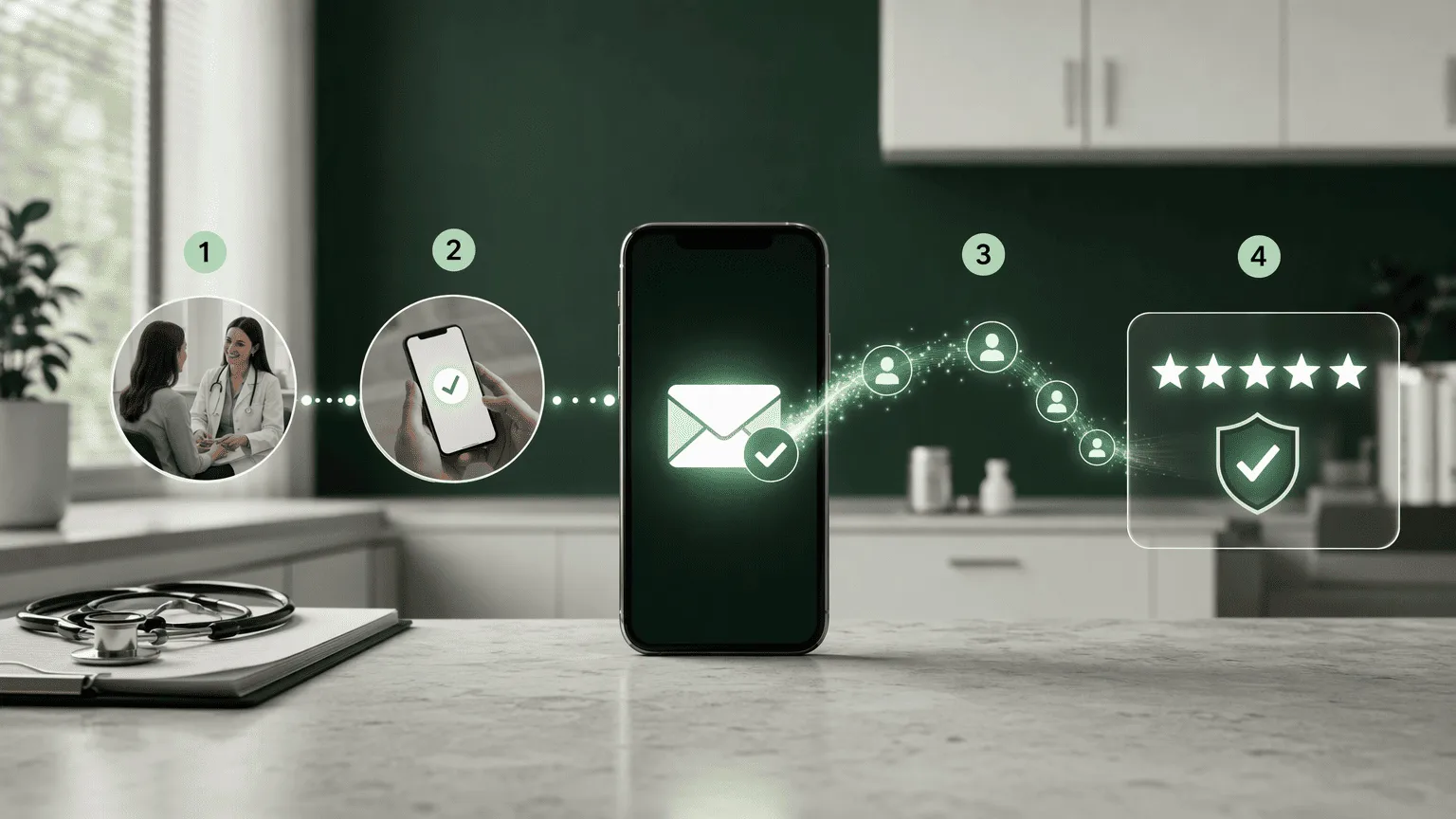
The gap between how many doctors know reviews work and how many actually ask is costing you patients. 22% of doctors say patient reviews are the most effective channel for getting new patients, yet only 11% regularly ask for them. That is a fixable operational failure, and it sits squarely inside the practice workflow.
- Timing matters: send a review request within hours of the appointment while the experience is fresh and gratitude is highest.
- Use HIPAA-compliant channels: deliver an SMS or email with a direct link to your Google Business Profile review page.
- Avoid soliciting treatment details: never encourage disclosure of specific care in a review request.
- Respond publicly with a fixed script: thank the patient by name if available, acknowledge the feedback, and invite them to call the office directly for anything clinical.
- Remember the audience: the response signals to the 70%+ searching online that a real provider is actively listening, not just the reviewer.
Step 4: Design a High-Converting, Appointment-Capturing Website
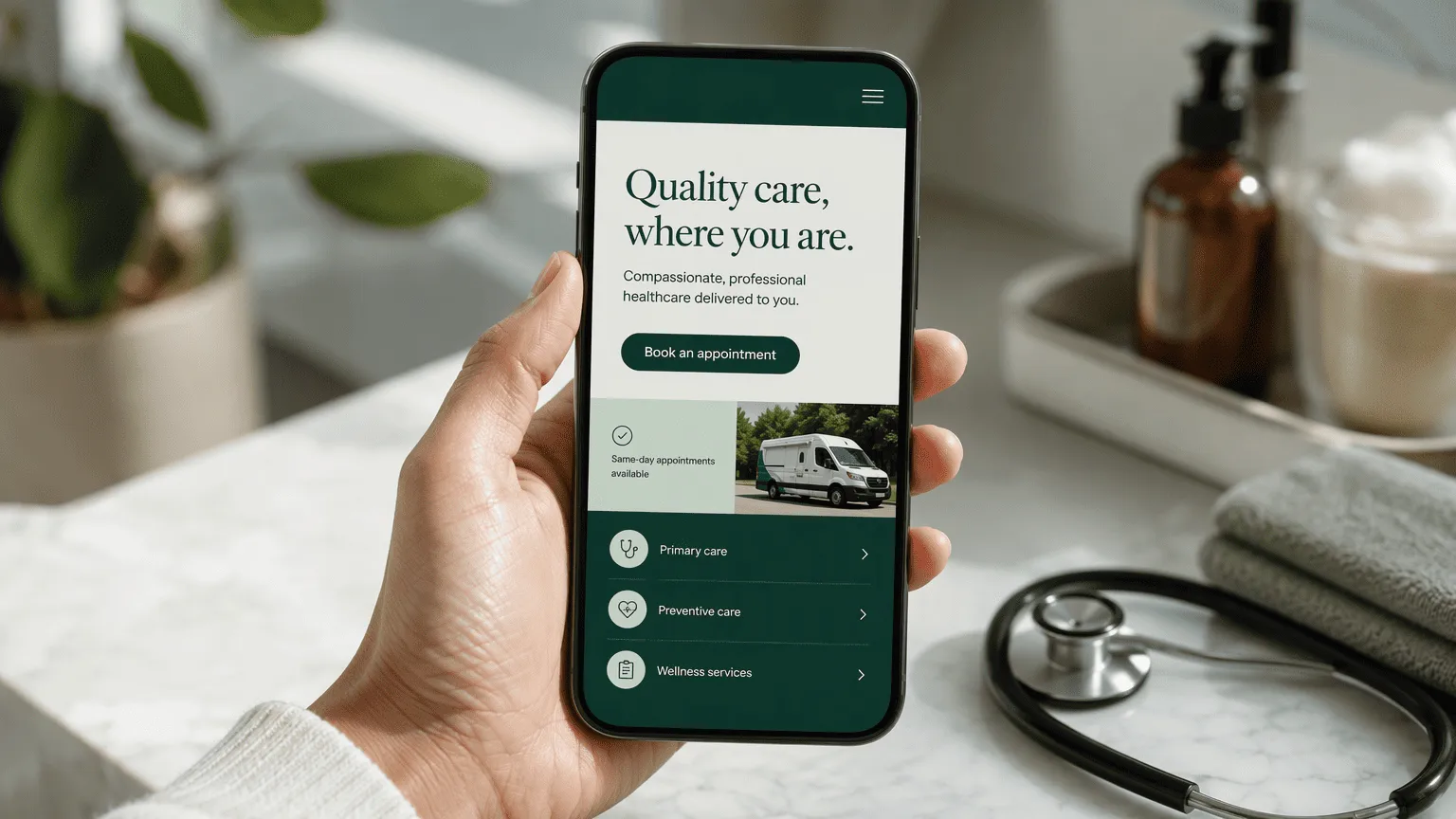
A website is the primary tool that converts prospects into patients. If it does not load instantly on a phone and tell a first-time visitor exactly what to do next within three seconds, you are buying traffic just to burn it. 80% of searches on Google are made on tablet or mobile. Google penalizes sites that fail its mobile-first indexing standards, so a desktop-only layout actively buries your rank.
Your unique value proposition needs to be above the fold on mobile in one line. What you treat, who you treat, and where. Below that, two high-contrast buttons: a tap-to-call link for immediate intent and a 'Book Online' widget that drops the patient directly into your available slots. Reduce the friction to a single action.
Trust signals close the deal below the fold. Place your board certifications, association badges, and a short track of 3 to 5 recent, anonymized patient testimonials near the booking widget. Every element above the fold justifies a click. Everything below justifies trust.
Embedding a self-scheduling widget like Cortico or a clinic management solution that syncs to your live calendar captures bookings at 2 a.m. while your front desk is closed. The fewer manual touchpoints between a patient's intent and a scheduled slot, the higher your conversion rate.
Step 5: Fuel Growth with Local SEO and Authoritative Content Marketing
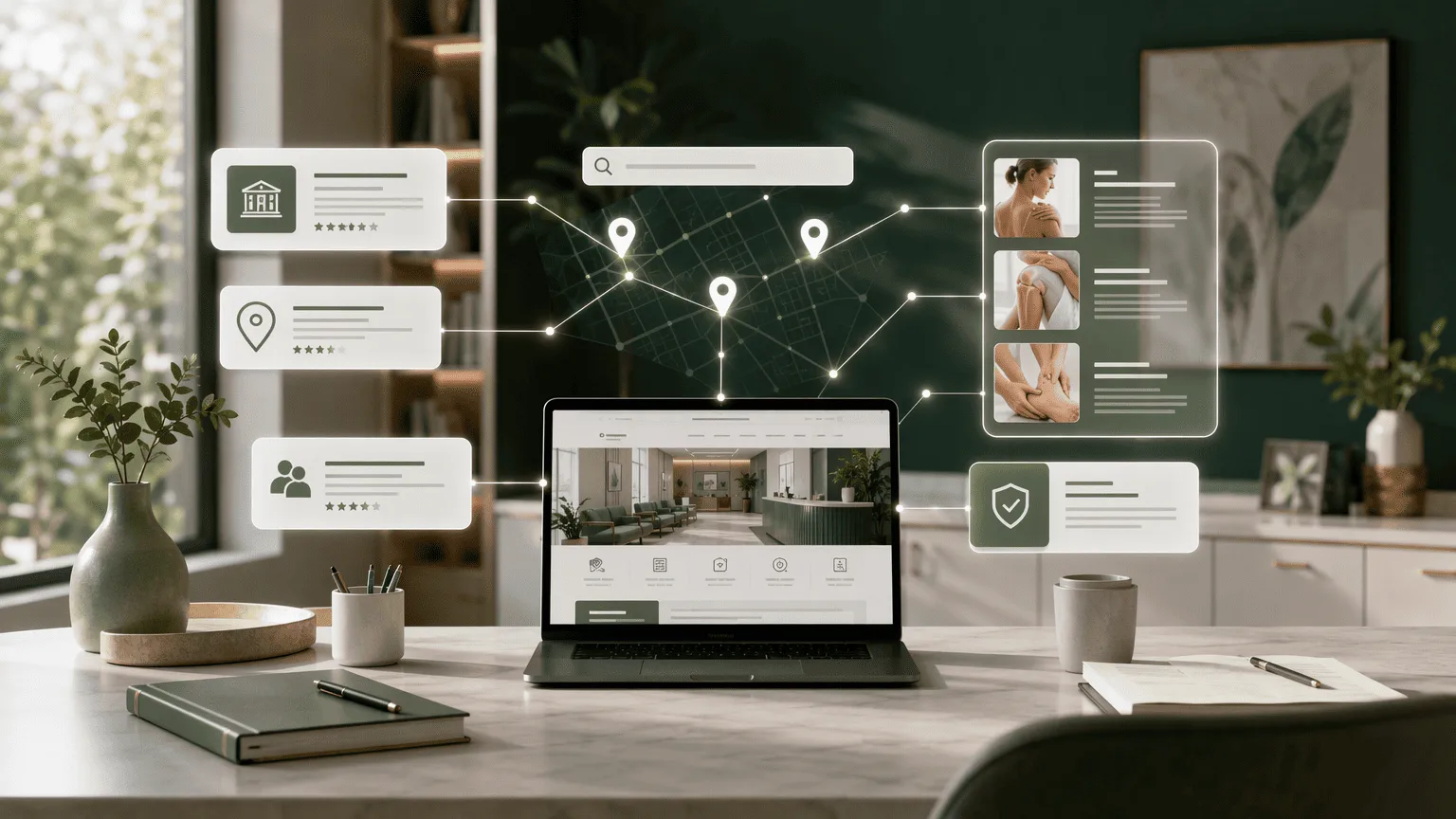
Search engine optimization is the practice of making your website show up when a local patient types a condition and your city into Google. The reality is that over the last decade, more patients have bypassed GP referrals entirely, going directly to Google to research healthcare services and contact the practice themselves. If you are not on page one for 'sports physio [your suburb]', you do not exist.
Local SEO starts with building consistent NAP citations across every reputable directory (Healthgrades, Vitals, Yelp, and your local chamber of commerce). Search engines treat these citations as location signals. An inconsistent phone number across three directories causes a trust penalty that erodes your ranking.
Content marketing answers the specific, high-intent questions your ideal patient is typing into a search bar. Your blog is a physician-authored, clinically accurate resource. A good article targeting a condition such as 'plantar fasciitis without surgery' needs to hit at least 750 words to signal depth to Google's algorithm. Each article should feature the treating physician's byline and credentials to signal E-E-A-T (Experience, Expertise, Authoritativeness, Trustworthiness) to Google's quality raters.
Write for the prospective patient. A single article answering 'What causes lower back pain when running' and offering a clear, evidence-based self-assessment checklist before recommending an appointment will drive qualified traffic for years. Multiply that by the top 20 conditions you treat, and your website becomes a patient acquisition asset a Google Ads campaign can never match on cost per acquisition over a 24-month horizon.
Step 6: Launch a Patient Referral Program That Compounding Returns
Word-of-mouth already drives your business. 42% of doctors said it was the most important channel for getting new patients, yet a staggering 62% of clinics operate without a formal referral program. The most trusted, lowest-cost acquisition channel you have is running on hope instead of a system.
The fix is a simple, trackable, and compliant system. Give every satisfied patient a unique referral card or a personalized online referral link upon checkout. The call-to-action taps into what already motivates them: 'Know someone dealing with the same issue?
Share your link and we will make sure they get the same level of care.' On the back end, a small, compliant token of appreciation such as a $15 coffee gift card for a successful referral works cleanly when processed through a system that never links PHI to a marketing incentive.
Structure the program so the reward is for the act of referring, not conditional on a specific treatment outcome, to stay clear of anti-kickback concerns. Track the link and watch that 62% gap turn into a predictable monthly patient stream.
Step 7: Plug Leaks with Automated Email and SMS Retention Campaigns
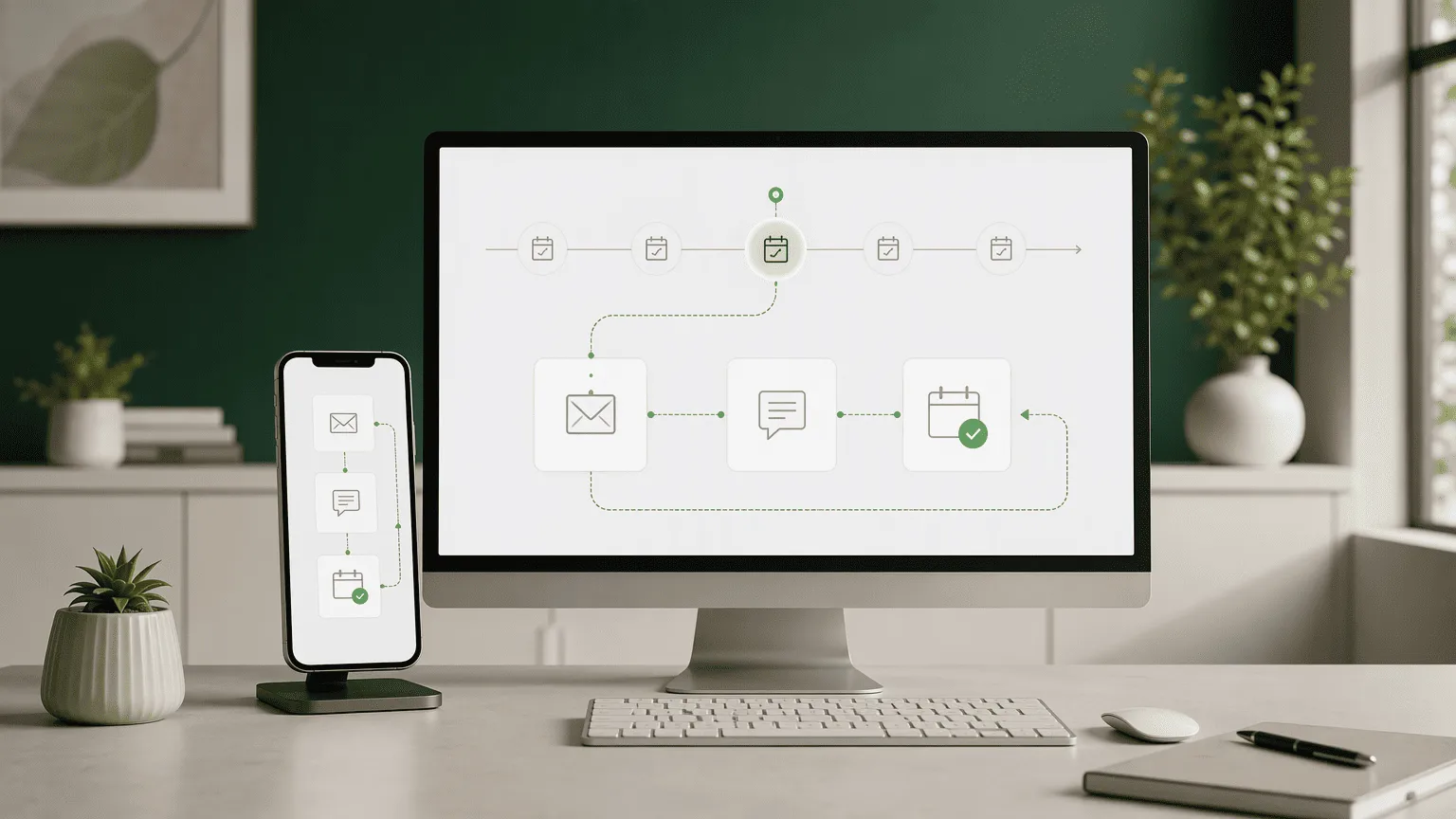
The most expensive patient to acquire is the one who already visited your clinic and never came back. A clinic running hard on new patient ads while its recall list gathers dust is pouring volume into a leaky bucket. Reactivating a dormant patient through a HIPAA-compliant automated recall message costs a fraction of a net-new acquisition and typically drives the highest-margin appointments in your book. A sequence triggered 11 months after their last visit with a simple 'Your annual check-up is covered and overdue. Book it: [link]' wins back patients who feel no dissatisfaction, only inertia.
Post-procedure follow-ups serve double duty. An automated SMS 48 hours after a treatment asking, 'How is your recovery? Reply 1 for great, 2 for concerns,' captures patient outcomes and catches complications early. The patient feels managed. That feeling drives retention and word-of-mouth.
Conclusion
The clinic that owns its Google Business Profile, shows a stream of recent reviews, converts mobile visitors with embedded booking, and systematically reactivates its existing base has a moat that a competitor spending $5,000 on ads cannot cross.
This system makes your clinical capability visible to the people who need it. Marketing that works like this is a logistics problem, solved with profile management, review velocity, and booking infrastructure.
The second step is over to you.
Frequently Asked Questions
How long does it take to see results from local SEO for a medical clinic?
Local SEO builds over months, not days. Here are typical timeframes for key activities:
- Google Business Profile optimization: the fastest lift, showing results in 2 to 4 weeks.
- Content marketing and citation building: meaningful ranking improvement and organic traffic growth in 4 to 6 months.
- Year-two compounding: the compounding effect makes year two significantly more efficient than year one.
Is it a HIPAA violation to ask patients for online reviews?
No, asking for a review is not a violation. The violation occurs if you disclose Protected Health Information (PHI) in your response. Thank the patient generically and never confirm they were a patient or reference their treatment. Keep all clinical discussions off public platforms.
What is the cheapest way to get more patients online in 2026?
Here are the two highest-impact, low-cost tactics:
- A fully optimized Google Business Profile: costs nothing to own and drives local discovery.
- A systematic review request workflow: sends a post-appointment request to convert existing patient satisfaction into public trust.
Both are essentially free beyond the operational time spent.
How many Google reviews do I need to rank higher?
There is no fixed number, but velocity and recency matter more than a static total. A consistent stream of fresh reviews (e.g., 3 to 5 per month) signals a healthy, active practice to Google's algorithm far more than 50 reviews from three years ago with no recent activity.
Why is no one booking an appointment through my website?
The most common reasons for low conversion on mobile are:
- Slow loading time: a site that loads slowly on mobile kills immediate engagement.
- Hidden booking widget: placing the booking option below the fold or requiring a complex account creation introduces friction.
- No visible trust signals: lacking reviews or badges near the call-to-action fails to build confidence.
80% of searches are mobile, and friction on a phone kills conversion instantly.
Sources
- 10+ Proven Strategies to Attract More Patients to Your ... - www.medesk.net
- How to Get More Patients to Your Clinic: 22 Effective Ways - www.sermo.com
- How to attract more patients to your practice with online marketing - www.cliniko.com
- The 4 Step Plan to Attracting More Patients to Your Clinic - HENO - www.heno.io
Want help executing this for your clinic?
Book a 30-minute call and we will map what a real ad engine would look like for your specific service mix.
Book a call