
8 Best Botox Ad Ideas for Med Spas in 2026
IntroductionMost med spas are running discount ads that look like Groupon coupons and attract patients who would switch providers to save five dollars. You see the low cost-per-lead and think the campaign is working, then look up six months later and realize your schedule is full of one-time bargain hunters instead of loyal patients who trust your injectors. That revenue leak is the direct result of optimizing for the wrong number.
The fix is not to spend more money. It is to change what you are selling. A portfolio-access ad, where the lead gen form unlocks a provider's actual before-and-after gallery, produces a 48% consultation rate versus 20% for a discount ad. On cost-per-consultation, the two strategies are nearly identical. On revenue per patient and retention, the portfolio ad destroys the discount ad.
This shift from price competition to provider authority defines the med spa advertising playbook in 2026. Below, we break down the eight highest-performing Botox ad formats built on that logic, from the portfolio-access framework that sets the standard to the after-hours booking flow that stops revenue from leaking between 8 PM and 8 AM.
Key Takeaways
Every ad format below operates on one principle: a patient who books for clinical expertise stays longer and spends more than one who books for price. Five shifts follow from that.
- Provider authority beats price per unit: Ads that gate a provider's portfolio behind a consultation form hit a 48% consultation rate, more than double the 20% benchmark for standard discount campaigns.
- Video of real patient experience outperforms static creative: Short Reels and TikToks of patients describing their experience build trust in the injector without triggering the regulatory flags that result-focused creative can.
- Portfolio-access lead magnets qualify before you pay for the consultation: Filtering for patients who value outcomes over deals keeps your cost-per-consultation flat while patient lifetime value rises sharply.
- Optimize for consultation conversion rate, not CPL: A $28 CPL at 48% conversion costs roughly $58 per consultation. A $12 CPL at 20% conversion costs $60. The math is close; the patient quality is not.
- Compliance is mandatory: FDA labeling, platform monitoring, and advertising codes now actively flag prescription-only medicine mentions in social posts, including hashtags and images.
At a Glance
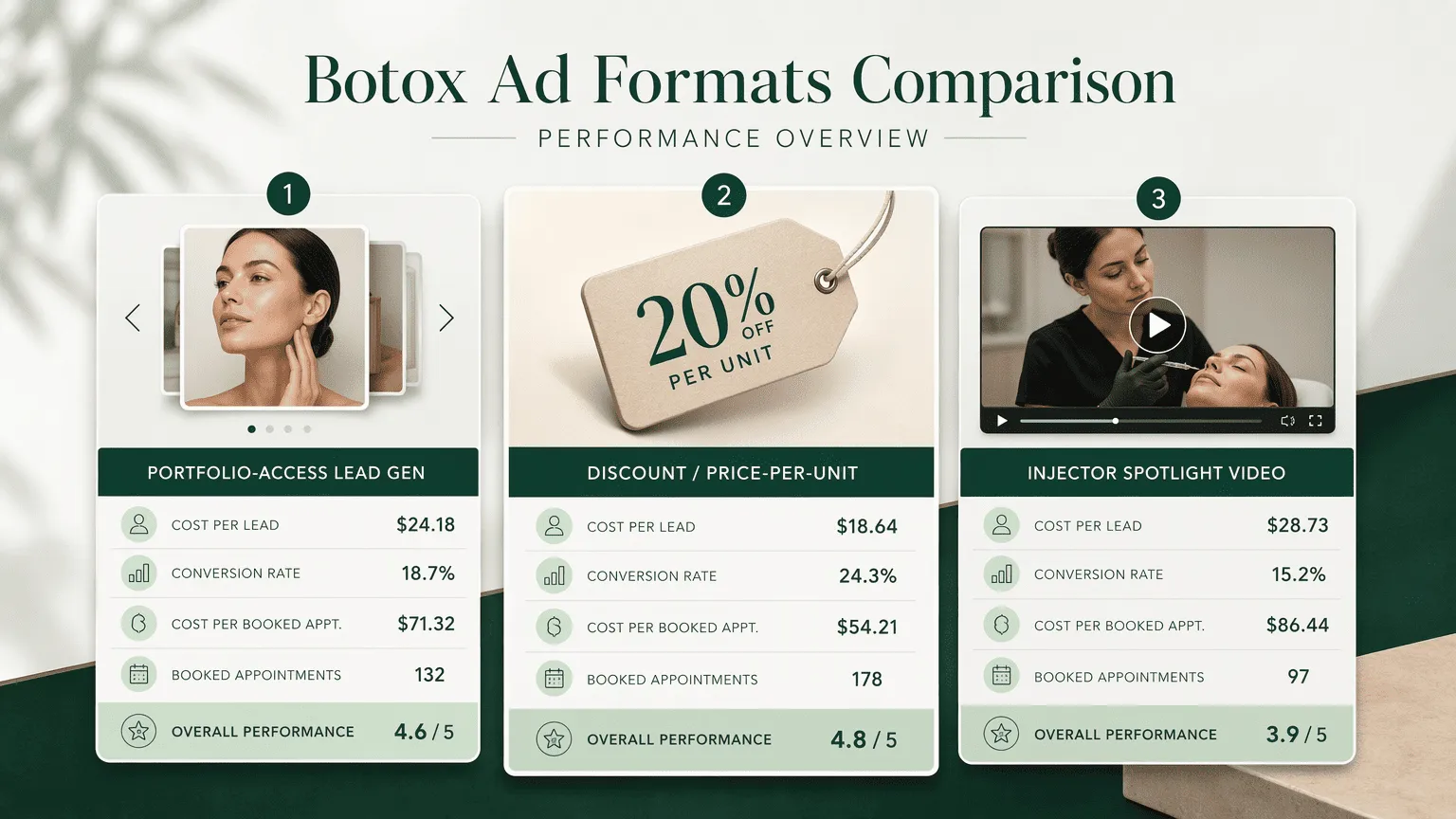
Here is how the options compare across the dimensions that matter most.
| Ad Format | Primary Hook | Consultation Rate | Cost per Consultation | Patient Lifetime Value Impact |
|---|---|---|---|---|
| Portfolio-Access Lead Gen | Provider's before-and-after gallery | 48% | ~$58 | High, attracts patients who value outcomes |
| Discount / Price-Per-Unit | Dollar savings | 20% | ~$60 | Low, attracts one-time bargain hunters |
| Injector Spotlight Video | Provider expertise and personality | Moderate | Comparable to photo ads | High, builds trust and loyalty |
| After-Hours Booking Flow | Convenience and immediate scheduling | Above average | Similar to daytime flow | Moderate, fills unused appointment slots |
| Educational / How-To Reel | Subtle problem awareness | Variable | Low CPL | Moderate, nurtures future interest |
| Seasonal / Event Campaign | Timeliness or local flavor | Average | Can be low with strong targeting | Moderate, seasonal spikes only |
| Patient Testimonial Video | Social proof from relatable real person | High (when authentic) | Moderate | High, trust transfers to provider |
| Retargeting (Warm Audiences) | Familiarity and low friction | Highest of all formats | Very low | Depends on initial offer quality |
1. Clinads Portfolio-Access Lead Gen Ads
The highest-converting Botox ad format right now is the portfolio-access lead gen ad, and the mechanics are simple: the user sees a single, striking result image paired with the headline "See Real Results from [Injector Name]." The call-to-action says "View Portfolio" and the form gates access to a curated gallery of that specific injector's before-and-after photos. It never says "Book Now" or "Get 20% Off."
Clinads builds these ads by pulling actual clinic photography and combining it with targeting logic that prioritizes users searching for a specific provider's work, not the lowest per-unit price. The headline structure foregrounds the injector's name because, in this format, the injector is the offer. This is a physician-portfolio ad dressed in Meta Ads creative. The result is a 48% consultation rate versus 20% for a standard discount ad.
The trade-off: your CPL will be higher, often $28 compared to $12 on a discount offer. But do the math. At $28 and 48% conversion, your cost per consultation lands at roughly $58.
At $12 and 20% conversion, you are paying $60 per consult. You are paying the same money to attract a patient who values results. The difference shows up six months later in the retention reports.
2. The "Injector Spotlight" Video Series (Instagram/Facebook Reels)
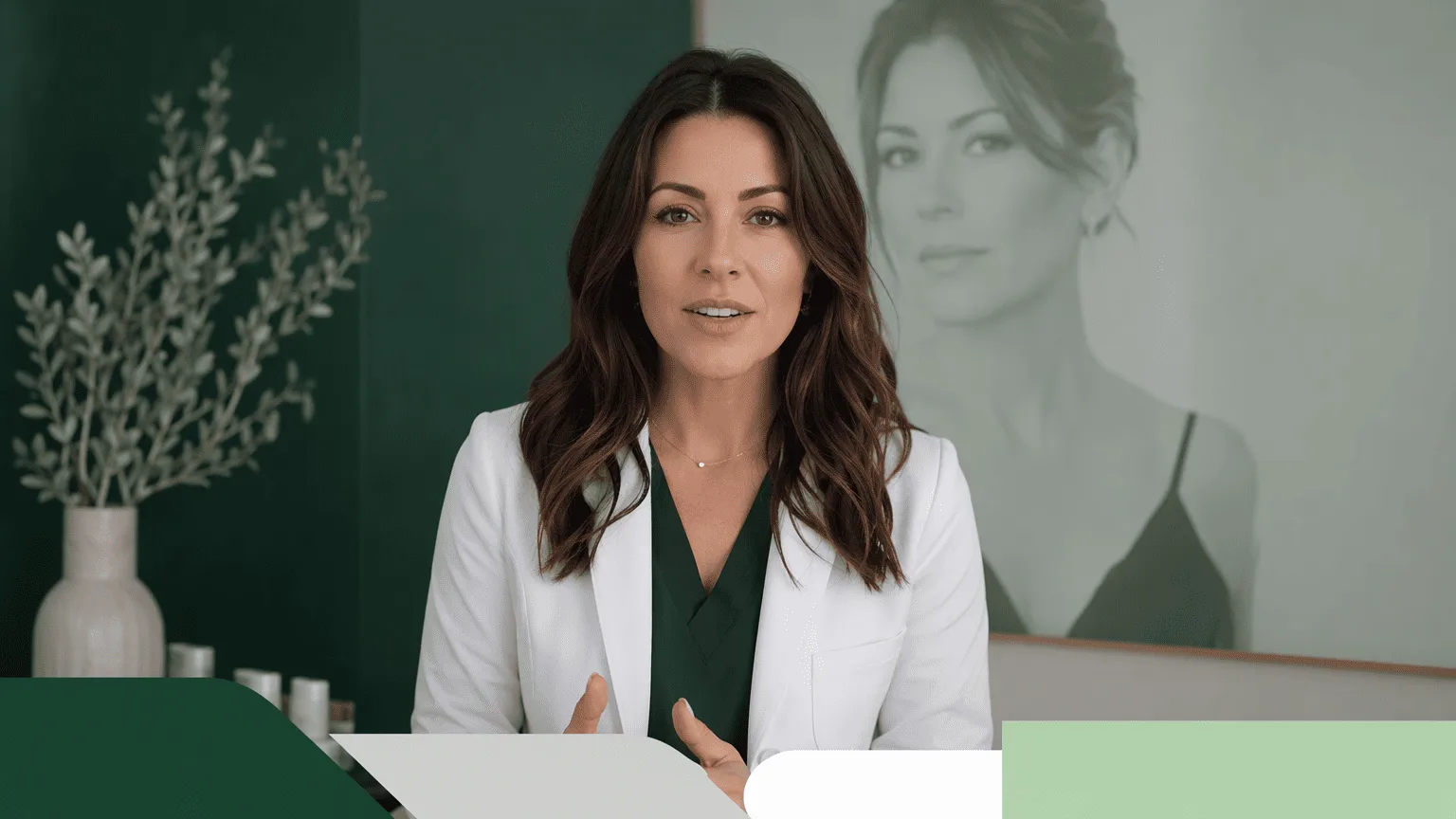
Twenty seconds of the injector you will actually book explaining, in her own words, why she uses fewer units on first-time patients. That builds trust. The static portrait with a stethoscope does not.
The Injector Spotlight Reel is outperforming stock-photo campaigns across Meta platforms because the format strips away the distance between a prospective patient and the person holding the syringe. The ad structure is straightforward: the injector opens with her philosophy on natural-looking results, the middle third covers one patient comfort tactic, and the closing frame is a portfolio-access CTA. No clinical claims, no price tags.
You do not need cinema lighting. An iPhone on a tripod in the treatment room, with the injector speaking directly to camera, often outperforms polished production because it reads as real.
3. Compliant Before/After Gallery Carousels
Before-and-after photos are the most powerful visual proof in aesthetic advertising, and they are also the easiest way to get your ad account flagged. The misstep most practices make is running a carousel where the "before" image is the first card someone scrolls past, creating an implied comparative claim that the FDA and Meta's automated review systems will catch. Starting 1 February 2020, the CAP and ASA have used automated technology to identify non-compliant social media posts, and the scrutiny has only tightened since.
The compliant playbook runs a single "after" image in the ad frame, paired with a headline like "Results from Dr. Chen's portfolio." The image is presented as an outcome, period. The full before-and-after comparison lives behind a form, accessible only after the prospective patient submits their information. That gating mechanism also ensures every patient whose photos appear in the gallery has signed explicit consent for advertising use, documented and on file.
This structure kills two risks at once. It avoids the public comparative claim that triggers FDA scrutiny, and it creates a legitimate information asymmetry: you dangle the outcome, gate the evidence, and convert the people who are serious enough to provide their email. The ad copy stays on what the patient will experience: a consultation where the provider listens, a personalized plan, a conversation before a syringe.
4. AI-Powered After-Hours Consultation Booking Sequences
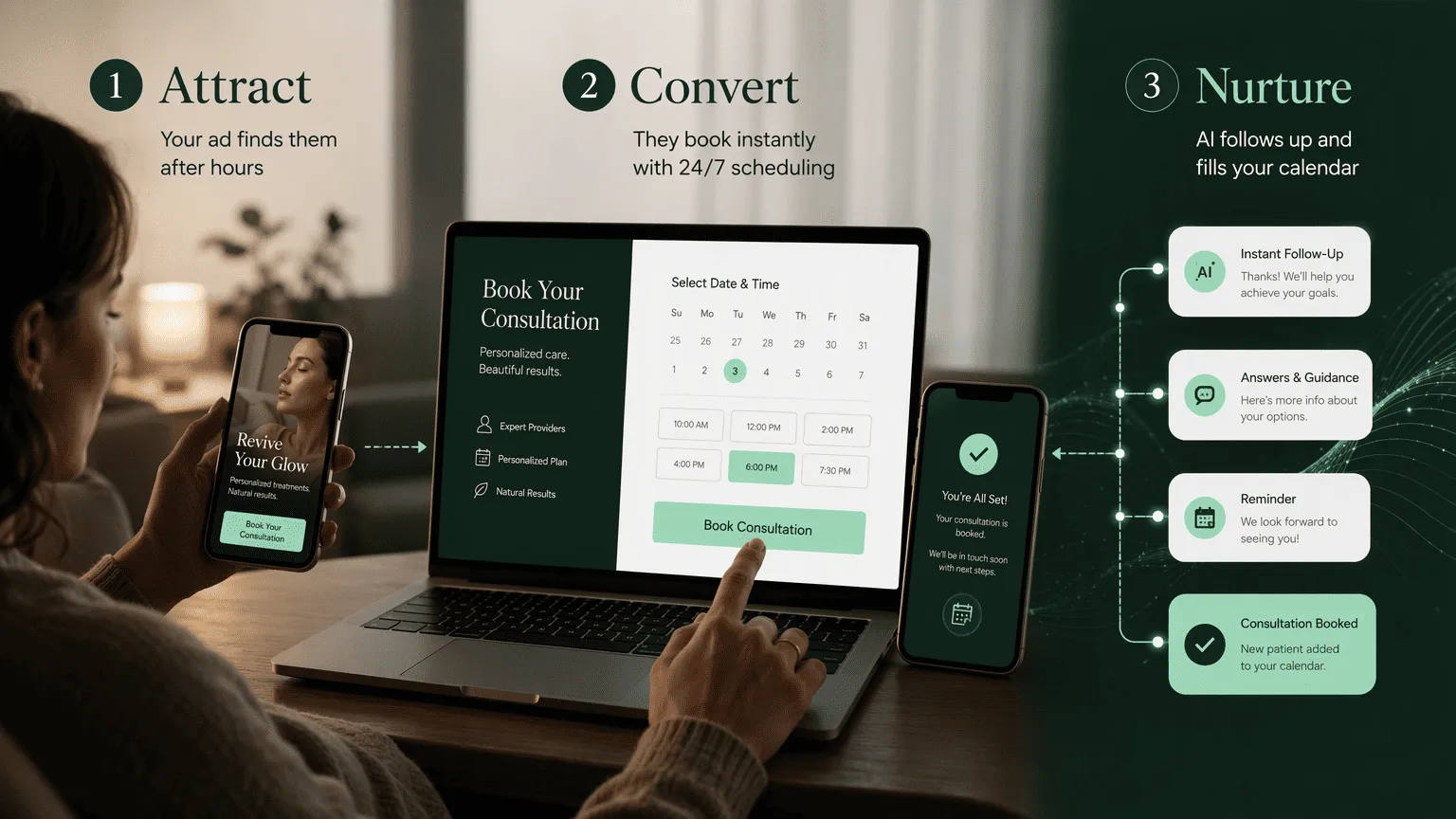
Every med spa loses leads between 7 PM and 8 AM because the front desk is closed. A prospect fills a form at 10:30 PM, gets an auto-reply, and books with a competitor before your 9 AM follow-up call. An AI booking sequence wired directly into the ad flow schedules the consultation while intent is hot, even at midnight. Here is the ad-to-booking architecture that works in 2026:
- Ad creative routes to the booking interface directly: The CTA is "Check Availability," which opens a 24/7 scheduling tool or AI chatbot pre-loaded with the injector's calendar.
- Qualifying questions run before the calendar appears: Two questions filter out ineligible prospects before they consume a slot: "Are you currently pregnant or breastfeeding?" and "Have you had Botox in the last 90 days?"
- Objection handling is built into the chat thread: Cost, pain, and downtime concerns get templated responses in the injector's voice. Those replies close the gap between anxiety and a converted consult.
- Confirmation and reminder texts fire automatically: The booked appointment triggers SMS confirmations and 24-hour reminders, cutting no-shows without staff lifting a finger.
5. Local Partnership & Seasonal "Botox & Brews" Event Ads
Someone who has never walked into a med spa is far more likely to walk into a coffee shop they already know. A joint event at a third-party venue removes the intimidation of a clinic setting and replaces it with familiarity. The right local partner gives you access to a room full of people who match your ideal patient profile but have never had a reason to book with you.
Here is the step-by-step structure for a partnership event campaign that fills a December calendar:
- Identify a partner with overlapping demographics but non-competing services: A local coffee shop, boutique, or blow-dry bar whose clients are 28 to 55 with disposable income.
- Co-create the event concept and split costs: The coffee shop provides the space and drinks; your practice provides a 60-second educational talk, injector meet-and-greet, and consultation scheduling.
- Produce a 15-second ad creative that names BOTH businesses: The ad runs to a 3-mile radius around the venue, showing the coffee shop interior, your injector smiling, and the event date.
- Run the event with an explicit no-pressure structure: The injector talks about "what we look for in a first-time consultation" without ever picking up a needle. The goal is to humanize the injector, not to inject on-site.
- Retarget attendees with a portfolio-access ad 48 hours post-event: You collected contact information at check-in. The follow-up ad says "See Dr. Patel's full portfolio" and links to the gated gallery.
6. Google Local Services Ads & GBP-Optimized Patient Review Integration
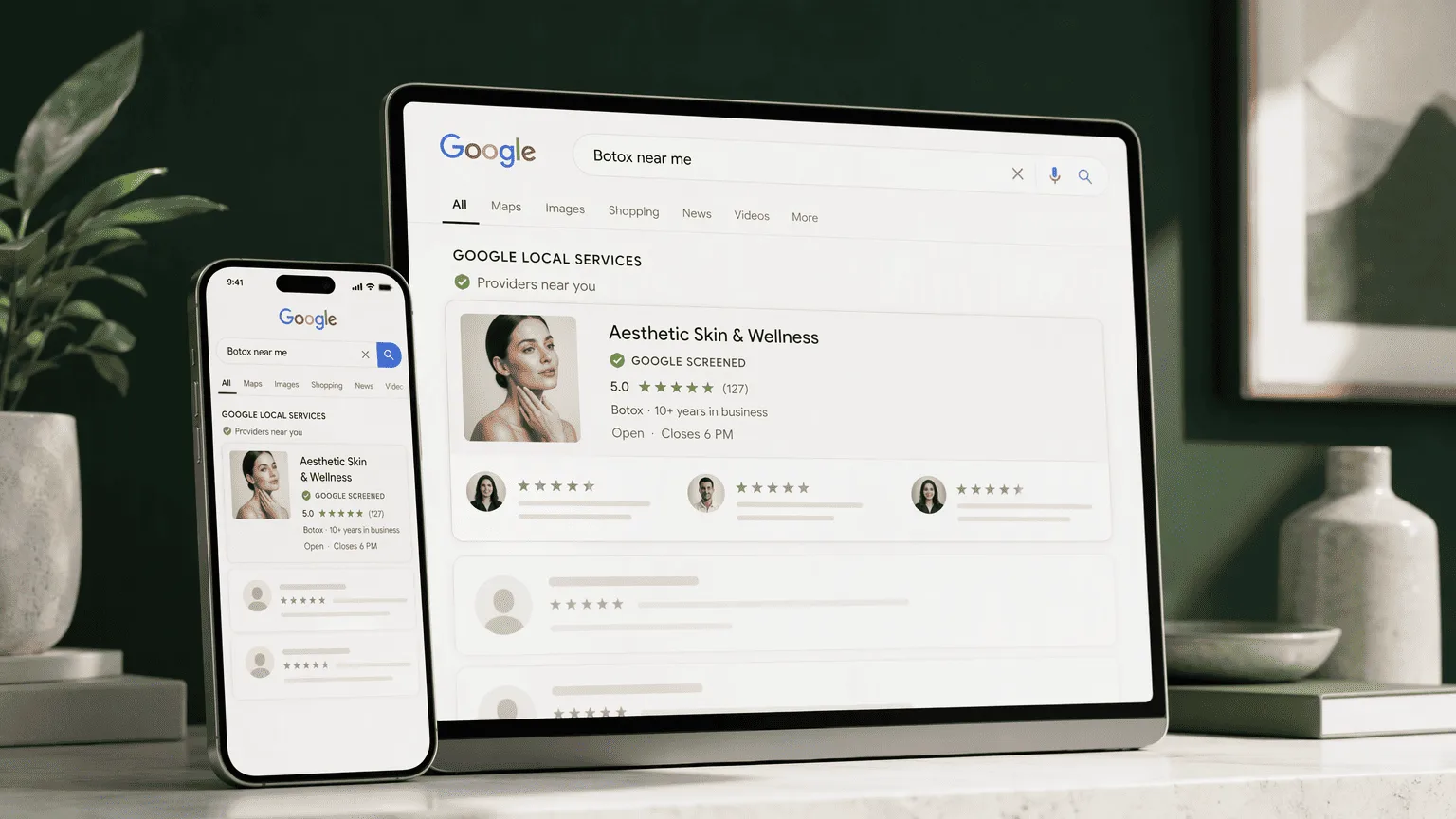
Someone searching "Botox near me" at 6 PM on a Tuesday is ready to book. They are past research and browsing. Google Local Services Ads (LSAs) put your practice at the top of the results with a Google Screened badge, a paid signal that you are licensed, insured, and vetted.
Here is the setup sequence:
- Complete the Google Screened verification process before launching LSAs: This involves license verification, background checks, and proof of insurance. The badge displays directly in the ad unit.
- Sync Botox-specific patient reviews into your Google Business Profile: Reviews that mention a specific injector by name and include "Botox" in the text convert best. Use a post-visit SMS review request that asks directly: "Did your injector today make you feel comfortable?"
- Enable "review extensions" so quotes appear under your LSA: A 5-star snippet reading "Dr. Nguyen explained everything and my results look completely natural" displayed below your phone number is more persuasive than any headline you can write.
- Track call and message conversions separately so you can calculate true cost-per-consultation: The Google Screened badge and review volume drive higher clickthrough, but only tracked conversion data tells you if those clicks become booked patients.
7. Non-Diagnostic "Warm Welcome" Consultation Ad Scripts
The most deceptively simple compliant copy framework is the warm welcome script. It does not mention results, does not promise outcomes, and avoids every word the FDA label uses to describe the drug's mechanism. Instead, it sells one thing: the experience of being listened to by an expert.
The headline structure is formulaic: "Your First Botox Appointment Should Feel Like This" or "30 Minutes With Dr. Chen, No Pressure, No Obligation." The body copy describes what happens IN the consultation room: the injector asks about your goals, explains how she approaches a treatment plan, answers every question before anything is scheduled. The word "Botox" appears once, in the headline or body, to anchor the search intent, but never in a sentence that describes what Botox DOES.
The legal line is sharp: advertising prescription-only medicines to the public breaches the Human Medicines Regulations and similar FDA advertising standards. Describing the consultation sidesteps the prescription-only medicine advertising restriction entirely because you are promoting a medical service, not a drug.
8. Long-Form Educational Content for YouTube Pre-Roll & TikTok
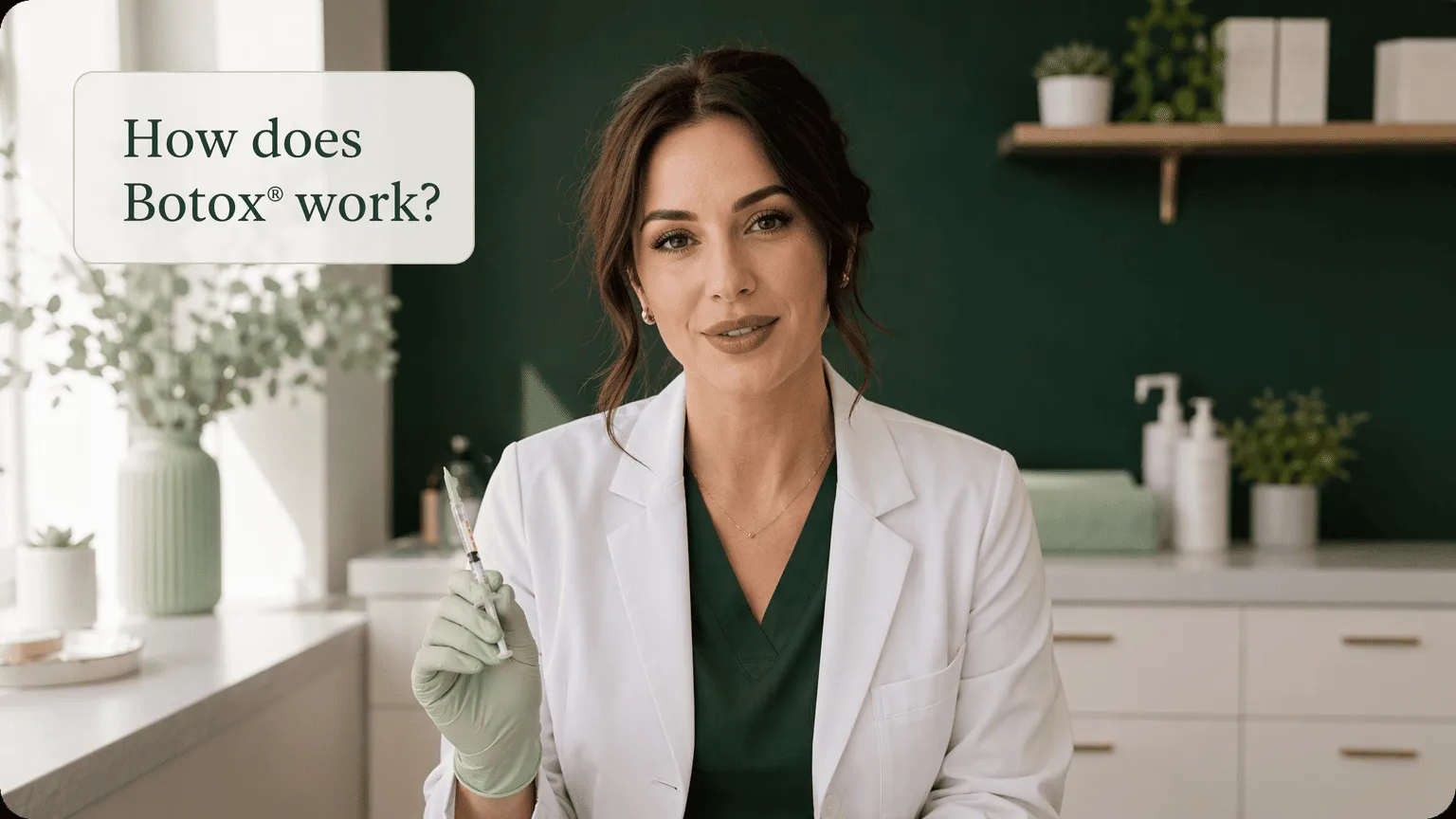
When a patient is 90 days out from booking and Googling "does Botox hurt" at 2 AM, your 60-second TikTok answering that exact question captures intent that no retargeting pixel will ever see. This is the research-phase content that makes your practice the transparent educational authority in the local market.
The format is an injector speaking to camera, no cuts, answering one precise question per video. Examples: "What Actually Happens During The First 48 Hours" or "Why We Use Fewer Units On A First Visit." These topics educate on neurotoxin science and patient preparation.
The landing page linked in the profile and YouTube description is the portfolio-access page, which moves the educated prospect into a booking flow. The multi-platform value here is high: the same 60-second asset becomes a TikTok post, a YouTube pre-roll, and a blog embed that boosts the practice's organic search authority. And because the content stays on what to expect, not the drug's promises, it runs compliantly across platforms that would reject a harder-sell creative.
Conclusion
The practice spending $4,000 a month on price-leveraged leads and processing over 900 new patients with 79% never returning is not winning. It is burning budget on churn. The practice running portfolio-access ads with 50% retention generates 2 to 3 times the annual revenue from the same new-patient volume.
Start with the portfolio-access lead gen ad first, add the injector spotlight video second, and layer in after-hours booking third. Those three assets alone replace a discount campaign with a high-retention engine. Then audit every piece of ad creative you are running right now: if it is leading with price per unit instead of provider philosophy, you know what to cut.
Want to see what your first month of ClinAds portfolio-access creative would look like? Book a 30-minute intro call.
Frequently Asked Questions
What Botox advertising strategies work best for medical spas in 2026?
The highest-performing strategy in 2026 is the portfolio-access lead gen ad, where the form unlocks a specific injector's before-and-after gallery. It drives a 48% consultation rate and attracts patients who stay for repeat treatments, generating 2 to 3 times the annual revenue of discount-ad patients with the same new-patient volume.
How can med spas create compliant Botox ads that still convert?
Keep the ad visual to a single result image with explicit patient consent, never a comparative before-and-after. Write copy about the consultation experience and provider's philosophy, never about what the drug does. Gating the full gallery behind a form avoids public comparative claims that trigger FDA and platform enforcement.
What visual and copy elements make Botox ad creative effective?
Short video Reels of the actual injector explaining their philosophy outperform stock imagery. Copy should lead with the injector's name, the consultation experience, and a portfolio-access CTA. Avoid any language like 'removes wrinkles' or 'painless' that makes a direct treatment claim about the prescription drug.
What current marketing channels deliver the highest ROI for Botox promotions?
Meta Ads (Instagram and Facebook) running portfolio-access offers and injector spotlight video produce the most consistent ROI for new patient acquisition. Google Local Services Ads with the Google Screened badge and verified patient reviews capture high-intent, bottom-of-funnel searches with strong cost-per-consultation efficiency.
What are the common pitfalls in Botox social media advertising?
The primary pitfall is optimizing for cost-per-lead instead of patient retention, which creates a schedule full of price-sensitive patients who never return. Adding to the risk, using unlicensed stock imagery, making unsubstantiated efficacy claims, or displaying comparative before-and-after images in the ad frame can trigger immediate account flagging.
How does FDA and FTC regulation shape Botox ad claims and disclaimers in the US?
Botox is a prescription-only medicine, and advertising it publicly with direct treatment claims or comparative outcome promises violates FDA labeling standards. Ads can promote the consultation service and provider expertise but must avoid describing what the drug does, how it feels, or showing transformation imagery directly in the public ad unit.
Sources
- Review adverts for botulinum toxin to ensure compliance ... - www.nature.com
- Meta Ads for Med Spas: Offer Strategy and CPL Benchmarks - practicegrowthco.com
Want help executing this for your clinic?
Book a 30-minute call and we will map what a real ad engine would look like for your specific service mix.
Book a call