
6 Best Growth Agencies for Direct-to-Consumer Telehealth in 2026
IntroductionMost telehealth brands don’t fail because they have a bad product. They fail because they pick a growth agency that has no idea what the FDA’s 2026 ad regulations actually require on a Tuesday afternoon when Meta’s automated system flags an ad for unapproved claims. One misstep in creative approval, and your ad account is suspended for 4 to 8 weeks before you can even begin an appeal to a human reviewer. That is a death sentence for a DTC brand relying on paid social for new patient volume.
Platform restrictions in 2026 are tighter than ever. Google Healthcare and TikTok Health Ads require certified accounts. FDA rules demand fair-balance disclosures in the copy itself, and any hint of off-label promotion triggers a warning letter that scares off pharmacy partners and payment processors. The cost of choosing the wrong partner is a 3- to 6-month market position setback that a competitor will fill before you get your ads running again.
A solution exists, but it requires moving past the generic
Key Takeaways
Here is what a CMO or founder evaluating telehealth growth agencies in 2026 must know before signing a contract.
- CAC payback discipline: Realistic first-purchase ROAS for acquisition on Meta and Google sits at 1.5 to 2.5x, while retention campaigns running email and SMS can hit 3 to 5x ROAS.
- Pricing benchmarks: Specialized telehealth growth agencies carry a monthly retainer of $8,000 to $25,000 plus a 15 to 25% cut of ad spend; any firm pricing far below that is likely not building compliant infrastructure.
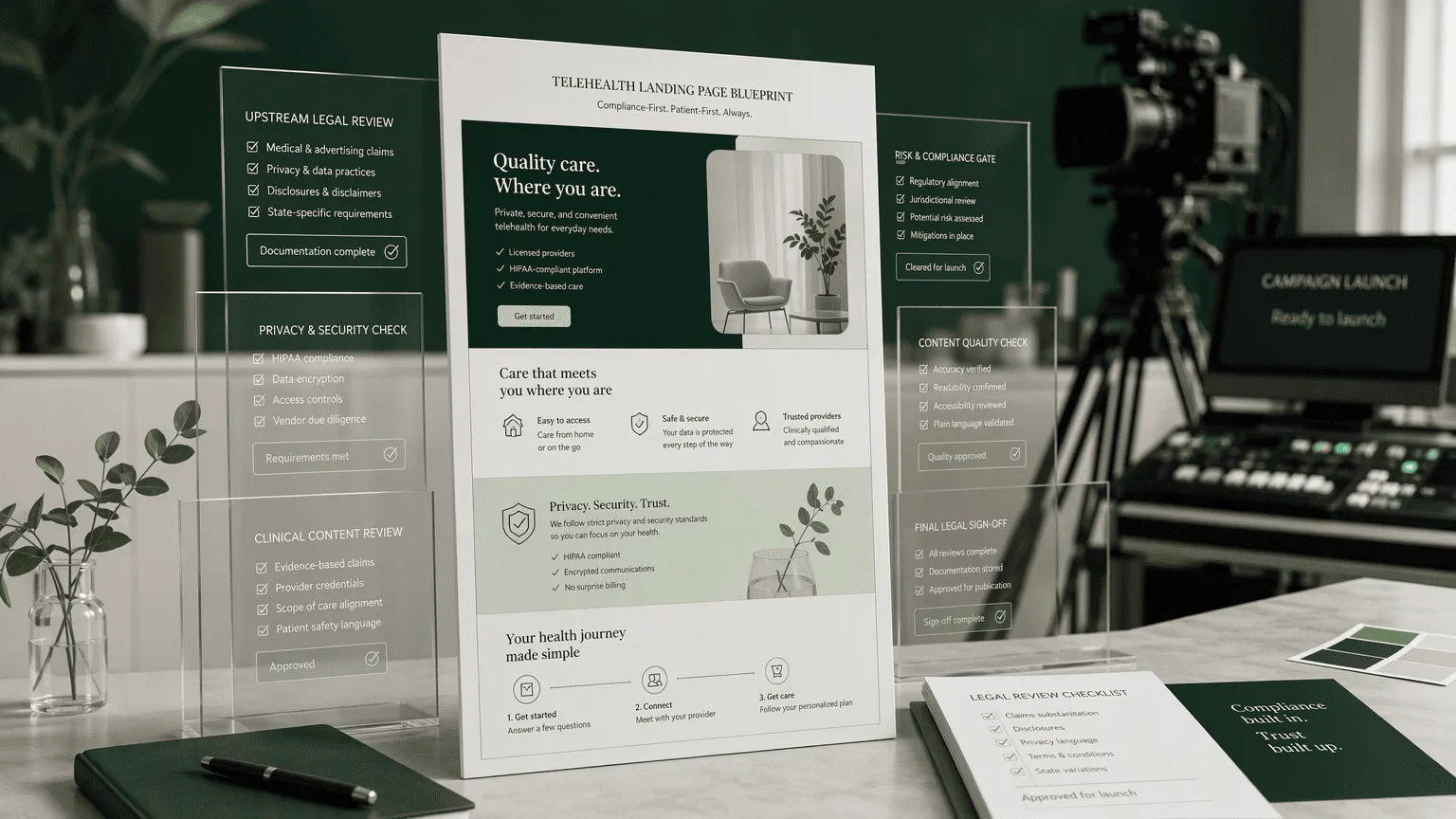
- Compliance is the product: If an agency does not produce pixel-free landing pages, a HIPAA business associate agreement, and a documented medical-ad review process from day one, you are buying ad account bans on a delay.
- Specialization wins: Vertical-specific firms like Epidemic Marketing produce creative that inherently avoids regulatory flags, while generalist agencies burn spend on creative that gets pulled before it hits the auction.
- Bottleneck-first hiring: Choosing the right agency means hiring the firm that fixes your primary blocker: infrastructure, brand credibility, trust architecture, compliance, or paid search scale.
1. Moxie: DTC Brand Building Through Cultural Relevance and Full-Funnel Measurement
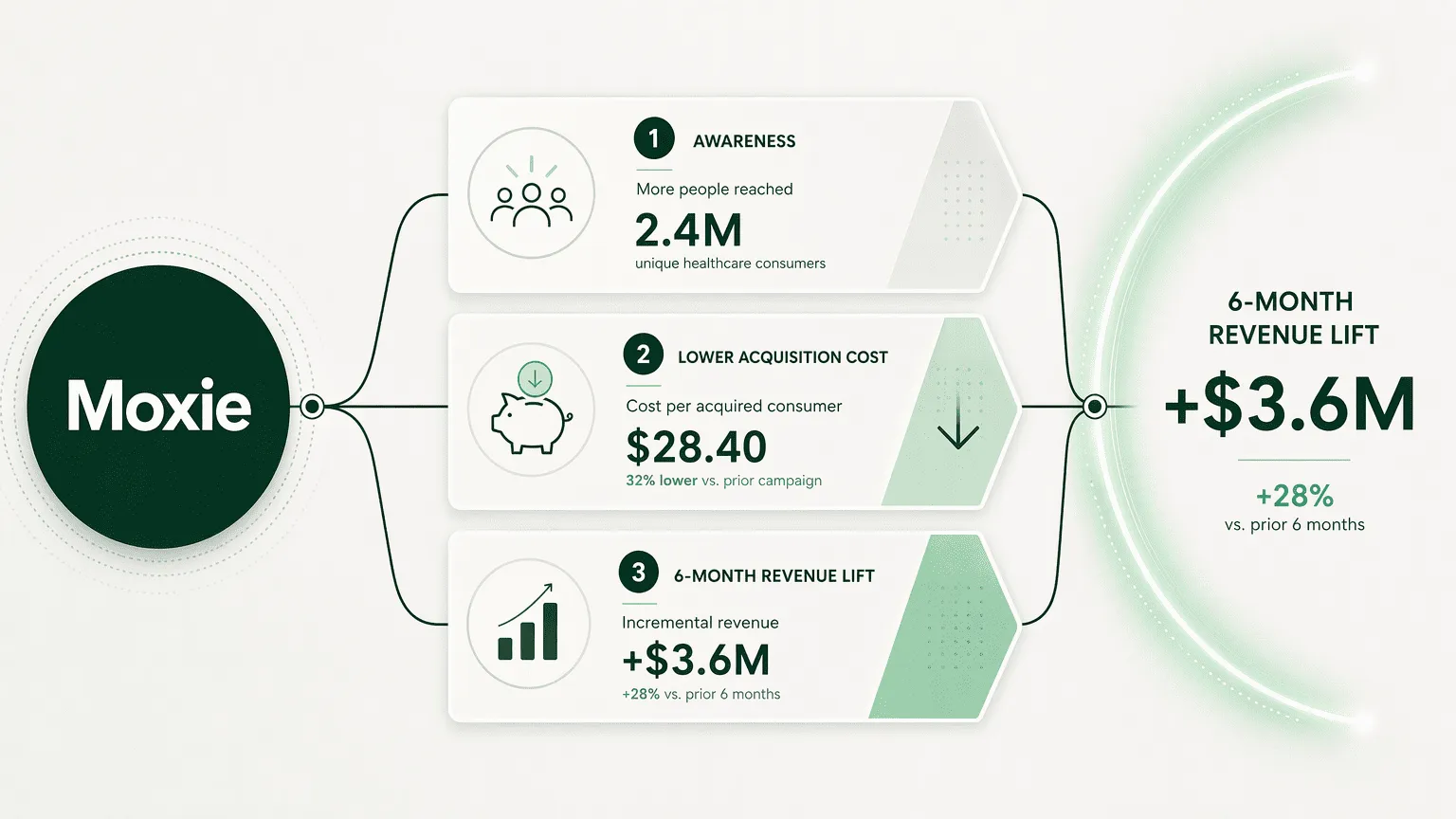
Where Clinads solves infrastructure, Moxie solves cultural relevance. The firm's model, refined on the Hims & Hers brand architecture, treats healthcare as a consumer category where brand investment drives measurable acquisition cost deflation over time.
The distinguishing framework is measurement: Moxie ties brand campaigns to full-funnel metrics. A 40%+ 6-month revenue lift sourced from research on their healthcare engagements demonstrates that brand building is a margin driver. The table below maps the comparison to a standard performance-only agency.
| Dimension | Moxie (Brand-Integrated) | Standard Performance Agency |
|---|---|---|
| Primary lever | Cultural relevance and category design | Creative iteration and bid management |
| Measurement window | 6-month full-funnel lift, incrementality testing | 7-day click, last-touch attribution |
| Risk exposure | Higher upfront investment before measurable return | Immediate ROAS signal, plateau risk within 90 days |
| Regulatory posture | In-house legal pre-clearance embedded in creative development | Creative approved post-production, higher rejection rate |
| Best fit | $20M+ revenue telehealth brands needing category positioning | Sub-$5M brands maximizing immediate acquisition volume |
2. Otter PR: Earned Media and Organic Authority to Reduce Paid Acquisition Dependence

Otter PR builds the earned-media authority layer that makes your paid media cheaper. The agency's thesis, modeled on Ro's scaling playbook, is that third-party coverage in credible publications reduces the skepticism premium baked into every telehealth CPM, which drops your effective cost per patient over 12 months.
Most DTC telehealth brands are structurally overexposed to paid social. When Meta's CPMs rise 15% quarter-over-quarter or a policy shift throttles your campaigns, you have no alternative demand engine. Otter PR fixes this by securing media placements that feed organic discovery and, critically, provide the credibility signals that improve conversion rates on your paid landing pages. The PR asset compounds: an article in a health publication stays indexed and builds referral traffic while your paid ads churn through creative.
You use Otter PR when your paid acquisition costs are climbing despite steady creative performance. That pattern means the market does not trust your brand; the problem is credibility, not your media buying.
3. Epidemic Marketing: Mental Health Vertical Specialization with FDA-Advisory, Safe Creative

Epidemic Marketing turns vertical specialization into a compliance moat. The agency works exclusively in mental health.
Its creative team writes copy that inherently avoids the linguistic triggers FDA reviewers flag: no aspirational cure language, no unapproved indication claims, and fair-balance disclosures baked into the hook, not buried in a footnote.
The problem is that generalist agencies, even strong ones, produce healthcare creative that a medical reviewer kills on the first pass because the copywriter does not understand what
4. NoGood: Performance Creative and Rapid Experimentation for Health-Tech Challengers
Most health-tech challenger brands hit the same wall: you need to test creative at a near-frantic pace to find something that works before your seed round runs dry. Simultaneously, every single ad has to clear Meta's certified healthcare advertiser rules, TikTok Health Ads policies, and Google Healthcare's restrictions as they stand in 2026.
NoGood folds compliance approval into the creative brief at the start rather than treating it as a final checkpoint. A health-tech brand can sustain a high-volume testing cadence because a medical reviewer isn't blocking the queue, forcing the team to sit idle for five business days between iterations. The output arrives pre-cleaned.
That structure changes the math for funded startups that pitched investors an 18-month growth curve. A conventional agency lets a legal review tag every ad concept after it is built, which slows the whole machine. NoGood runs that review during concept development, so the ad that ships already contains the disclosures and phrasing the platform demands. The catch: the system only holds up for challengers with in-house medical oversight who can match the agency's weekly testing tempo.
When velocity-first engagements break, the misalignment usually sits between the client's clinical team and the agency's required pace.
5. Beloved Brands: Physician-Led Trust Architecture and Subscription LTV Engineering

Beloved Brands structures a telehealth growth engine around a clinical credibility asset that most DTC brands overlook: the prescribing physician as a marketing signal. The agency’s model places physician-led content and trust architecture at the top of the funnel, directly addressing the patient anxiety that suppresses conversion rates on subscription-based telehealth products.
A patient considering a monthly GLP-1 subscription will abandon the cart if they do not trust that a real doctor is involved. Beloved Brands makes that trust explicit in the creative and the landing page, not as a trust-badge afterthought but as the primary claim. That clinical credibility feeds directly into retention economics where the real margin lives.
Research benchmarks show that retention campaigns via email and SMS can achieve 3 to 5x ROAS, which compounds meaningfully when the initial conversion happened because a patient trusted the provider, not just the discount.
CRM automation is the distribution layer, but it runs on the signal structure the trust architecture built at acquisition. A reactivation sequence works when the patient remembers the doctor, not the coupon.
6. Jump 450: LegitScript-Anchored Paid Search for Immediate Policy-Proof Scaling

Jump 450 focuses on the channel where purchase intent is highest and where the regulatory barrier weeds out most competitors: LegitScript-certified Google Healthcare campaigns. This is the playbook for a telehealth brand that needs to unlock immediate, high-intent patient demand without exposing its ad account to policy enforcement shutdowns that take weeks to resolve.
The key components of Jump 450's policy-proofed paid search model.
- LegitScript certification anchoring: Jump 450 builds campaigns on LegitScript-certified accounts that meet Google Healthcare’s advertiser verification requirements, a barrier that eliminates uncertified competitors from your keyword auctions.
- Ad copy pre-reconciliation: Creative undergoes a medical-legal review against FDA fair-balance requirements before entering the Google Ads policy queue, reducing the rejection rate that triggers account-level flags.
- First-purchase ROAS discipline: The agency targets a sustainable 1.5 to 2.5x first-purchase ROAS benchmark, understanding that paid search’s role is cash-flow-positive acquisition, not a brand awareness subsidy.
- Account resilience architecture: Jump 450 structures campaigns to survive policy updates without full rebuilds, directly solving the 4- to 8-week ban appeal timeline that a standard agency’s campaign infrastructure cannot withstand mid-quarter.
Conclusion
The
Frequently Asked Questions
What channels and strategies do top growth agencies deploy for DTC telehealth in the US in 2026?
Top agencies run a multi-channel strategy that includes:
- Paid social on Meta and TikTok Health Ads through certified healthcare advertiser accounts
- Paid search on Google Healthcare with LegitScript certification
- Affiliated email and SMS retention campaigns to nurture existing patients
- Earned media programs to build organic authority
What is the typical pricing model for a specialized DTC telehealth growth agency, and what ROI benchmarks are realistic?
Expect these cost and ROI benchmarks:
- Retainer and fees: $8,000 to $25,000 monthly retainer plus 15 to 25% of ad spend managed
- Acquisition campaign ROAS: 1.5 to 2.5x first-purchase ROAS on Meta and Google
- Retention campaign ROAS: 3 to 5x ROAS for email and SMS campaigns
What are the risks and pitfalls of picking the wrong growth agency for a telehealth startup?
The primary risks to watch for include:
- Unrecoverable ad account bans that can take 4 to 8 weeks to appeal
- FDA enforcement triggers from non-compliant creative
- A 3- to 6-month market setback if a campaign is halted
Generic agencies lacking HIPAA business associate agreements or a documented medical-review process create the most liability.
How do HIPAA and FDA advertising regulations affect what a growth agency can do in 2026?
Regulatory compliance demands two key guardrails:
- FDA rules prohibit off-label promotion and require fair-balance disclosures; all ad claims, creative copy, and landing page language must pass medical-legal review before platform submission
Which agencies have the strongest case studies for scaling DTC telehealth in competitive categories?
Moxie has produced 40%+ 6-month revenue lifts using the Hims & Hers brand model. Otter PR applied Ro-style earned media scaling. Epidemic Marketing demonstrated a 40%+ lift in the mental health vertical, and Clinads delivers patient acquisition at a validated $22 cost per lead through compliant infrastructure.
What criteria should a DTC telehealth brand use to evaluate a growth agency right now?
Evaluate an agency first on its compliance infrastructure: documented HIPAA agreements, pixel-free tracking, and a medical-ad review process. Then assess category specialization, verifiable CAC and ROAS benchmarks, and whether the agency’s primary capability fixes your brand’s largest growth bottleneck, not just its general creative output.
Sources
- Telehealth Marketing Agency | ClinicAds - clinicads.com
- 6 Best Telehealth Marketing Agencies in 2026 | Grow Your Virtual Practice - www.helloroketto.com
Want help executing this for your clinic?
Book a 30-minute call and we will map what a real ad engine would look like for your specific service mix.
Book a call